
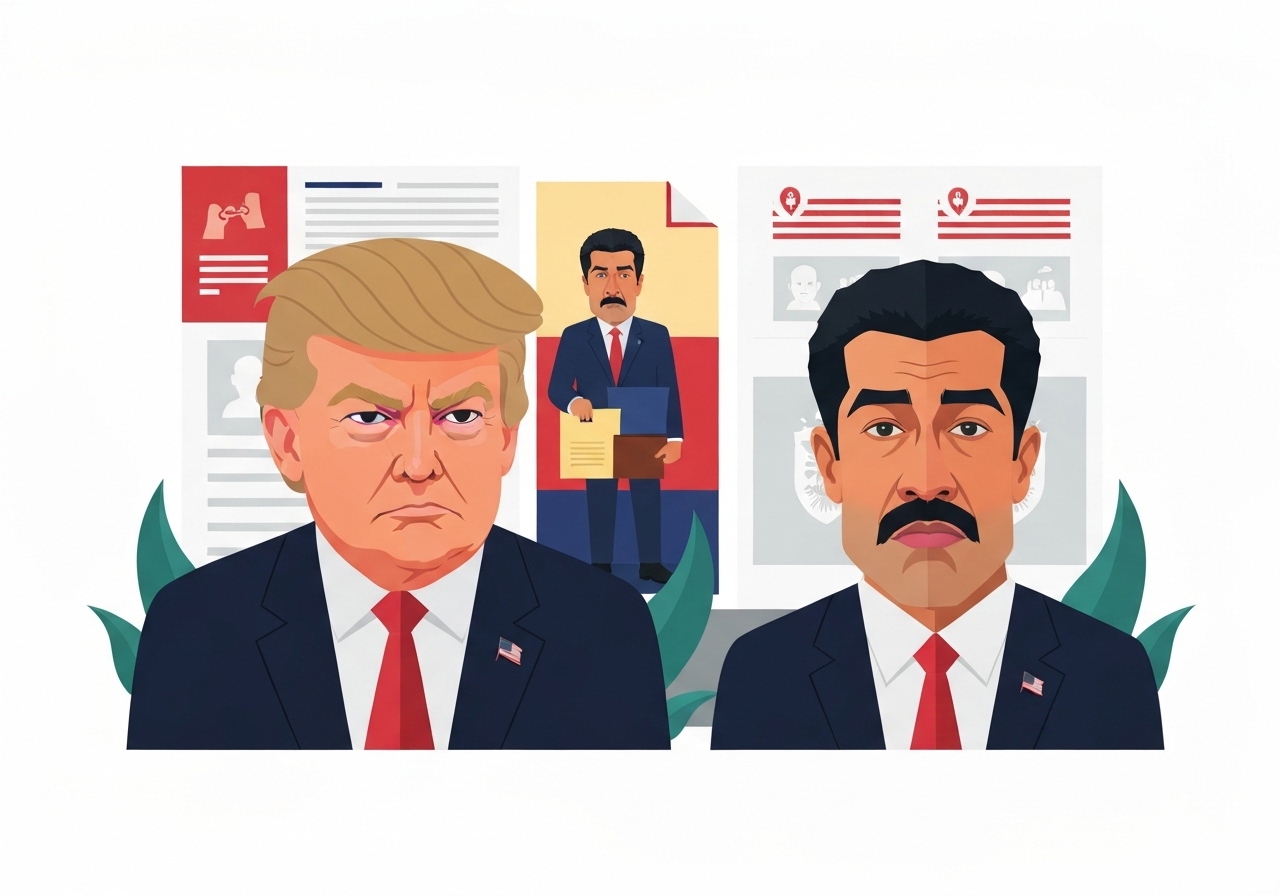
Venezuelan president Nicolás Maduro urged Donald Trump to abandon what he called “illegal warmongering” and open “serious talks” after reports emerged of a pre-Christmas strike on Venezuelan soil. Maduro, speaking in a pre-recorded hour-long television interview, declined to confirm media accounts that the United States carried out a drone or airstrike and framed Washington’s actions as aimed at seizing Venezuela’s resources. The comments come amid a five-month U.S. campaign of military pressure that began in August 2025 and, if a December strike is confirmed, would mark the first known U.S. attack on Venezuelan territory during that period. The episode has intensified diplomatic friction and raised questions about escalation, intelligence accountability and regional stability.
Key takeaways
- Maduro publicly called for “serious talks” with Donald Trump after reports of a pre-Christmas strike in Venezuela; the interview was pre-recorded and lasted about an hour.
- President Trump said the U.S. struck a docking facility used by alleged drug-trafficking boats last month; U.S. media outlets have attributed the operation to the CIA (unconfirmed).
- If verified, the incident would be the first strike on Venezuelan soil since the U.S. campaign of pressure began in August 2025, a period the administration describes as five months long.
- The U.S. campaign has included the deployment of a large naval fleet, targeted airstrikes on suspected trafficking networks, a declared “total blockade” on sanctioned oil tankers, and the seizure of two vessels with a third pursued.
- Maduro rejected U.S. allegations that his government runs a “narco-terrorist” criminal enterprise and argued U.S. motives include control over Venezuelan oil, gold and rare-earth minerals.
- Observers warn the episode could broaden regional tensions and complicate cooperation on drug interdiction, humanitarian access and energy markets.
Background
U.S.–Venezuela relations have been sharply adversarial since the Trump administration intensified pressure in August 2025, framing parts of the Maduro government as complicit in large-scale drug trafficking. The U.S. measures combine sanctions on officials and oil assets with maritime and aerial operations aimed at disrupting smuggling routes. Caracas, for its part, has consistently denied allegations of state-run drug trafficking and has accused Washington of seeking to appropriate Venezuelan natural resources.
Past U.S. interventions in Latin America and the Middle East shape the political sensitivities around any strike. Maduro compared recent allegations to the false WMD claims that preceded major U.S. operations in the early 2000s, saying Washington has manufactured pretexts when other accusations failed to stick. Regional governments and international institutions have been cautious, balancing condemnation of illicit trafficking with concerns about sovereignty and escalation.
Main event
The sequence began in late December 2025 when U.S. officials and several U.S. media outlets reported an attack on a Venezuelan docking facility used by suspected drug-trafficking boats. President Trump later stated publicly that the U.S. had struck a facility last month; U.S. press reporting has suggested CIA involvement in a drone or covert strike, though American agencies have not issued an on-the-record confirmation. Caracas has neither verified nor accepted those accounts.
In a televised, pre-recorded interview, Maduro refused to confirm the reports while forcefully denying U.S. claims about Venezuela’s involvement in large-scale narco-trafficking. He argued the true objective of U.S. policy is control over hydrocarbons and strategic minerals, not drug interdiction. Maduro framed his call for talks as a bid to halt what he called “illegal warmongering” and to de-escalate a confrontation he says risks Venezuelan sovereignty.
U.S. policy since August has combined public military posture with clandestine measures that the administration says target traffickers and smugglers. Officials cite seizures and interdictions as evidence of progress; critics worry about transparency, legal authority for covert action, and the possibility that misattributed or poorly coordinated strikes could produce civilian harm or wider conflict. The reported December action—if attributable to U.S. intelligence or forces—would signify a tactical shift toward strikes onshore rather than exclusively maritime interdiction.
Analysis & implications
Strategically, an onshore strike in Venezuela would mark an escalation from naval operations and at-sea interdictions to direct action on territorial infrastructure. That shift increases the risk of unintended casualties and diplomatic blowback, which could push Caracas to deepen military ties with external partners or harden domestic repression in the name of national security. For the United States, such a move would raise questions about the legal basis for strikes, oversight of covert operations, and congressional prerogatives.
Economically, persistent confrontation threatens Venezuelan oil exports, already constrained by sanctions and market conditions, and could further perturb global energy markets if operations expand near key terminals. Maduro’s emphasis on oil, gold and rare-earth elements highlights how resource security is central to Caracas’s resistance to foreign pressure and a possible flashpoint for international competition over critical minerals.
Regionally, Latin American governments are likely to calculate diplomatic responses carefully: many criticize both illicit trafficking and foreign intervention. A U.S. strike attributed to the CIA could complicate cooperation with governments that seek to balance security partnerships with defense of sovereignty. It may also spur migration or humanitarian strains if instability deepens.
Politically in the U.S., the incident places scrutiny on the administration’s use of force and intelligence agencies. Congress may press for briefings, and watchdogs could demand clarity on rules of engagement and civilian-protection measures. Internationally, allies may call for clearer evidence if covert action expands beyond maritime interdiction.
Comparison & data
| Action | Date / Period | Reported detail |
|---|---|---|
| U.S. military pressure campaign | From August 2025 (five months) | Large naval deployments and air operations targeting traffickers |
| Pre-Christmas strike (reported) | December 2025 (pre-Christmas) | Alleged hit on docking facility; U.S. media name CIA involvement (unconfirmed) |
| Seizures of vessels | Since campaign began | Two vessels seized; a third reportedly pursued |
The table summarizes publicly reported measures and alleged incidents since August 2025. Numbers and attributions—especially regarding covert operations—remain subject to confirmation. Observers caution that media reports and official statements may reflect differing degrees of access to classified information.
Reactions & quotes
The following excerpts indicate official positioning and public messaging; each quote is brief and placed in context below.
“I believe that we need to set all this aside and start serious talks.”
Nicolás Maduro (Venezuelan president)
Maduro used his interview to urge direct negotiations with the Trump administration while rejecting U.S. allegations about Venezuela’s role in narcotics trafficking. He framed talks as a way to avert further escalation and to protect national sovereignty.
“We are locked and loaded, and ready to go.”
Donald Trump (social media post on Iran matter)
Although this remark was made in a different context—commenting on Iran and protesters—it illustrates the administration’s recent rhetoric on using force and how such language can heighten regional anxieties when paired with concrete operations.
“U.S. media reporting has attributed the operation to the CIA; agencies have not confirmed this publicly.”
U.S. press reporting (summarized)
Major U.S. outlets have reported CIA involvement in the alleged strike; those accounts prompted Maduro’s denials and calls for diplomacy. The discrepancy between media attribution and official confirmation is central to current uncertainty.
Unconfirmed
- The CIA’s direct responsibility for the reported pre-Christmas strike: U.S. agencies have not issued an on-the-record confirmation.
- Exact casualty or damage figures from the alleged December action: no independently verified on-the-ground accounting has been released.
- Whether the December operation targeted only trafficking infrastructure or broader facilities linked to state resources remains unclear.
Bottom line
The Maduro–Trump exchange underscores a perilous moment: reported covert action, strong public rhetoric and long-standing resource and geopolitical disputes have combined to raise the risk of miscalculation. Maduro’s call for talks reflects both a diplomatic opening and a rhetorical effort to reframe U.S. motives as resource seizure rather than counter-narcotics enforcement.
For policymakers and observers, the immediate priorities are transparency, verification and channels for de-escalation. If the claimed December strike is confirmed, Washington will face pressure at home and abroad to explain legal authority and civilian-protection measures; if it remains unconfirmed, media-attributed operations will continue to complicate trust between capitals and raise regional tensions.
Sources
- The Guardian — news report summarizing Maduro’s interview and related U.S. claims (news)