
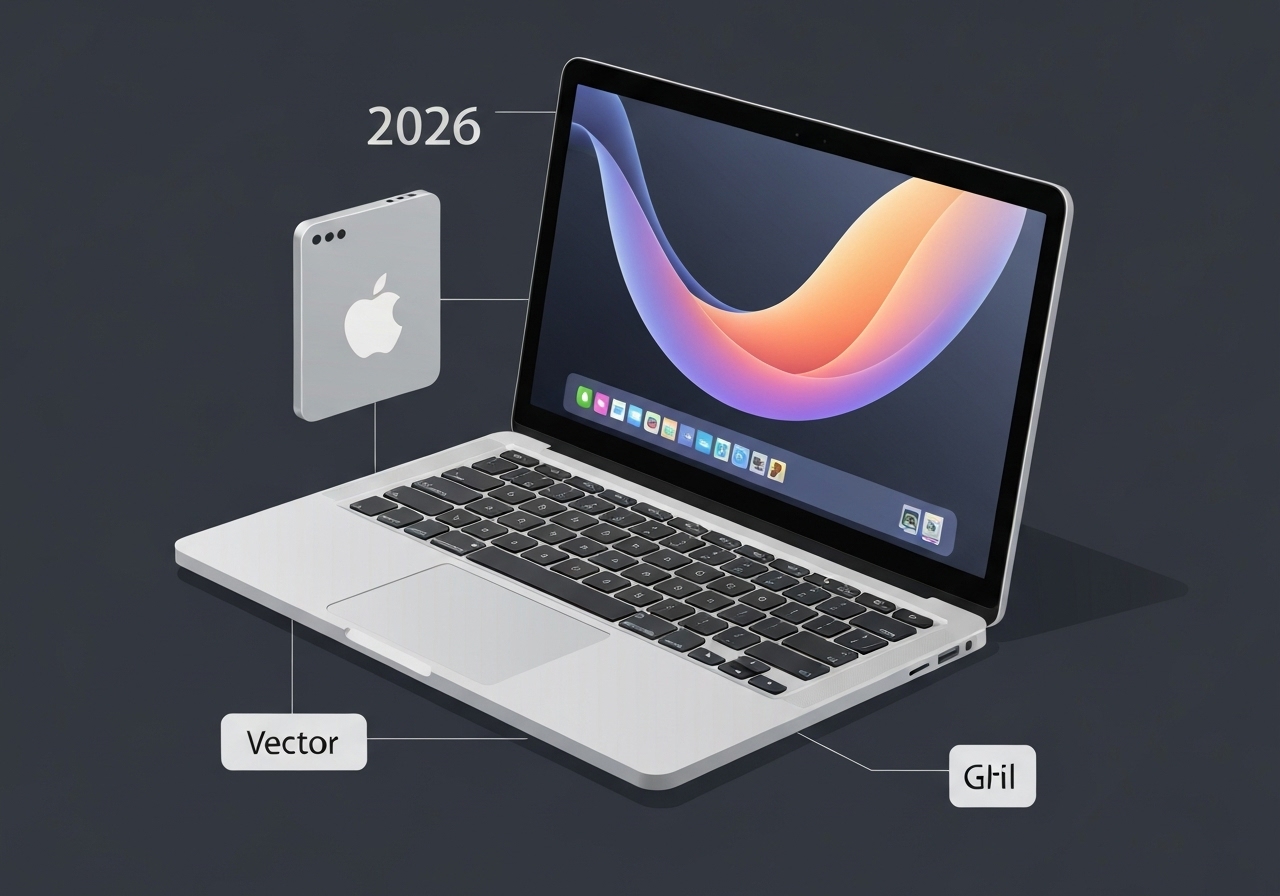
Lead: Apple is preparing a lower‑priced MacBook model for launch in the first half of 2026 that will use an A18 Pro system chip and target buyers who currently consider Chromebooks, budget Windows laptops, or iPad+keyboard setups. Reports first surfaced on January 2, 2026, indicating the machine will sit below the $999 MacBook Air in price while offering a roughly 13‑inch LCD display and Apple Intelligence support. Early benchmarking notes place the A18 Pro’s single‑core CPU performance near M3 Ultra levels in certain tests, though multi‑core and GPU results are closer to older M‑series chips. Apple has not publicly confirmed specifications, pricing, or an exact release date.
Key Takeaways
- Planned launch window: first half of 2026, per multiple industry reports and rumor coverage.
- Chip: A18 Pro (first used in iPhone 16 Pro), built on second‑generation 3nm process with 8GB RAM and Apple Intelligence support.
- Display and size: expected ~13‑inch LCD panel (no mini‑LED or ProMotion); likely slightly smaller than the 13.6‑inch MacBook Air.
- Performance: Geekbench 6–style comparisons reported single‑core parity with an M3 Ultra in some runs and overall multi‑core/Metal scores similar to M1 in other metrics.
- Battery and design tradeoffs: could approach MacBook Air battery life (up to 18 hours video playback) if Apple prioritizes battery over ultra‑thin enclosure.
- Ports and features: rumored to be minimal — possibly one or two USB‑C ports — as Apple balances cost and functionality.
- Pricing guidance: Bloomberg reported the machine will be “well under $1,000,” suggesting a retail target somewhere beneath the current $999 MacBook Air.
- Color and materials: unverified chatter suggests brighter color options and possibly lower‑cost materials, but those claims remain speculative.
Background
Apple’s mainstream notebook lineup has steadily expanded since the M1 transition, leaving a pricing gap below the $999 MacBook Air that Apple appears ready to address. Historically Apple has offered lower‑cost portable options (for example, Intel MacBook Air models and polycarbonate original MacBooks), and the company’s product stack already includes iPads that overlap functionally with inexpensive laptops. The market for sub‑$800 notebooks is dominated by Chromebooks and budget Windows PCs; an Apple offering at a lower price point would be positioned to win customers who prioritize macOS and Apple ecosystem continuity.
Chip packaging and efficiency have shifted Apple’s cost calculus: A‑series silicon designed for iPhones has matured to the point where multi‑device use is feasible, lowering engineering hurdles for a notebook that prioritizes value over peak pro performance. At the same time, Apple must navigate tradeoffs between display quality (no mini‑LED/HDR promised in rumors), battery capacity, and enclosure cost to create a product that undercuts the MacBook Air’s price yet still meets user expectations for battery life and general responsiveness.
Main Event
Reports published January 2, 2026, consolidate several recurring rumors: the machine will house an A18 Pro chip, offer roughly a 13‑inch LCD screen, and be priced below the $999 MacBook Air. The A18 Pro—originally introduced in the iPhone 16 Pro—brings hardware acceleration and Apple Intelligence features to the platform, enabling many macOS tasks while maintaining low power consumption. Sources indicate the device will handle everyday workloads—web browsing, video streaming, document editing, photo edits and light video tasks—comfortably, though intensive pro‑grade workloads will be slower than on M‑series machines.
Design rumors point to conventional laptop materials and a focus on cost efficiency rather than extreme thinness. While some speculation suggests brighter color options or even a return to lower‑cost plastic shells reminiscent of early MacBooks, no supplier leaks or regulatory filings have corroborated those details. Port counts are expected to be conservative—one USB‑C port is plausible, with two possible if Apple opts to mirror the MacBook Air’s approach.
Benchmark commentary included in coverage compares single‑core CPU outputs favorably to high‑end M‑series parts in specific tests, but those reports also caution that multi‑core and GPU scores align more with M1‑era performance for many tasks. That profile suggests the new MacBook would feel quick in everyday use and match or exceed many competitors in the sub‑$800 laptop segment without threatening Apple’s own M‑series‑based Air and Pro lines.
Analysis & Implications
A low‑cost MacBook built around the A18 Pro would let Apple enter price tiers it has mostly left to competitors, potentially expanding macOS adoption among students, families, and budget buyers. If priced substantially below $999, the device could cannibalize some iPad+keyboard purchases while attracting customers seeking a more traditional laptop form factor. The move would also give Apple a direct product to compete with Chromebooks in education markets where cost and simplicity are decisive.
From a product‑stack perspective, Apple must avoid undercutting its own higher‑margin M‑series models. The company can do that by deliberately limiting display tech, omitting advanced cooling, and tuning the A18 Pro for efficiency rather than sustained pro workloads. That positioning preserves differentiation: M‑series laptops remain the choice for performance‑heavy users while A‑series MacBooks offer an entry point with good day‑to‑day performance.
On the supply chain and component side, using an A‑series chip already in volume production (A18 Pro) reduces development lead time and manufacturing cost; that could accelerate a first‑half‑2026 launch. However, Apple will need to balance parts sourcing (LCD panels, batteries, lower‑cost enclosures) against global component price swings to hit a competitive retail price while safeguarding margins.
Comparison & Data
| Model / Metric | Typical Price | Display | Typical Battery (video) |
|---|---|---|---|
| A18 MacBook (rumored) | Below $999 (reportedly “well under $1,000”) | ~13″ LCD | Likely comparable to MacBook Air |
| MacBook Air (base) | $999 | 13.6″ Liquid Retina | Up to 18 hours video |
| iPad Air (13″) | $799 | 13″ Liquid Retina (iPad) | Varies by use |
The table above places the rumored A18 MacBook between existing Apple products and highlights the main tradeoffs: display tech and battery expectations versus price. Benchmarks referenced in reporting show single‑core CPU results in some runs comparable to M3 Ultra levels, but multi‑core and Metal GPU measures cluster nearer to M1‑era outputs—an important nuance when judging suitability for pro workflows versus everyday tasks.
Reactions & Quotes
Industry coverage and analyst commentary have emphasized the pricing implication and Apple’s potential strategy to widen the Mac lineup.
“Well under $1,000,”
Bloomberg (industry reporting)
Bloomberg’s phrasing encapsulates the key market signal: Apple intends to price the device noticeably below the existing MacBook Air entry point, according to the report that first used that expression.
“Competitive pricing,”
TrendForce (industry research)
TrendForce characterized the planned 12.9–13‑inch model as aimed at entry‑to‑mid range buyers and described the pricing as competitive in the segment, underscoring the strategy to target value‑conscious customers.
Unconfirmed
- Color and material choices (silver, blue, pink, yellow or plastic casing) have appeared in rumors but lack corroboration from suppliers or regulatory filings.
- Exact price point remains unverified beyond Bloomberg’s “well under $1,000” phrasing; no MSRP has been published.
- Port configuration (single USB‑C vs two ports) and precise battery capacities are unannounced and may change before launch.
- Benchmarks cited are from early or selective runs; comprehensive, repeatable third‑party testing of A18 Pro in a Mac chassis is not yet available.
Bottom Line
Apple appears poised to introduce a genuinely lower‑priced MacBook in 2026 by leveraging the A18 Pro to balance performance and cost. If Bloomberg’s pricing signal is accurate, the device would undercut the current $999 MacBook Air and create a clearer entry point into macOS for students and value buyers.
The key variables to watch are final price, display quality, and battery life: Apple must deliver acceptable battery endurance and a usable screen while trimming costs in other areas to avoid undermining the broader Mac lineup. Buyers considering a new lightweight machine in early 2026 should weigh whether to wait for Apple’s announcement, especially if they prefer macOS or seek better ecosystem continuity than an iPad or low‑cost Windows Chromebook can offer.