
Lead
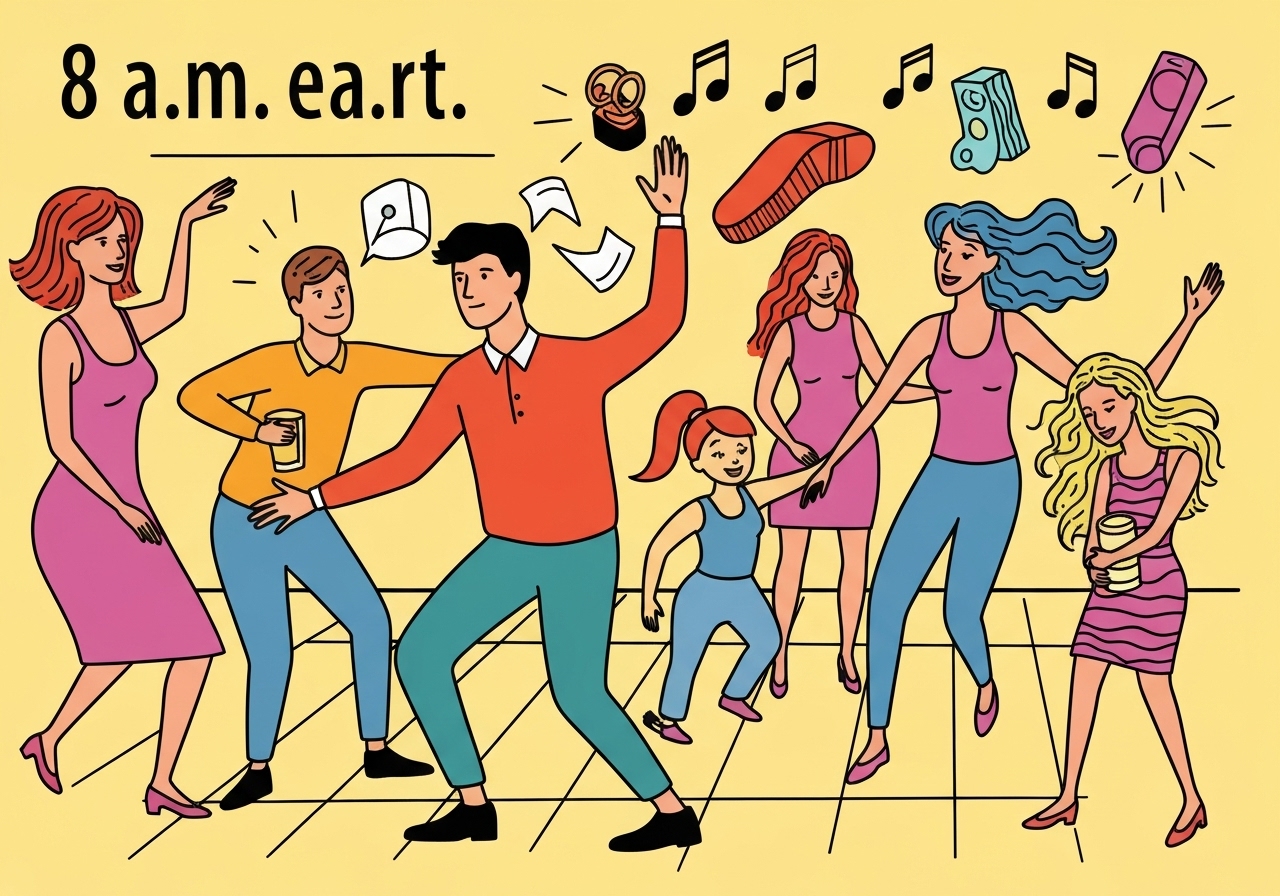
On a Saturday morning in October, 29-year-old Park Jihyun left her Seoul apartment at 5:30 a.m., ran five miles and arrived ready to rave at a coffee shop event that began with DJs and iced americanos instead of alcohol. The Seoul Morning Coffee Club (SMCC) launched its Coffee Rave in May and now draws hundreds for caffeine-fueled, booze-free dancing that kicks off around 8 a.m. Organizers and attendees say the gatherings mix community, wellness and music, attracting people who prioritize sleep, safety and sober socializing. Similar events — from bakery raves in Paris to morning parties in London and Toronto — reflect a broader shift among younger adults away from late-night drinking culture.
Key takeaways
- Seoul Coffee Rave launched in May and charges 20,000 won (about $14) per ticket, with attendees arriving from 7 a.m. and DJs starting around 8 a.m.
- Park Jihyun, 29, described arriving after a one-hour, 5-mile run; events combine running, coffee and dancing without alcohol.
- Alexis Duvivier (Aazar), 36, began bakery raves in Paris in 2019, blending music with pastries and local venue culture.
- South Korea recorded 23 suicides per 100,000 people in 2023, the highest rate among OECD countries, a backdrop organizers cite when framing mental-health benefits.
- A 2025 Night Time Industries Association UK survey of 2,000 people aged 18–30 found 61% went out less last year; industry data warns 40% of UK nightlife businesses face closure risks without intervention.
- Events appeal to morning people, non-drinkers and those seeking safer, multi-generational social spaces; organizers report diverse attendance from runners and parents with children to older adults.
Background
Sober, daytime raves are not entirely new: groups such as Daybreaker in New York and Morning Gloryville in London have staged alcohol-free dance events for more than a decade. In the late 2010s and early 2020s a variant of that idea migrated into cafés, bakeries and community spaces, where local culture and food create distinctive settings. In Paris, Alexis Duvivier launched bakery-focused parties in 2019 as a personal celebration that combined his love of boulangeries with DJ sets; social clips later amplified the visual novelty online. The Seoul Morning Coffee Club adapted the formula to local conditions, framing morning raves as a remedy to high-pressure social environments and as an alternative social calendar for early risers.
Broader social trends help explain the uptake: younger generations in many cities report drinking less, prioritizing sleep and wellness, and seeking sober ways to socialize after the pandemic. Economic pressures, safety concerns and changing nightlife economics have also reshaped going-out patterns in places such as the UK, where industry surveys show substantial declines in frequency among younger adults. Local organizers say small-scale, lower-cost daytime events can lower barriers to entry and foster repeat attendance that late-night club models struggle to secure.
Main event
The Seoul Coffee Rave typically sees doors open about 7 a.m.; attendees queue for coffee, matcha or other nonalcoholic drinks and then gather as DJs begin at 8 a.m. Founder Park Jae-hyun says the goal is simple: provide an energetic, sober start to the day. The crowd in Yongsan-gu ranges from early-morning runners to office workers and students; tickets are modestly priced at 20,000 won. Organizers emphasize safety and inclusivity, noting that families with young children and older adults can attend alongside people in their 20s and 30s.
In Paris, Duvivier’s Bakery Session began as a one-off release party in the 11th arrondissement and grew after social-video clips of DJs playing amid trays of baguettes and pastries circulated online. The French Bastards bakery hosted early-evening and daytime sets that captured attention partly for their visual contrast — DJs and pastries in the same frame — but Duvivier stresses the concept grew from personal cultural ties rather than a bid for virality.
London and Toronto have seen similar adaptations. Coffee Gen in London, launched by DJs who previously played late-night clubs, put daytime, sober sets into coffee shops earlier in the year, citing rising costs, commercialization and safety concerns in traditional nightlife. The Coffee Party in Toronto also reports rapid local interest this year, where organizers say gatherings help people find social connection without alcohol and have led to friendships and relationships among attendees.
Analysis & implications
These morning, alcohol-free events intersect with larger public-health and cultural shifts. In South Korea, organizers frame their work against a backdrop of intense competition, long work hours and a suicide rate of 23 per 100,000 in 2023 — the highest among OECD members — which amplifies demand for community-based, low-pressure social outlets. While events are not a clinical intervention, participants and hosts describe tangible reductions in loneliness and new opportunities for social bonding that do not rely on drinking.
Economically, sober daytime events lower some of the cost and safety barriers that deter regular night-time attendance, potentially broadening the market for venue operators. For struggling nightlife sectors, the pivot to daytime programming can generate incremental revenue and diversify audiences, though it is unlikely to fully substitute for late-night income streams dependent on bars and clubs. The Night Time Industries Association UK findings — with 61% of 18–30-year-olds going out less — underscore structural demand shifts that venues and policymakers must address.
Culturally, morning raves reflect a generational rebalancing of leisure priorities: younger adults often cite sleep, wellbeing and affordability, and organizers tailor formats (shorter duration, family-friendly, alcohol-free) accordingly. There are also geographic variations: in some cities the concept dovetails with strong running, coffee or bakery cultures, while in others it fills a gap left by depopulated or expensive nightlife districts. Expect continued experimentation — pop-ups, branded series and hybrid fitness-music events — as organizers test sustainability and scale.
Comparison & data
| City/Group | Organizer | Start time | Ticket/Price | Notable detail |
|---|---|---|---|---|
| Seoul | Seoul Morning Coffee Club | 7–8 a.m. | 20,000 won (~$14) | Includes morning runs, coffee chats |
| Paris | Bakery Session (Aazar) | Early evening / daytime (since 2019) | Often free / varied | Hosted at The French Bastards bakery |
| London | Coffee Gen | Daytime (earlier in 2025) | Varied | Run by former late-night DJs |
| Toronto | The Coffee Party | Daytime | Varied | Reported local community matches and volunteer helpers |
The table highlights how formats, price points and scheduling vary by city and organizer. While Paris examples gained early social-media traction, Seoul’s model explicitly packages running, coffee and dancing into a morning routine. These distinctions matter for scale: paid-ticket models (Seoul) rely on repeat attendees and modest per-person revenue, whereas free or donation-based pop-ups (some Paris sessions) trade immediate income for reach and publicity.
Reactions & quotes
Organizers and participants describe the events in personal, non-hyperbolic terms; short excerpts below capture intent and atmosphere.
“It’s just random people who meet for the first time. But as we start dancing together, it becomes crazier as time flies.”
Park Jihyun, attendee (Seoul)
Park’s remark came after describing a 5-mile run before the rave and highlights how strangers bond quickly through shared activity.
“It’s a fresh start to the day… everyone looks excited and happy, even without alcohol.”
Park Jae-hyun, founder (Seoul Morning Coffee Club)
Park Jae-hyun framed the events as deliberate alternatives to late-night drinking, emphasizing mood and community rather than novelty.
“I didn’t choose a bakery because I was looking for an unusual location, but because for me it represents France and what I love.”
Alexis Duvivier (Aazar), DJ and Bakery Session founder (Paris)
Duvivier’s comment reminds readers the format can be culturally rooted, not purely a social-media gimmick.
Unconfirmed
- Long-term clinical mental-health benefits from attending morning raves are not established; organizers report improvements in wellbeing but controlled studies are lacking.
- The precise economic impact of daytime sober events on traditional nightlife closures is unclear; industry data show pressures on venues but causation by this movement has not been proven.
- Claims about the global size and growth rate of the movement are based on media reports and viral clips; comprehensive attendance or revenue data across cities are not yet available.
Bottom line
Early-morning, alcohol-free raves combine music, local venue culture and a wellness-oriented social model that resonates with many younger adults who are drinking less and seeking safer, more affordable ways to connect. In Seoul, Paris, London and Toronto organizers have adapted the concept to local tastes — from coffee and running to baked goods — which helps explain both the rapid spread and the uneven shapes the movement takes.
While these gatherings are unlikely to replace traditional nightlife economically or culturally, they offer venues a low-cost experiment in daytime programming and provide participants a meaningful alternative social calendar. Policymakers and operators watching nightlife’s future should treat morning raves as one visible signal of changing leisure preferences — worthy of attention, careful documentation and, where appropriate, support.
Sources
- CNN — news report and interviews (media).
- Night Time Industries Association UK — 2025 consumer report summary and industry analysis (industry association).
- Daybreaker — organizer background and event model (organizer).
- Morning Gloryville — historical context for sober rave movement (organizer).
- The French Bastards — venue where Bakery Session events were held (business/venue).