
Lead
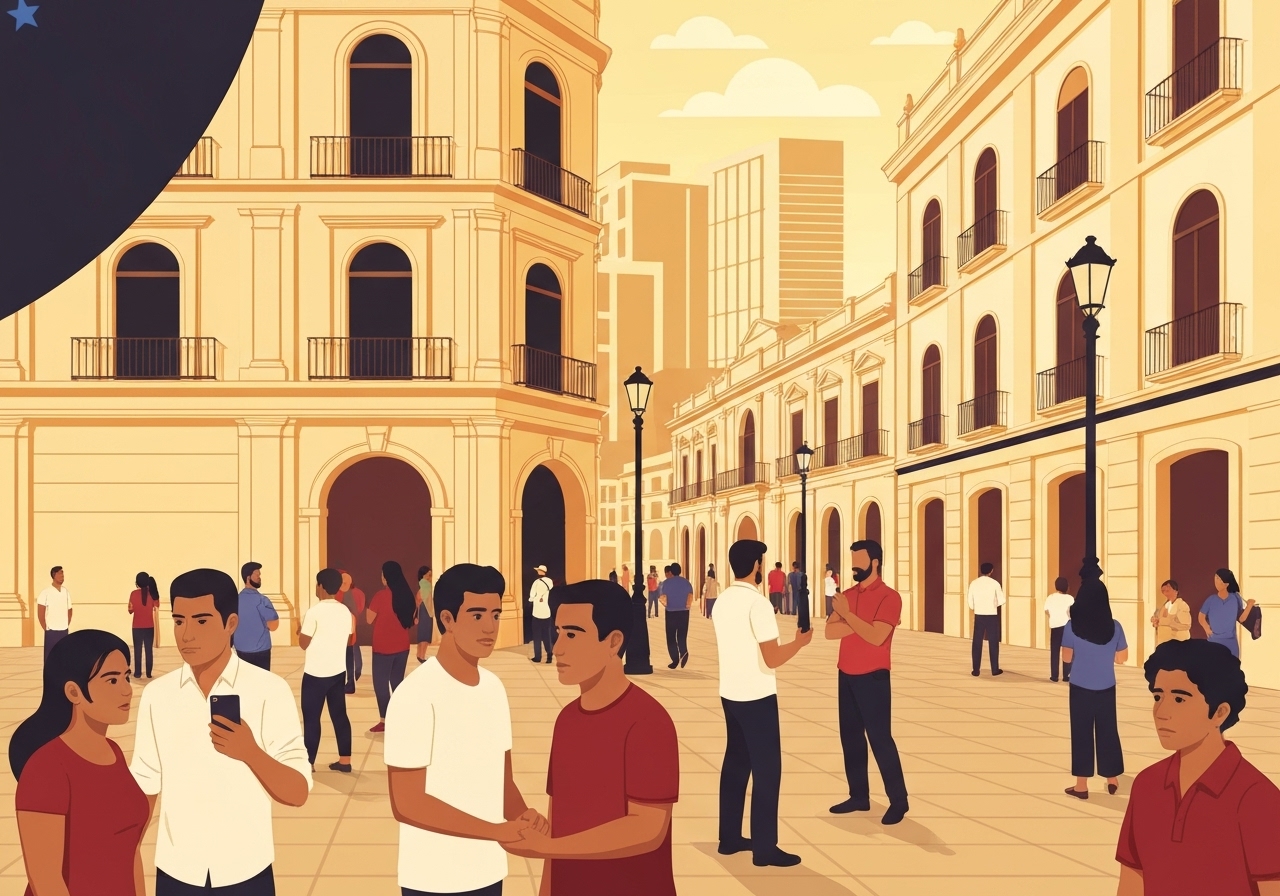
Venezuelans woke to uncertainty on Saturday after U.S. military forces captured President Nicolás Maduro, leaving the country’s 29 million people unsure who now holds authority. Venezuela’s high court ordered Vice President Delcy Rodríguez to assume the interim presidency, while President Donald Trump said Rodríguez had been in direct contact with U.S. officials and indicated Washington might work with her. Streets in Caracas emptied amid long queues at supermarkets and gas stations as residents braced for the next move. Tensions surged as government officials denounced the U.S. operation and loyalist commanders called for popular mobilization.
Key Takeaways
- U.S. military forces captured President Nicolás Maduro on Saturday; the operation followed earlier unrest and diplomatic pressure in a country of about 29 million people.
- Venezuela’s Supreme Court ordered Vice President Delcy Rodríguez to serve as interim president pending further legal steps; state media showed Rodríguez denying any U.S. aggression justification.
- President Trump told reporters he spoke with Rodríguez and said she indicated willingness to cooperate; Trump also dismissed opposition leader María Corina Machado’s readiness to lead.
- Senior Venezuelan officials, including Defense Minister Gen. Vladimir Padrino López and Interior Minister Diosdado Cabello, remained publicly defiant and called for street mobilization.
- Public reaction was mixed: some pro-government rallies and flag burnings were reported, while most residents stayed indoors, fearing more violence.
- Experts note the constitutional succession would normally trigger a new election within a month, but legal and practical obstacles remain amid foreign military intervention.
Background
Venezuela has racked up years of political and economic crises under Nicolás Maduro, who survived a 2019 bid to remove him, multiple army insurrections and extensive international sanctions. The state’s oil-dependent economy, collapsing public services and mass emigration have left the country politically fractured. Delcy Rodríguez has served as vice president since 2018 and has overseen key economic and security portfolios; she and her family have long been central figures in the Chavista leadership.
Rodríguez previously faced U.S. sanctions during Donald Trump’s earlier administration for actions accused of undermining democratic institutions. Over the years she cultivated contacts beyond Venezuela, including meetings with U.S. figures who at times sought back-channel arrangements. Meanwhile, opposition leaders such as María Corina Machado claimed a rival mandate after a disputed 2024 presidential contest, deepening the question of who could credibly assume power.
Main Event
On Saturday U.S. forces executed an operation that led to the capture of President Maduro, according to U.S. statements reported by international media. Immediately afterward, Venezuela’s Supreme Court moved to install Vice President Delcy Rodríguez as interim president under provisions for presidential absence. Rodríguez appeared on state television, surrounded by senior civilian and military officials, and denounced the U.S. raid as a breach of international law.
President Trump held a press conference in which he described a lengthy conversation between Rodríguez and U.S. Secretary of State Marco Rubio, quoting Rodríguez as saying, “We’ll do whatever you need.” Trump characterized Rodríguez as someone willing to cooperate with U.S. aims and questioned opposition leader María Corina Machado’s ability to govern. State television did not show any formal swearing-in ceremony for Rodríguez, and on-screen graphics continued to identify her as vice president.
Venezuelan military leaders responded with hardline language in video messages. Defense Minister Gen. Vladimir Padrino López vowed resistance and framed the operation as an attack on sovereignty, while Interior Minister Diosdado Cabello urged citizens to take to the streets and denounced the incursion. Some pro-government groups heeded that call, staging limited rallies and burning American flags in scattered locations around Caracas.
Analysis & Implications
The immediate consequence is a deepening of institutional ambiguity: a foreign power’s military action combined with competing domestic claims to authority creates a rare and unstable constitutional test. The Supreme Court’s order naming Rodríguez interim president follows the letter of succession rules, but those same rules presuppose ordinary domestic circumstances and a functioning legitimacy that is now contested by the scale and source of the intervention.
Rodríguez’s past—her international contacts, her sanctions record, and her control over economic and security portfolios—makes her a complex figure for both Venezuelans and foreign actors. To some in Washington she may appear as a pragmatic partner; to many inside Venezuela she remains a symbol of the ruling apparatus that has been blamed for years of repression and economic collapse. That dual perception complicates any transition that would rely on her leadership.
The armed forces are the pivotal institution. If the military ranks remain cohesive behind the Rodríguez-led command structure, domestic resistance may be limited and the new configuration could consolidate quickly. If, however, fragments of the military or regional commanders defect or withhold loyalty, Venezuela risks protracted fragmentation, localized violence and a governance vacuum that would exacerbate humanitarian needs.
Comparison & Data
| Metric | 1999–2002 | 2019–2025 | Jan 2026 (current) |
|---|---|---|---|
| Major uprisings or coup attempts | 1999–2002: frequent military unrest | 2019–2025: failed coup attempts, mutinies | U.S. military operation leading to Maduro’s capture |
| Population (approx.) | — | 29 million (2025) | 29 million |
| Constitutional succession timeline | Immediate interim steps | Contested application after external intervention | Supreme Court ordered Rodríguez interim |
The table above situates the current crisis within Venezuela’s recent history of coups and political instability. While past episodes involved primarily domestic actors, the January 2026 operation introduces a direct external military element that alters legal and diplomatic pathways normally available after a president’s removal.
Reactions & Quotes
“There is only one president in this country, and his name is Nicolás Maduro.”
Delcy Rodríguez, Vice President (state television)
Rodríguez used her televised remarks to reject the U.S. operation and demand the immediate release of Maduro and his wife, framing the action as a violation of international law.
“They have attacked us but will not break us.”
Gen. Vladimir Padrino López, Defense Minister
Padrino López, in military fatigues, appealed to national pride and the armed forces’ duty to defend sovereignty, signaling that key commanders remained aligned with the ruling coalition.
“I think it would be very tough for [Machado] to be the leader. She doesn’t have the support or respect within the country.”
President Donald Trump
Trump’s characterization of opposition leader María Corina Machado undercut expectations among some Venezuelan and international observers that U.S. action would quickly install an opposition-led democratic transition.
Unconfirmed
- Whether Delcy Rodríguez was formally and immediately sworn in as president on the day of the operation; state television and on-screen graphics did not show a ceremony.
- The precise content and context of the private conversation Trump described between Rodríguez and U.S. Secretary of State Marco Rubio; the claim is based on Trump’s account and has not been independently verified.
- Whether U.S. authorities intend to exercise direct control of Venezuelan governance beyond the immediate security operation; officials said nothing definitive on day one.
- The full whereabouts and legal status of Nicolás Maduro following reports of his capture; some details remain limited in public reporting.
Bottom Line
The combination of a U.S. military operation, a court-ordered interim appointment and competing political claims has thrust Venezuela into acute uncertainty. Constitutional mechanisms exist for succession and rapid elections, but their applicability is now contested by the extraordinary involvement of an external military actor and the polarized domestic balance of power.
Key indicators to watch in the coming days are the cohesion of Venezuela’s armed forces, whether Rodríguez consolidates cross-factional support, and the international community’s choices about recognition and humanitarian access. The path forward could range from a managed, if controversial, transition to prolonged fragmentation with significant humanitarian and regional consequences.
Sources
- NPR — U.S. media reporting on events, Jan. 4, 2026.