
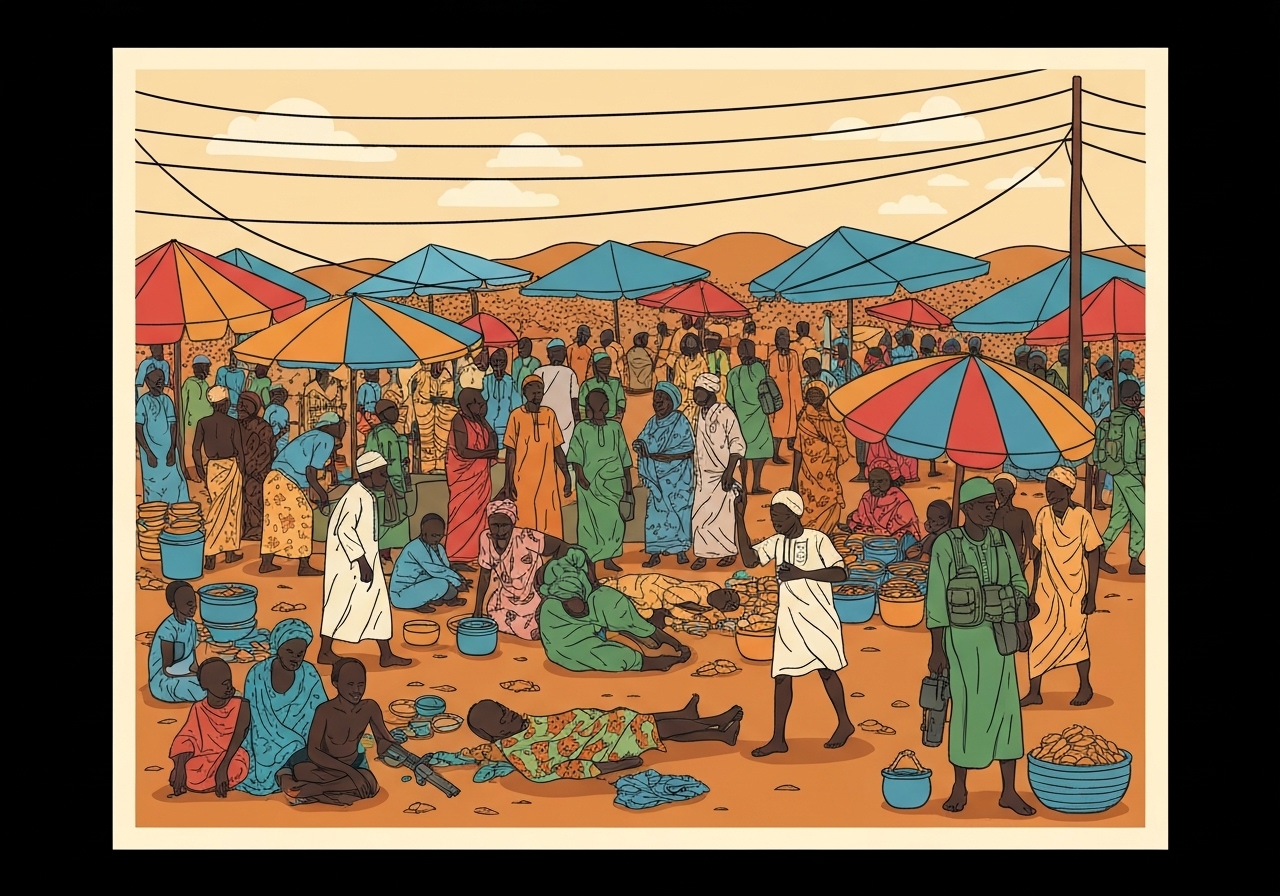
Lead: Armed assailants attacked Kasuwan-Daji village in Borgu local government, Niger state, on Saturday evening, killing at least 30 residents and abducting others, local authorities and church officials said. Witnesses reported the raid lasted up to three hours, with attackers razing the market and several houses before withdrawing toward nearby forest reserves. Police identified the attackers as gunmen operating from the National Park forest near Kabe district; survivors say security forces were slow to arrive. Local clergy and some residents put the toll higher, and several people remain missing.
Key takeaways
- At least 30 people were confirmed killed in the Kasuwan-Daji raid on Saturday evening; two residents told local media the toll could be 37 and church officials said it may exceed 40.
- Several villagers were abducted during the attack; local clergy reported some of the captives may be children.
- Attackers burned the village market and multiple homes, causing further displacement and destruction of livelihoods.
- Survivors said the assault lasted up to three hours and that bodies remain in the village because residents fear returning without visible security deployment.
- Police named Niger state spokesman Wasiu Abiodun in a statement and said officers were deployed to search for the kidnapped; residents dispute the timeliness of that response.
- The assailants reportedly came from the National Park forest along Kabe district, highlighting the use of remote forests as hideouts.
- The raid occurred near Papiri community, where more than 300 schoolchildren and teachers were kidnapped from a Catholic school in November, showing a pattern of attacks in the area.
Background
Niger state, in north-central Nigeria, has been affected for years by armed groups and criminal gangs that exploit scarce security presence in remote communities. Large, abandoned forest reserves and national parks have repeatedly been used as staging grounds and concealment areas for these networks. Local economies, heavily dependent on small markets and subsistence farming, are particularly vulnerable when marketplaces and homes are destroyed.
Nigeria has faced recurrent mass kidnappings and village raids across its northern and central belts; some episodes have involved hundreds of abducted schoolchildren and sustained cycles of retaliation. State and federal security forces have increased operations in recent years, but gaps in patrol coverage and coordination leave many rural settlements exposed. Community leaders, churches and traditional authorities often serve as first responders and recorders of casualties when official confirmation lags.
Main event
The attack on Kasuwan-Daji began on Saturday evening when a group of armed men entered the village and opened fire on residents, according to police and witness accounts. Residents told local media the gunmen moved through the settlement, setting fire to the local market and several houses before withdrawing toward the forested area near Kabe district. Witnesses said the assault lasted as long as three hours, and that many survivors fled into nearby bush to avoid capture.
Local police spokesman Wasiu Abiodun issued a statement saying officers were dispatched to search for the kidnapped and secure the area, but multiple residents said security forces had not yet arrived as of Sunday and remained skeptical of a rapid response. Rev. Fr. Stephen Kabirat of the Kontagora Diocese reported to local outlets that the death toll could be higher than official counts and that some abducted were children. Two named residents told reporters they counted 37 bodies and feared that more villagers remained missing.
Authorities attributed the attackers’ mobility to their use of dense parkland and forest reserves, which serve as cover and staging points for gangs operating across state borders. The proximity to Papiri — the site of the November mass school kidnapping of over 300 pupils and teachers — underscores a troubling pattern of attacks concentrated in this corridor. As of Sunday, many families remained in hiding and a full accounting of casualties and abductees was incomplete.
Analysis & implications
The Kasuwan-Daji raid illustrates persistent security vulnerabilities in rural Nigeria where limited state presence emboldens armed groups. Forested reserves and national parks create tactical advantages for attackers: they provide concealment, lines of retreat and areas to hold captives out of immediate reach of security forces. That geographic reality complicates rapid-response operations and sustained pursuit.
Economically, the destruction of the local market and homes will deepen hardship for households already coping with displacement and disrupted harvests. Markets in small towns are central to local exchange, and their loss can cascade into food insecurity and loss of income for traders and farmers. Reconstruction and relief will require prompt humanitarian access and resources to prevent longer-term displacement.
Politically, repeated high-profile raids and mass kidnappings erode public confidence in security institutions at both state and federal levels. Discrepancies between official statements and residents’ reports about security deployment risk inflaming distrust, complicating cooperation between communities and law enforcement. If unresolved, such incidents can increase local reliance on self-defense groups, with attendant risks of vigilante violence and further instability.
Comparison & data
| Incident | Date | Location | Reported deaths | Reported abducted |
|---|---|---|---|---|
| Kasuwan-Daji raid | Jan 3, 2026 | Borgu LGA, Niger State | 30 (official); 37–40+ (residents/clerics) | Several (including reports of children) |
| Papiri school kidnapping | Nov 2025 | Papiri, Niger State | 0 (no confirmed deaths reported in initial reports) | 300+ pupils and teachers |
The table shows the scale and typology differences: Kasuwan-Daji was a deadly raid with both killings and abductions, while the Papiri incident involved large-scale abduction of students. Both incidents highlight the recurring use of forested areas as operational bases. Accurate, consolidated tallies remain dependent on field verification and coordination between local leaders and official agencies.
Reactions & quotes
Local church leaders and residents have publicly decried the attack and called for faster, more visible security action. Their statements reflect both grief and frustration at perceived delays in official protection.
“The gunmen killed more than 40 people and several children were taken,”
Rev. Fr. Stephen Kabirat, Kontagora Diocese (as reported to local media)
The diocese spokesman’s higher toll contrasts with the police count and highlights the difficulty of immediate, independent verification in areas where survivors remain displaced or in hiding.
“Officers have been deployed to search for those kidnapped,”
Wasiu Abiodun, Niger State Police spokesman
The police statement announced deployment but residents on the ground told reporters they had not seen forces arrive by Sunday, underscoring a recurring gap between official notifications and on-the-ground perceptions.
Unconfirmed
- The precise death toll: some local witnesses and church officials claim 37–40+ fatalities; official police reports confirmed at least 30.
- The exact number and ages of abducted individuals, including reports that some were children, have not been independently verified.
- The timeline and scale of security deployments after the attack are disputed between police statements and resident reports.
Bottom line
The Kasuwan-Daji raid underscores the continuing threat posed by armed gangs in Nigeria’s interior and the strategic challenge posed by forested hideouts. Immediate priorities are verifying casualty and abduction figures, securing the site so families can recover the dead, and providing emergency shelter and humanitarian assistance to displaced residents.
Longer term, preventing repeats will require coordinated state and federal operations to deny insurgents sanctuary in parklands, improved rapid-response capability for rural communities, and investment in local early-warning and community policing mechanisms. Observers should watch for follow-up verifications from independent agencies and any changes in security posture from Niger state authorities.
Sources
- CNN — international news outlet reporting on the Kasuwan-Daji raid (media)
- Nigeria Police Force — official federal police website (official/security)
- Human Rights Watch — Nigeria — analysis and reporting on communal violence and kidnappings in Nigeria (NGO/analysis)