
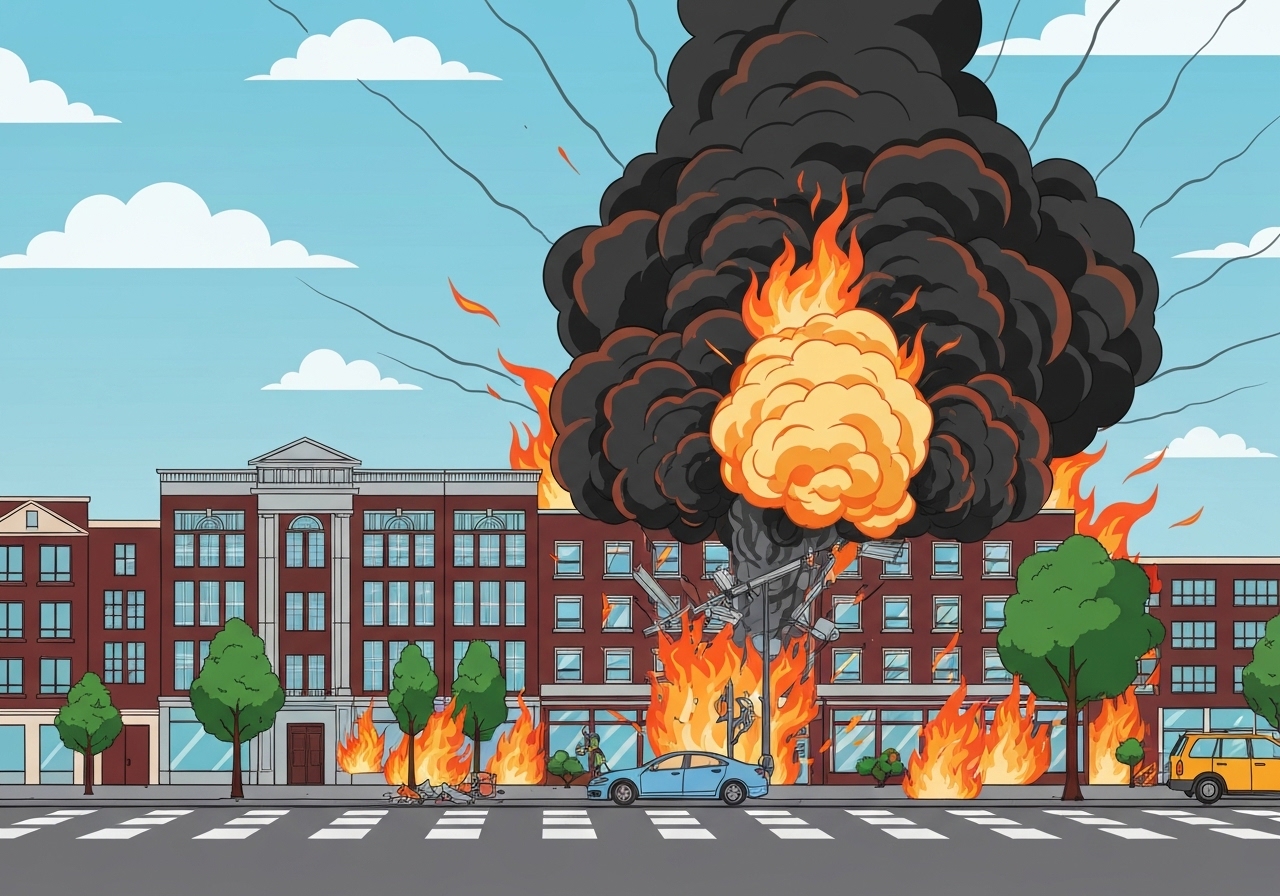
Lead: A large fire broke out after an explosion in the centre of Utrecht, near Visscherssteeg, one hour before this report, injuring at least four people and causing multiple building collapses. Emergency services say the cause is not yet known and have evacuated nearby residents while warning that structures remain unstable. Authorities reported extensive damage to shops and residences and warned that people may still be trapped under the rubble. Firefighters and safety teams have restricted access to the area because of the risk of further collapse.
Key Takeaways
- At least four people were injured in the explosion and subsequent fire; the injuries were reported by local emergency responders.
- The incident occurred near Visscherssteeg in Utrecht city centre, a densely built commercial and residential area.
- Several buildings have collapsed or suffered major structural damage, and some residents were evacuated by authorities.
- Emergency teams warned that people may remain under rubble and that search-and-rescue operations are ongoing.
- The local fire department reported it could not enter some damaged buildings due to danger of further collapse.
- Many nearby shops sustained damage, with windows and walls blown out in adjacent properties.
- No definitive cause has been established; investigations by safety officials are underway.
Background
Utrecht’s city centre contains narrow streets and mixed-use buildings where shops, offices and homes are closely interwoven. Such urban layouts can magnify damage from blasts and fires, complicating rescue and stabilisation efforts. Dutch emergency services maintain coordinated regional responses for urban incidents, drawing on fire, medical and structural assessment teams to manage hazards and evacuations. Previous urban fires and accidental explosions in European city centres have shown that containment, search operations and building-securement can take many hours to complete.
Local authorities typically secure perimeters quickly to limit civilian exposure and allow specialist teams to assess structural risks. In cases where collapse is likely, crews prioritize remote monitoring, controlled access and structural engineering surveys before sending personnel inside. Municipal officials also arrange temporary shelter and liaise with business owners on immediate relief and later compensation mechanisms. Criminal investigators and safety regulators often join technical teams if an explosion origin — such as a gas leak or an explosive device — needs to be determined.
Main Event
According to emergency dispatch logs and witness accounts, an explosion occurred in or adjacent to a building on Visscherssteeg and was followed immediately by a large fire. Witnesses described a very loud blast and widespread physical damage: windows and walls on several buildings were blown out, and debris littered the alley and adjoining streets. Local media reported that multiple storefronts and residences were damaged, and shop fronts in the immediate area showed signs of severe impact.
First responders arrived quickly and established a safety perimeter; however, the fire department said some structures were too dangerous to enter. That precaution has slowed direct search activity inside collapsed sections, while teams used remote detection and controlled entry where feasible. Evacuation orders were issued for nearby buildings and members of the public were told to avoid the area to allow rescue operations to proceed without hindrance.
Emergency services confirmed at least four people suffered injuries; authorities did not immediately release detailed information about the severity of those injuries. Rescue workers continued to search the rubble where collapse occurred, with officials warning that the total number of affected residents and workers remains uncertain. Investigative units from municipal safety authorities and police were deployed to preserve evidence and begin establishing a timeline for the blast and ensuing fire.
Analysis & Implications
The immediate humanitarian priority is rescue and medical care for the injured and any people still trapped; that effort is complicated by unstable structures. If people remain under debris, prolonged search operations could extend for many hours and require specialist collapse-rescue teams and equipment. The requirement to keep teams out of unstable buildings also increases reliance on remote sensing and structural engineers to determine safe entry points.
Economic and social fallout may be significant for local businesses and residents: damaged shops in a city-centre alley can see weeks or months of lost trade and costly repairs. Insurance claims, municipal emergency relief and potential temporary relocation will all affect recovery timelines. For historically dense European centres, even moderate structural damage can trigger broader conservation and planning concerns where listed or older buildings are involved.
From a regulatory and investigative perspective, authorities will seek to determine whether the blast had an accidental origin (for example, a gas leak or equipment failure) or another cause that requires criminal inquiry. Findings could prompt inspections of nearby utility networks and reviews of building safety compliance. In the short term, municipal services will likely increase street closures, inspections and public information updates as they balance public safety with the need to resume normal activity.
Comparison & Data
| Metric | Reported |
|---|---|
| Injuries | At least 4 |
| Buildings collapsed | Several (exact number pending) |
| Evacuations | Multiple nearby residences and shops |
| Cause | Unknown — under investigation |
The table above summarises confirmed figures released by local responders at the scene. Additional data such as exact casualty counts, full structural-assessment results and economic loss estimates will emerge as investigators complete site examinations and officials compile damage reports.
Reactions & Quotes
“We are treating multiple injured and have secured the perimeter; some buildings cannot be entered because of the collapse risk.”
Utrecht emergency services (official)
This statement outlines why search activity is constrained and why authorities are prioritising safety before sending crews into unstable structures.
“There was an enormous blast and the whole alley looked destroyed — shops and windows were smashed.”
Local eyewitness, reported to RTL/Volkskrant
Eyewitness descriptions have helped authorities identify the most heavily affected areas for initial search-and-rescue focus, but such accounts are observational and do not establish cause.
“Investigators are on site to determine the origin of the explosion and coordinate structural surveys.”
Municipal safety authority (official)
Officials emphasised that technical teams from multiple agencies are involved and that public updates will follow as evidence is reviewed.
Unconfirmed
- Any specific cause of the explosion — reports of a gas leak or faulty equipment are not confirmed by investigators.
- The exact number of people still under rubble remains unverified and is the subject of ongoing searches.
- Full counts of displaced residents and precise estimates of economic loss to shops are not yet available.
Bottom Line
The explosion and subsequent fire in Utrecht’s Visscherssteeg area produced immediate human harm and significant structural damage, with at least four people injured and several buildings collapsed. Emergency responders face a complex task: rescuing potential victims while ensuring crews are not endangered by unstable structures. Authorities must balance rapid search-and-rescue with careful, technical assessment to avoid further casualties.
Investigations into the cause are in their early stages; findings will determine whether the incident spurs regulatory action, utility inspections or criminal inquiries. In the coming days, expect official briefings on casualty updates, structural assessments and plans for local recovery and support for affected residents and businesses.
Sources
- BBC News (International news outlet)
- RTL News (Dutch broadcaster / media reports)
- De Volkskrant (Dutch newspaper / media report)
- NOS (Dutch public broadcaster / media report)
- Municipal safety authority — Utrecht (Official local authority updates)