
Lead
Pamela Anderson said she felt uncomfortable after spotting Pam & Tommy creator Seth Rogen at the 2026 Golden Globes and left soon after presenting an award. In a SiriusXM interview with Andy Cohen, Anderson described the Hulu dramatization of her life as depicting “the worst time” she endured and said it was made without her consent. She recounted leaving the Beverly Hilton, going straight to bed and later reflecting that the encounter made her feel “a little yucky.” Anderson also noted she has been busy with new work but that the series still stung.
Key Takeaways
- Pamela Anderson, 58, told Andy Cohen on SiriusXM she felt uneasy seeing Seth Rogen, 43, at the Golden Globes on Jan. 11, 2026.
- Anderson said Pam & Tommy dramatized what she called “the worst time” in her life and that the project was made without speaking to her first.
- She left the ceremony after presenting Best Actress in a Motion Picture, Musical or Comedy to Rose Byrne and returned to her hotel room.
- Anderson said she completed five movies in the previous year, underscoring that ongoing work has kept her busy.
- The exchange was discussed during a studio visit on Jan. 14, 2026 in New York City; the full interview was scheduled to air Jan. 20, 2026.
- Anderson has previously spoken about the Pam & Tommy dramatization and expressed no desire to watch versions of that period, citing privacy and emotional harm.
Background
The controversy centers on a dramatized series about Anderson’s life that revisits a 1995 incident in which a private homemade sex tape was stolen and circulated. Anderson has long objected to public exploitation of that episode, arguing her privacy and emotional wellbeing were not respected. The recent Hulu series — described by Anderson as semi-fictionalized — renewed debate over whether and when producers should dramatize traumatic real-life events without the subject’s involvement.
Creators, studios and platforms often defend dramatic retellings as creative expression or public interest storytelling, while subjects and privacy advocates highlight consent, accuracy and compensation. Anderson has used multiple platforms to set her perspective, including a Netflix documentary she participated in and media interviews, and she told Entertainment Tonight in 2023 that she had no desire to watch the Hulu show.
Main Event
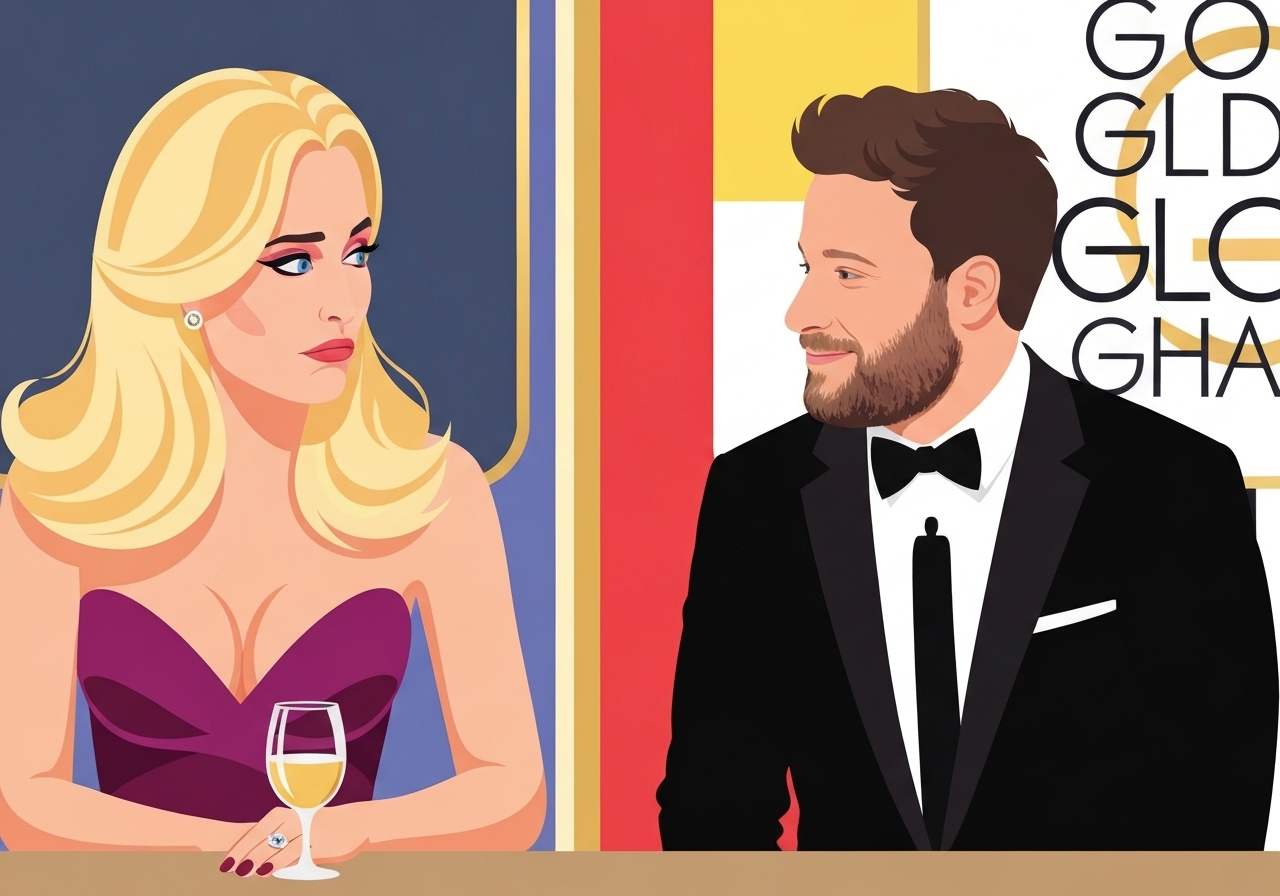
At the 83rd Golden Globe Awards on Jan. 11, 2026, Anderson presented the award for Best Actress in a Motion Picture, Musical or Comedy to Rose Byrne, then departed the ceremony. In comments made during a studio appearance on Andy Cohen’s SiriusXM show, Anderson said that seeing Seth Rogen — who was publicly tied to the Pam & Tommy dramatization as a creator — made her feel uncomfortable and prompted her to leave and rest instead of lingering.
Anderson described being seated close enough to Rogen to notice him in the audience but said she did not approach him directly at the event. She recalled mentally rehearsing what she might say and indicated she had strong emotional reactions to the idea that someone could dramatize a painful period of her life without consulting her. She characterized her feelings with words like “weird” and “yucky,” while also emphasizing she would not let the encounter derail her broader priorities.
During the interview, Andy Cohen and Anderson exchanged observations about public figures’ expectations of privacy. Anderson reiterated that being famous does not justify dramatizing “your darkest, deepest secrets” for entertainment and said the series had “pissed her off a little bit.” Cohen suggested a direct apology from Rogen might carry weight, but Anderson kept her response measured, noting complicated feelings and a desire to move forward.
Analysis & Implications
The episode highlights persistent tensions between creative industries and personal privacy. Producers may argue dramatizations contribute to cultural conversation or historical record, but subjects can reasonably contest portrayals that reopen trauma. Anderson’s reaction underscores that even dramatized or semi-fictional projects can have real emotional consequences for people depicted.
For awards shows and other public gatherings, the incident illustrates how industry spaces can become charged when creative choices intersect with subjects’ unresolved grievances. Moments of proximity between creators and those portrayed can trigger public scrutiny and pose reputational risks for both sides — the creator for perceived insensitivity and the subject for publicly airing private pain.
Commercially, controversies like this can boost attention and viewership for dramatizations while alienating the people whose stories are told. Ethically, they raise questions about consent, the responsibilities of platforms and the standards producers should adopt when transforming real trauma into entertainment. A visible apology or reconciliation might reduce tension, but it does not erase the underlying debate about consent and control over personal narratives.
Comparison & Data
| Year | Event |
|---|---|
| 1995 | Private homemade sex tape involving Pamela Anderson and Tommy Lee was stolen and circulated. |
| 2023 | Anderson spoke publicly about the episode and was featured in a Netflix documentary recounting her perspective. |
| 2026 | Anderson attended the Golden Globes (Jan. 11) and discussed feeling uncomfortable about seeing series creator Seth Rogen during a SiriusXM studio visit (Jan. 14); interview aired Jan. 20. |
This timeline places the Golden Globes encounter in a larger sequence of public reckonings over how media retell past events. The table above avoids assigning causality but clarifies the sequence of public statements, dramatizations and Anderson’s recent comments.
Reactions & Quotes
“I felt a little bit weird about it… I just felt like, ‘I’m not chopped liver over here.'”
Pamela Anderson, SiriusXM interview
Context: Anderson used this phrasing to describe feeling overlooked and upset that a dramatized series covered a painful chapter without her involvement.
“An apology from him might mean something.”
Andy Cohen, SiriusXM host
Context: Cohen suggested that a direct apology could hold emotional value; Anderson said she might welcome contact but remained focused on her work and well-being.
Unconfirmed
- Whether Seth Rogen or other producers will directly apologize to Pamela Anderson has not been confirmed publicly beyond Anderson’s expectation or hope.
- Details of any private conversations or outreach between Anderson and the Pam & Tommy creative team prior to or during production remain unverified here.
Bottom Line
Pamela Anderson’s account of feeling “yucky” after seeing a creator associated with a dramatization of her trauma underscores the human cost behind entertainment stories. The encounter at the Golden Globes is less about a single awkward moment than about how media industries handle living subjects’ painful histories.
Moving forward, producers and platforms face mounting pressure to consider consent and sensitivity when adapting real-life tragedies, while award shows and public events will likely continue to spotlight the uneasy proximity between creators and those whose stories they tell. For Anderson, the episode reaffirmed a longstanding grievance and served as a reminder that not all publicity is harmless.
Sources
- Yahoo News UK — UK news outlet reporting on Anderson’s interview and Golden Globes appearance.
- People — US entertainment news outlet; original People article with interview excerpts and contextual reporting.