
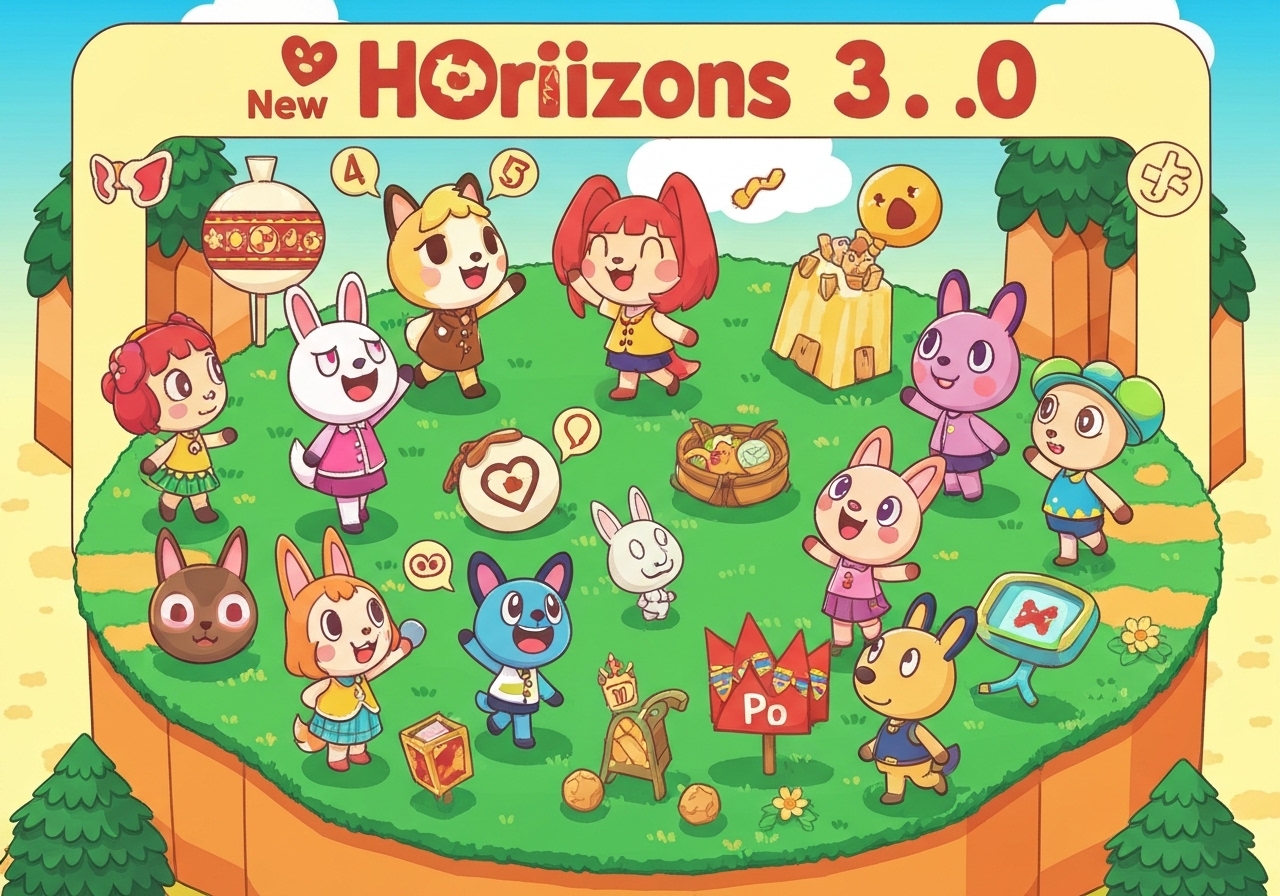
On Jan. 14, 2026, Nintendo released the free Animal Crossing: New Horizons 3.0 update one day ahead of its announced schedule, giving players early access to a package of new features. The following day, Jan. 15, the Switch 2 edition of New Horizons also went live, offering upgraded visuals, mouse support and expanded multiplayer. The 3.0 update adds a new resort hotel on the pier, additional items and quality-of-life changes, plus a shared “Slumber Island” space for building with others. Nintendo is positioning the releases to re-engage lapsed players and support cross-generation play on Switch 2.
- The 3.0 content update launched on Jan. 14, 2026—one day earlier than the previously announced date.
- The Switch 2 edition became available on Jan. 15, 2026, alongside the 3.0 update.
- Upgrading an existing copy to the Switch 2 edition costs $5; a first-time Switch 2 purchase is priced at $65.
- New Horizons 3.0 introduces a pierside resort hotel, new decor items, and Slumber Island for communal island-building.
- Switch 2 unlocks mouse controls, GameChat functionality, and raises online multiplayer capacity from eight players to 12.
- The 3.0 update is distributed as a free software update accessible from the game’s Switch home-screen icon.
Background
Animal Crossing: New Horizons exploded in popularity during the early months of the 2020 global lockdowns, becoming a cultural touchstone for remote socializing. Since that peak, Nintendo has steadily updated the title with seasonal events and paid expansions to keep players engaged, while many casual players drifted away as life normalized. The 3.0 expansion and a new Switch 2 edition are part of Nintendo’s strategy to rekindle interest among former players and to offer a refreshed experience on its latest hardware. Major changes in the Switch 2 edition—visual refinements, new input options like mouse support, and expanded multiplayer—are aimed at modernizing the game without altering its core cozy-simulation design.
Past updates set a precedent: Nintendo has previously used both free updates and paid upgrades to extend longevity and monetize new platform versions. The mixed model—free content for existing software combined with a modest paid upgrade for the new console—mirrors approaches seen in other Nintendo franchises when a hardware transition occurs. Key stakeholders include Nintendo’s internal teams, the existing New Horizons community, and potential new Switch 2 adopters who might be tempted by improved visuals and online features. Retail pricing decisions—$5 for upgrades and $65 for a full purchase on Switch 2—reflect Nintendo’s effort to keep the barrier to entry low for returning players.
Main Event
On Jan. 14, 2026, the 3.0 update began rolling out globally as a free download; players were instructed to select the New Horizons icon on their Switch home screen to fetch the update. The headline addition is a customizable resort hotel located on the pier, which players can help design and furnish, introducing new social and creative objectives within the game economy. The update also brings Slumber Island, a dreamlike shared island space where friends and family can collaborate on fresh island builds without impacting their primary island saves. Numerous new furniture items and quality-of-life adjustments arrived alongside these features, addressing long-standing community requests about inventory and interaction convenience.
The Switch 2 edition became available the next day, Jan. 15, enabling enhanced visuals, mouse input, and GameChat. Nintendo increased the online multiplayer cap from eight to 12 players in this edition, a concrete change that expands in-game gatherings. Existing owners are offered a $5 upgrade path to the Switch 2 edition, while newcomers can buy the Switch 2 version outright for $65. Nintendo confirmed the timing in its announcements and marketing materials; distribution channels include the Nintendo eShop and digital storefronts tied to users’ Nintendo Accounts.
Players reported immediate access to the new content and began sharing screenshots and impressions within hours of the rollout. Early downloads proceeded without widespread reports of technical issues, and the presence of both free 3.0 content and a low-cost upgrade appears designed to smooth the transition for players across both console generations. Nintendo’s messaging emphasized continuity—preserving island saves and social features—while highlighting the incremental benefits of Switch 2 hardware.
Analysis & Implications
Nintendo’s dual release strategy—free content for all and a small paid upgrade for the new console—reduces barriers for returning players while creating a revenue opportunity tied to platform migration. The $5 upgrade price is modest relative to typical full-game prices, which should encourage many existing players to move to Switch 2 while keeping community cohesion intact. By expanding multiplayer from eight to 12, Nintendo addresses a practical limit that had constrained larger gatherings; this could influence how players organize events and could modestly increase in-game activity metrics.
Visually, the Switch 2 enhancements are positioned to attract players who prioritize presentation and new control options such as mouse support and GameChat. These additions align New Horizons with contemporary expectations for social and creative games, especially on newer hardware. However, the success of this relaunch depends on reactivating a large swath of lapsed users; historical patterns suggest any sustained resurgence will rely on continuous feature support and community-driven events rather than a single update.
Economically, the release could produce a short-term bump in digital sales and in-game commerce as players acquire new items and customization options. Longer-term effects hinge on Nintendo’s post-launch roadmap: steady seasonal content, community tools, and cross-generation compatibility will be key to retaining engagement. Internationally, the low upgrade price helps standardize experiences across regions where Switch 2 adoption may vary, potentially minimizing fragmentation of the player base.
| Item | Date | Price / Change |
|---|---|---|
| New Horizons 3.0 (free update) | Jan. 14, 2026 | Free |
| Switch 2 edition release | Jan. 15, 2026 | $65 (full); $5 upgrade |
| Multiplayer capacity | Jan. 15, 2026 (Switch 2) | Expanded from 8 to 12 |
The table highlights the core dates, pricing, and the concrete multiplayer change. These elements frame Nintendo’s immediate commercial and technical offer to both returning and new players.
Reactions & Quotes
Community response was immediate, with many players noting excitement about the resort feature and Slumber Island collaboration tools.
“The resort and Slumber Island give players more reasons to revisit and rebuild together.”
Community posts / social feeds
Industry coverage emphasized the timing and the modest upgrade price as strategic moves by Nintendo to bridge console generations.
“Nintendo’s small upgrade fee and cross-generation updates aim to keep New Horizons accessible while nudging users to Switch 2.”
Engadget (technology press)
Nintendo’s official communications framed the releases as continuity-focused, preserving player islands while enhancing features on newer hardware.
“Switch 2 users will see improved visuals and new input options, with island saves maintained across versions.”
Nintendo (official announcement)
Unconfirmed
- Whether the 3.0 update will meaningfully restore peak-level concurrent player numbers from 2020 is unknown and unconfirmed by Nintendo.
- Exact performance metrics (frame rates, resolution targets) for the Switch 2 edition have not been published in detail by Nintendo and remain unverified.
- Long-term retention effects tied specifically to the resort and Slumber Island features are speculative until Nintendo releases engagement data.
Bottom Line
Nintendo’s early release of the Animal Crossing: New Horizons 3.0 update on Jan. 14, 2026, followed by the Switch 2 edition on Jan. 15, combines free content with a low-cost upgrade path to encourage players back into the game. The addition of a customizable resort, Slumber Island collaboration tools, and an expanded multiplayer cap to 12 on Switch 2 are clear, concrete incentives for social play and content creation. While the move is unlikely to replicate the unprecedented peak popularity seen in 2020, it is a pragmatic approach to sustain and potentially grow the community as Nintendo transitions to new hardware.
For players, the practical next steps are simple: download the free 3.0 update from the New Horizons icon on your Switch home screen, and consider the $5 upgrade if you plan to play on Switch 2 to take advantage of the expanded features and larger multiplayer sessions. Observers should watch Nintendo’s post-launch support cadence and any forthcoming engagement metrics to judge whether this relaunch achieves a durable comeback.
Sources