
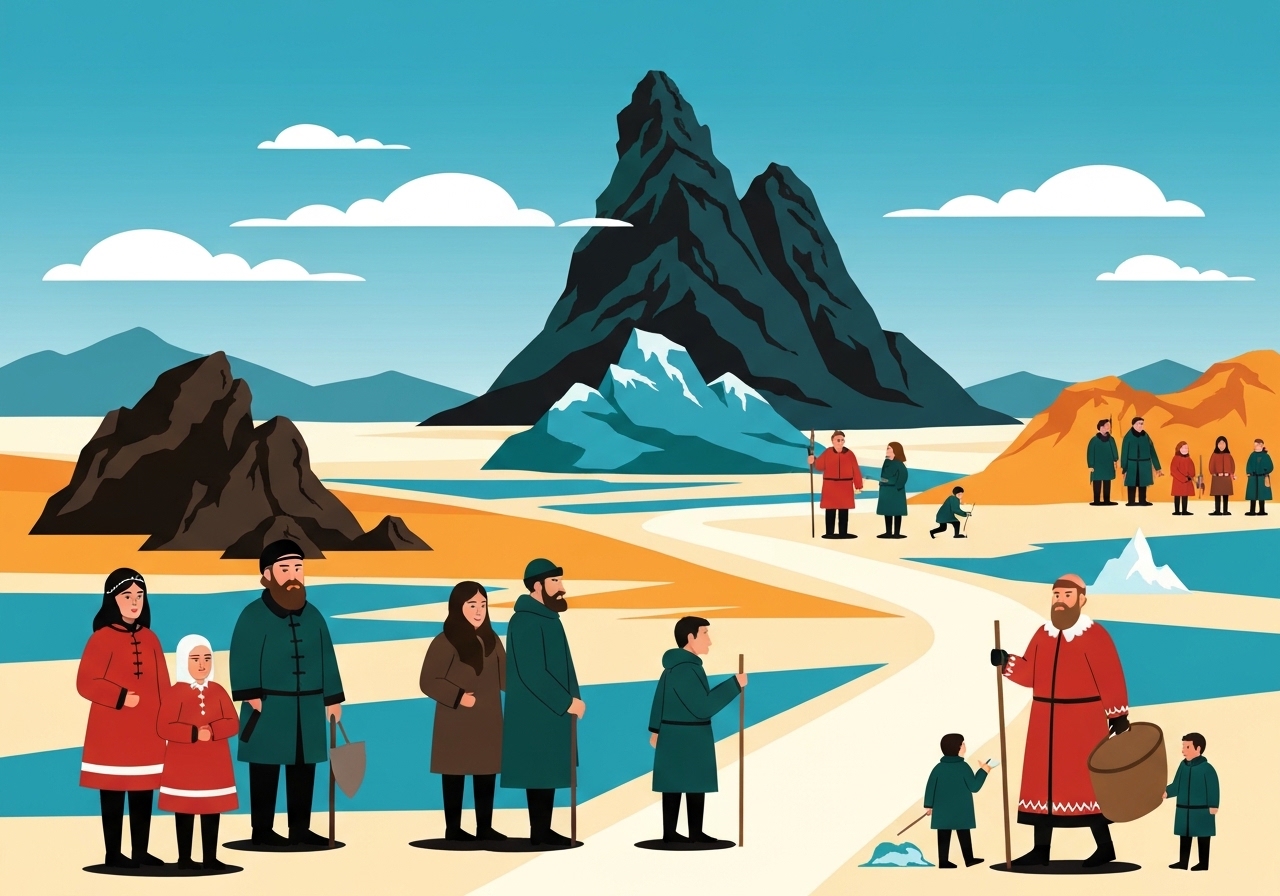
Lead: Greenland’s story stretches from Norse settlers to a modern U.S. interest that resurfaced in 2026. Viking colonist Erik the Red established a Norse presence on the island more than 1,000 years ago; his son Leif Eriksson later reached North America roughly five centuries before Columbus. Researchers from Harvard and Penn State link part of the medieval Norse departure from Greenland to sea-level changes about 400 years after initial settlement. In early 2026, renewed attention arrived in Washington as envoys linked to President Donald Trump held talks with Danish and Greenlandic officials about the island’s strategic future.
Key Takeaways
- Erik the Red founded the Norse settlement in Greenland around the late 10th century; his son Leif Eriksson reached North America roughly 500 years before Columbus.
- Academic teams from Harvard and Penn State report that rising sea levels were a contributing factor in the Norse abandonment of parts of Greenland about 400 years after settlement.
- In January 2026, representatives associated with President Trump met with Danish and Greenlandic ministers in Washington to discuss the island’s strategic and economic position.
- A Reuters/IPSOS poll in January 2026 found about one in five Americans support U.S. attempts to acquire Greenland.
- Historical memory and Greenlandic self-rule make any transfer of sovereignty politically and legally complex; Denmark and Greenland both assert strong interests in the island’s future.
Background
Erik the Red, born in Norway and later expelled from Iceland for violent conflict, is credited in Norse sources with establishing the first permanent Scandinavian settlements in Greenland in the late 10th century. He reportedly chose the name—often translated as “Greenland”—and his lineage included Leif Eriksson, who voyaged to North America centuries before Columbus. The Norse settlements persisted for several centuries but eventually contracted and then disappeared from the historical record.
Recent palaeoenvironmental and archaeological work has revisited the reasons for the Norse retreat. Studies by researchers at Harvard and Penn State cite climate variability and rising local sea levels among several factors that undermined coastal farms and hampered supply networks roughly four centuries after initial settlement. These findings place the Norse experience inside longer-term environmental change rather than attributing their departure to a single cause.
In the modern era Greenland’s strategic value has grown because of its Arctic location, mineral potential and maritime routes. Greenland has had increasing autonomy since the late 20th century under arrangements with Denmark; questions about sovereignty, resource rights and foreign partnerships are tightly contested among Greenlandic political leaders, Copenhagen and external powers.
Main Event
In mid-January 2026, a delegation associated with President Donald Trump met in Washington with Danish and Greenlandic foreign ministers to discuss matters tied to Greenland’s security and economic future. Reports said the U.S. side included well-known political figures acting as intermediaries. Danish and Greenlandic officials described the talks as serious but noted differences over the island’s status and any proposals that implied changes in sovereignty.
The meetings followed heightened public attention to Greenland in recent years. For many Danes and Greenlanders the idea that Greenland could be bought or transferred remains politically fraught and symbolically sensitive. Danish leaders have reiterated that Greenland is part of the Kingdom of Denmark and that major decisions require consultation with Greenlandic authorities.
Public polling in January 2026 showed limited U.S. popular support for American acquisition: roughly 20 percent of respondents backed an effort to acquire the island. Greenlandic political leaders emphasized that their priorities are local governance, economic development and sustainable resource management rather than transfer of territory to another state.
Analysis & Implications
Strategically, Greenland sits astride Arctic sea lanes and offers potential access to mineral deposits and other resources—factors that elevate its profile as Arctic competition intensifies. Any renewed U.S. drive to increase influence there must grapple with Greenland’s autonomous institutions and Denmark’s legal prerogatives, making a formal purchase impractical without a lengthy political transformation.
Domestically in the United States, low public support for dramatic action on Greenland limits political momentum for a costly or diplomatically risky move. The January 2026 poll showing roughly one in five Americans in favor suggests the issue is peripheral for most voters, even if it attracts headline attention in Washington and abroad.
For Greenlanders, the central questions are economic opportunity and self-determination. External offers or pressure—real or rhetorical—can prompt domestic debates about development priorities, indigenous rights and environmental protection. Greenlandic leaders have repeatedly signaled that outside proposals must respect local decision-making and international law.
Regionally, increased great-power interest in the Arctic raises the stakes for NATO partners and Arctic Council members. Denmark’s response will influence relations with Washington and with Beijing and Moscow, both of which also watch developments in the Arctic for strategic reasons. The diplomatic fallout from high-profile initiatives can strain alliances if partners view proposals as unilateral or dismissive of established processes.
Comparison & Data
| Item | Approximate date | Relevant figure |
|---|---|---|
| Norse settlement begins | Late 10th century | Erik the Red |
| Leif Eriksson reaches N. America | ~11th century | ~500 years before Columbus |
| Norse contraction/abandonment (partial) | ~400 years after settlement | Linked to sea-level and climate shifts (research) |
| U.S. public support for acquisition | January 2026 | ~20% (Reuters/IPSOS) |
The table above places key moments on a concise timeline and summarizes current polling. While the medieval timeline is derived from Norse sagas and archaeological dating, modern public-opinion numbers come from contemporary polls and should be read as snapshots rather than immutable trends.
Reactions & Quotes
Participants on all sides framed the Washington meetings as diplomatic but tense, with officials stressing the need to respect Greenlandic agency and Danish responsibilities.
“Greenland is not for sale.”
Mette Frederiksen, Prime Minister of Denmark (public statement)
That succinct reiteration of Danish policy has been invoked repeatedly in discussions of any proposed transfer of territory and signals Copenhagen’s red line on sovereignty questions.
“Rising sea levels and changing local conditions likely played a role in the Norse withdrawal from parts of Greenland.”
Harvard and Penn State research teams (study summary)
Researchers emphasize a multi-causal explanation for the medieval contraction, with environmental stressors interacting with economic and social factors to reshape settlement viability.
“Only a minority of Americans back efforts to acquire Greenland, and that colors Washington’s options.”
Reuters/IPSOS poll analysis (media)
Poll analysts note that while the topic generates headlines, it does not command broad public support in the United States, limiting the political appetite for large-scale commitments.
Unconfirmed
- Any formal, imminent U.S. plan to purchase Greenland has not been publicly confirmed by the U.S. government as of January 16, 2026.
- Reports that specific high-level bilateral agreements were finalized in the Washington meetings remain unverified; officials described talks as exploratory.
Bottom Line
Greenland’s past and present show how geography, environment and politics intersect across centuries. The Norse experience illustrates the island’s vulnerability to environmental change, while the 2026 diplomatic attention underlines Greenland’s continuing geopolitical significance.
Practical change in Greenland’s international status would require consent from Greenlandic institutions and Denmark and encounter legal, political and ethical constraints. For now, the immediate consequence of the January meetings is heightened diplomatic attention and renewed public debate rather than an enforceable shift in sovereignty.
Sources
- POLITICO — “From Erik the Red to Donald the Orange” (Declassified humor column; media)
- Reuters/IPSOS poll reporting (media coverage of January 2026 poll)
- Harvard University — research team (academic research on Norse Greenland; institutional source)
- Penn State University — research team (academic research on Norse Greenland; institutional source)
- Gallup (1999 public-opinion archive; research organization)