
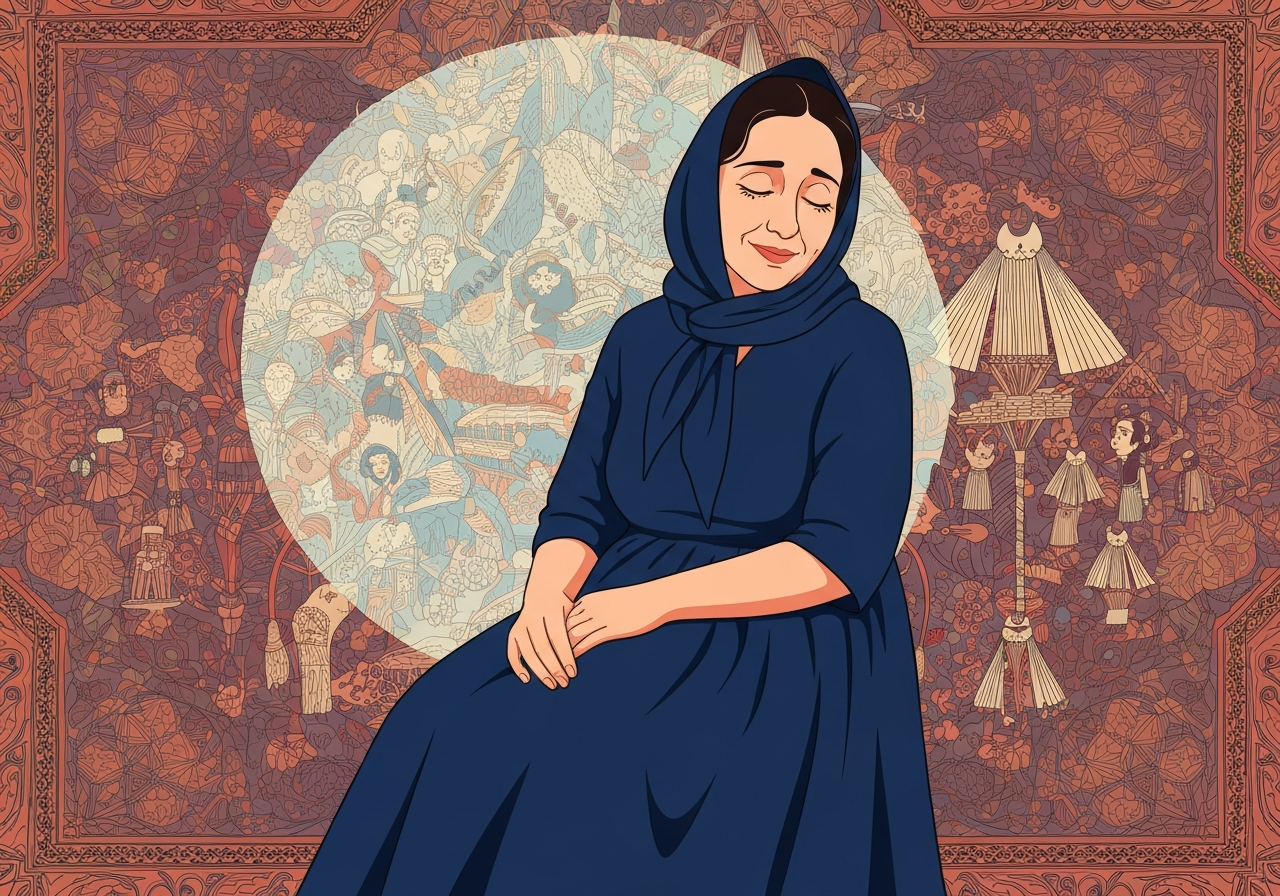
Marjane Satrapi, the French-Iranian graphic novelist, filmmaker and artist whose memoir Persepolis reshaped global views of Iran, has died aged 56. Relatives told AFP she had “died of sadness” after the death of her husband, Swedish producer Mattias Ripa, who died on 8 April last year. The news prompted tributes from across French politics and culture, including from President Emmanuel Macron and parliamentary leaders. Satrapi’s work — from the 2000 Persepolis memoir to a celebrated animated adaptation and later films such as Radioactive (2019) — made her an international voice on Iran, exile and women’s rights.
Key Takeaways
- Marjane Satrapi died at age 56; family informed AFP that she had “died of sadness” following the death of her husband, Mattias Ripa, who died on 8 April last year.
- Born in Rasht, Iran, in 1969, Satrapi left Iran as a teenager, settled in France in 1994 and became a French citizen in 2006.
- Her 2000 graphic memoir Persepolis sold millions of copies worldwide and became a defining portrayal of Iranian life after the 1979 revolution.
- Satrapi co-directed the animated Persepolis film (released 2007) and was among the first women nominated for the Academy Award for Best Animated Feature.
- She directed five feature films, including Radioactive (2019) starring Rosamund Pike, and coordinated the 2024 collaborative graphic volume Woman, Life, Freedom.
- French leaders and writers, including President Emmanuel Macron and novelist Margaret Atwood, publicly paid tribute to her contribution to art and human rights.
Background
Marjane Satrapi was born in 1969 in Rasht, near the Caspian Sea, and grew up in Tehran in a family that combined technical and creative professions: her father worked as an engineer and her mother was a dress designer. Sent abroad as a teenager by her parents to avoid the increasing social restrictions after the 1979 Iranian revolution, she pursued art education in Europe and later settled in France in 1994. Her bicultural life — rooted in Iran but lived largely in Europe — became a central theme of her storytelling.
Persepolis, first published in 2000, emerged from this personal history as a starkly drawn, candid memoir that used black-and-white comics to chronicle childhood, political upheaval and exile. Its accessibility and moral clarity helped it cross cultural boundaries: western readers encountered a humanized, individual perspective on Iran that challenged prevailing stereotypes. Over two decades Satrapi moved between comics, film direction and public cultural engagement, consistently linking creative work with political concern, particularly for women’s rights.
Main Event
Relatives provided a statement to the French press agency AFP saying Satrapi had “died of sadness” after the death of her husband, Mattias Ripa, who died on 8 April last year. In late April of that year, messages posted to Satrapi’s Instagram referenced the loss, including the line: “For I lost the love of my life.” The family wording has been widely reported; no medical cause beyond the family description has been issued publicly.
News of Satrapi’s death drew prompt responses from French political and cultural figures. President Emmanuel Macron described her as “a great artist who turned her Iranian childhood into a universal tale,” praising her irony, tenderness and the way readers identified with her work. Yaël Braun-Pivet, president of the French National Assembly, highlighted Satrapi’s framing of Persepolis as “an act of freedom” and a voice for women’s dignity.
Peers and writers also responded. Margaret Atwood emphasized the resonance between Satrapi’s lived experience and the themes of repression and courage in her work. French commentators and fellow artists recalled Satrapi’s public presence at rallies, including demonstrations in Paris in support of Iranian women in 2022, and her sustained cultural solidarity with Iranians campaigning for rights and recognition.
Analysis & Implications
Satrapi’s death marks the loss of one of the most visible cultural intermediaries between Iran and the West. Persepolis functioned as a corrective to one-dimensional depictions of Iran by centering personal memory and moral nuance; its commercial success — selling in the millions — showed substantial global appetite for intimate, illustrated testimony about life under and after revolution. That reach amplified Iranian voices and influenced how subsequent generations of writers and artists approached testimony and exile.
Artistically, Satrapi’s work helped legitimize graphic memoir as a serious literary form in international markets. The animated film adaptation broadened her audience and established a precedent for adult-oriented, politically engaged animation. Her place in Academy Award history as among the first women nominated in Best Animated Feature signalled a breakthrough for creators working outside major studio systems.
Politically, Satrapi’s persistent critique of Iran’s clerical leadership aligned her with activist currents, especially after the 2022 death in custody of Mahsa Amini and the ensuing protests. Her coordination of Woman, Life, Freedom in 2024 connected artists, academics and activists across borders, using cultural production to sustain solidarity and international attention for rights-based demands inside Iran. The long-term effect is likely to be sustained artistic reference points for advocacy as well as a younger generation of Iranian and diasporic creators citing her as an influence.
Comparison & Data
| Work | Year | Notable outcome |
|---|---|---|
| Persepolis (graphic memoir) | 2000 | International bestseller; millions of copies sold |
| Persepolis (animated film) | 2007 | Academy Award nomination for Best Animated Feature |
| Radioactive (feature film) | 2019 | Directed by Satrapi; starred Rosamund Pike |
Placed side by side, Satrapi’s comics and films show a trajectory from personal memoir to internationally distributed cinema and collaborative activist publishing. Her commercial and critical milestones — especially the film’s Oscar nomination — helped open institutional doors for graphic-novel adaptations and for women directors working in animation and art-house cinema.
Reactions & Quotes
“A great artist who turned her Iranian childhood into a universal tale … the author created a moving world with which readers identified.”
Emmanuel Macron, President of France
Macron’s tribute framed Satrapi’s work as culturally formative in France and beyond, highlighting the blend of tenderness and irony that many reviewers noted in her storytelling.
“Marjane Satrapi had turned her work into an act of freedom. With Persepolis, she had given a face and a voice to the Iranian revolution.”
Yaël Braun-Pivet, President of the French National Assembly
Braun-Pivet focused on the civic and symbolic role of Satrapi’s work in giving public visibility to protest and claims for women’s dignity.
“Persepolis made a huge impact … her work is more pertinent than ever.”
Margaret Atwood, novelist
Atwood placed Satrapi’s narratives in a wider literary conversation about repression and resistance, underlining the contemporary relevance of her storytelling.
Unconfirmed
- The family statement that Satrapi “died of sadness” reflects relatives’ account; there has been no publicly released medical confirmation of cause of death.
- Social-media posts attributed to Satrapi expressing personal grief have been cited by outlets; full context and provenance for every post have not been independently authenticated in public reporting.
Bottom Line
Marjane Satrapi’s death removes one of the most prominent cultural translators of contemporary Iran: an artist who transformed personal memory into works that reached millions and influenced public understanding. Persepolis and its adaptations remain key reference points for how comics, film and testimony can shape international debate about politics, human rights and gender.
Her combination of artistic craft, political engagement and international visibility left both a creative legacy and a set of institutional precedents — in publishing, film festivals and transnational solidarity work — that younger creators and activists will continue to draw on. In the short term, expect renewed attention to her books and films, and continued use of her work as a cultural touchstone in discussions about Iran and diasporic expression.
Sources
- The Guardian — International newspaper reporting on Satrapi’s death and tributes (primary obituary source).
- Agence France-Presse (AFP) — International news agency; reported family statement to AFP about Satrapi’s death (family/press statement).
- Academy of Motion Picture Arts and Sciences — Official record of Academy Award nominations, including Persepolis’ nomination (official institution).