
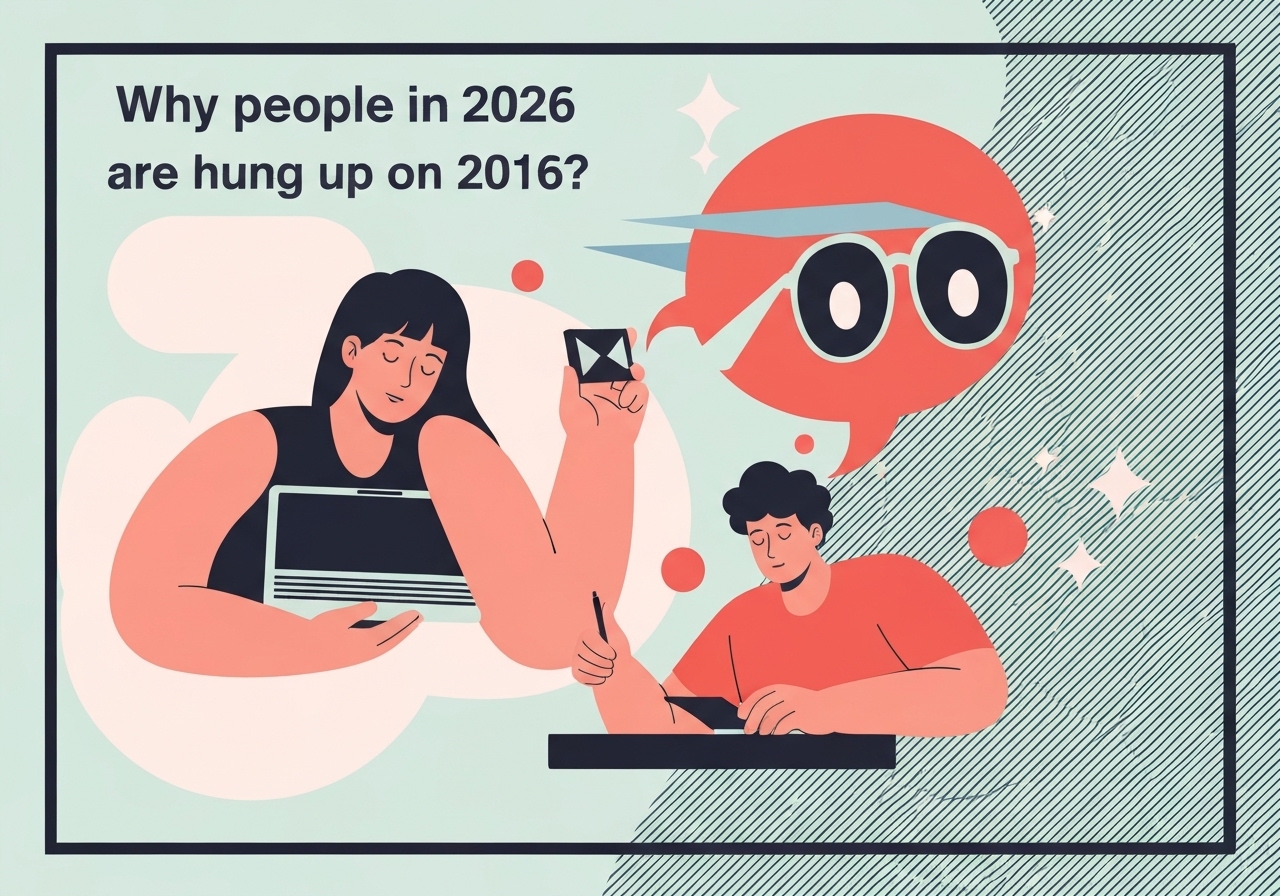
Ten years after a culturally vivid and politically turbulent 2016, people across the United States and beyond are resurfacing photographs, memes and memories that recast that year as a simpler, more pleasurable moment. The trend has been visible on social platforms in early 2026, where celebrities and ordinary users alike posted throwbacks to 2016 aesthetics, shared feelings of wistfulness and compared that era to the present. Those posts recall bright pop-culture touchstones — from Beyoncé’s Lemonade and the Pokémon Go craze to hopes for the first woman president — even as 2016 also contained acute national traumas such as the Pulse nightclub shooting and the deaths of major artists. The result: an online wave of nostalgia that is at once playful, selective and politically freighted.
Key Takeaways
- Social-media users and celebrities in early 2026 have reposted 2016 photos and memories, citing a sense of cultural ease and shared reference points.
- 2016 is remembered for major pop-culture moments — Beyoncé’s Lemonade, Pokémon Go, and prominent celebrity events — alongside grim developments like the Pulse nightclub massacre and high-profile musician deaths.
- Some celebrities who posted 2016 throwbacks highlighted specific milestones, such as Kylie Jenner marking the launch of her lip kit that helped build her business profile.
- Academics warn that the trend involves selective memory; nostalgia often compresses complexity and downplays political and social fractures that were already present in 2016.
- Scholars argue the year is portrayed as a “last good year” because it immediately preceded deep political realignments, including Brexit and the election of Donald Trump, which reshaped public discourse.
- Responses to the trend are polarized online: many celebrate the lightness of the era, while others critique what they see as revisionist nostalgia.
Background
In 2016, mainstream cultural life produced several highly visible moments that remain reference points a decade later. Pop releases such as Beyoncé’s Lemonade and mass phenomena like Pokémon Go created shared experiences across platforms; celebrity-driven narratives — beauty launches, fashion moments and viral feuds — dominated feeds. At the same time, 2016 was politically consequential: the U.S. presidential election and the Brexit referendum reshaped party politics and public debate, and commentators say those events accelerated the fusion of politics and culture.
That mixture of widely shared pop culture and escalating political conflict helps explain why 2016 persists in memory. The year also included tragedies that left lasting scars: the Pulse nightclub attack became the deadliest mass shooting in U.S. history at the time, and the passing of artists such as Prince and David Bowie intensified a sense of loss for some communities. For many, these contrasts — lighthearted viral trends alongside deep national ruptures — make the year feel like a hinge moment between two eras.
Main Event
The early-2026 wave of posts began when numerous public figures and ordinary accounts started reposting images from 2016, often with brief captions that mixed fondness and irony. High-profile examples included Kylie Jenner marking the lip-kit era that helped shape her fortune; supermodel Karlie Kloss sharing fashion-era snapshots such as chokers and playful Snapchat filters; and actors posting behind-the-scenes photos tied to hit shows. Those reposts spread quickly as followers reshared and riffed on the same visual cues.
The tone of many posts emphasized a more carefree style: heavier makeup, grainier phone photos, and social media moments that felt more communal than the highly segmented feeds of 2026. Creators and fans framed these aesthetics as costumes to try on, or as reminders of personal milestones. Some users explicitly said they missed that perceived simplicity, while others acknowledged that the nostalgia glosses over real problems that existed then and now.
Academics and observers have framed the trend as both cultural recycling and a form of selective remembering. Jessica Maddox, an associate professor who studies media and culture at the University of Georgia, noted that sharing old photos can be a way to narrate life chapters to new followers — but cautioned that nostalgia rarely reproduces the original feeling intact. Dustin Kidd, a sociology professor and pop-culture scholar at Temple University, described the impulse to call 2016 the “last good year” as shorthand for the moment before seismic political shifts remade everyday cultural life.
Analysis & Implications
The longing for 2016 reflects more than fashion or music: it signals how people seek coherence in fractured media landscapes. In 2016, many users congregated around a smaller set of platforms and shared moments; by 2026, platforms and content ecosystems have multiplied and become more adversarial. That fragmentation intensifies perceptions of cultural decline, even if some dimensions of everyday life — technology, entertainment options, or public health realities — have objectively changed.
Politically, framing 2016 as a last bright moment serves both personal and collective functions. For individuals it provides a comforting narrative of a pre-crisis past; for publics, it can function as a way to identify a before-and-after turning point. Scholars caution that this framing risks eliding inequality, violence and other harms that were present in 2016 and that continued or worsened later. Treating 2016 as a monolithic “good year” also flattens the varied experiences of different social groups.
Economically and commercially, the trend is likely to be monetized. Brands and creators can repack 2016 aesthetics into products, festival lineups and marketing campaigns that sell longing as a commodity. That dynamic raises questions about who profits from nostalgia and whether the cycle of reviving past styles distracts from addressing present policy challenges and cultural harms.
Comparison & Data
| 2016 Cultural Markers | Why They Matter |
|---|---|
| Beyoncé’s Lemonade | Broad cultural conversation around race, gender and artistry |
| Pokémon Go | Widespread augmented-reality craze that produced shared outdoor engagement |
| Pulse nightclub massacre | Major national trauma that shaped debates on safety and gun violence |
| Celebrity beauty and fashion trends | Visible markers of social-media-driven entrepreneurship and identity |
Viewed together, these markers show why 2016 feels like a single, recognizable moment: several cultural threads converged into easily shared references. That convergence made for a looser sense of a collective internet experience, which many now contrast with a more splintered and contentious online public sphere in 2026.
Reactions & Quotes
Public reaction to the nostalgia wave has been mixed: some commentators celebrate the chance to reminisce, while others see it as a sanitized retelling. The debate itself illustrates how online spaces have become sites of rapid contestation, where even an ostensibly apolitical photo can prompt politicized responses.
“Nostalgia is always complicated, because we think that by doing or consuming something, we can have the same feeling we had back then, which can never be the case.”
Jessica Maddox, University of Georgia (academic)
Maddox’s comment accompanied her own 2016 throwback, which she said served to explain a life event — a hand cast from a serious injury — to followers who met her later. Her reflection captures the personal motivations behind many posts: storytelling for new audiences rather than a straightforward yearning for a lost era.
“When people refer to it as the ‘last good year,’ I feel like maybe what we’re really saying is — it was the last time before there was a seismic shift in American politics.”
Dustin Kidd, Temple University (academic)
Kidd’s framing links the cultural impulse to political developments such as the Brexit referendum and the U.S. election, underlining how changes in governance and media ecology can reshape collective memory.
Unconfirmed
- Whether the majority of 2016 posts are driven by sincere longing rather than calculated branding is not confirmed and varies by account.
- Claims that 2016 was objectively “better” for everyone lack empirical support and are shaped by selective memory and demographic differences.
- The long-term cultural impact of the 2026 reposting trend — whether it will reshape markets or remain a short-lived meme — remains uncertain.
Bottom Line
The 2016 throwback trend in 2026 reveals how collective memory, media change and commercial incentives interact. People are drawn to shared cultural anchors from that year because they provide quick, comforting shorthand for a moment when online life felt more unified.
At the same time, scholars and critics warn against mistaking curated nostalgia for a full account of the past. The popular framing of 2016 as a final, golden moment before a darker political era is emotionally powerful, but it often obscures the continuities of social conflict and the uneven experiences of different communities. Observing that nuance helps explain why the trend both resonates and provokes debate.