
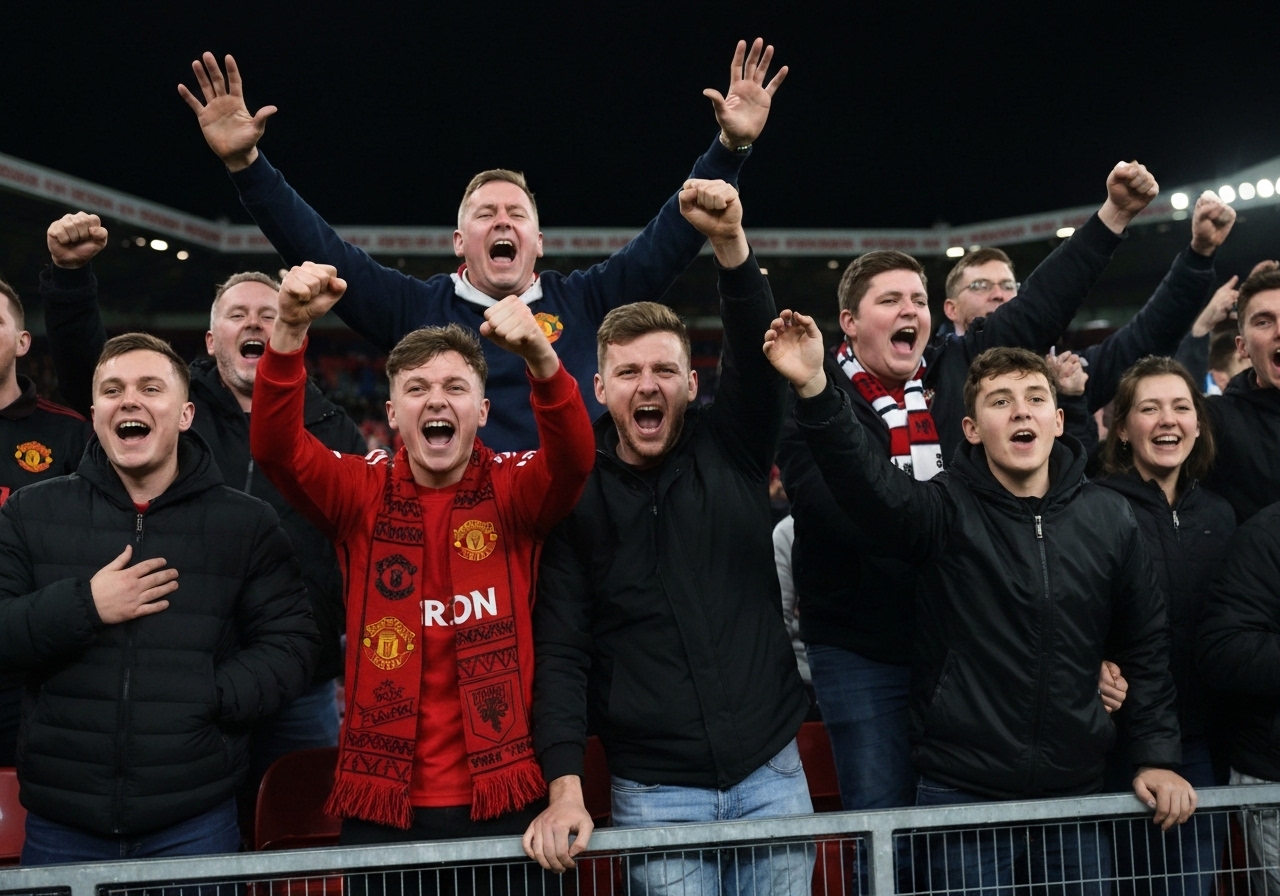
Lead: Manchester United delivered a striking response at Old Trafford on Saturday as interim head coach Michael Carrick opened his spell with a 2-0 win over Manchester City. The victory, achieved on Carrick’s first full week working with the squad, halted City’s momentum in the title race and revived United’s hopes of reaching the Champions League places. Goals from Bryan Mbeumo and a late finish set up by Patrick Dorgu secured the result. The match altered the immediate landscape ahead of Arsenal’s trip to Nottingham Forest and left City facing a quick return to European action.
Key Takeaways
- Final score: Manchester United 2, Manchester City 0 — a decisive derby win at Old Trafford that boosted United’s European qualification hopes.
- Carrick impact: Michael Carrick began work on Wednesday and implemented a structured 4-2-3-1 that became a 4-4-2 out of possession; United managed just 28% possession in the first half yet created multiple clear chances.
- Goals: Bryan Mbeumo opened the scoring on a swift four-v-two transition assisted by Bruno Fernandes; the second came when Patrick Dorgu outpaced Rico Lewis and supplied Matheus Cunha’s finish.
- City issues: Pep Guardiola’s side struggled to control the game; Rodri was unusually loose in the first half and the visitors’ final third passing lacked precision.
- Haaland substitution: Erling Haaland, who completed only 15 touches, was withdrawn in the 80th minute along with Jeremy Doku and Bernardo Silva — a substitution pattern that signalled City could not overturn the deficit.
- Discipline: Diogo Dalot received a yellow card for a high challenge in the 11th minute; Luke Shaw was booked six minutes later, forcing tactical adjustments to protect the full-backs.
- Defensive grit: Casemiro, Harry Maguire and Lisandro Martínez produced committed defensive interventions, consistently blocking shots and making slide tackles to repel City pressure.
Background
Manchester United appointed Michael Carrick as interim head coach with a short-term mandate to steady a turbulent season and try to secure Champions League qualification. Carrick’s promotion followed a run of inconsistent results under the previous permanent manager, and the club’s leadership made clear that immediate improvement was the priority. Derbies at Old Trafford often produce defining moments for managers, and United have historically responded to the unique intensity of these fixtures with heightened discipline and commitment.
Pep Guardiola’s Manchester City arrived at Old Trafford seeking to regain ground on league leaders Arsenal and to apply pressure before Arsenal’s away match later the same day. City’s season has been characterised by dominant possession and fine margins in the final third; when those margins narrow, Guardiola’s side typically rely on positional rotation and technical control to find openings. The fixture carried extra weight for both clubs: United needed points to keep their European aspirations alive, while City required consistency to sustain a title challenge.
Main Event
Carrick set United up in a 4-2-3-1 that functioned as a 4-4-2 without the ball, prioritising compact defending and quick, vertical transitions. Bruno Fernandes operated as the creative fulcrum, choosing moments to press and moments to drop, which helped United strike on the break. In the opening phase Harry Maguire’s header from a corner rattled the woodwork, signalling United’s threat from set pieces as well as in transition.
City attempted to control territory through Bernardo Silva and Rodri, and Rico Lewis was squeezed inside at times to facilitate ball circulation. Yet Rodri looked below his usual sharpness in the first half, and one careless pass handed United their clearest early chance. When City did find possession close to goal their passing in the final third was imprecise and they failed to manufacture a meaningful shot on target during decisive periods.
The first goal came from a swift counter: Fernandes threaded a weighted pass on a four-v-two break to Bryan Mbeumo, who finished with his left. United’s second goal materialised when Patrick Dorgu outpaced Rico Lewis in the box and provided the decisive touch to Matheus Cunha’s cross. After those strikes City pushed harder, but Guardiola’s substitutions at the 80th minute — replacing Jeremy Doku, Bernardo Silva and Haaland with Rayan Ait-Nouri, Divine Mukasa and Tijjani Reijnders — suggested the manager believed the match was beyond rescue.
Analysis & Implications
Carrick’s immediate tactical imprint was to compress space centrally and invite City to play in wider zones where United could defend in numbers. That approach exploited City’s occasional fragility when forced to create from stretched positions rather than the close, patient sequences that typically break opponents down. The result underscores how a compact defensive base combined with focused transitional moments can neutralise a possession-dominant opponent.
For City, the defeat highlighted two issues: when Rodri and Bernardo Silva are not at their peak in controlling tempo, City’s shape becomes vulnerable, and their final-third execution can suffer. Guardiola’s side usually expects to dominate possession and wear teams down; here they were repeatedly disrupted and could not convert spells of control into clear scoring opportunities. The timing and nature of the late substitutions — including removing Haaland after 15 touches — was interpreted by many as an admission the game could not be turned around.
The result has immediate competitive consequences. City missed a chance to close the gap on Arsenal, while United’s three points materially improve their position in the fight for Champions League qualification with 17 league games left for Carrick to influence outcomes. Psychologically, the win could galvanise United in short-term fixtures, but sustained recovery will require consistency in selection, discipline to avoid suspensions and continued alignment of tactics with player strengths.
Comparison & Data
| Metric | United | City |
|---|---|---|
| First-half possession | 28% | 72% |
| Erling Haaland touches (full match) | 15 touches | |
| Yellow cards (notable) | Diogo Dalot (11′), Luke Shaw (17′) | — |
The table highlights how United surrendered possession in the first half yet still manufactured clear chances by remaining compact and exploiting transitions. Haaland’s low touch count reflects City’s limited service into the penalty area; disciplinary cautions early in the match required United to manage the right flank carefully for the remainder of the game.
Reactions & Quotes
“Today was special — trying to put an imprint on the team quickly and gather everybody together.”
Michael Carrick, Manchester United interim head coach (post-match)
Carrick framed the win as an early step rather than a definitive turnaround, stressing the need for regularity. He emphasised collective effort from staff and players in implementing a clear gameplan within days of taking charge.
“They were better today in key moments; we have the duty to analyse the game and learn from the actions that cost us goals.”
Pep Guardiola, Manchester City manager (post-match)
Guardiola accepted that individual and team errors contributed to the defeat and underlined the club’s responsibility to review the match decisively. His substitutions were described in context as choices to change the dynamic, though they were widely read as an acknowledgement the match was slipping away.
“The tackle was high across the kneecap; at normal speed you can’t always tell. He was very lucky not to receive a red.”
Mike Dean, former Premier League referee (commentary on Dalot challenge)
Commentators noted Diogo Dalot’s early booking for a high challenge on Jeremy Doku and suggested United were fortunate to keep all eleven on the field, a factor that influenced later tactical conservatism.
Unconfirmed
- Whether Carrick will remain in the role beyond the end of the season has not been decided and remains subject to club discussions.
- The precise tactical reason for Haaland’s substitution — whether purely tactical or partly precautionary — has not been fully explained by City’s staff.
- Any long-term changes to United’s lineup or transfer plans as a direct result of this single result are speculative until the club provides further comment.
Bottom Line
Michael Carrick’s first match in charge delivered a clear, practical blueprint: compact defending, disciplined pressing triggers and quick, decisive transitions. Those principles produced two well-taken goals and a performance that masked United’s relative lack of ball retention by maximising efficiency in key moments. For United, the win is both a points boost and a morale lift at a critical junction of the season.
For Manchester City the loss is a reminder that dominance of possession does not guarantee control of outcomes when tempo, precision and certain individual performances dip. Guardiola’s substitutions and post-match comments acknowledged shortcomings but also framed the result as analyzable rather than catastrophic. The immediate impact on the title race and United’s Champions League push makes the coming fixtures — Arsenal for United and Bodo/Glimt for City — particularly consequential for both clubs.