
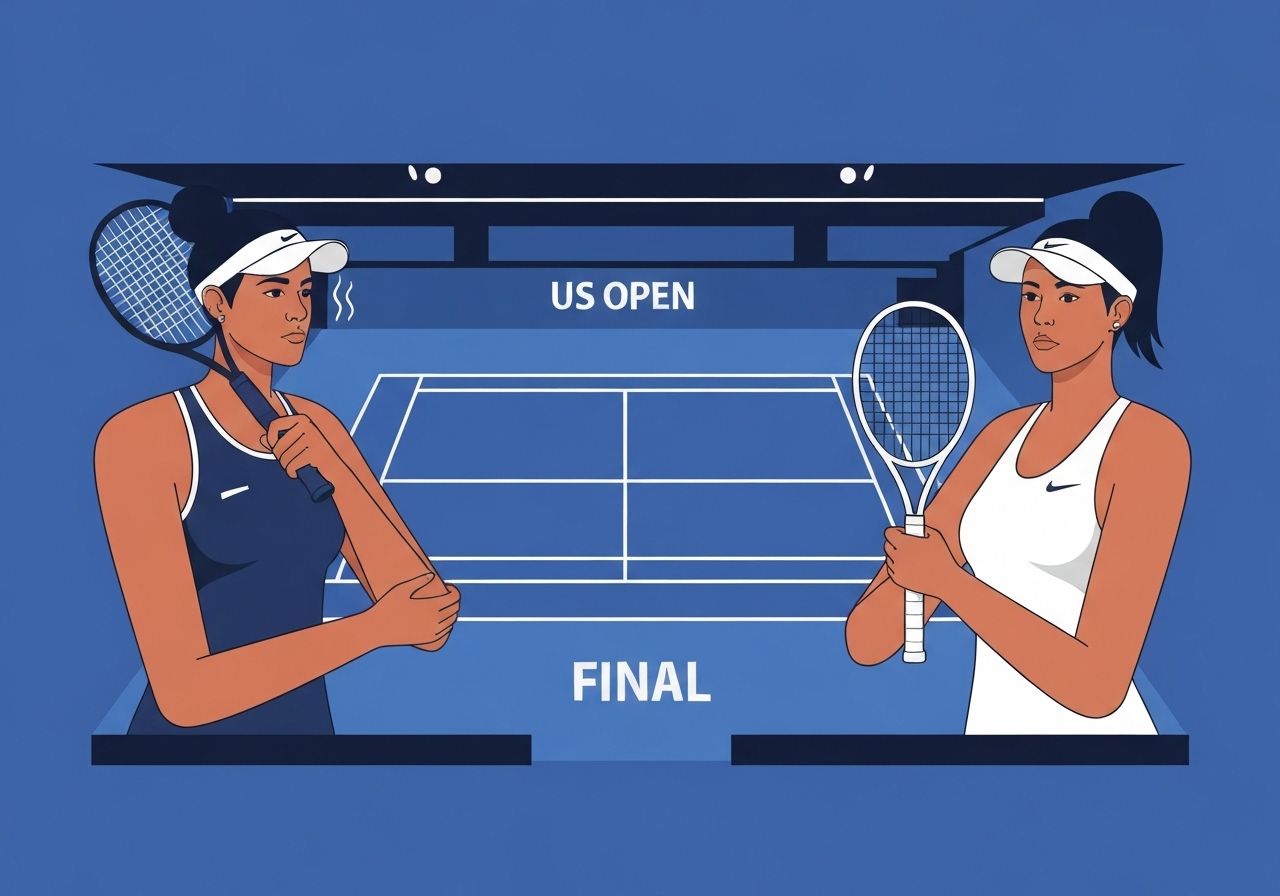
— Amanda Anisimova, 24, arrives at the US Open final at Flushing Meadows on Saturday after a rapid recovery from a humiliating Wimbledon exit and a run of high-quality wins; she meets world No 1 and defending champion Aryna Sabalenka with a chance to win a first grand slam on home soil.
Key takeaways
- Anisimova, 24, reached the US Open final after a string of aggressive, early-strike performances.
- She suffered a 6-0, 6-0 defeat to Iga Swiatek in the Wimbledon final earlier this year but has rebounded strongly.
- Sabalenka is world No 1, a three-time major champion and the defending US Open champion.
- Sabalenka beat Jessica Pegula in the semi-final; Anisimova recorded notable victories in earlier rounds, including a tight late-night win over Naomi Osaka.
- Anisimova leads their head-to-head 6-3 and defeated Sabalenka less than two months ago in a high-stakes meeting.
- Mental-strength work since an eight-month break in 2023 is a recurring theme in Anisimova’s recovery and current form.
- Both players carry recent pressure: Anisimova seeks redemption, Sabalenka seeks to erase past final-stage struggles.
Verified facts
Amanda Anisimova’s run at the 2025 US Open has been defined by aggressive timing and a willingness to take the ball early. Observers have noted her two-handed backhand as a particularly potent weapon; she used it to dictate rallies and generate pace in several matches en route to the final.
Earlier in 2025 at Wimbledon Anisimova lost the final 6-0, 6-0 to Iga Swiatek. That defeat was widely discussed as a low point, but Anisimova has publicly addressed the loss and adjusted her preparation since.
Aryna Sabalenka enters the final as the world No 1 and defending champion. She is a three-time major winner and has reached six consecutive hard-court major finals and four of the last five major finals overall — a record that underlines her consistency at the highest level.
On the semi-final day at Flushing Meadows, Sabalenka defeated Jessica Pegula in a match where her power and willingness to take control in key moments were decisive. Anisimova’s semi-final and quarter-final results included a late-night victory over Naomi Osaka, a match that stretched close to 1am and tested her endurance and composure.
Context & impact
For Anisimova, the final represents a second chance at a grand slam title on American soil and a test of the mental work she began after stepping away from the tour for eight months in 2023. Her progress since that break has been cited by coaches and commentators as evidence of improved emotional regulation and match toughness.
Sabalenka’s record shows she reaches finals regularly, but she has also shown signs of vulnerability in big matches, sometimes succumbing to nerves under match-closing pressure. Winning on Saturday would both reinforce her status at the top and address questions about her ability to deliver when expectations are highest.
Sports-business and endorsement implications are consequential: a US Open champion on home soil or a reaffirmed world No 1 winner would attract headlines, sponsorship attention and ranking-security effects ahead of the indoor season.
Match tactics to watch: Anisimova’s early ball-striking and directional variety versus Sabalenka’s serve and flat, powerful groundstrokes. Whoever controls the pace and court position is likely to tilt the contest their way.
“I think most players are putting a lot of pressure on themselves…those few days before the tournament are pretty stressful,”
Amanda Anisimova
Unconfirmed
- Some summaries conflate the timing of Anisimova’s wins and losses this season; a few reports mix matches from different tournaments. Readers should treat sequencing details from secondary reports with caution.
- Any speculation about off-court reasons for form swings beyond Anisimova’s publicly discussed mental-health break is unverified.
Bottom line
The US Open final on Saturday is a clear crossroads: Anisimova can convert a recent recovery into historic reward, while Sabalenka can silence recurring doubts about delivering in finals. The match should be decided by which player seizes the initiative early and sustains composure in pivotal games.