
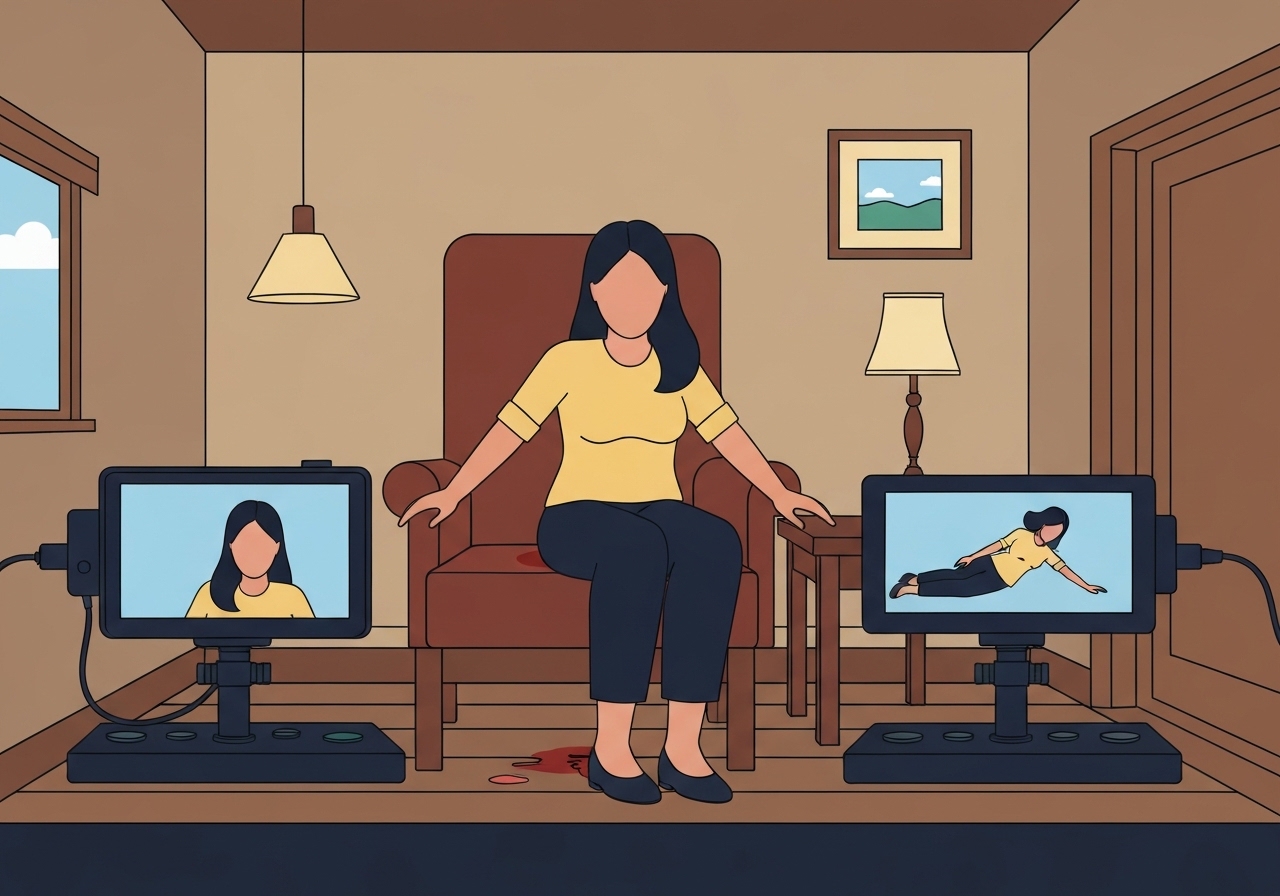
On Aug. 10, 2013, in Lackawanna County, Pennsylvania, Melissa Rocuba died from a gunshot wound to the head after being airlifted to a hospital; she was pronounced dead at 1:45 a.m. Her husband, Bruno Rocuba, initially said the gun discharged accidentally and that a round passed through his palm. Nearly nine years later, enhanced home security audio and re-examined forensics prompted prosecutors to reopen the case, leading to Bruno’s 2022 arrest and a 2024 plea to third-degree murder. In January 2025 he was sentenced to 12–40 years; parole eligibility begins in 2035.
Key takeaways
- Melissa Rocuba died Aug. 10, 2013, at 1:45 a.m.; cause listed as a gunshot wound to the head and manner of death initially left pending.
- Bruno Rocuba provided multiple accounts: an immediate walkthrough with police, a 911 call, and later different explanations to family; an early polygraph was recorded as inconclusive.
- Home security DVR footage and enhanced audio captured argument sounds and Melissa’s last recorded words, including “What is wrong with you?”, which investigators say contradicts an accidental discharge claim.
- Forensic review identified blood spatter and ballistics patterns investigators say are consistent with a struggle and with Bruno positioned over Melissa when the shot was fired.
- Prosecutors issued an arrest warrant June 2, 2022; Bruno was stopped and arrested June 3, 2022, then charged with murder and a related theft allegation; he later pleaded to third-degree murder in May 2024.
- Sentence handed down Jan. 8, 2025: 12 to 40 years in prison, with parole eligibility beginning in 2035.
- Melissa left a will and roughly $300,000 intended for husband and daughters; the daughters signed paperwork after her death that transferred estate control to Bruno, a fact later described as suspicious by family.
Background
Melissa and Bruno Rocuba married after meeting in 1988; by 2013 they lived in Lackawanna County and were parents and grandparents. Family members describe a relationship that outwardly appeared stable but, according to the daughters’ later statements, included episodes of controlling behavior and prior threats involving a firearm. In the weeks before Melissa’s death, one daughter says Melissa confided that Bruno had once pulled a gun on her during a marital dispute.
The night of Aug. 9–10, 2013, the couple returned from a night out. Minutes later Melissa was found shot; Bruno sustained a gunshot injury to his hand. Initial investigators treated the shooting as accidental and did not arrest Bruno. Melissa remained on life support for three days before the family removed support and she was declared dead on Aug. 10, 2013.
Main event
Within 15 hours of the shooting, detectives interviewed Bruno and had him demonstrate, using a toy gun, how his .40-caliber pistol could have discharged and passed through his palm before striking Melissa. Bruno maintained he was checking the chamber and that the shot occurred during a handling accident. Early crime-scene notes reportedly recorded no clear signs of a struggle, and hospital staff documented no additional injuries on Melissa at that time.
Family recollections and later statements diverged sharply from Bruno’s explanations. Daughters reported inconsistent behavior: requests to retrieve Melissa’s phone hours after the shooting, disposal of the bloodstained mattress, and removal of her belongings — actions they say felt like an attempt to erase her presence. In the months after the death Bruno developed a relationship with another woman who previously had been married to a dinner companion present the evening of the shooting.
In 2020 a Pennsylvania State Police investigator re-opened the file and obtained evidence not fully reviewed previously, including DVR footage from a home security camera. Enhanced audio and forensic re-examination showed sustained argument audio recorded from the driveway into the house and blood-spatter patterns that investigators said were inconsistent with Bruno’s original walkthrough and accidental-discharge explanation.
After forensic experts, DNA testing and audio enhancement, prosecutors concluded the footage and re-analysis supported a homicide theory: the couple had been violently arguing inside the home, there was physical contact consistent with a struggle, and the discharge occurred in that context. A warrant was issued in June 2022, Bruno was arrested, charged with murder and theft, and eventually pleaded guilty to third-degree murder in 2024.
Analysis & implications
The case highlights how advances in digital forensics and renewed investigative review can change the legal characterization of long-cold files. The DVR recording — captured on fairly old equipment — required enhancement to be useful, and its later clarity was decisive in convincing prosecutors to proceed. That underscores a larger pattern: evidence available at the time of an incident is not always fully exploited when investigative resources, technology or perspectives differ.
For prosecutors, the challenge was assembling a cohesive narrative from inconsistent early interviews, family testimony, physical evidence and the newly enhanced audio. The presence of multiple accounts by Bruno (911 call, walkthrough, later admissions to family) complicated both the factual record and the defense strategy, but it also gave investigators several touchpoints to test against physical forensics and the DVR transcript.
On criminal-proof standards, this case shows the difference between reasonable suspicion and proof beyond a reasonable doubt. Early investigators apparently judged available evidence insufficient for charges in 2013. Years later, with new analysis and expert testimony — including blood-pattern interpretation and enhanced audio — the prosecution felt it had adequate probable cause and supporting expert opinion to pursue an arrest and plea resolution.
There are broader social implications: alleged domestic violence, estate control after a sudden death, and the emotional cost of delayed accountability. Families may experience mixed outcomes — criminal conviction can coexist with lingering personal trauma and complicated grief, as seen in the daughters’ conflicted feelings toward their incarcerated father.
| Date | Event |
|---|---|
| Aug. 10, 2013 | Melissa Rocuba dies at 1:45 a.m. from a gunshot wound; Bruno injured in hand. |
| June 2–3, 2022 | Arrest warrant issued; Bruno arrested in traffic stop on June 3. |
| May 2024 | Bruno pleads to third-degree murder (plea deal). |
| Jan. 8, 2025 | Sentenced to 12–40 years; parole eligible in 2035. |
The timeline table places the pivotal moments side by side: death and initial investigation in 2013, a re-examination and arrest nearly nine years later, and plea and sentencing in 2024–2025. The gap between the event and prosecution illustrates how new evidence or re-prioritization can revive a case.
Reactions & quotes
Family reaction mixed between grief and relief. Before the reopening, daughters described suspicion and pressure; after the arrest and plea, they expressed both a sense of justice and unresolved loss.
“My mom deserves justice. And my mom — she should be here.”
Chelsea Cicio, daughter
Courtroom officials and the prosecutor framed the evidence differently, emphasizing forensic analysis and the home video as pivotal in changing the case posture.
“My gut reaction was this is probably a case that should have been charged back in 2013.”
Mark Powell, then-Lackawanna County District Attorney
The defense counsel acknowledged how the recording could influence jurors while maintaining the client’s claim the death resulted from reckless, not intentional, conduct.
“When you hear screaming and … somebody’s shot, the jury could conclude you shot her on purpose.”
Joe D’Andrea, defense attorney
Unconfirmed
- Precise timing of when a relationship between Bruno Rocuba and Tonia Wilczewski began—reports and recollections differ, and no definitive outside documentation was produced publicly.
- Whether all potentially relevant digital devices (phones, cameras) were accessible to original investigators in 2013; early investigators cited technological limits but full inventory of seized devices is not public.
- Any additional unshared forensic test results or internal prosecutor memos that might further explain why charges were deferred in 2013 remain not publicly disclosed.
Bottom line
The Rocuba case demonstrates how improved forensic review and digital-evidence enhancement can shift a long-dormant investigation into an actionable prosecution years after an event. Enhanced home-security audio and re-examined blood-pattern analysis were central to changing investigators’ interpretation of the scene from accidental to criminal.
For families and the justice system alike, the case underlines both the potential of modern forensic tools and the human costs of delayed resolution: convictions may close a legal chapter, but emotional recovery and contested family bonds can persist. Observers should note that technological advances and renewed review of evidence can—and sometimes should—prompt re-evaluation of earlier investigative judgments.
Sources
- CBS News / 48 Hours — investigative journalism report with interviews and transcript excerpts (media).
- 48 Hours program page — broadcast segment summarizing evidentiary review and interviews (media).