
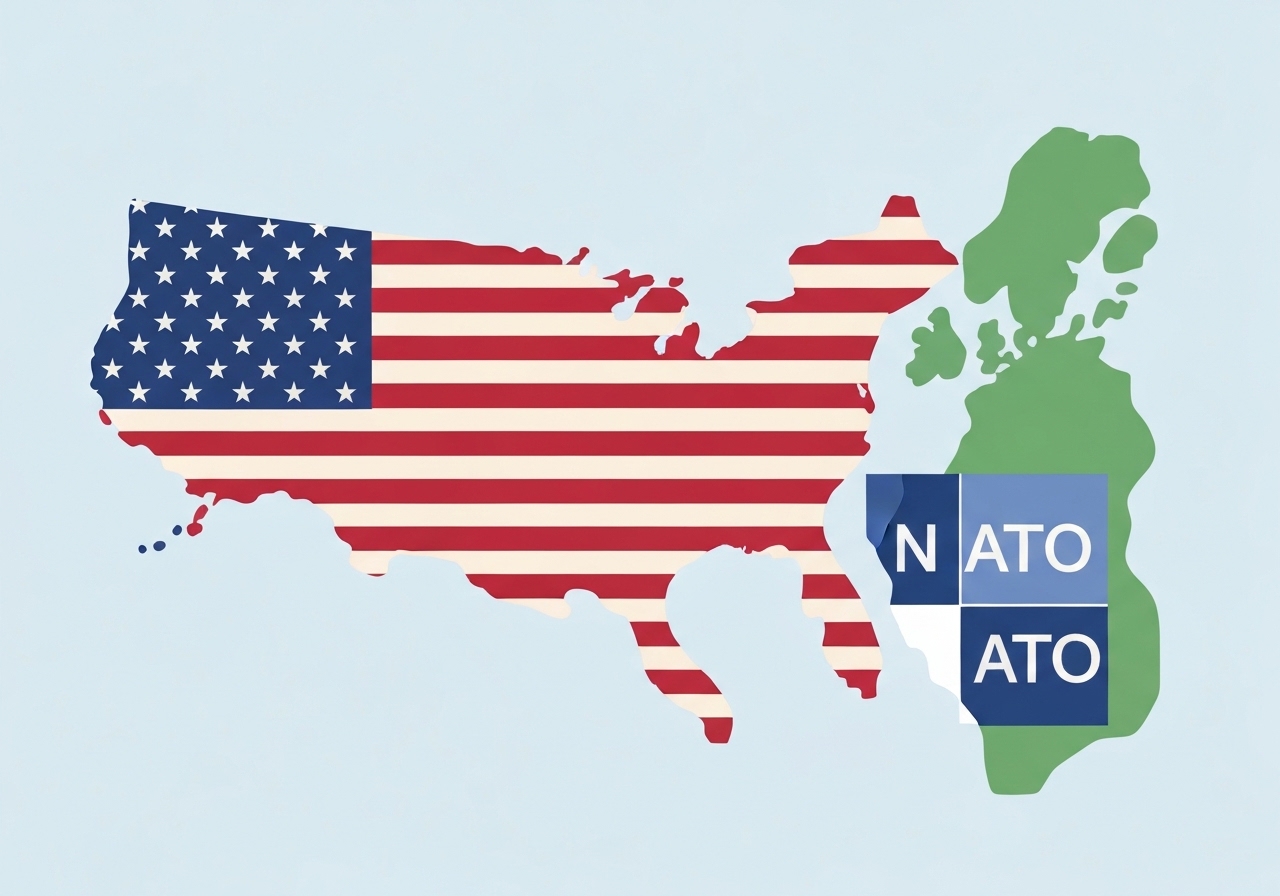
Lead
On Jan. 18, 2026, Rep. Michael McCaul warned on ABC News’ “This Week” that any U.S. military seizure of Greenland would put the United States at odds with its NATO allies and could threaten the alliance itself. McCaul, the Republican chairman emeritus of the House Foreign Affairs and Homeland Security committees, said the United States already has treaty access to Greenland and does not need to use force. His comments followed public reporting that the president has not ruled out military options and had recently imposed tariffs on eight European allies. Lawmakers from both parties responded by urging legal and congressional checks on the executive branch.
Key Takeaways
- Rep. Michael McCaul (R-Tex.) said on Jan. 18, 2026 that a U.S. military invasion of Greenland would effectively pit the U.S. against NATO and could “abolish NATO as we know it.”
- McCaul noted the U.S. already has treaty-based access to Greenland — an autonomous territory within the Kingdom of Denmark — and argued invasion is unnecessary for security needs.
- Sen. Chris Van Hollen (D-Md.) called the president’s claimed security rationale a “lie” and described the drive as a potential land grab for resources, urging congressional action under the War Powers framework.
- Reports noted the president had imposed tariffs on eight European allies shortly before the Greenland remarks, heightening diplomatic tensions with NATO members.
- Van Hollen recommended Congress consider funding restrictions and the War Powers Resolution to limit any unilateral military action regarding Greenland.
- Officials in Denmark and Greenland have told the United States it may take measures needed to protect U.S. security interests, and a U.S. base exists on the island, according to congressional and media reporting.
Background
Greenland is an autonomous territory within the Kingdom of Denmark and has long been of strategic interest because of its location in the North Atlantic and Arctic approaches. The United States operates military facilities and has had defense arrangements with Denmark and Greenland for decades; U.S. access to bases and cooperation on Arctic security have been managed through treaties and bilateral agreements. Historically, U.S. presidents have considered varying degrees of expanded engagement with Greenland, but acquisition by force would be unprecedented in the modern NATO era.
The present public debate intensified after reporting that the president said he would not rule out military means to obtain Greenland and after recent tariffs on several European allies. Those moves raised alarm among lawmakers and allied capitals about the potential diplomatic fallout and the legal constraints on executive military action. Congressional actors from both parties have referenced the War Powers Resolution and budgetary controls as tools to constrain unilateral intervention.
Main Event
During the Jan. 18 appearance on ABC News’ “This Week,” co-anchor Jonathan Karl asked Rep. McCaul to assess the president’s comments about Greenland and the prospect of using force. McCaul responded that while Greenland is strategically important and historically discussed by prior administrations, the United States already enjoys treaty rights that allow military access to protect common defenses — making an invasion unnecessary and dangerous.
McCaul said, in part, that “the president has full military access to Greenland to protect us from any threat,” and added that purchasing the territory would be a different matter than a military seizure. He warned that attempting to take Greenland by force would turn Article 5 of NATO “on its very head” and could amount to a conflict with NATO members themselves.
Sen. Chris Van Hollen, appearing on the same program, echoed McCaul’s concern and accused the president of misrepresenting the motive as security-driven. Van Hollen argued that existing bases could be expanded and that the stated national-security rationale masks interest in Greenland’s minerals and resources. He urged Congress to consider the War Powers Resolution and fiscal levers to prevent unauthorized military action.
Analysis & Implications
McCaul’s framing ties the Greenland episode to core NATO commitments. Article 5 — the alliance’s mutual-defense clause — binds NATO members to treat an attack on one as an attack on all; a unilateral U.S. military seizure of territory belonging to a NATO partner could fracture the legal and political foundations of that mutual-defense arrangement. Even if the United States hoped to justify action on separate grounds, the diplomatic costs with allied capitals and within NATO institutions would be severe.
Domestically, the episode spotlights the checks Congress can wield. The War Powers Resolution and appropriations controls are the principal statutory mechanisms lawmakers cite to constrain the president’s use of force. Calling for them signals bipartisan concern and sets up a potential congressional fight over funding, oversight, and the limits of executive authority in foreign operations.
Economically and geopolitically, Greenland’s natural resources and Arctic positioning have attracted interest from several states. But acquisition by force would undermine established norms about sovereignty and resource rights, and could prompt retaliatory measures from partners and rivals alike. The risk extends beyond immediate diplomacy to alliance cohesion on other matters, including collective deterrence, trade, and Arctic cooperation.
Comparison & Data
| Item | Then/Now |
|---|---|
| Political status | Autonomous territory of the Kingdom of Denmark |
| U.S. military presence | Existing bases and treaty access (longstanding cooperation) |
| NATO implications of invasion | Could conflict with Article 5 and allied mutual-defense commitments |
The table summarizes the key status points: Greenland’s sovereignty under Denmark, established U.S. access, and the unique NATO legal risks that a forcible seizure would create. These points help explain why senior lawmakers from both parties have publicly cautioned against military action and discussed legislative constraints.
Reactions & Quotes
“The fact is, the president has full military access to Greenland to protect us from any threat,”
Rep. Michael McCaul (R-Tex.)
McCaul used the existing access arrangements to argue that invasion would be unnecessary and counterproductive, framing the threat primarily as a diplomatic and alliance problem rather than a defense gap.
“This is not about security. This is about a land grab,”
Sen. Chris Van Hollen (D-Md.)
Van Hollen asserted that resource and political motives drove the rhetoric, and urged Congress to deploy the War Powers framework and budgetary measures to block unilateral military action.
Unconfirmed
- Whether the president has finalized any plan to use military force to acquire Greenland remains unconfirmed; public reporting indicates the president “has not ruled out” that option but offers no operational details.
- Claims that the move is primarily motivated by access to Greenland’s mineral resources are asserted by critics but have not been proven as the administration’s explicit, documented policy objective.
- Any concrete negotiations to purchase Greenland from Denmark or Greenlandic authorities have not been publicly confirmed or documented.
Bottom Line
The Jan. 18, 2026 exchanges highlight broad bipartisan alarm that any U.S. use of force to take Greenland would have outsized diplomatic and legal consequences, particularly for NATO. Lawmakers point to existing treaty access and urge congressional measures to prevent unilateral military action.
Absent credible, documented security needs that cannot be met through current agreements, the most likely near-term outcomes are intensified diplomatic fallout, congressional proposals to restrict funding or invoke War Powers authorities, and public debate over the boundaries of executive power in foreign affairs. Observers should watch for formal statements from Denmark and Greenland, any administration clarification of intent, and congressional steps to translate warnings into concrete limits.
Sources
- ABC News — U.S. mainstream media report covering the Jan. 18, 2026 interview and lawmakers’ responses (media).
- Congress.gov — War Powers Resolution (H.J.Res. 542) — official legislative text and history of the statutory framework referenced by lawmakers (official/government).
- NATO – Article 5 Overview — explanation of the alliance’s mutual-defense clause and related policy context (official/international organization).