
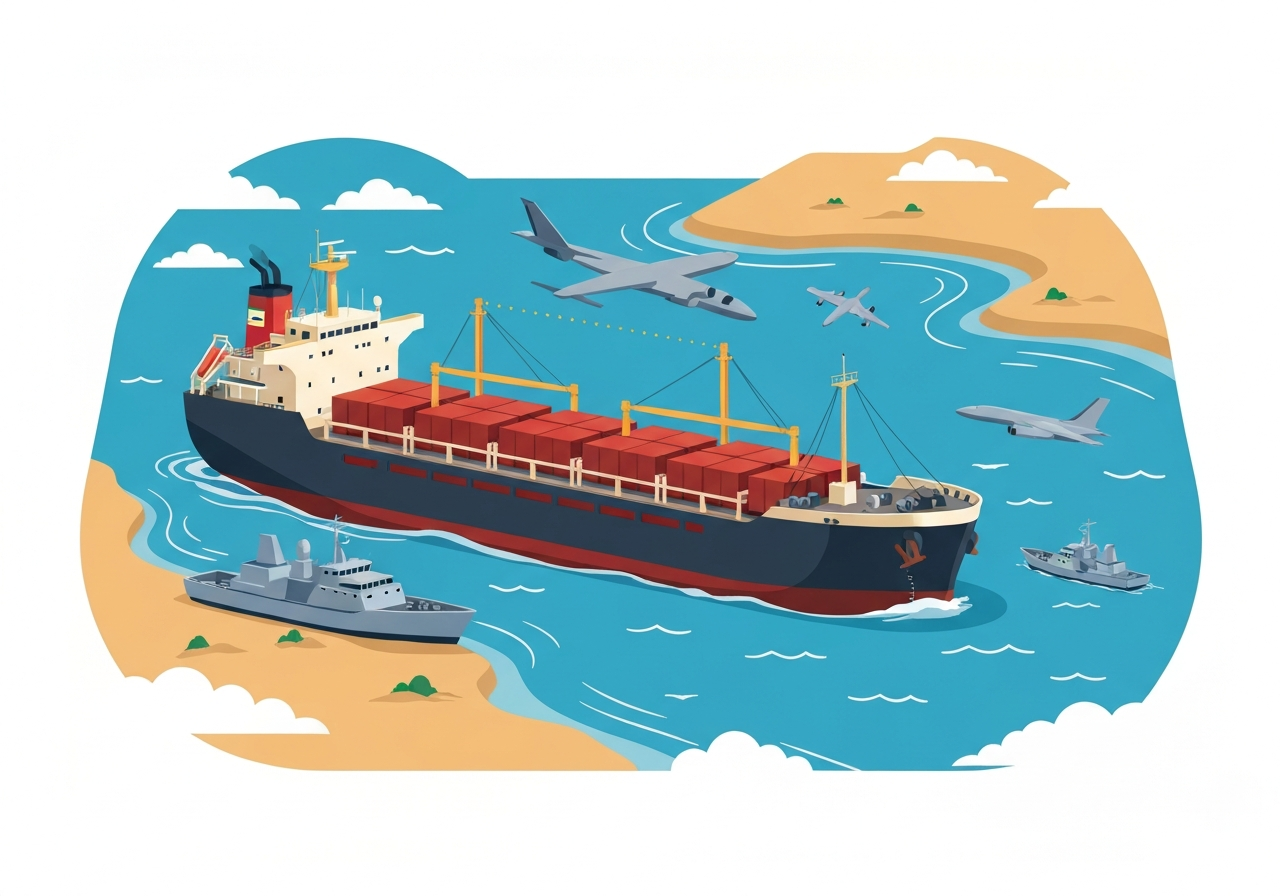
Lead: On April 19, 2026, U.S. forces intercepted and took custody of an Iranian-flagged cargo vessel, the Touska, near the Strait of Hormuz after what the U.S. described as repeated warnings. The seizure — the first since the U.S. began blockading Iranian ports last week — came as planned talks between Washington and Tehran were being readied in Pakistan and as a fragile ceasefire faced an imminent expiry. Washington says a U.S. guided-missile destroyer warned the ship over roughly six hours before Marines boarded; Iranian officials and state media offered only partial responses. The move further strained an already volatile standoff over transit through a waterway that carries about one-fifth of global oil trade.
Key Takeaways
- The seized vessel is the Iranian-flagged cargo ship Touska; U.S. Marines now have custody, according to U.S. statements.
- The U.S. Central Command said the destroyer issued repeated warnings over a six-hour period before boarding.
- President Donald Trump tweeted that the ship was halted after U.S. forces “blew a hole in the engineroom,” a claim not independently confirmed.
- The seizure is the first interception since the U.S. blockade of Iranian ports began last week (reported April 19, 2026).
- A fragile ceasefire is set to expire by Wednesday, complicating diplomacy and the planned U.S. delegation trip to Pakistan.
- Hundreds of vessels remained queued at each end of the Strait of Hormuz, threatening broader energy and supply disruptions; the strait handles roughly 20% of the world’s oil trade.
- Casualty tallies cited in reports list at least 3,000 dead in Iran, more than 2,290 in Lebanon, 23 in Israel and more than a dozen in Gulf Arab states; 15 Israeli soldiers in Lebanon and 13 U.S. service members have been reported killed.
Background
The confrontation sits within a wider conflict that began when the U.S. and Israel launched an operation against Iran on Feb. 28, 2026, prompting Tehran to close and then selectively reopen the Strait of Hormuz. The U.S. responded with a blockade on ships bound to and from Iranian ports, a step Washington says aims to pressure Tehran into negotiations. Iran views control over strait transits as leverage tied to the broader war and to negotiations over its nuclear program and regional activities.
Diplomatic efforts have been active: the White House announced a planned U.S. delegation to Pakistan for further talks on Monday, led by Vice President J.D. Vance with envoys Steve Witkoff and Jared Kushner. Iranian officials acknowledged receiving new U.S. proposals but say large gaps remain; Mohammed Bagher Qalibaf, Iran’s parliament speaker and chief negotiator in media comments, said diplomacy would continue even as differences persist.
Regional mediators, including Pakistan, have been involved. Pakistani Foreign Minister Ishaq Dar reportedly spoke with Iran’s Abbas Araghchi, and Islamabad tightened security ahead of any potential talks. A regional official told reporters mediators were finalizing logistics and that U.S. advance security teams were deployed, though Pakistan did not confirm a second round of negotiations publicly.
Main Event
According to U.S. accounts, a U.S. Navy guided-missile destroyer operating in the Gulf of Oman warned the Touska repeatedly over about six hours as it attempted to transit near the Strait of Hormuz. The Pentagon said Marines subsequently boarded and took control of the U.S.-sanctioned vessel. The administration described the action as lawful enforcement of a blockade intended to deny funds and materials to Iran.
President Trump announced the seizure on social media, characterizing the action as decisive and saying the destroyer had struck the ship’s engine room. U.S. Central Command framed the timeline around warnings and a boarding operation; there was no immediate corroborating detail from independent observers about the sequence or damage described.
Iranian state media responded by reporting a phone call between Iranian President Masoud Pezeshkian and Pakistani Prime Minister Shehbaz Sharif, in which Iranian officials protested U.S. behavior and warned the move would deepen mistrust of U.S. diplomacy. Tehran’s foreign ministry spokesperson, Esmail Baghaei, called the blockade an “act of aggression.” Iran’s parliament speaker reiterated that Iran would not allow others to pass the strait while its own transits were restricted.
Analysis & Implications
The seizure raises immediate diplomatic and security questions. Operationally, it signals that the U.S. is prepared to enforce its naval blockade aggressively, a posture likely to harden Tehran’s negotiating stance and reduce incentives for compromise ahead of the planned talks in Pakistan. If the U.S. is perceived to use force against commercial shipping flagged to Iran, neutral states and commercial shippers may alter routing and insurance arrangements, increasing transport costs and delays.
Economically, disruption of the Strait of Hormuz risks accelerating an energy shock: about 20% of global oil trade transits the strait, and bottlenecks already left hundreds of vessels waiting. Prolonged restrictions could push oil and gas prices higher, affect fertilizer and food supply chains, and exacerbate shortages in vulnerable countries that rely on shipments through the Gulf, including Afghanistan and Sudan.
Legally and reputationally, the U.S. faces scrutiny over use-of-force claims, including public assertions about damaging a civilian vessel’s engine room. International law on blockades and seizures requires clear legal bases and proportionality; the U.S. will likely publish or cite legal rationale to justify the action to partners and international institutions. Conversely, Iran’s continued control over designated routes and demands for transit fees raise the prospect of parallel regulatory regimes that will complicate maritime governance.
Strategically, the incident could produce several paths: de-escalation through renewed diplomacy if talks proceed, a tit-for-tat cycle of seizures and interdictions, or localized military confrontations. Each path carries risks of wider involvement by regional navies, insurance and commercial fallout, and political consequences for leaders engaging in hardline rhetoric.
Comparison & Data
| Metric | Reported Figure |
|---|---|
| Share of global oil trade via Hormuz | ~20% |
| Vessels waiting at each end | Hundreds |
| Reported conflict deaths (selected) | Iran: ≥3,000; Lebanon: >2,290; Israel: 23; Gulf states: >12 |
The table highlights immediate economic exposure (oil transit share) and operational congestion (hundreds of ships queued), set against human costs cited in reports from the eight-week war. Those metrics underline how a maritime interdiction can have rapid effects on markets and humanitarian supply lines even as battlefield dynamics shift inland.
Reactions & Quotes
“A U.S. Navy guided missile destroyer warned the ship, then stopped them right in their tracks by blowing a hole in the engineroom. U.S. Marines are seeing what’s on board!”
President Donald Trump (social media)
Context: The president framed the seizure as a decisive enforcement action. The claim about damage to the engine room comes from his post and has not been independently verified in public reporting at the time of publication.
“It is impossible for others to pass through the Strait of Hormuz while we cannot.”
Mohammed Bagher Qalibaf, Iran parliament speaker (state media interview)
Context: Qalibaf’s comment reiterates Tehran’s view that unequal transit rules under the U.S. blockade make normal passage unacceptable, signaling political resistance to restoring pre-blockade transit norms without concessions.
“The destroyer issued repeated warnings over a six-hour period.”
U.S. Central Command (official statement)
Context: Central Command’s timeline supports the U.S. account of escalation before boarding; military statements aim to establish procedural steps taken prior to seizure.
Unconfirmed
- President Trump’s specific claim that U.S. forces “blew a hole in the engineroom” has not been independently verified by third-party observers.
- Whether the scheduled U.S. delegation talks in Pakistan will take place remains unclear; Pakistani authorities have not publicly confirmed a second round.
- Details of the Touska’s cargo manifest and whether prohibited materials were aboard have not been released publicly by U.S. authorities.
Bottom Line
The U.S. seizure of the Touska near the Strait of Hormuz marks a notable escalation in a maritime standoff that already threatens global energy supplies and complicates fragile diplomacy. The action underscores how naval enforcement and control of chokepoints can be used as leverage, but it also raises legal, commercial and humanitarian questions that will shape international responses.
What to watch next: whether Pakistan hosts the planned talks and whether Tehran reciprocates with additional maritime measures or returns to diplomacy; any further interdictions, independent verifications of damage and the responses of major shipping insurers and neutral states will be key indicators of whether this incident becomes a contained episode or triggers broader escalation.
Sources
- Associated Press — news organization: original reporting and timeline (April 19, 2026)