
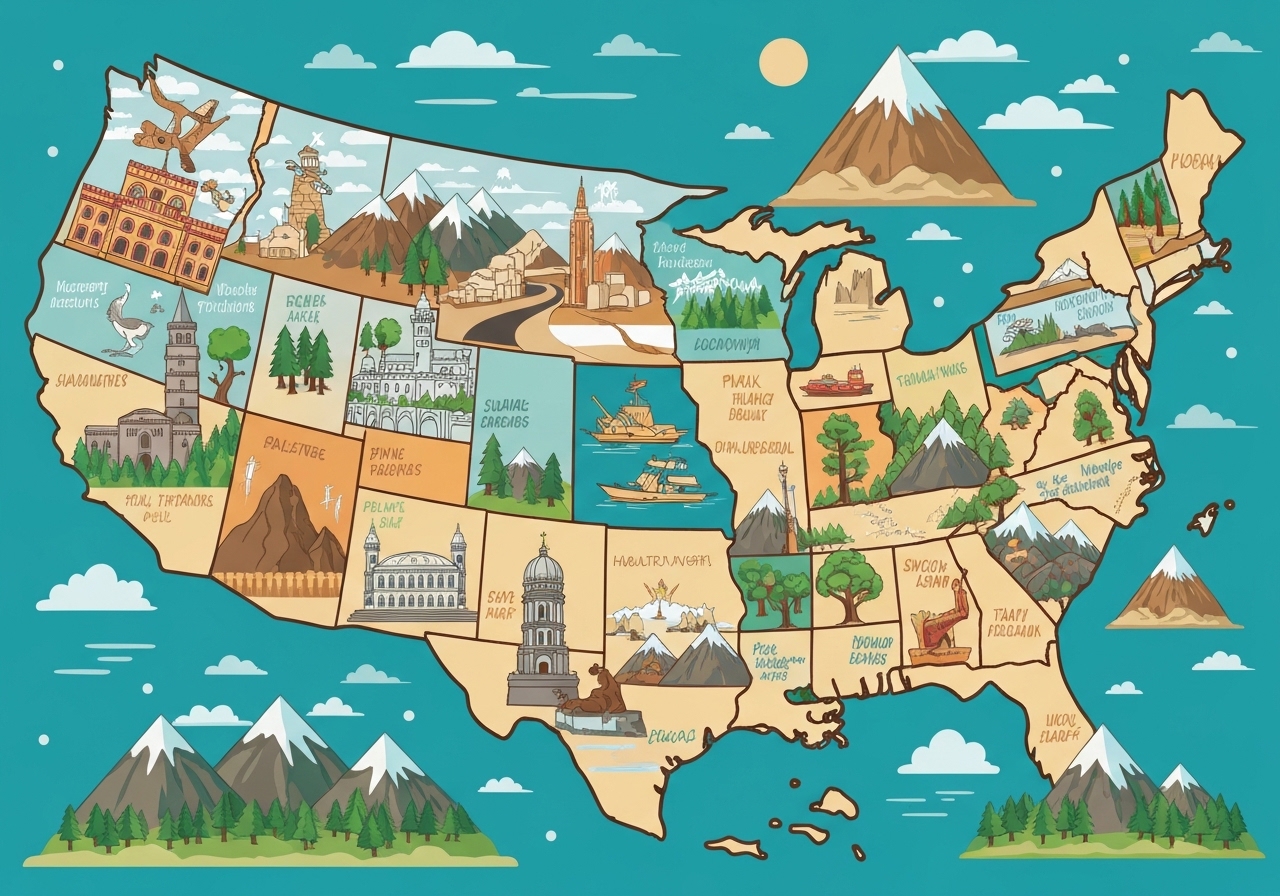
Who: Members of the Highpointers Club and independent travelers. When: Ongoing gatherings and trips, including a recent convention in Bishop, California. Where: State highpoints across the United States, from Alaska’s Denali to Florida’s Britton Hill. What happened: Enthusiasts travel to and sometimes summit each state’s highest geographic point; 180 people met recently in Bishop near Mt. Whitney. Result: The movement highlights a travel subculture that mixes strenuous mountaineering with simple, roadside destinations and stimulates local tourism and stewardship.
Key Takeaways
- Mt. Whitney in California is the tallest peak in the contiguous U.S., rising to 14,505 feet; its standard route is about a 20-mile roundtrip hike.
- Alaska’s Denali, at 20,320 feet, and California’s Mount Whitney represent the high end of difficulty; many state highpoints are far easier or even drivable.
- About 180 people recently gathered in Bishop, California, for a Highpointers Club event that draws hobbyists nationwide and internationally.
- Some highpoints pose logistical barriers: Charles Mound (Illinois, elevation 1,235 feet) is on private land with limited public access days.
- Young highpointers include Lucy Westlake, who at 17 in 2021 became the youngest woman recorded to visit every state highpoint (club record).
- Highpointing blends diverse experiences—from remote alpine ascents like Gannett Peak (~14,000 feet) to modest, accessible sites such as Britton Hill, Florida (345 feet).
Background
Highpointing—the pursuit of visiting each U.S. state’s highest geographic location—has roots in both mountaineering and travel hobbyism. Organized groups such as the Highpointers Club provide routes, events and a social structure that turns an individual checklist into a communal pursuit. The activity appeals to a wide range of people: serious climbers who tackle Denali or Gannett Peak, families seeking scenic drives, and travelers who enjoy checking off culturally surprising stops like Britton Hill in Florida.
State highpoints vary dramatically in elevation, access and technical challenge. Some are in protected backcountry requiring multi-day expeditions and technical skills; others are within state parks or along paved roads. Land ownership can complicate access—private parcels or seasonal restrictions mean planning matters as much as physical ability. The Highpointers Club and independent guides have filled an information gap, cataloging routes, access windows and local contacts to help visitors plan responsibly.
Main Event
At a recent gathering in Bishop, California, roughly 180 highpointers met near the trailheads that lead to Mt. Whitney, which rises to 14,505 feet and typically requires more than 20 miles roundtrip on the standard route. The convention combined trip planning, presentations and social events, attracting participants who range from expert alpinists to families seeking shorter, scenic highpoints. Organizers emphasize safety, leave-no-trace ethics and the different skill sets needed across the 50 highpoints.
Attendees described a mix of motivations. Some pursue the challenge and prestige of summiting extreme peaks like Denali (20,320 feet) or Wyoming’s Gannett Peak (near 14,000 feet). Others value the travel aspect—using a highpoints checklist to visit places they otherwise might not see, from Midwestern farm roads to alpine ridgelines. The club facilitates exchange of route beta, timing tips for private-access sites, and social traditions such as photographing survey markers or mileposts.
Practical obstacles are as varied as the peaks themselves. Charles Mound in Illinois sits on private farmland and is open to visitors only on a few weekends each year, so timing and coordination are crucial. Conversely, some summits such as Mount Washington (New Hampshire) and High Point State Park (New Jersey) are reachable by vehicle, making them accessible for a wider range of visitors. The interplay of physical, logistical and social factors is central to why people stay engaged over years or a lifetime.
Analysis & Implications
Highpointing is both a travel niche and a conservation-relevant phenomenon. By directing tourism to lesser-known places, the hobby can provide economic activity to small towns—Bishop, California being a recent example—while also placing pressure on fragile environments. Clubs and guides often act as de facto stewards, sharing best practices for minimizing impact and coordinating volunteer stewardship projects at sensitive sites.
Demographically, the hobby attracts a broad age range. Stories like Lucy Westlake, who completed all 50 highpoints by age 17 in 2021, show youth engagement, while other members emphasize the social and health benefits for older participants. The mix of low- and high-effort sites means that highpointing can be adapted to many fitness levels, which helps sustain multi-generational participation and long-term commitment.
From an access-policy perspective, private landholdings and limited opening days raise questions about fair public access. Negotiations between landowners and visitor groups—sometimes mediated by clubs—can set a model: controlled, scheduled public access paired with landowner protections. That approach balances private property rights with public interest, but it requires ongoing communication and mutual trust.
Comparison & Data
| State / Peak | Elevation (ft) | Typical Access |
|---|---|---|
| Alaska — Denali | 20,320 | Technical expedition |
| California — Mt. Whitney | 14,505 | Strenuous 20+ mile hike |
| New Mexico — Wheeler Peak | 13,161 | Hiking / alpine approach |
| Nebraska — Panorama Point | 5,424 | Drive & short walk |
| Illinois — Charles Mound | 1,235 | Private land; limited open days |
| Florida — Britton Hill | 345 | Paved access |
The table illustrates extremes: Denali requires full alpine logistics, while Britton Hill is a short, paved visit. Many highpoints fall between these poles, demanding planning for weather, permits or timed access. For trip planning, independent guides and club resources typically list seasonal recommendations, permit requirements and terrain notes to help members match objectives to ability and calendar windows.
Reactions & Quotes
The following selected remarks capture participants’ motivations and the club’s ethos.
“There is Denali, there’s Rainier, there’s Hood that are really difficult peaks, but you can do a lot of peaks that are easy to do, that are a fun trip with the family.”
Shannon Brumund, President, Highpointers Club
Brumund framed highpointing as inclusive: while some climbs are technical, many are family-friendly and emphasize shared experience over pure athleticism.
“We have this, like, huge, unique, beautiful and diverse country, and a lot of people don’t see a lot of it.”
Lucy Westlake, Highpointer
Westlake, who completed all 50 highpoints by age 17 (2021), described the route-list as a purposeful travel framework that encourages exploration of overlooked places.
“A lot of hikers will say this is the hardest highpoint because you just got to time it.”
Rick Wise, Highpointer
Wise pointed to logistical difficulty—such as limited access days at privately held Charles Mound—as a distinct kind of challenge that can rival physical climbing in terms of planning complexity.
Unconfirmed
- Record claims such as “youngest woman to visit every state highpoint” are based on club records and public reporting; independent verification outside club records may not exist.
- Attendance figures (e.g., “180 people” at a specific Bishop event) are reported by organizers; exact counts and attendee lists are not independently verified here.
- Specific private-access schedules (dates and windows for sites like Charles Mound) can change year to year; visitors should confirm with landowners or club notices before travel.
Bottom Line
Highpointing is a hybrid pursuit—part checklist-driven travel, part mountaineering community—that opens the country to repeated discovery. The activity channels tourism into places that many visitors would otherwise overlook, from farm roads to alpine passes, and it supports a network of volunteers, guides and local businesses that facilitate access and stewardship.
For prospective participants, the takeaway is practical: match objectives to ability, check access rules (especially for private land), and use club or guidebook resources to plan responsibly. For communities and landowners, thoughtful collaboration can turn occasional visitors into allies for conservation and local economies when access is managed respectfully.