
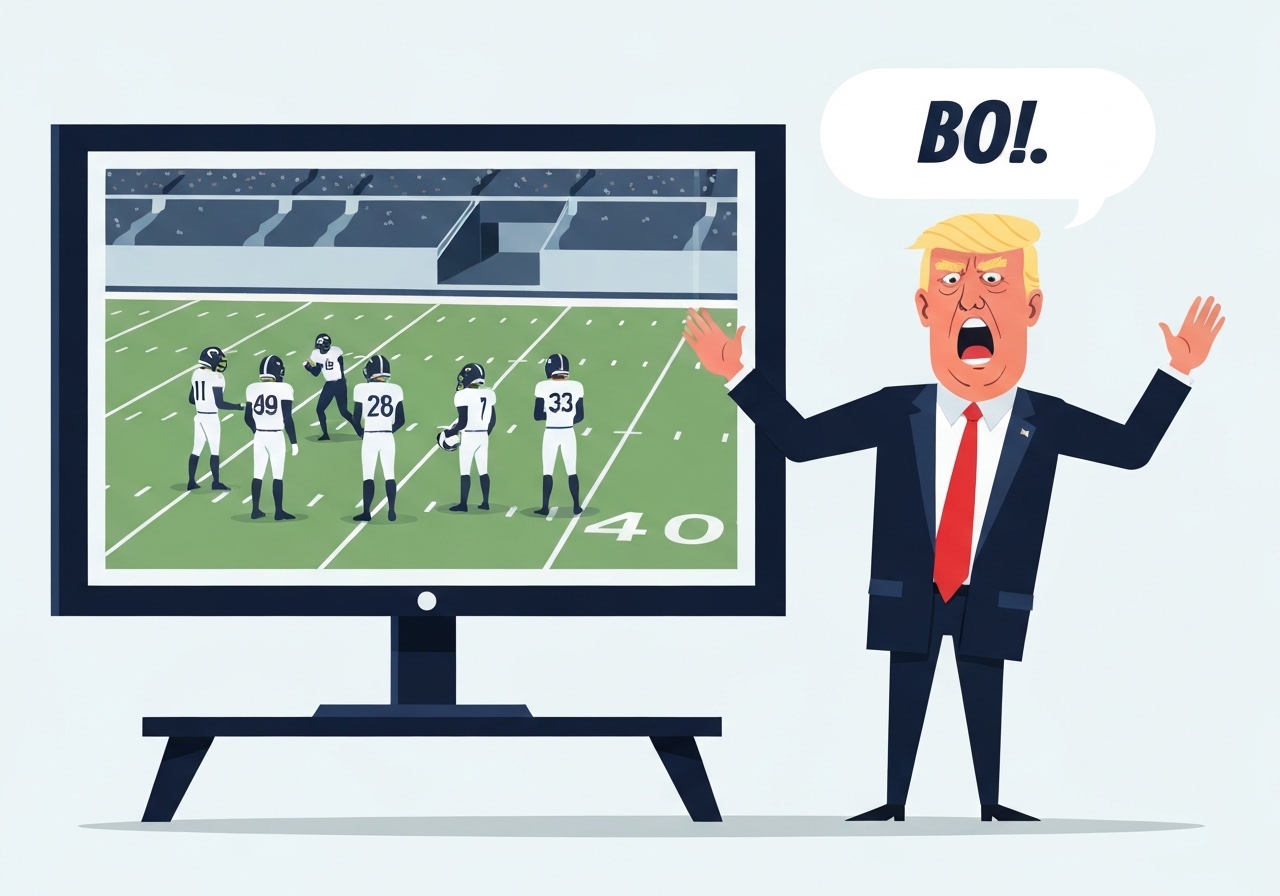
President Donald Trump announced plans to sign an executive order intended to block other football broadcasts from airing opposite the annual Army–Navy Game, saying the measure would preserve what he called one of the nation’s most treasured sporting traditions. The declaration, posted on Truth Social on Jan. 17, 2026, signals an unusually direct White House intervention into college football scheduling and television programming. Trump said the order would establish an exclusive four‑hour broadcast window on the second Saturday in December, a slot he insisted should belong solely to Army–Navy. The proposal raises immediate questions about enforceability and federal authority over cable and streaming platforms.
Key Takeaways
- Trump announced on Jan. 17, 2026, an intent to issue an executive order creating an exclusive four‑hour broadcast window for the Army–Navy Game on the second Saturday in December.
- CBS holds exclusive broadcast rights to the Army–Navy Game through 2038, making the network a primary beneficiary if an enforcement mechanism were established.
- The president attended the most recent Army–Navy Game in December 2025 in Baltimore, a 17–16 Navy victory, and took part in the ceremonial coin toss — his sixth appearance at the event.
- The Federal Communications Commission regulates broadcast television but generally lacks direct authority over cable and streaming platforms, complicating enforcement of a broadcast-only restriction.
- Antitrust and communications law issues could arise; NFL and other postseason arrangements are governed in part by statutes and private contracts that may limit executive action.
- CNN contacted the FCC and CBS for comment; neither provided a public response at the time of reporting.
Background
The Army–Navy Game is an American football tradition first contested in 1890 that pits the United States Military Academy (Army) against the United States Naval Academy (Navy). Over more than a century the matchup has been treated as a national cultural event with pageantry tied to military institutions, drawing viewers beyond typical college‑football audiences. Broadcast rights have shifted among networks over time; currently, CBS has exclusive rights through 2038, a long‑term arrangement that gives one commercial broadcaster monopoly access to the game’s television audience. In recent seasons, the college football postseason and an expanding slate of bowl and playoff games have created calendar congestion in early December, prompting periodic debate about scheduling and the visibility of traditional matchups.
The White House has intervened in media and licensing matters before, framing some interventions as questions of public interest. Presidential influence over timing or access to events is unusual but not unprecedented; administrations may attempt to shape regulatory priorities or use executive actions to signal policy aims. Any attempt to limit competing broadcasts intersects with multiple regulatory frameworks: the FCC’s authority over over‑the‑air broadcasters, the contractual sphere of cable and streaming companies, and federal antitrust law and its exemptions or constraints. Stakeholders include the academies, CBS/Paramount (which holds the rights), other broadcasters and streamers, and lawmakers who oversee communications and antitrust statutes.
Main Event
On the evening of Jan. 17, 2026, Trump posted that he would “soon sign a Historic Executive Order” to protect the Army–Navy Game by carving out an exclusive broadcast window on the second Saturday in December. He framed the step as necessary to keep the matchup from being eclipsed by college playoff games and large television contracts. The wording emphasized patriotism and tradition and instructed networks and outlets to treat the date as reserved for Army–Navy alone.
Supporters of the move argue a protected window would guarantee viewership and revenue for a game tied to the military academies and preserve a storied tradition. Critics counter that the executive branch lacks a clear statutory tool to compel private broadcasters, cable networks or streaming services to alter their schedules, and that such an order could collide with First Amendment and commerce protections. The White House did not provide a draft of the proposed order, and agency officials had not outlined a legal route for enforcement at the time of publication.
The announcement also highlights commercial ties: Paramount Global’s CBS holds exclusive broadcast rights through 2038, and the company’s ownership includes executives and investors with close ties to the president’s circle. While the White House framed the move as cultural preservation, observers noted the potential for overlap between public interest claims and private gains for a network with long‑term rights to the event.
Analysis & Implications
If implemented, the executive order would test the limits of presidential authority over broadcast timing and raise novel legal questions. The FCC regulates terrestrial broadcast licenses and can impose certain public‑interest obligations, but it does not have direct control over programming on cable or proprietary streaming platforms. An order aimed only at over‑the‑air broadcasters could leave large portions of the viewing market untouched, undercutting the policy goal.
Enforcement could involve administrative action, interagency memoranda, or pressure on networks and affiliates, but any mandate that restricts when private broadcasters may air programming could invite judicial review on constitutional grounds. Antitrust statutes and private contractual rights governing sports broadcasting are another layer: networks and leagues operate under negotiated agreements that a presidential order would not automatically override. Litigation would be a likely outcome if the order were issued and implemented in a manner that affected commercial contracts.
The political effect may be as consequential as the legal one. For supporters of the president and of the academies, the move signals prioritization of tradition and military pageantry. For media companies and free‑market advocates, it raises concerns about executive overreach into editorial and scheduling decisions. Congress could respond with clarifying legislation or hearings, and stakeholders—from the academies to networks to consumer groups—may mobilize to shape any administrative rulemaking or court battles that follow.
Comparison & Data
| Item | Fact |
|---|---|
| First Army–Navy Game | 1890 |
| Most recent meeting | Dec. 2025 — Navy 17–16 (Baltimore) |
| Broadcast rights | CBS exclusive through 2038 |
| Proposed protection | Exclusive 4‑hour window on second Saturday in December |
The table places the proposed order in historical and contractual context: a game with roots in 1890, a narrow recent scoreline in December 2025, and a long rights deal that runs through 2038. Those facts explain why an administration might view the matchup as uniquely worthy of protection while also indicating why a short‑term executive act would encounter complex legal and marketplace barriers.
Reactions & Quotes
Trump framed the move as preservation of patriotism and tradition in multiple Truth Social posts, pressing networks to yield the date. The posts make clear the White House intent, but they do not include legal text or a timeline for implementation. CNN requested comment from the FCC and CBS; neither had issued a public reply at the time of reporting.
“The Army‑Navy Game is one of our Greatest American Traditions — Unmatched Patriotism, Courage, and Honor!”
Donald Trump / Truth Social
That post emphasizes symbolism and national character as the administration’s justification. It also signals a political appeal to viewers who prioritize tradition and military pageantry over the commercial expansion of postseason football.
“Under my Administration, the second Saturday in December belongs to Army‑Navy, and ONLY Army‑Navy! I will soon sign a Historic Executive Order securing an EXCLUSIVE 4 hour Broadcast window.”
Donald Trump / Truth Social
The second statement sets a concrete claim—a four‑hour window—but does not specify enforcement mechanisms or how the order would address non‑broadcast platforms like cable and streaming, nor whether affiliates would be compelled to comply.
“Please let this serve as Notice to ALL Television Networks, Stations, and Outlets.”
Donald Trump / Truth Social
That final excerpt functions as a direct public warning to media outlets, underscoring the political thrust of the announcement even as legal questions remain unresolved.
Unconfirmed
- It is unconfirmed whether an executive order could lawfully compel cable or streaming services to avoid airing other football games during the proposed window.
- The degree to which Paramount/CBS would receive material commercial benefit from the order is not independently verified beyond the fact that CBS holds exclusive rights through 2038.
- Any internal White House legal analysis or draft language underlying the proposed order has not been made public and its legal conclusions are unconfirmed.
Bottom Line
The president’s pledge to issue an executive order protecting the Army–Navy Game elevates a longstanding sports tradition into a test case of executive reach into media scheduling and the modern broadcast ecosystem. The proposal is explicit about timing and intent but silent on enforceable legal mechanisms, leaving significant gaps between political signaling and regulatory reality. Stakeholders from networks to lawmakers will likely engage quickly: networks to defend commercial and contractual prerogatives, the academies and supporters to press for tradition, and courts or Congress as potential venues to resolve disputes.
For observers, the key watch points are legal strategy and reaction from federal agencies and private broadcasters. If an order is signed, expect rapid legal scrutiny, congressional interest, and negotiations within the industry about how to balance tradition, commercial rights, and regulatory authority in an era of diversified distribution platforms.