
Lead
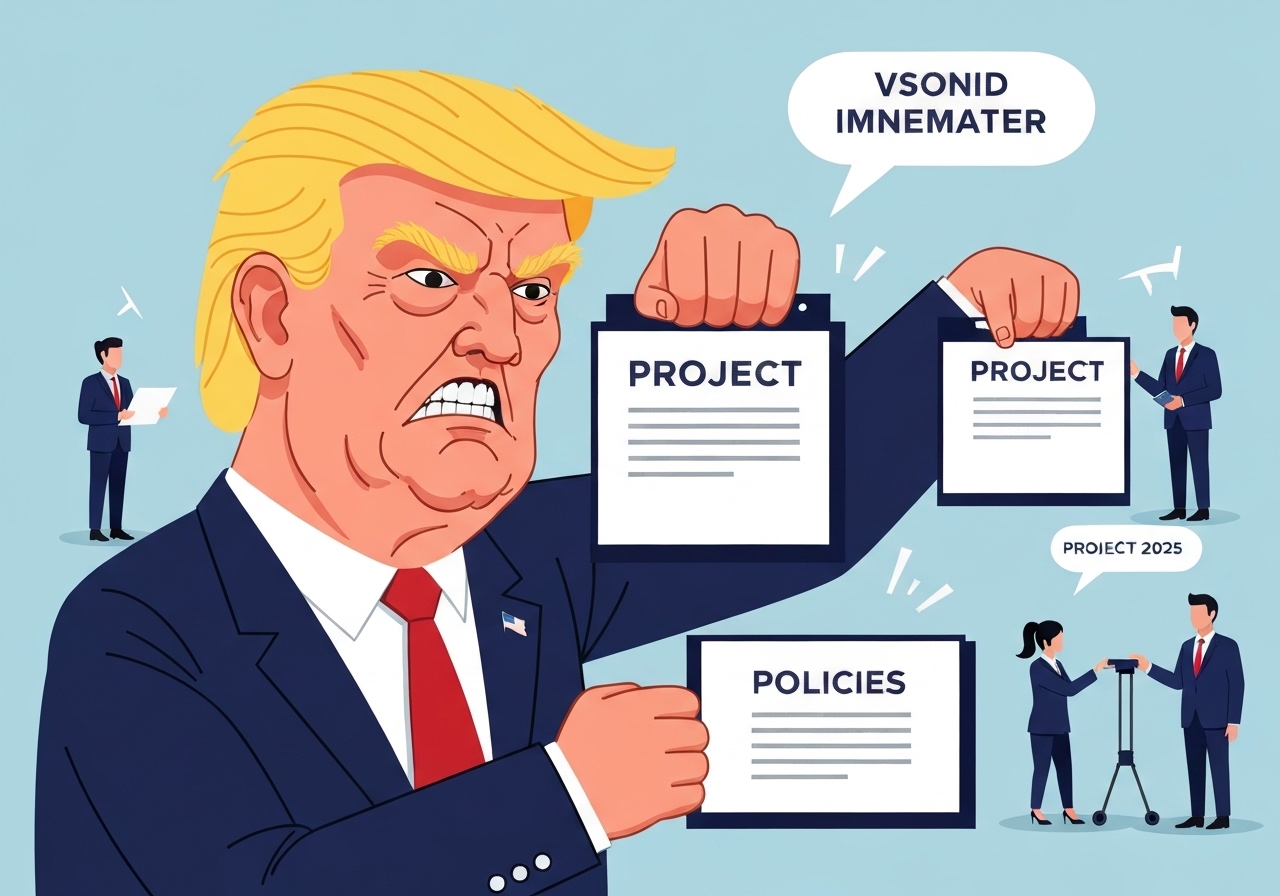
President Donald Trump has moved quickly to enact a number of measures that mirror recommendations from the 900-page Project 2025 blueprint, even after he publicly disavowed knowledge of the plan during the 2024 campaign. Concerns that surfaced in spring 2024 intensified after public figures called attention to the Heritage Foundation-led agenda, and the debate continued through the transition and first year of the administration. Key personnel involved in drafting Project 2025 joined the White House or were tapped to lead agencies, and several policy shifts have followed, from immigration enforcement to changes at the Department of Education. Legal challenges from state officials, led by California Attorney General Rob Bonta and a coalition of 23 Democratic attorneys general, have already blocked or delayed some of those actions.
Key Takeaways
- The Project 2025 blueprint spans roughly 900 pages and was produced by the Heritage Foundation and allied conservatives.
- Concerns about the plan rose in spring 2024 and drew national attention after a high-profile mention at the BET awards later that year.
- Russell Vought, a lead architect of Project 2025, was appointed to direct the Office of Management and Budget shortly after the election.
- Administration actions include ending many diversity, equity and inclusion programs, intensifying immigration enforcement, and initiating restructuring steps at the Department of Education.
- California Attorney General Rob Bonta and 23 Democratic attorneys general studied Project 2025 and have filed coordinated legal challenges; some policies have been paused or blocked in court.
- The White House frames these moves as implementation of the president’s campaign agenda, prioritizing border security, economic growth and lower energy prices.
- Scholars note Project 2025 resembles long-standing conservative playbooks, but with a distinctively MAGA-oriented emphasis.
Background
Project 2025 emerged as a comprehensive conservative policy roadmap designed to guide a future Republican administration. Compiled by the Heritage Foundation and contributors from aligned organizations, the plan lays out personnel changes, regulatory rollbacks and structural reforms across federal agencies. During the 2024 campaign, Democrats sought to cast the 900-page plan as a warning about extreme policy shifts, while some allied commentators and think tanks argued that such blueprints are routine preparations for transitions.
Political controversy escalated when public figures amplified concerns on national platforms, bringing Project 2025 into wider public view. Candidate Trump initially distanced himself from the project, calling its ideas ridiculous and asserting limited knowledge of its authors, even though several contributors had previously served in his administration. That public disavowal arguably increased attention to the plan and made its proposals politically combustible.
After the election, multiple authors and allies of Project 2025 moved into official roles, and the administration began issuing executive actions and directives that resembled items in the blueprint. State officials, led by a bloc of Democratic attorneys general, responded by reviewing the plan in detail and preparing legal strategies aimed at blocking or tempering implementation where they judged federal action to exceed statutory authority.
Main Event
In the early months of the administration, senior appointments signaled alignment with Project 2025 priorities. Russell Vought, identified as an architect of the blueprint, was named to lead the Office of Management and Budget, a powerful office that coordinates federal personnel and budgets. Other contributors were also brought into influential posts, accelerating the translation of written proposals into policy moves.
The White House issued a series of directives that tracked with Project 2025 recommendations. Those actions included the elimination or suspension of many diversity, equity and inclusion programs across federal agencies, issuance of stricter immigration enforcement guidance, and initial steps to reorganize or reduce functions at the Department of Education. At the 2025 inaugural address the president announced a federal policy framing sex as binary, a move consistent with certain Project 2025 positions on gender and civil service rules.
Legal pushback arrived swiftly. California Attorney General Rob Bonta publicly said the blueprint effectively announced the administration’s intended course, prompting a coordinated review by 23 Democratic attorneys general. Bonta and others filed lawsuits that successfully halted or limited particular measures, including some attempts to compel state cooperation in new immigration enforcement actions and budgetary maneuvers that would have frozen domestic grant funding.
The White House has defended the measures as faithful execution of the president’s campaign promises. A White House spokeswoman said the administration is focused on priorities cited on the campaign trail, such as securing the border, lowering energy costs and boosting growth, and dismissed alarmist characterizations of Project 2025 as insider speculation.
Analysis & Implications
Project 2025 functions as a practical playbook: it lists personnel changes, regulatory priorities and drafting templates that make rapid policy shifts possible once sympathetic actors occupy key agencies. By incorporating authors of the blueprint into administration roles, the transition from written proposal to executive action shortened, reducing the usual lag between campaign promises and implementation. That dynamic increases the likelihood that comprehensive think tank agendas can shape governance in months rather than years.
Legal resistance from state attorneys general illustrates the federalism fault lines such blueprints can produce. When policy pushes depend on agency rules or conditional funding to compel state action, states can litigate to protect their prerogatives or funding streams. Litigation has already produced mixed results: some directives remain in force, some were blocked, and others are tied up in court, producing a policy landscape that is fluid and contested rather than uniformly implemented.
International and domestic consequences vary by policy area. Hardline immigration enforcement can alter migration flows and diplomatic relations with sending countries, while changes at the Department of Education and in workforce policy affect millions of federal employees and program recipients. If the administration continues to pursue the Project 2025 agenda, expect sustained litigation, patchwork implementation across states, and potential legislative responses from Congress to codify or counteract major items.
Comparison & Data
| Policy Area | Project 2025 Proposal | Administration Action |
|---|---|---|
| Immigration enforcement | Increased interior enforcement and state cooperation | Heightened enforcement guidance issued; efforts to compel state cooperation met with legal challenges |
| Diversity, equity and inclusion | Eliminate federal DEI programs and funding priorities | Many DEI initiatives ended or suspended across agencies |
| Department of Education | Restructure or shrink federal education role | Plans announced for layoffs and reorganization; some actions paused by lawsuits |
| Personnel and OMB control | Place aligned officials in key management roles | Russell Vought appointed to OMB; other contributors assigned to senior posts |
The table summarizes major themes and current status as of the administration’s first year. Some measures are fully implemented, others are partially rolled out, and several remain subject to judicial review. The presence of concrete proposals in a single document makes it easier for opponents to anticipate specific legal and political countermeasures.
Reactions & Quotes
Pay attention. It is not a secret. Look it up. They are attacking our most vulnerable citizens.
Taraji P. Henson, actor, speaking at the 2024 BET awards
Henson’s public call amplified attention to Project 2025 and helped turn a technical policy blueprint into a broader cultural and political controversy. The moment pushed more reporters and activists to review the document and publicize its provisions.
Theyre a pain in the asterisks, and they dont get to drive everything.
Chris LaCivita, senior adviser to the Trump campaign
LaCivita criticized the organizers of Project 2025 during the 2024 Republican National Convention, reflecting tension between campaign messaging and policy advocates. That public distancing contrasted with later personnel appointments that aligned the administration more closely with the blueprint.
President Trump is implementing the agenda he campaigned on and that the American people voted for.
Abigail Jackson, White House spokeswoman
The White House position emphasizes electoral mandate and campaign promises as the basis for policy choices rather than direct reliance on any single external plan.
Unconfirmed
- The extent to which President Trump personally directed specific language or drafts within Project 2025 remains publicly unverified.
- Internal White House deliberations about whether to adopt particular Project 2025 items have not been fully disclosed and therefore cannot be independently confirmed.
- Longer term outcomes and whether all proposed agency reorganizations will survive litigation or Congress are not yet determined.
Bottom Line
Project 2025 served as a detailed reference that appears to have accelerated the administration’s policy choices once sympathetic actors occupied management and budgetary posts. That linkage transformed what might have been abstract policy proposals into executable steps, shortening the timeline for significant federal changes in areas such as immigration, civil service rules and education policy.
The result is a contested governance environment: some priorities have been implemented, others slowed or blocked by courts and state actions, and many will remain subject to political negotiation. Observers should expect continued litigation, uneven implementation across states, and intensified attention from both advocacy groups and other state officials as the administration moves forward.