
Lead
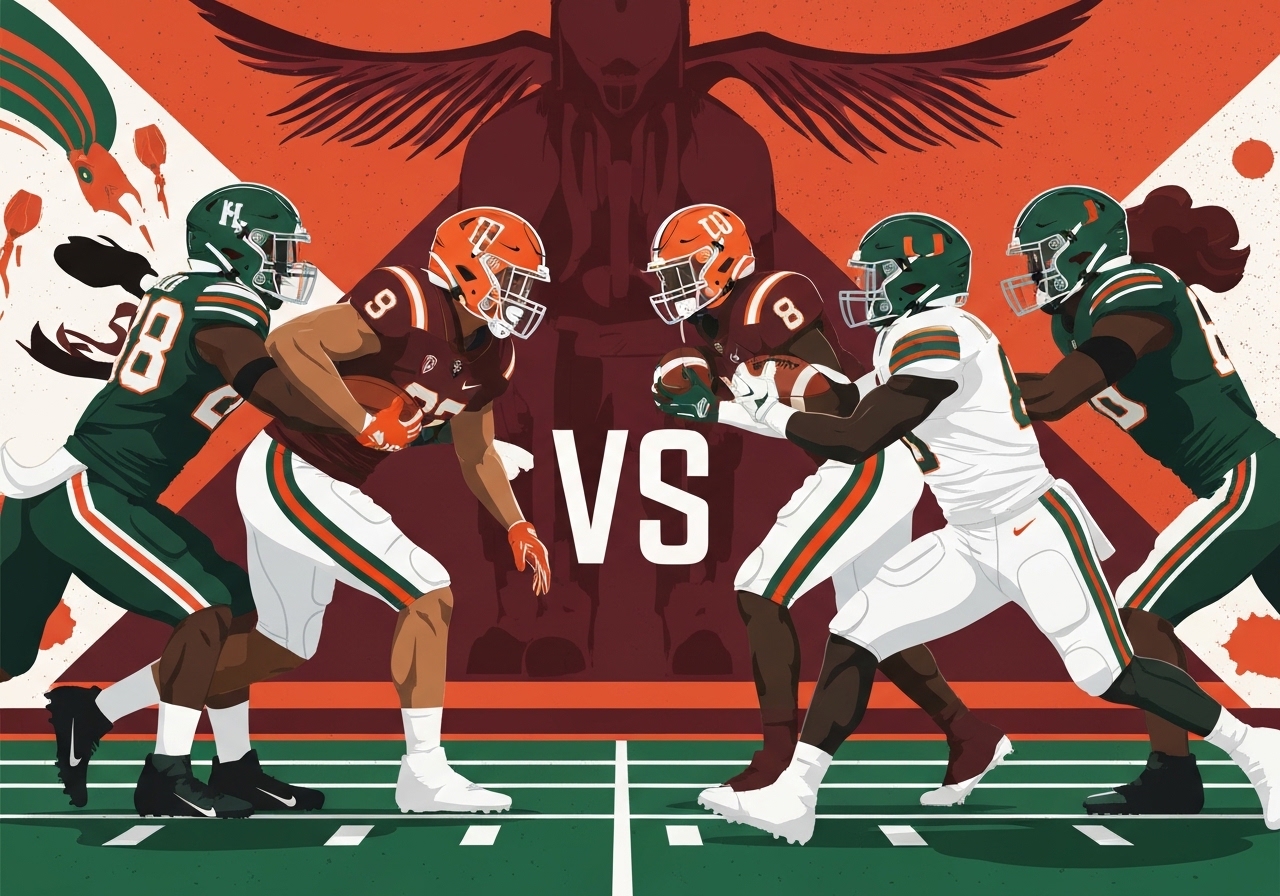
On Monday night at Hard Rock Stadium, longtime cinematic observer Angelo Pizzo watched Indiana University’s fans pour into Miami as the Hoosiers prepared to meet the Hurricanes in the College Football Playoff title game. Indiana enters as an 8.5-point favorite and carries an unblemished record this season; Miami, a program with five national championships in a 19-year span, is chasing a return to its former dominance. The matchup feels scripted — a blue-collar underdog from the Midwest against a sun-soaked, celebrity-studded powerhouse — and has drawn a surprising Hollywood contingent to South Florida.
Key Takeaways
- Indiana is an 8.5-point favorite and finished the season undefeated; Miami is positioned as a historically decorated program with five titles over a 19-year stretch.
- The Hoosiers entered the game without a single five-star recruit this season, while Miami listed two five-star recruits; Indiana’s rise has been led by coach Curt Cignetti and transfer QB Fernando Mendoza.
- Indiana has never won a national championship and had not won a bowl game in 34 years prior to this run, underscoring the scale of the program’s turnaround.
- High-profile entertainment figures have converged on Miami — Dwayne Johnson is expected in attendance and his $1 million gift named a locker room at Hard Rock Stadium; Mark Cuban and other IU alums also traveled to the game.
- Local NIL influence and donor cash are prominent in Miami’s environment; reporting in the feature cites a local mogul alleged to have paid over $20 million to players.
- Indiana University’s enrollment (roughly 90,000 students across campuses) gives Hoosier fans a substantial secondary ticket presence in Miami’s market.
Background
Angelo Pizzo, the screenwriter behind Rudy and Hoosiers, has long linked Indiana sports to classic cinematic underdog narratives. He sees the matchup as a contemporary version of the small-town versus powerhouse story — only now unfolding on a national stage with millions watching. The Hoosiers’ ascent, driven by coach Curt Cignetti’s arrival two years ago, contrasts sharply with Indiana’s century-long reputation as a football afterthought.
The University of Miami — by contrast — carries both gridiron pedigree and Hollywood ties. The program produced multiple national titles and has alumni who crossed into film and entertainment, including Dwayne Johnson, Sylvester Stallone and Ray Liotta. That cultural overlap makes the CFP final more than a sports event: it’s part athletic contest, part celebrity spectacle.
Main Event
In Miami on Monday, the city’s nightlife and bars reflected the cultural collision. Hoosier red swarmed South Beach venues typically decked in Miami green and orange, while a strong local following and celebrity supporters gathered to watch the title game. Indiana’s starting quarterback Fernando Mendoza — a transfer once recruited so lightly he committed to Yale — and coach Curt Cignetti have become central figures in the narrative of the program’s revival.
Miami, represented on the field by 23-year-old quarterback Carson Beck, seeks to reestablish itself after highs that include five national titles in a concentrated period decades ago. Off the field, the Hurricanes’ environment includes significant NIL activity and donor involvement that shape recruiting and visibility, a marked contrast with Indiana’s blue-collar image.
Celebrity presence amplified the spectacle: Dwayne Johnson’s past play on Miami’s 1991 title team and his $1 million donation have given the stadium a branded locker room; Mark Cuban, John Mellencamp and other notable IU supporters flew or drove in to back the Hoosiers. Political figures were also reported to be in the area, adding an unexpected civic dimension to the game-day atmosphere.
Analysis & Implications
The matchup spotlights the evolving dynamics of college football, where money, media and celebrity increasingly intersect with on-field performance. Miami’s market advantages — brand recognition, NIL capital and entertainment ties — represent the modern model of program-building. Indiana’s success under constrained recruiting and fewer elite-rated prospects illustrates an alternative route focused on coaching, transfers and program culture.
If Indiana’s approach succeeds, it will strengthen a narrative that disciplined roster construction and coaching can overcome recruiting disadvantages even in an NIL era. That could influence other mid-major programs’ strategies, encouraging investments in coaching, player development and transfer-market scouting rather than bidding wars for five-star recruits.
Economically, the game underscores how big-money donors and NIL boosters shape competitive balance. Miami’s reported local mogul activity — and high-profile gifts such as Johnson’s and Cuban’s donations to IU projects — show donors can affect facilities, branding and public perception, blurring the line between philanthropy and competitive advantage.
Comparison & Data
| Metric | Indiana | Miami |
|---|---|---|
| Season status | Undefeated, favored by 8.5 points | Title contender, storied history |
| Five-star recruits (this season) | 0 | 2 |
| Notable donor gifts | Mark Cuban: $5M; John Mellencamp: $1.5M | Dwayne Johnson: $1M; reported >$20M NIL spending locally |
| Student body (approx.) | ~90,000 (IU system) | One-fifth IU’s total (enrollment scale smaller) |
The table above compiles figures highlighted in coverage of the game: recruiting profiles, donor gifts and enrollment scale. These numbers help explain why Indiana’s fan presence in Miami could be disproportionately large relative to Miami’s local base and why financial dynamics differ between the programs.
Reactions & Quotes
Angelo Pizzo framed the matchup in cinematic terms while en route to a Hoosier tailgate, stressing the archetypal underdog storyline that has long animated his films.
“We’re the ultimate underdog story,”
Angelo Pizzo, screenwriter and IU alumnus
Mark Cuban, an IU donor and entertainment-industry figure, contrasted Miami’s celebrity aura with Indiana’s more workmanlike identity and offered coaching-adjacent advice based on his team-ownership experience.
“Miami has celebrity vibes and we have soybean vibes,”
Mark Cuban, investor and IU donor
Nathan Ross, a veteran producer and IU alumnus, described the Hoosiers’ turnaround as uniquely compelling and said he was discussing documentary possibilities with the university.
“Of all the scripts I’ve read… I’ve never seen a story like this,”
Nathan Ross, producer and IU alumnus
Unconfirmed
- Reports that Dwayne Johnson might go onto the field during Monday’s game remain unverified and should be treated as possible but not confirmed.
- Accounts that President Donald Trump and Senator Marco Rubio would attend the game were reported but not independently confirmed in official schedules.
- The figure cited for local NIL spending by a Miami-area mogul (more than $20 million) appears in coverage but has not been corroborated by an official university or NCAA disclosure in the reporting available.
- The projection that more Indiana fans would occupy Hard Rock Stadium than Miami fans is plausible given enrollment disparities but was not validated by ticket-by-ticket census data.
Bottom Line
The Indiana–Miami CFP final has become a rare convergence of sport, culture and celebrity: a Midwest underdog narrative amplified by Hollywood interest and a South Florida program steeped in star power and money. That collision makes the game noteworthy beyond who wins the trophy — it’s a snapshot of how college football’s present mixes tradition, cash, and culture.
Whatever the on-field outcome, the matchup will shape conversations about competitive models in college football. If Indiana triumphs, it will bolster the viability of coaching-driven rebuilds and transfer-market strategies in the NIL era. If Miami wins, it will reinforce the advantages that brand, market and donor capital confer in modern college athletics.
Sources
- The Hollywood Reporter — entertainment news/feature (original reporting referenced in this piece)
- Entertainment Tonight — entertainment news (source of quoted Johnson remarks)