
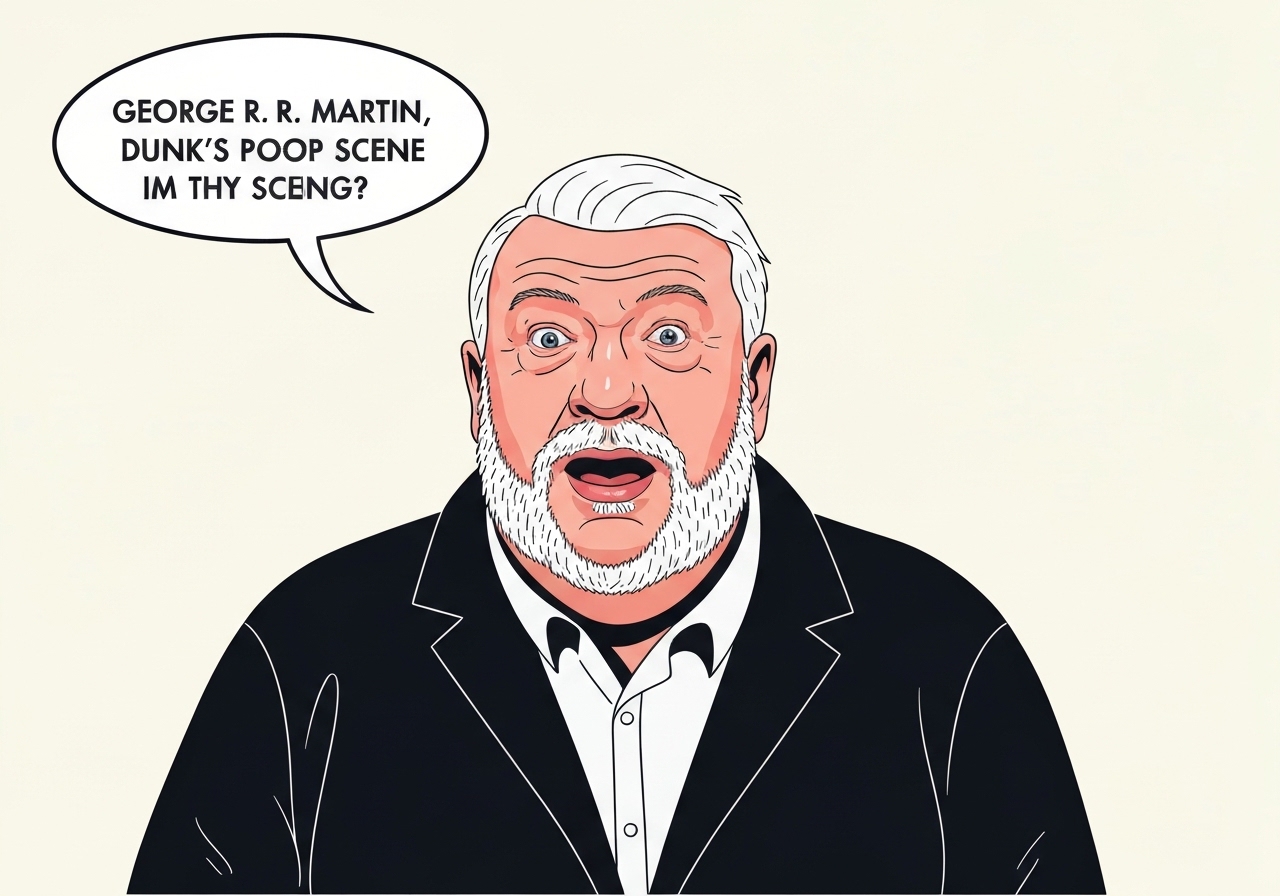
HBO’s new prequel series A Knight of the Seven Kingdoms opened with a scene that has drawn as much attention as it did laughter: Ser Duncan the Tall, known as Dunk, is briefly felled by an acute bout of gastrointestinal distress during his first episode, undercutting his tournament-day bravado. The sequence—which shows Dunk crouched behind a tree at a crucial moment after hearing the familiar Game of Thrones theme—was raised by io9 at a press day and discussed publicly by showrunner Ira Parker. George R.R. Martin, whose Dunk-and-Egg stories inspired the show, told The Hollywood Reporter he was surprised by the choice but ultimately deferred to the creative team. Producers say the moment is meant to humanize Dunk and underline that he is not a polished hero yet; the next episode arrives Sunday on HBO and HBO Max.
Key Takeaways
- The opening episode of A Knight of the Seven Kingdoms includes a graphic comedy beat in which Dunk experiences projectile diarrhea while hidden behind a tree.
- io9 raised questions about the scene during a press-day conversation with showrunner Ira Parker, who framed it as illustrating Dunk’s sudden confrontation with reality.
- George R.R. Martin told The Hollywood Reporter he was initially surprised—quoting him, “Yeah, that was a bit of a surprise.”—but did not block the scene.
- Parker has described the moment as signaling that Dunk “is not a hero yet,” emphasizing character vulnerability rather than mockery of Martin’s world.
- The episode juxtaposes a familiar Game of Thrones musical cue with an unglamorous physical reaction to undercut fantasy expectations.
- The series premiere and its marketing highlight a more modest, character-driven tone compared with the high-stakes spectacle associated with Game of Thrones.
Background
A Knight of the Seven Kingdoms adapts George R.R. Martin’s early Dunk and Egg novellas, which chronicle the adventures of a hedge knight and his squire decades before the events of Game of Thrones. The Dunk and Egg tales have long appealed to readers for their smaller scale and focus on individual character arcs rather than continent-spanning conflicts. HBO’s decision to develop that material into a limited series reflects a broader appetite for prequels that explore formative, quieter stories within Martin’s world. Adapting material rooted in lowborn perspective requires tonal adjustments; the showrunner and writers have signaled a willingness to lean into humor and grounded moments to differentiate the prequel from its predecessor.
The shadow of Game of Thrones remains large: its theme music and visual language are culturally recognizable cues that the new show can use experimentally. Past adaptations of Martin’s work have produced mixed reactions from the author and fans alike, with debates over fidelity, tone, and explicit content recurring across projects. Martin’s collaborative posture on this series—supportive but not prescriptive—frames how the production team negotiates faithfulness to the source while making choices for television. That dynamic helps explain why an unexpected comic-physical beat survived into the final cut.
Main Event
In the first episode’s opening act, Dunk resolves to try his luck at a nearby tournament, imagining the glory such a venture could bring. When the Game of Thrones theme swells in his imagination, reality intrudes: Parker said the music triggers Dunk’s awareness of the true risks involved, and the character reacts with acute nervousness that manifests as a bowel emergency. The moment is staged explicitly—Dunk hides behind a tree while the camera and sound design emphasize his embarrassment—so the sequence reads as character revelation rather than mere gross-out humor.
At a press-day exchange recounted by io9, the creative team explained that the juxtaposition of heroic fantasy and bodily failure was intentional, aiming to show how intimidating real action can be for an untested protagonist. When The Hollywood Reporter asked Martin about the scene, he acknowledged surprise and questioned its necessity in a rough cut, saying he wondered aloud whether it was needed. Nevertheless, Martin accepted showrunner Ira Parker’s case for the beat and allowed the scene to remain in the episode.
Parker defended the choice publicly, arguing the scene is not intended as disrespect toward Martin’s characters or the larger series legacy. Instead, he framed it as a simple, relatable illustration of self-doubt and the gap between private ambition and public performance. The creative team has presented the scene as emblematic of the season’s arc: Dunk must reckon with personal limits and hard realities before any heroic transformation can occur.
Analysis & Implications
The sequence functions as a tonal marker: by pairing a resonant musical cue with a humiliating physical failure, the show signals a departure from straight spectacle toward a character-first approach. That choice could broaden the series’ appeal to viewers who prefer smaller-scale storytelling, while risking pushback from audiences expecting a tone closer to Game of Thrones’ epic register. The production’s willingness to include coarse physical comedy suggests an attempt to render medieval life with a mix of pathos and unpleasant realism.
Martin’s public surprise is an important cultural moment because his stamp carries weight among fans and critics. His acceptance—rather than veto—of the scene provides cover for creative experimentation, which may encourage the showrunners to continue taking tonal risks. At the same time, visible authorial support is not a guarantee of uniform fan approval; reactions will likely split along lines of taste regarding humor, gross-out elements, and perceived respect for source material.
For the industry, the episode illustrates how franchises can be refreshed by foregrounding modest personal stories and vulnerable protagonists. If audiences respond well to Dunk’s imperfections, other franchises may follow by commissioning origin stories that prioritize interiority over spectacle. Conversely, if the gag overshadows the character work for many viewers, producers may recalibrate upcoming episodes and marketing to highlight drama over novelty.
Comparison & Data
| Series | Typical Tone | Notable Approach in Premiere |
|---|---|---|
| Game of Thrones | Epic, high-stakes, graphic | Broad spectacle, political intrigue, explicit violence |
| A Knight of the Seven Kingdoms | Smaller scale, character-driven | Grounded humor and vulnerability; premiere includes a crude-comedic beat |
The table highlights a qualitative contrast rather than quantitative metrics: the prequel opts for relational detail and character fallibility, while Game of Thrones emphasized sweeping conflict. That difference helps explain both creative choices like the bathroom gag and varied audience expectations going into the series.
Reactions & Quotes
“Yeah, that was a bit of a surprise,”
George R.R. Martin, author (to The Hollywood Reporter)
Martin’s response—short and candid—signals neither endorsement nor categorical rejection; he expressed puzzlement in early screenings but did not demand removal.
“All we’re trying to say here is that Dunk is not a hero yet. He’s just a nervy kid with a nervous stomach,”
Ira Parker, showrunner (press day)
Parker framed the scene as a character beat meant to humanize Dunk rather than to lampoon Martin’s work or the broader franchise.
Unconfirmed
- Whether the digestive gag was in Martin’s original notes for the Dunk and Egg stories is not confirmed; Martin said he normally does not dwell on such bodily details in his writing.
- Audience-level reaction metrics for the scene (streaming engagement, social sentiment breakdown) have not been publicly released and remain unavailable at this time.
- Reports that the scene was added very late in postproduction are based on production anecdotes and have not been independently verified.
Bottom Line
The premiere’s infamous poop scene is less a gratuitous stunt than a deliberate tonal signal: it positions Dunk as a fallible, relatable figure whose ambitions collide with messy reality. George R.R. Martin’s surprise—and subsequent acquiescence—gives the creative team latitude to explore a softer, more comedic register within Westeros without the author publicly distancing himself.
How viewers respond will shape the show’s immediate trajectory: positive reception could validate risk-taking in future episodes and marketing, while sustained criticism might prompt producers to emphasize drama over novelty. For now, the sequence has generated discussion that brings attention to the series’ central question: can a humble, error-prone knight grow into heroism in a world that often rewards brutality and spectacle?