
Lead
Ryanair CEO Michael O’Leary on Wednesday dismissed Elon Musk’s suggestion that the billionaire buy the low-cost carrier and shrugged off a string of insults amid a public dispute over installing Starlink satellite Wi-Fi on aircraft. The exchange, which has played out across social media and interviews this week, centers on Ryanair’s contention that Starlink’s antennas would add about 2 percent aerodynamic drag and raise costs. Musk responded on X by calling O’Leary an “utter idiot”, joking about buying the airline and polling followers, with 76.5 percent voting yes. O’Leary said regulatory limits on non-European ownership would likely prevent a majority takeover, but welcomed investment while using the spat for publicity.
Key Takeaways
- Ryanair CEO Michael O’Leary publicly rejected Elon Musk’s buyout quip and insult, calling Musk an idiot on Irish radio, while Musk retorted on X.
- Ryanair estimates Starlink would cost the carrier about $250 million per year for installation and systems, plus an estimated $200 million in extra fuel from roughly 2 percent added drag.
- The airline says Starlink requires two antennas per fuselage and that less than 5 percent of passengers on its 1 hour 15 minute average short-haul flights would pay for onboard internet.
- Elon Musk bought X in 2022 for $44 billion and used his platform to poll users on buying Ryanair, with 76.5 percent in favor in the posted poll.
- Ryanair has been in talks with Starlink for about 12 months and is also discussing alternatives including Amazon’s Project Kuiper, but only if costs fall.
- O’Leary noted that non-European nationals cannot hold majority stakes in European airlines, a constraint he cited in response to Musk’s remarks.
- The airline turned the row into marketing, launching a seat sale that used a caricature of Musk in promotional material.
Background
The spat comes at a moment when inflight connectivity is becoming a common differentiator, but adoption varies widely by carrier type and route length. Low-cost carriers like Ryanair prioritize unit costs and quick turnarounds, making any incremental fuel or installation expense more consequential than for full-service airlines. Starlink, SpaceX’s satellite internet system, has been piloted by multiple operators and markets itself on high bandwidth, but equipment weight, aerodynamic effects and certification are practical hurdles for large fleets.
European ownership rules for airlines are designed to protect regional control and require that majority ownership rests with EU nationals or entities, which O’Leary cited after Musk, who was born in South Africa and resides in the United States, suggested buying Ryanair. Musk’s control of X since his 2022 $44 billion purchase has made the platform a frequent amplifier of his business moves and provocations. Ryanair’s chief executive has a long record of blunt public comments and has previously used controversy to secure media attention.
Main Event
Ryanair told investors and the public last week that it had ruled out installing Starlink on its fleet because the carrier estimates the antennas would raise fuel consumption and overall operating costs. The airline’s calculations include installing two antennas per aircraft and an estimated 2 percent aerodynamic drag penalty, which O’Leary said would increase fuel bills by roughly $200 million annually.
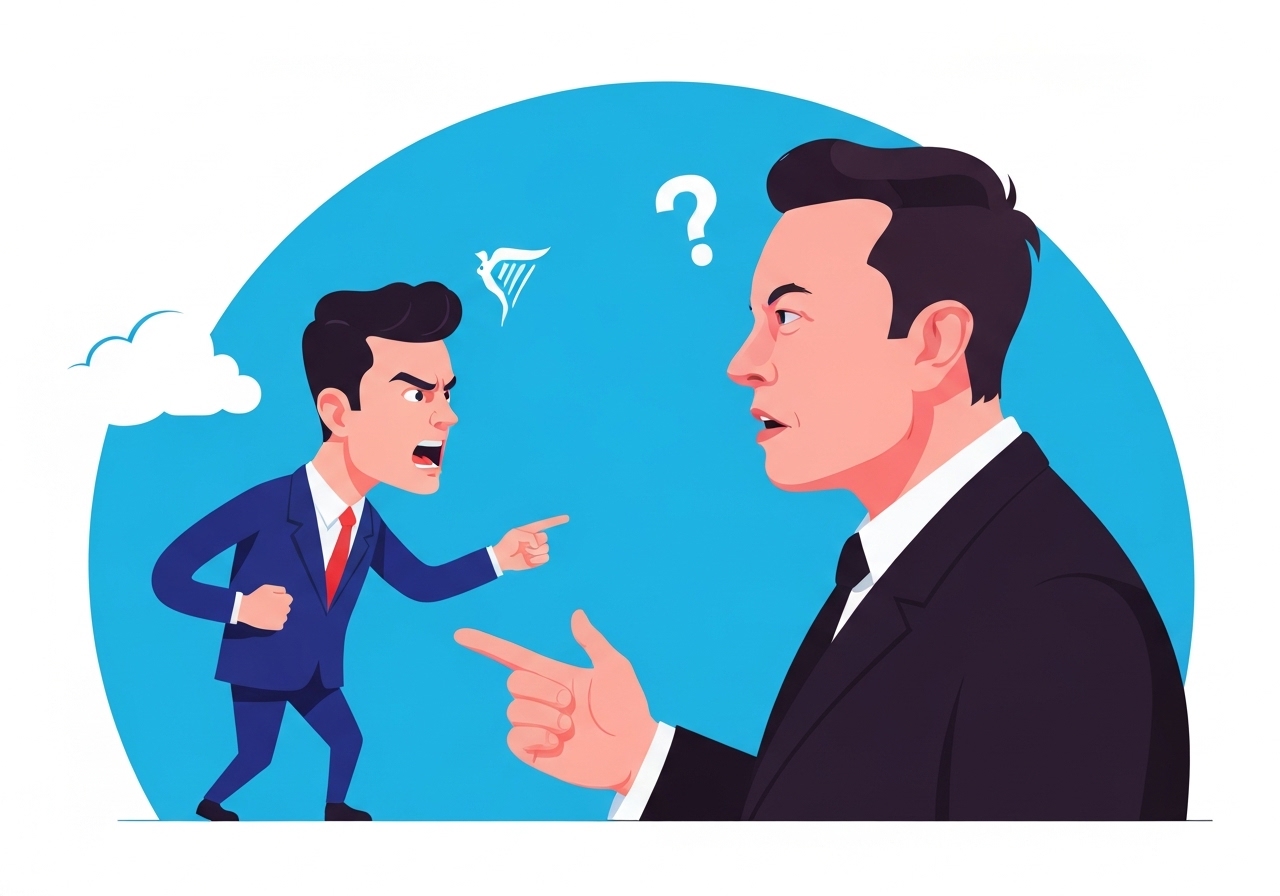
When Musk accused O’Leary of being misinformed, O’Leary responded on Irish radio by saying he would ignore Musk and describing him as an idiot. Musk countered on X, labeling O’Leary an utter idiot and polling followers about whether he should buy Ryanair, adding a taunt about appointing someone named Ryan to run the carrier. The poll posted by Musk registered 76.5 percent in favor, according to the X post.
Speaking to reporters in Dublin, O’Leary observed that EU ownership rules limit non-European majority stakes, while also saying that any investment from Musk would be welcome and probably a good financial bet. Ryanair leveraged the public exchange to promote a seat sale, using imagery referencing Musk for additional publicity.
O’Leary also discussed wider concerns tied to Musk’s businesses, referencing controversies around X’s AI chatbot Grok and its reported misuse for creating nonconsensual deepfakes. He called parts of social media, and X in particular, a cesspit and said recent issues involving deepfake imagery were offensive.
Analysis & Implications
The dispute highlights the tension between technology providers seeking new distribution channels and airlines focused on marginal costs. For a budget carrier with thin margins and high sensitivity to fuel expense, a recurring $450 million hit when combining system and fuel estimates would be material, especially when projected passenger uptake is under 5 percent on short routes. That math underpins Ryanair’s public skepticism of paying for Starlink without a clear path to recoup costs.
From a regulatory and governance perspective, the episode underscores how ownership rules constrain cross-border dealmaking in aviation. Even with billionaire interest, legal limits on control by non-Europeans mean acquisition would face structural hurdles, turning Musk’s poll into more of a PR stunt than an actionable takeover strategy in the near term.
Politically and reputationally, both principals gain and risk visibility. Musk’s posts steer public attention and can pressure firms or sway consumer sentiment, while O’Leary’s blunt responses play well with Ryanair’s cost-conscious customer base. However, using public spats for marketing can backfire if perceived as trivializing safety, privacy or regulatory matters, or if it distracts management from operational priorities.
Finally, the episode may accelerate competitive offers from other connectivity providers. Amazon’s Project Kuiper and legacy satellite operators are likely to stress total cost of ownership, certification timelines and revenue-sharing models to win airline contracts. For Ryanair, bargaining power lies in scale and the carrier’s insistence that any solution must lower, not raise, per-flight costs.
Comparison & Data
| Item | Estimated annual impact (USD) | Notes |
|---|---|---|
| Starlink systems and installation | 250,000,000 | Ryanair estimate for fleet equipment and service |
| Additional fuel from ~2% drag | 200,000,000 | Ryanair estimate of higher fuel bill |
| Total incremental cost | 450,000,000 | Combined system and fuel estimates |
| Average short-haul flight | 1 hour 15 minutes | Ryanair average duration |
| Estimated passenger uptake | <5% | Ryanair projection for paid Wi-Fi on short flights |
The table shows Ryanair’s internal estimates that drive its public position. Even if Starlink offered lower equipment fees, the marginal fuel penalty and limited passenger willingness to pay on short sectors would make payback challenging. Competing systems that promise lower drag, different antenna placements, or alternative commercial splits could change the calculus.
Reactions & Quotes
Ryanair framed the dispute as both a technical and commercial judgment, while publicly mocking Musk’s remarks to amplify publicity. The following representative statements were made in the course of the exchange.
I would pay no attention whatsoever to Elon Musk, he is an idiot.
Michael O’Leary, Ryanair CEO
O’Leary made that remark on an Irish radio program after Musk questioned his statements about Starlink. He reiterated that cost and aerodynamic drag, rather than technology performance, were the principal concerns.
Utter idiot. Should I buy Ryan Air and put someone whose actual name is Ryan in charge?
Elon Musk, owner of X
Musk posted the comment on X and followed with a poll asking followers whether he should buy the airline; 76.5 percent responded yes. The post served more as public provocation than a documented acquisition proposal.
We like the Starlink system. It is a terrific system. It works very well, but it will cost us about $250 million a year.
Michael O’Leary, on Starlink talks
O’Leary said Ryanair has been in discussions with Starlink for roughly 12 months and that the cost estimates reflect the carrier’s assessment of equipment and operational impact.
Unconfirmed
- The precise 2 percent aerodynamic drag figure and the $200 million fuel cost are Ryanair estimates and have not been independently verified by an aviation regulator or an external engineering study.
- Musk’s poll on X reflects user sentiment on the platform at the time of posting but does not constitute an actionable acquisition proposal or indicate regulatory feasibility.
- Details about the alleged nonconsensual deepfakes generated via Grok are still under investigation and have not been fully documented in a public regulatory finding.
Bottom Line
The public spat between Ryanair and Elon Musk centers on technical cost estimates, regulatory constraints and the power of social media to elevate commercial disagreements into headline news. Ryanair’s position is rooted in fleet-level economics and EU ownership rules, making a Musk-led takeover unlikely in the near term and Starlink adoption conditional on better commercial terms.
For the broader industry, the episode underscores how inflight connectivity decisions will hinge on total cost of ownership and passenger willingness to pay, particularly for short-haul, low-cost carriers. Expect suppliers to refine antenna designs, pricing models and certification strategies to address the concerns flagged by airlines like Ryanair.