
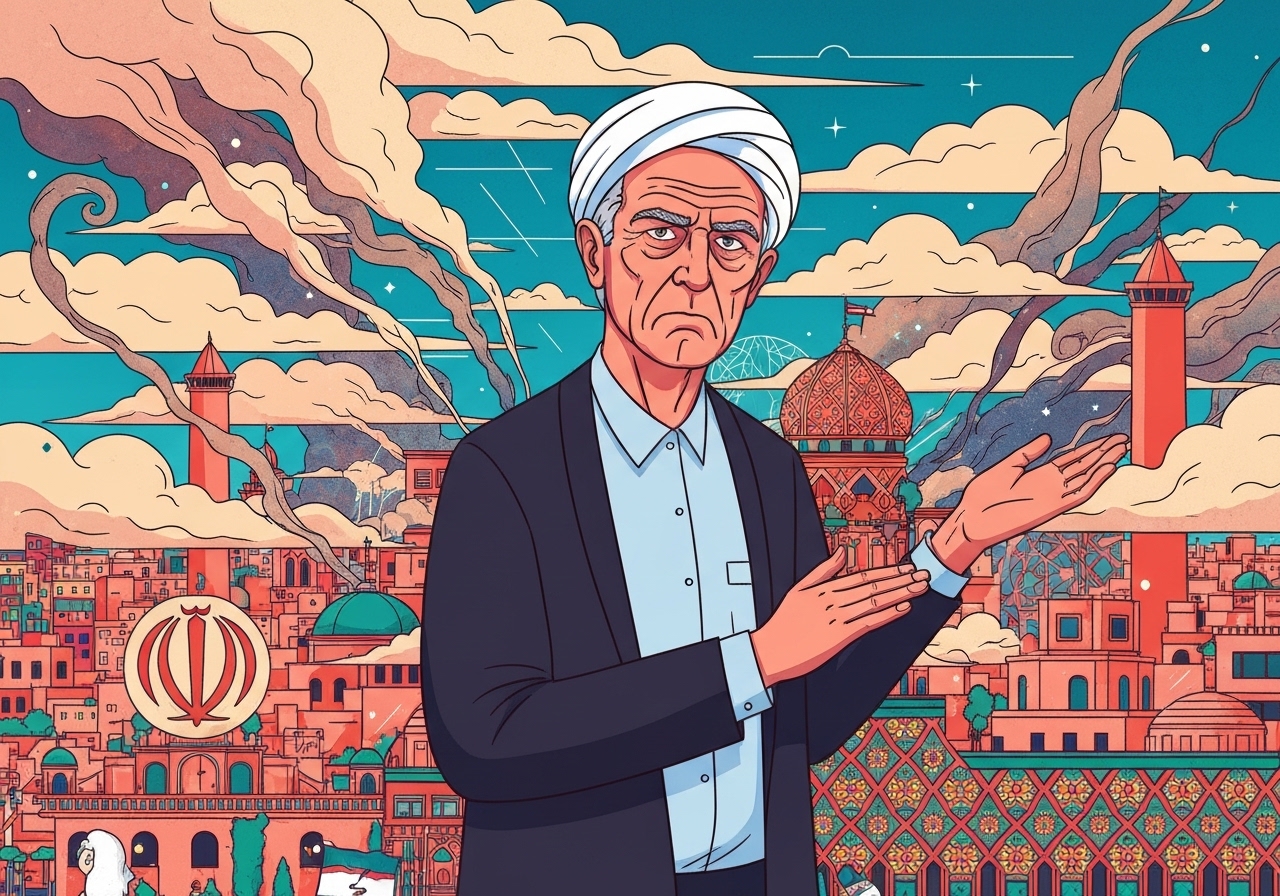
At a Washington town hall on January 22, 2026, former CIA director and retired four‑star general David Petraeus said the Iranian regime’s recent measures raise “enormous questions” about its ability to sustain control, while acknowledging the government appears capable of suppressing much of the current unrest. Petraeus tied the regime’s pressure to a series of military and political setbacks over the past year and warned that, although the protests are intense and widespread, wholesale collapse is not imminent. His remarks came amid protests across Iran since late December, a harsh security crackdown, and disputed reports that place fatalities between 5,000 and 20,000 and tens of thousands detained.
- David Petraeus spoke at a January 22, 2026 town hall hosted by Iran International in Washington, saying the regime’s actions raise serious sustainability concerns.
- Protests began in late December 2025 and, according to multiple reports, the death toll ranges from 5,000 to 20,000 with tens of thousands arrested.
- Petraeus described the last year as “very, very damaging” to Iran after military and proxy setbacks, including strikes in the 12‑Day war that degraded Iranian capabilities.
- U.S.-Iran tensions rose after President Trump threatened military action and later appeared to pause a strike following reports of canceled executions.
- The Institute for the Study of War has cataloged indicators of strain inside Iran’s ruling structures, but Petraeus said those indicators are not yet sufficient to predict regime collapse.
- Analysts note economic contraction and attrition among proxies such as Hezbollah, Hamas and the Assad regime as compounding pressures on Tehran.
Background
Large anti‑government demonstrations have spread across Iran since late December 2025, triggered by longstanding grievances over political repression, economic hardship and human rights abuses. The state’s response has included a concerted security crackdown with local and international media reporting widespread arrests and heavy use of force. Economically, Iran continues to face severe strain from prolonged fiscal stress, sanctions and the military effects of regional conflicts, contributing to shortages and declining public services.
Regionally, Iran’s network of allied groups and partner states has shown signs of weakening after a year of kinetic losses and diplomatic setbacks. Israeli and U.S. strikes during the 12‑Day war degraded some Iranian military capabilities, while allies such as Hezbollah and forces tied to the Assad government have suffered operational setbacks. Those developments reduce Tehran’s ability to project power and complicate its calculations for domestic and foreign policy responses.
Main Event
At the town hall, Petraeus framed recent government actions—mass arrests, curfews and forceful crowd control—as indicators that test the regime’s resilience. He emphasized the dual dynamic the government faces: the capacity to crush protests in the short term through superior force, and the longer‑term problem of sustaining legitimacy and order amid economic decline and societal anger. Petraeus noted that while the regime appears to be able to suppress many demonstrations, the breadth of unrest leaves open the prospect of prolonged instability.
Petraeus pointed to the past year’s attrition of Iran’s regional proxies—Hezbollah in Lebanon, Hamas in Gaza and Assad’s forces in Syria—as strategic setbacks that erode Tehran’s external buffers. He described these losses as part of a pattern making the regime’s position “very difficult,” linking battlefield and political pressure to internal vulnerability. Still, he cautioned against assuming a rapid replica of Egypt’s 2011 outcome, where the military’s refusal to fire on protesters precipitated regime change.
The photo of the remains of the Shemiran‑e‑Nou Mosque, set on fire during protests on January 8–9 and photographed on January 21, 2026, underscores the unrest’s intensity in Tehran. Local responders and witnesses reported arson and clashes in multiple cities during early January, illustrating how protests have spread beyond single locales to encompass diverse urban centers. Internationally, statements and threats from the United States have heightened diplomatic tensions and raised concerns among analysts about miscalculation.
Analysis & Implications
Petraeus’s assessment blends operational military observation with political judgment: the regime retains coercive instruments that can quell demonstrations for now, but sustaining long‑term control becomes harder as economic conditions worsen and social trust erodes. If Tehran persists with blanket repression, it risks deepening popular alienation and driving more segments of society into opposition, complicating post‑crackdown stabilization. Conversely, limited reforms or concessions could buy time but may be politically unacceptable to factional hardliners within the state apparatus.
Regionally, attrition of Iran’s proxies reduces its strategic depth and bargaining leverage, potentially narrowing Tehran’s options in negotiations and coercive diplomacy. A smaller or degraded proxy network also alters calculations for neighboring states and nonstate actors who previously relied on Iranian support. This shift could accelerate realignments in the Levant and Gulf, with ripple effects for Israeli, Syrian and Lebanese security postures.
Internationally, the risk calculus includes military missteps, escalation with the United States and the humanitarian consequences of sustained violence. Experts caution that while an all‑out interstate war remains a low‑probability scenario, continued tit‑for‑tat strikes and threats increase the chance of accidental escalation. Economic sanctions and diplomatic isolation will likely compound domestic pressures, but they also complicate pathways for political compromise.
Comparison & Data
| Indicator | Recent estimate | Context |
|---|---|---|
| Reported fatalities | 5,000–20,000 | Range compiled from multiple media and rights groups |
| Arrests | Tens of thousands | Large‑scale detentions reported across cities |
| Proxy attrition | Operational setbacks | Hezbollah, Hamas and Assad‑aligned units reported degraded capability |
The table summarizes the principal, publicly reported indicators drawing together casualty ranges, detention scale and proxy performance. These figures are contested and vary by source; they serve as a snapshot of widely cited metrics that analysts use when assessing regime stability. Tracking changes over weeks and months will be necessary to determine whether these indicators coalesce into sustained systemic breakdown or remain episodic signals of stress.
Reactions & Quotes
Petraeus’s comments prompted a mix of commentary from officials, analysts and the public. Below are brief excerpts placed in context to reflect how different actors interpreted the town hall.
“It signals enormous questions about the regime’s ability to sustain the situation.”
David Petraeus, former CIA director
This statement framed Petraeus’s core judgment that the regime’s recent measures expose vulnerabilities even as security forces retain short‑term control. He used the phrase to underline the gap between coercive capacity and political legitimacy.
“It is starting to look like the regime will be able to put [the protests] down.”
David Petraeus, former CIA director
Petraeus added this cautionary note to indicate that operational superiority can produce a temporary suppression of dissent, making a quick transition to political change unlikely without further ruptures inside security institutions.
“There are some cracks appearing, but not in the numbers or actions that produced Egypt’s 2011 outcome.”
Institute for the Study of War (paraphrase)
The Institute for the Study of War cataloged indicators of internal strain; analysts emphasize that comparable mass defections by security forces have not yet occurred, limiting the chances of immediate regime collapse.
Unconfirmed
- The precise death toll: figures between 5,000 and 20,000 are reported but remain disputed among rights groups and governments.
- That President Trump called off a strike specifically because Iran canceled hundreds of executions is reported by some outlets but lacks a direct, corroborated timeline from official U.S. sources.
- The extent to which elite security units might refuse orders remains uncertain and is a critical, unresolved variable for forecasts about regime durability.
Bottom Line
David Petraeus’s assessment frames Iran as a state under significant pressure from economic distress, battlefield setbacks and broad popular unrest, yet still possessing the means to blunt immediate challenges. Short‑term coercion appears viable for the regime, but the combination of proxy attrition and deepening domestic grievances raises meaningful questions about long‑term sustainability. Observers should watch indicators such as elite cohesion, protest diffusion, and economic shock triggers to gauge whether current strain evolves into systemic crisis or a managed stabilization.
For policymakers and analysts, the priority is calibrated observation: avoiding alarmist predictions while preparing contingency plans for escalation, humanitarian fallout and regional spillovers. Continued, careful documentation from independent monitors and cross‑checking of casualty and detention claims will be essential to maintain an accurate, reliable record as events unfold.
Sources
- The Jerusalem Post — media report covering Petraeus remarks and the January 22, 2026 town hall (journalism).
- Institute for the Study of War — think tank analysis referenced by Petraeus on indicators of regime strain (think tank).
- Iran International — event organizer and broadcaster of the town hall where Petraeus spoke (media).