
Lead
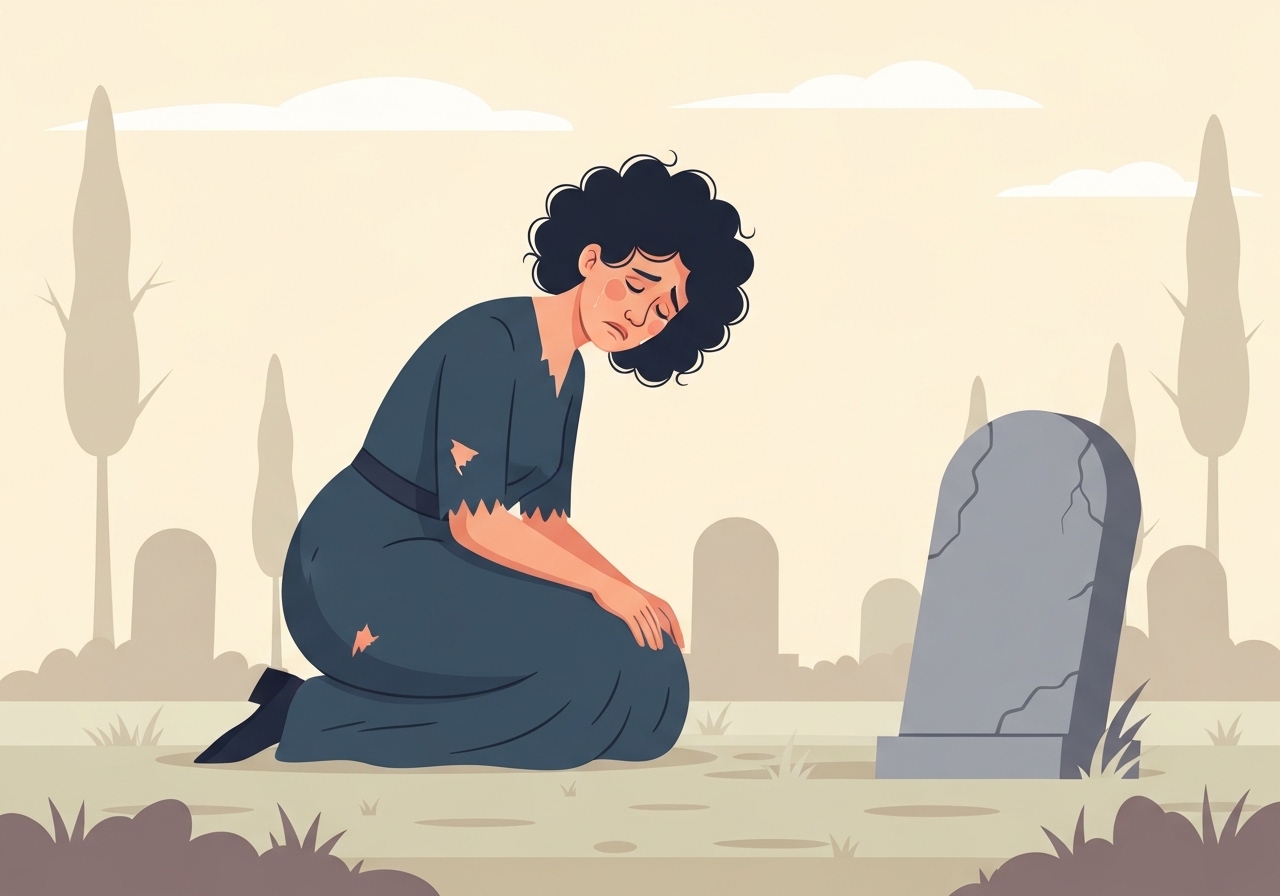
In Syracuse, New York, a 55-year-old woman, Rhea Holmes, spent months sleeping beside her husband Eddie’s gravesite after his sudden death. The couple had been married 26 years and had just had an accepted offer on a home in October 2020 when Eddie died of a heart attack. With little money and reluctant to enter a shelter, Holmes used the down payment to buy her husband a cemetery plot and began living there by night in May 2025. In December 2025 a retired cemetery worker alerted police and Officer Jamie Pastorello helped move her into temporary shelter and ultimately into an affordable tiny home.
Key Takeaways
- Rhea Holmes, 55, began sleeping at Oakwood Cemetery in Syracuse in May 2025 after losing housing and work following her husband’s death.
- Her husband, Eddie Holmes, died of a heart attack the same day their October 2020 offer on a house was accepted; the couple had been married 26 years.
- A retired cemetery employee spotted Holmes in December 2025 and notified Syracuse police, prompting Officer Jamie Pastorello to intervene.
- Pastorello paid for a hotel stay, arranged campus lodging through Le Moyne College during winter break, launched a crowdfunding effort and connected Holmes with A Tiny Home for Good.
- Within roughly 20 days of discovery, Holmes moved from sleeping outdoors to temporary indoor shelter and later into an affordable tiny home run by a nonprofit.
Background
The chain of events began in October 2020 when Eddie and Rhea Holmes put in an offer on their planned home; officials say the offer was accepted the same day Eddie died of a heart attack. Facing sudden bereavement and financial strain, Rhea allocated the couple’s down payment to purchase a cemetery plot at Oakwood Cemetery and installed a bench to sit by her husband’s grave. Over the following years she struggled with depression, lost her job and was evicted from her residence.
Syracuse, like many U.S. cities, has seen a widening gap between available housing and people in crisis, and local nonprofits have expanded programs such as tiny-home rentals to offer lower-cost options. Le Moyne College is a Jesuit institution in Syracuse; its president temporarily opened campus housing during winter break in response to a local appeal. A Tiny Home for Good is a nonprofit that arranges affordable tiny-home rentals for people exiting homelessness.
Main Event
Beginning in May 2025, Holmes is reported to have spent her days volunteering at a nearby food pantry and her nights sleeping in Oakwood Cemetery at the site where Eddie is buried. Colleagues at the pantry and passersby did not immediately identify her as someone in need of shelter. A retired cemetery worker noticed Holmes living on-site in December 2025 and notified Syracuse police; Officer Jamie Pastorello responded to that call.
Pastorello, who has retired from law enforcement but continued to work at the cemetery, said he would not let Holmes sleep outside any longer. He first paid for a hotel room, then reached out to community partners. The college president agreed to let Holmes stay in campus housing while students were away for winter break, and Pastorello launched a crowdfunding campaign to cover immediate needs.
Through those connections, Pastorello linked Holmes with A Tiny Home for Good. When a tiny home became available from the nonprofit, Holmes was offered rental terms she could manage and moved into the unit. During a reunion arranged after her move, Holmes embraced Pastorello several times, conveying relief and gratitude while acknowledging that nothing replaces her husband.
Analysis & Implications
This case highlights how grief, sudden loss of income and gaps in the social safety net can push a person into unconventional forms of sheltering. Holmes’s choice to stay near her husband’s grave combined emotional attachment with practical barriers—she avoided shelters out of pride and familiarity with the plot she had paid for. That mixture of personal decision and structural constraint is common among people who become unsheltered after a crisis.
The rapid community response—an individual spotting the situation, a retired officer mobilizing resources, a college enabling short-term housing and a nonprofit offering a tiny home—shows the potential for ad hoc networks to fill urgent gaps. But relying on serendipity and goodwill is not a scalable policy solution; it underscores persistent limits in permanent affordable housing supply and coordinated outreach.
Programs like tiny-home rentals can be cost-effective transitional options, offering stability faster than traditional housing pipelines. Yet they require follow-up services—case management, income supports and mental health care—to ensure long-term success. Holmes’s move illustrates both the promise of small-scale housing solutions and the need for systemic investment to prevent similar episodes.
Comparison & Data
| When | Event |
|---|---|
| October 2020 | Offer on house accepted; Eddie Holmes dies of a heart attack |
| May 2025 | Rhea Holmes begins sleeping at Oakwood Cemetery |
| December 2025 | Cemetery worker alerts police; Pastorello intervenes |
| Late Dec 2025 – Jan 2026 | Temporary hotel and campus housing; moved into a tiny home |
This simple timeline shows a five-year span between the traumatic loss and the point when community intervention led to housing. While this is one personal story, municipal data in many U.S. cities show that evictions, job loss and mental-health crises often interact over months to produce unsheltered homelessness. Small transitional programs typically operate with far less funding than large permanent supportive housing efforts, limiting scale.
Reactions & Quotes
Public statements and eyewitness comments framed the incident as a local rescue rather than a systemic solution.
“This is what I purchased,” Holmes said of the plot at Oakwood Cemetery, describing why she stayed there at night.
Rhea Holmes
“I assumed that I was going to die there,” Holmes said, adding that she felt an “angel” arrived when help came.
Rhea Holmes
“It was just the right thing to do. And I wasn’t going to let Rhea sleep outside again,” Officer Jamie Pastorello said, describing his immediate actions to secure shelter and supports.
Officer Jamie Pastorello, Syracuse Police (responding officer)
Unconfirmed
- Whether Holmes had received formal eviction notices in each residence before sleeping in the cemetery is not independently verified in public reports.
- Details about the precise amount of the original down payment used for the cemetery plot and bench were not disclosed by Holmes in available accounts.
- The length and specifics of any formal outreach by city homeless services to Holmes prior to December 2025 have not been confirmed in public records.
Bottom Line
Rhea Holmes’s story is a stark example of how sudden personal loss, financial strain and limited shelter options can result in a person living outdoors in a place chosen for emotional reasons rather than necessity alone. The intervention by a retired officer and rapid local support moved her from a grave-side existence to a tiny home within weeks, illustrating the power of community action.
At the same time, the episode exposes broader policy questions: how to scale timely housing interventions, how to integrate grief and mental-health supports into homelessness responses, and how to ensure affordable housing availability before crises force people into desperate arrangements. Holmes’s case should prompt local officials and nonprofits to examine preventive outreach, eviction prevention and expanded transitional housing options.
Sources
- CBS News — national news outlet report with interviews and local reporting
- Le Moyne College — local college (institutional website)
- A Tiny Home for Good — nonprofit organization (program information)