
Lead
As delegations from the United States, Russia and Ukraine met in Abu Dhabi in January 2026 for their first trilateral talks since the full-scale invasion, all sides identified one remaining sticking point: territory. The contested area is the Donbas — the coal- and industry-rich eastern region comprising Donetsk and Luhansk. Ukrainian President Volodymyr Zelensky reiterated that Kyiv will not cede sovereign land, while Kremlin aides warned Russia will press its demands, including on the battlefield, until the territorial issue is resolved. With front lines unchanged in many places and heavy losses reported, the diplomatic impasse looks likely to persist.
Key takeaways
- The Donbas covers Donetsk and Luhansk, historically Ukraine’s industrial heartland with coal, steel and fertile agricultural areas.
- Russia began large-scale operations in the region in 2014 and formally recognized self-styled Donetsk and Luhansk People’s Republics in February 2022, then launched a full-scale invasion three days later.
- After years of fighting, Russian forces control nearly all of Luhansk and roughly 70% of Donetsk; the remaining Donetsk territory is contested or held by Ukraine.
- From 2014 through early 2022, about 14,000 people died in the low-intensity war along the Donbas front, according to Ukrainian tallies.
- High-profile incidents tied to the conflict include the downing of Malaysia Airlines Flight MH17, which killed 298 people and led a Dutch court to convict two Russians and one separatist.
- Estimates from monitoring groups suggest that, at the current rate of territorial gains, Russia could need roughly another 18 months to seize the remaining areas of Donbas under Ukrainian control.
- Diplomatic proposals discussed include creating a special economic or “free economic zone” in parts of the Donbas in return for security guarantees, though details and Russian acceptance remain unclear.
- Human-rights organizations and UN reporting document widespread rights abuses in Russian-occupied areas, including detention, forced transfers and restrictions on civil liberties.
Background
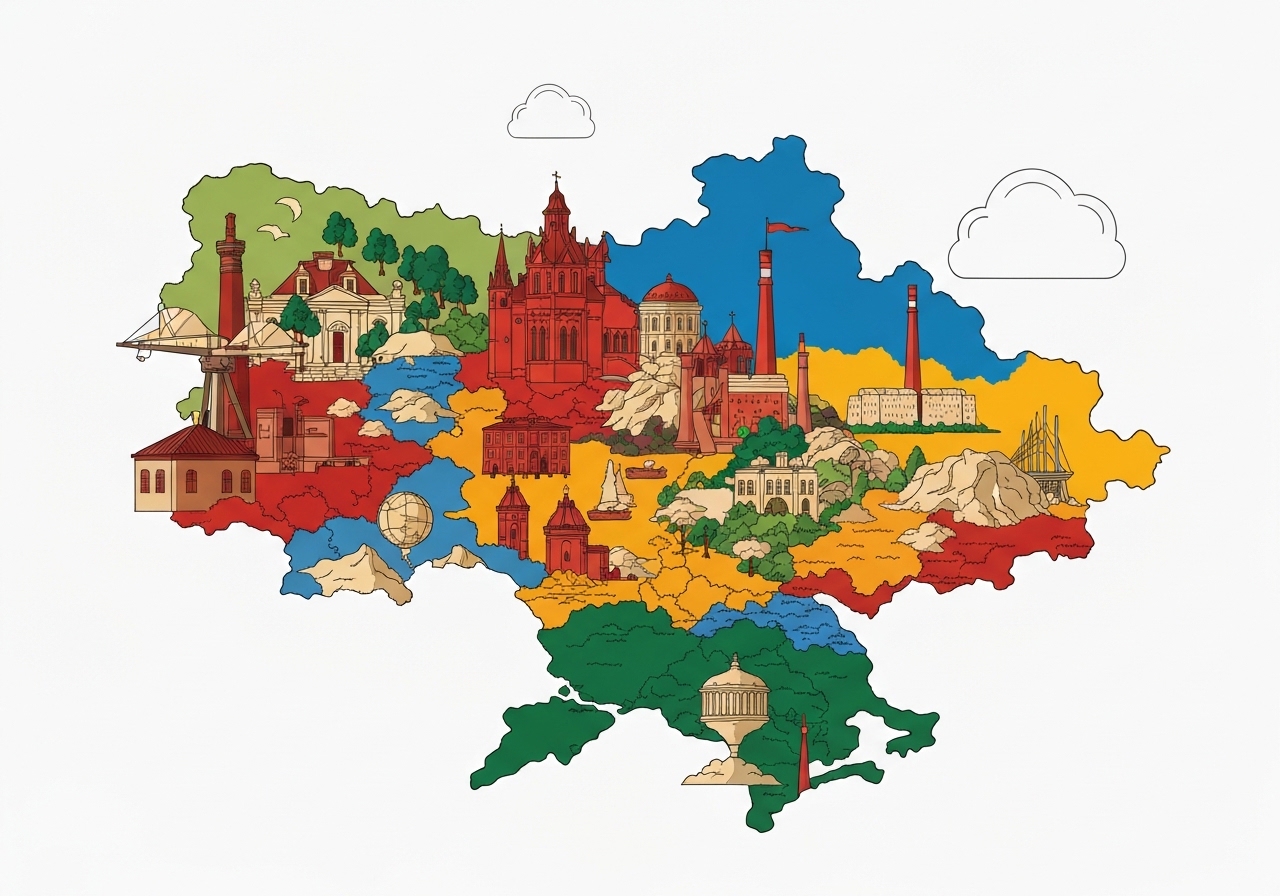
The Donbas — made up of Donetsk and Luhansk regions — developed into Ukraine’s heavy-industrial core over the 19th and 20th centuries. Rich in coal and steel capacity, the area was deeply integrated into Soviet-era supply chains; river and canal links to the Sea of Azov supported industry and transport. Its population historically included a large number of Russian speakers and migrants from across the Soviet Union, contributing to distinct local identities.
The modern conflict dates to 2014, when Russia annexed Crimea and backed armed separatists in parts of Donetsk and Luhansk. Those events followed years of political turmoil in Kyiv and spurred a protracted, low-intensity war along front lines that persisted into 2022. Over that period, eastern Ukraine saw intermittent ceasefires, local elections under occupation and repeated claims — denied by Moscow — that Russia did not have regular forces operating there.
The international legal framework is clear: the use of force to alter borders is prohibited, and permanent territorial transfers effected under coercion would violate that principle. Ukraine’s Western backers have framed diplomacy around restoring sovereignty while mitigating further bloodshed, producing proposals that attempt to balance territorial integrity with pragmatic security arrangements.
Main event
The Abu Dhabi trilateral meeting in January 2026 brought U.S., Russian and Ukrainian envoys together to discuss ending hostilities and shaping a post-conflict settlement. Delegations converged on the same central problem: the fate of territory in the Donbas. Ukrainian officials have consistently rejected any deal that entails permanent handover of land captured by force, making the territorial dimension the principal obstacle to agreement.
On the eve of talks, President Zelensky stressed the dispute is fundamentally about land, repeating that Kyiv will not barter away sovereign territory. Kremlin aides, including Yury Ushakov, signaled the opposite position: Moscow refuses a long-term settlement that does not address Russia’s territorial claims and explicitly warned that unresolved demands could be pursued by force. Those rival stances framed discussions and limited room for compromise.
Operationally, the battlefield picture remains mixed. Russia holds almost all of Luhansk and about 70% of Donetsk, but large swathes of Donetsk remain under Ukrainian control or contested. External monitors and analysts say gains for either side have been incremental and costly; independent estimates put Russian battlefield casualties at high monthly levels, figures Moscow does not publish officially.
Diplomats acknowledged proposals on the table but kept details sparse. One U.S.-reported idea described by Ukrainian leaders involves creating an economic regime for parts of the Donbas still under Kyiv’s authority in exchange for security guarantees — a formula that could freeze lines without conceding legal sovereignty. The U.S. has not publicly released text and it remains unclear if Moscow would accept such a compromise.
Analysis & implications
Territory in the Donbas matters for military, economic and political reasons. Militarily, the region contains key railways, roads and industrial “fortress” cities that anchor Ukraine’s defensive depth. Losing remaining positions would strain Ukrainian logistics and make other eastern sectors more vulnerable to renewed offensives. Economically, Donbas assets include energy and metallurgical infrastructure that have strategic value for reconstruction and industrial capacity.
Politically, any negotiated change to borders would be explosive at home in Kyiv. Public opinion surveys indicate Ukrainians are unlikely to support permanent territorial concessions; even a referendum under pressure would risk being unlawful under international norms. For Western capitals, endorsing a solution that rewards conquest would set a precedent many are reluctant to accept, complicating alliance cohesion on aid and recognition.
For Moscow, controlling the Donbas is tied to broader narratives about historical claims and security buffers. Kremlin messaging has framed the region as central to Russian identity and influence in the near abroad, and Putin’s long-term objective appears to be preventing Ukraine from firmly anchoring to Western institutions. If Russia cannot achieve its aims diplomatically, it has signaled a willingness to press them militarily, escalating the stakes.
Finally, the human-rights and humanitarian impact is acute. Reports from survivors and rights monitors describe detention, forced transfers, conscription, and repression of dissent in occupied areas. Any negotiated freeze that leaves these populations under occupation would raise urgent questions about protections, accountability and the mechanics of humanitarian access.
Comparison & data
| Region | Approx. Russian control | Approx. Ukrainian control | Note |
|---|---|---|---|
| Luhansk | Nearly 100% | Minimal | Russia controls almost the whole region. |
| Donetsk | ~70% | ~30% | Remaining areas include contested front lines and Ukrainian-held cities. |
The table summarizes front-line control as reported by monitoring organizations and public statements: Russia dominates Luhansk while Donetsk remains contested. Independent analysts estimate that, without a change in tempo, Russia would require roughly 18 months to capture the remaining Ukrainian-held Donetsk territory. Casualty estimates vary widely; Ukrainian figures cite about 14,000 killed during the 2014–2022 low-intensity phase, and some external commentators have suggested very high Russian monthly losses during the full-scale war phase, figures Moscow does not confirm.
Reactions & quotes
Ukrainian leaders framed the issue in sovereignty terms ahead of the talks, rejecting any plan to hand over territory acquired by force. The comment underlined Kyiv’s negotiating red lines and its domestic political constraints.
“It’s all about the eastern part of our country, it’s all about the land.”
Volodymyr Zelensky, President of Ukraine
Russian officials reiterated that territory is non-negotiable in any lasting settlement and signalled willingness to continue military operations if diplomatic terms do not meet Moscow’s demands.
“There will be no long-term settlement without resolving the territorial issue,”
Yury Ushakov, Kremlin aide
Third-party commentators and some allied officials highlighted the human cost and the question of precedent in setting terms that might reward conquest. Dutch and international judicial findings relating to MH17 have also kept legal accountability and evidence before courts as part of the broader international response.
“We cannot ignore the human-rights record in occupied areas while discussing lines on a map.”
Independent human-rights monitor (paraphrased)
Unconfirmed
- Precise text and legal terms of the U.S.-reported proposal for a “free economic zone” have not been published and remain unverified.
- Casualty figures cited in some public commentary — including monthly Russian losses quoted by officials — lack official confirmation from the Russian government.
- Whether Moscow would accept any freeze that leaves significant areas under Ukrainian control is not confirmed by any public Russian offer.
Bottom line
The Donbas is at once economically valuable, strategically important and politically symbolic — which helps explain why it has become the central bargaining chip and battleground. Diplomacy in early 2026 has so far failed to bridge the fundamental divide: Kyiv rejects ceding territory taken by force, while Moscow insists territorial questions be settled in its favor. That impasse means the front lines, and the suffering they impose, are likely to persist unless a new and credible security arrangement is agreed that reconciles legal norms with on-the-ground realities.
For international actors and Ukrainians alike, the core dilemma is whether short-term measures to stop the killing (such as a freeze or special economic arrangements) can be coupled with long-term mechanisms to restore sovereignty, ensure accountability for abuses, and deter future aggression. Absent such mechanisms, any settlement risks leaving deep grievances unresolved and the hostilities liable to reignite.
Sources
- CNN (press report summarizing recent diplomacy and conflict history)
- Institute for the Study of War (think tank monitoring battlefield developments)
- Reuters — MH17 court reporting (press coverage of Dutch court verdict)
- UN Human Rights Office (OHCHR) (UN reporting on human-rights conditions in occupied Ukraine)