
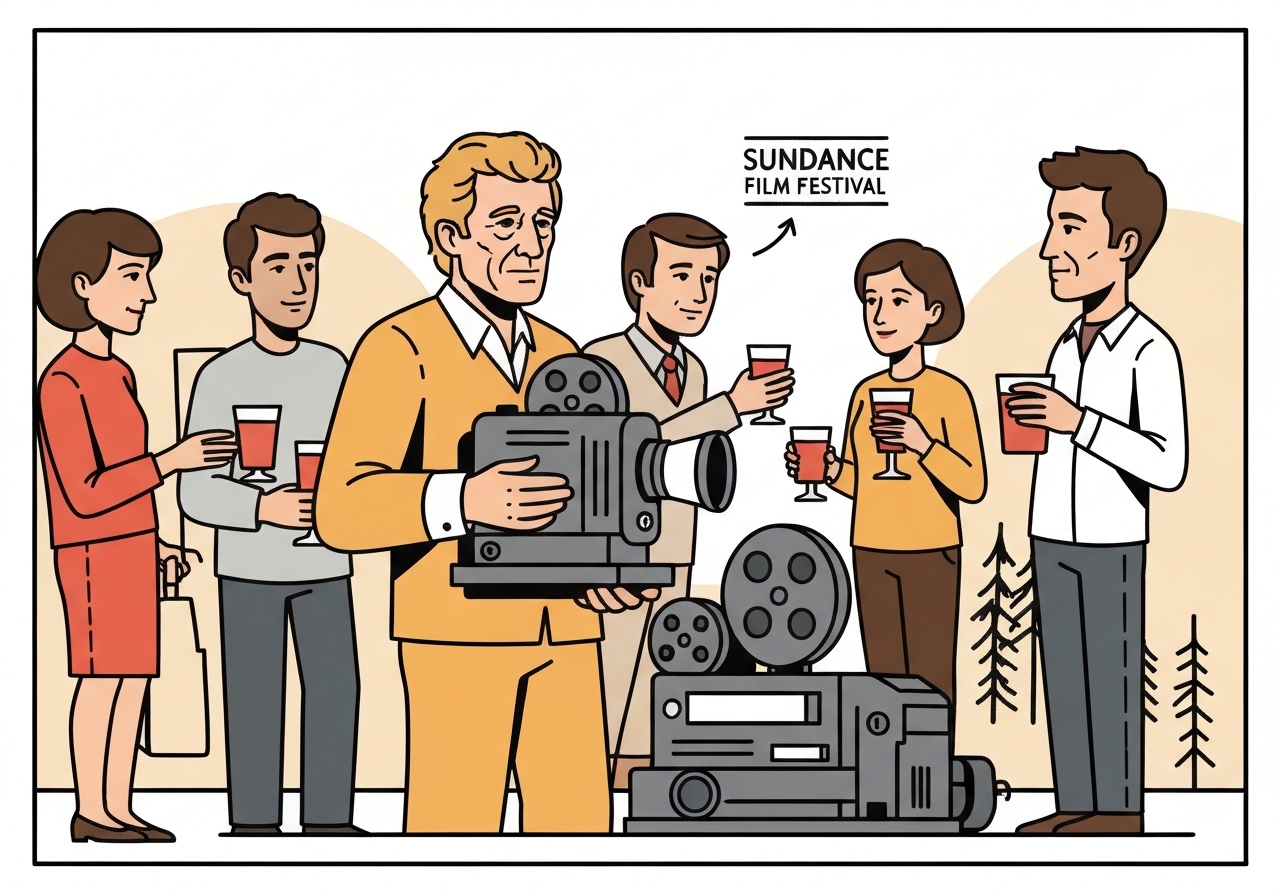
The Sundance Film Festival in Park City staged a star-studded tribute Friday to Robert Redford, whose death last year made the 2026 edition the first without him. Filmmakers and actors gathered at a gala to honor Redford’s decades-long role as a mentor and champion of independent cinema, and to celebrate the Sundance Institute programs he created to develop new writers and directors. The festival, which will move to Boulder, Colorado after this year, remained a showcase for the community Redford built in Utah, where the Institute’s labs have operated since 1981. His daughter Amy Redford said the Institute’s nurturing programs — what he called a nest rather than an empire — mattered most to him and will continue to shape future filmmakers.
Key Takeaways
- The Sundance Institute’s labs began in 1981 and bring emerging storytellers to a rustic resort about 34 miles (54 kilometers) south of Park City for intensive mentorship and development.
- Three of the five nominees for this year’s Academy Award for Best Director — Paul Thomas Anderson, Chloé Zhao and Ryan Coogler — are alumni of Sundance lab programs.
- The 2026 festival is the final edition to be held in Utah before relocating to Boulder, Colorado, while the Institute’s writer and director labs are reported to remain based in Utah.
- At the gala, screenings and a short tribute video prompted repeated standing ovations; many volunteers and attendees wore buttons reading “Thank you Bob!”
- Notable speakers recalled personal mentorship moments: Ethan Hawke described an early audition and Redford’s encouragement, and directors including Nia DaCosta and Chloé Zhao recounted how Redford and program staff supported their development.
- A retrospective screening planned later in the festival will feature Redford’s 1969 independent film Downhill Racer, underscoring his longstanding ties to noncommercial cinema.
Background
Robert Redford founded the Sundance Institute to create a space where films that fell outside mainstream studio output could find support and an audience. Over decades the Institute developed laboratory programs for writers and directors designed to give creators sustained guidance away from Hollywood’s commercial pressures. The labs emphasize mentorship, peer feedback and craft development, with experienced practitioners — including Redford in his later years — meeting regularly with fellows.
The Institute’s Mountain Resort setting, roughly 34 miles (54 kilometers) south of Park City, was chosen to remove distractions and foster a close creative community. That environment helped launch numerous careers; the article notes that three of this year’s five Best Director Oscar nominees attended the labs. As Sundance the festival prepares to relocate to Boulder, the Institute’s legacy in Utah — particularly its labs — remains a central part of Redford’s public memory and the local creative ecosystem.
Main Event
The gala gathered generations of artists whose careers were shaped by Redford and the Institute he created. A short tribute film screened before several presentations, drawing sustained applause and visible emotion from the audience. Many attendees and volunteers honored Redford with buttons and personal anecdotes about his hands-on approach to mentorship and his preference to be called “Bob” by those he guided.
Speakers emphasized Redford’s day-to-day role with emerging filmmakers. Chloé Zhao credited the screenwriting lab with jump-starting her career in 2012, saying the program helped her trust her voice and find a creative community. Director Nia DaCosta recalled Redford riding his motorcycle on wooded paths at the resort and stopping to discuss projects, a small gesture that underlined his personal investment in fellows.
Ethan Hawke recounted an early audition for Redford in 1992 and said Redford privately told him he was too young for the part but predicted a strong future career — a moment Hawke cited as formative. Ava DuVernay, who worked at Sundance early in her career and later as a trustee, described Redford’s broader cultural modeling: creating institutional space where artists and imagination are protected and prioritized.
Analysis & Implications
Redford’s approach combined institutional structure with personal mentorship, producing a pipeline of filmmakers who have gone on to influence mainstream and independent cinema. That three of five Best Director nominees this year are alumni is an indicator of the labs’ outsized influence relative to their size. The labs’ focus on craft and community rather than commercial metrics may account for the distinct voices that emerge from Sundance programs.
The festival’s move to Boulder raises practical and symbolic questions about where and how independent film communities will organize. While the Institute has signaled that key lab programs will remain in Utah, the relocation of the festival itself may shift networks of industry attention, press coverage and economic activity. Some filmmakers and local stakeholders worry about the cultural and financial impacts on Utah communities that have hosted Sundance for decades.
Institutional continuity will hinge on funding, leadership and how the Institute balances a new festival home with programs rooted in Utah. Maintaining in-person labs in the Mountain Resort helps preserve the mentorship model Redford valued, but the broader industry dynamic — streaming platforms, global festivals, and studio-backed independent labels — continues to reshape entry points for new filmmakers.
Comparison & Data
| Item | Data |
|---|---|
| Sundance Institute labs established | 1981 |
| Distance from Park City to Mountain Resort | 34 miles (54 km) south |
| Best Director nominees this year who are lab alumni | 3 of 5 (Paul Thomas Anderson, Chloé Zhao, Ryan Coogler) |
The table highlights concrete facts cited at the gala and in festival materials. Those data points underscore the labs’ longevity and proximity to the Park City festival center, and they provide a measurable example of the programs’ influence on contemporary awards-season recognition.
Reactions & Quotes
Speakers blended personal memory with institutional praise as they reflected on Redford’s influence.
“When my dad could have created an empire, he created a nest.”
Amy Redford, daughter
Amy Redford framed her father’s priority as protecting and launching artists rather than building corporate scale, a theme echoed by many attendees.
“He just looked so full of love and pride for us, for what he built.”
Nia DaCosta, director
DaCosta’s remark highlighted Redford’s day-to-day engagement with fellows at the labs, including informal moments on resort trails.
“Mr. Redford didn’t just establish a festival. He modeled a way to be… that imagination is worth protecting.”
Ava DuVernay, filmmaker
DuVernay framed Redford’s legacy as both institutional and ethical: a template for valuing artists and sustaining creative practice.
Unconfirmed
- Long-term scale and frequency of in-person labs in Utah after the festival’s relocation remain unclear; the Institute has said labs will continue there but detailed plans were not released at the gala.
- The precise economic impact on Park City and surrounding communities from the festival’s move to Boulder is not yet quantified and will depend on future programming and tourism shifts.
- Whether the festival’s move will change industry attendance patterns or press coverage in ways that affect lab participants’ exposure is not yet determined.
Bottom Line
Friday’s gala at Sundance framed Robert Redford’s legacy less as a catalog of achievements than as an active mentorship model that continues to shape contemporary filmmakers. The Institute’s labs — operating since 1981 and rooted at the Mountain Resort outside Park City — remain a central, tangible element of that legacy, credited with helping launch directors now recognized by major awards.
As the festival itself prepares to relocate to Boulder, the test for Sundance’s next chapter will be preserving the intimacy and sustained support that defined Redford’s approach while adapting to new geography and industry dynamics. For filmmakers, funders and local communities, the coming seasons will reveal whether the nest Redford built can both remain in Utah and continue to serve as a global incubator for independent voices.
Sources
- Associated Press (news report on Sundance gala and Redford tributes)
- Sundance Institute (official information on labs and programs)