
Lead
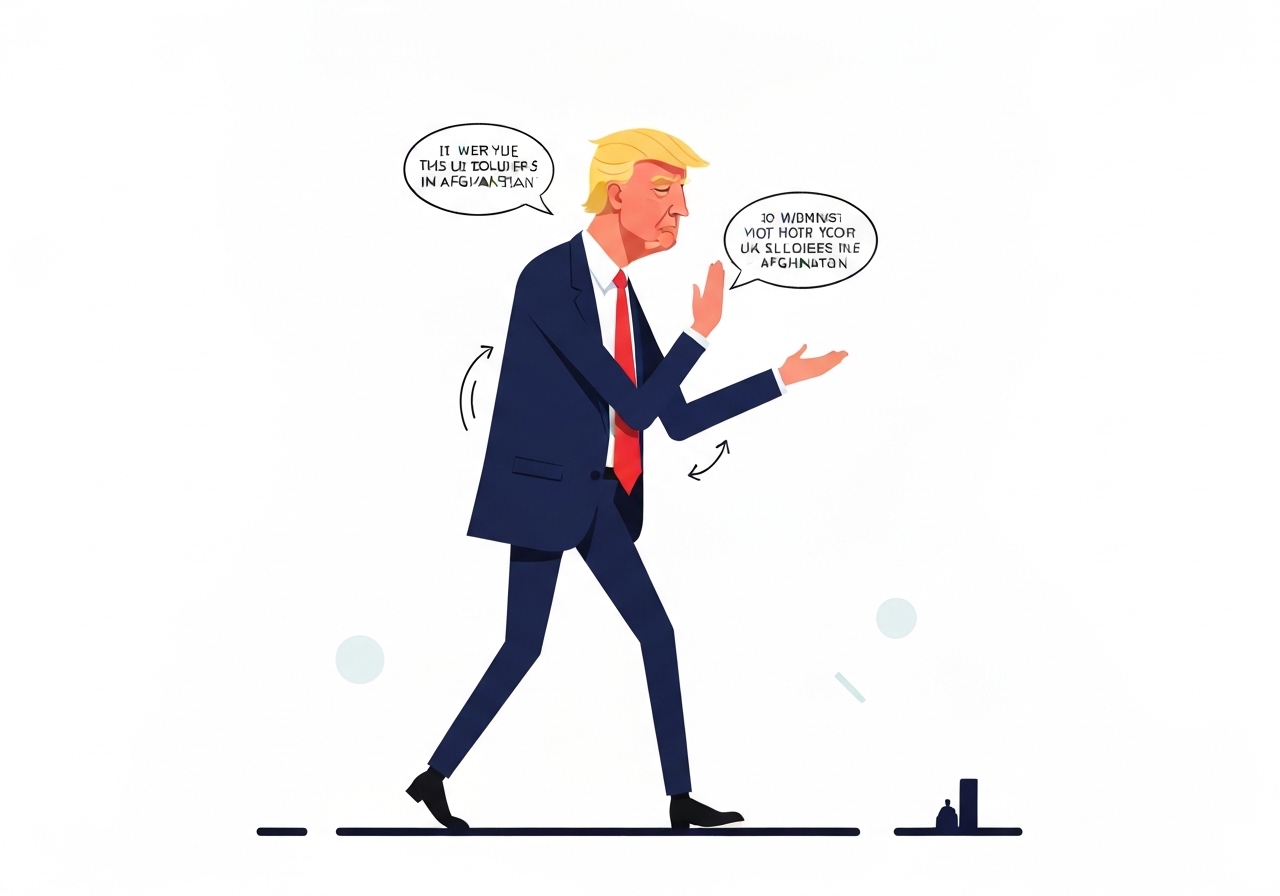
On Saturday 24 January 2026, US President Donald Trump posted a message praising British troops who served in Afghanistan, describing them as “among the greatest of all warriors,” after drawing criticism for earlier remarks suggesting some Nato forces had not fought on the frontlines. The post reiterated the United States’ bond with the UK and cited 457 British service members who died in the conflict. The intervention came amid political scrutiny in London and reports that Labour leader Keir Starmer raised the issue directly with the president during a conversation. The president’s follow-up soothed some immediate diplomatic tensions but left questions about the initial comment’s origins and impact.
Key takeaways
- Donald Trump posted on social media on 24 January 2026 praising UK soldiers who fought in Afghanistan and calling them “among the greatest of all warriors.”
- The post explicitly referenced 457 British military fatalities in Afghanistan, a figure reported in UK casualty tallies from the campaign.
- Trump’s follow-up came after criticism of an earlier remark that Nato allies had “stayed a little off the frontlines” during parts of the Afghanistan campaign.
- According to reports, Keir Starmer raised the president’s earlier comments directly with Trump in a conversation on Saturday, signalling concern at the highest UK political level.
- The clarification framed the US–UK relationship as enduring, with Trump adding complimentary language about the UK military being “second to none (except for the USA).”
- Immediate diplomatic fallout was limited by the president’s praise, but the exchange highlighted sensitivities around alliance service and memory of Afghanistan among veterans and politicians.
Background
The UK deployed thousands of troops to Afghanistan from 2001, participating in Nato-led operations and bilateral missions. Over the course of the conflict the UK recorded 457 service personnel killed, a number that remains a central reference point in British public and political discussions about the campaign. The issue of frontline exposure—who fought where and under what rules—has long been politically sensitive, especially for families of the fallen and veterans’ groups.
Statements about allied conduct in Afghanistan frequently trigger scrutiny because they touch on honour, sacrifice and national narratives about the war. Nato operations involved many nations with different mandates and force protections; the mix of roles—combat, support, training—has produced contested memories and occasional political disputes. In recent years, transatlantic rhetoric about burden‑sharing and military engagement has fed domestic debates in both the US and the UK.
Main event
On Saturday, the president posted a message praising UK soldiers and explicitly acknowledging the 457 British deaths in Afghanistan, describing the troops as among the finest and reaffirming the US–UK bond. The language was framed as a corrective after a remark attributed to him that Nato allies had “stayed a little off the frontlines.” That earlier comment prompted immediate criticism from political figures in Britain and raised questions about whether it was a broad characterisation of allied conduct or a loose phrasing taken out of context.
British political leaders reacted swiftly: media reports said Labour leader Keir Starmer raised the matter directly with President Trump in a Saturday conversation, signalling concern at senior levels. The president’s social post took a clearly different tone, using emphatic praise and a familiar rhetorical framing of the “special relationship” between the two countries. That shift reduced the risk of a sustained diplomatic spat, even as critics insisted the initial remark deserved fuller clarification.
In London, the exchange prompted commentary across the political spectrum, with some officials calling for clearer engagement on veterans’ issues and others treating the episode as a moment of political theatre. Veterans’ groups and service charities emphasised the importance of accurate public recognition of sacrifices made during the Afghanistan campaign. The episode unfolded mainly in public statements and social media rather than formal diplomatic channels, which shaped how quickly it moved out of the headlines.
Analysis & implications
Politically, the episode illustrates how off‑hand remarks by a sitting US president can reverberate across allied capitals. Even when quickly softened, the initial comment fed narratives about instability in transatlantic messaging and produced a need for damage control. For UK politicians, raising the issue directly to the president was a low‑cost way to defend veterans and signal seriousness to domestic audiences.
For Nato cohesion the incident is more symbolic than structural. Alliance operations are governed by formal command arrangements and national caveats; a public line by one leader does not change operational records. But repeated public questioning of allied conduct can erode trust over time if left unaddressed, particularly when it intersects with domestic politics in member states that mark the conflict’s human costs.
Diplomatically, the quick corrective limited immediate fallout: Trump’s praise reaffirmed the bilateral bond and will likely keep the episode from escalating into a sustained dispute between Washington and London. However, the exchange may be used by political opponents and commentators in both countries to argue competing narratives—either that the president misspoke in a way that needs correction, or that criticism was disproportionate.
Comparison & data
| Measure | Figure |
|---|---|
| UK military deaths in Afghanistan (commonly cited total) | 457 |
The single figure above is the specific casualty number referenced in the president’s post and in subsequent commentary. That number is often used as a shorthand in political statements to underline the human cost borne by the UK, and it anchors public reactions to any commentary about allied conduct in the campaign.
Reactions & quotes
Political figures and commentators reacted to both the initial remark and the subsequent praise, framing the exchange as a mix of offence and correction.
“The great and very brave soldiers of the United Kingdom will always be with the United States of America. In Afghanistan, 457 died, many were badly injured, and they were among the greatest of all warriors.”
Donald Trump (social media post, 24 January 2026)
This passage was the centrepiece of the president’s follow-up and was widely cited in British media as the public-facing clarification. Supporters pointed to it as a clear expression of respect; critics said it did not erase the impact of the earlier remark.
“They stayed a little off the frontlines.”
Donald Trump (earlier remark)
That brief phrase—reported as an earlier characterisation of Nato troop behaviour in Afghanistan—sparked the initial criticism. It was discussed by politicians in London as a point that required either context or retraction, prompting the direct outreach from Keir Starmer reported in the media.
Unconfirmed
- Whether the president’s earlier remark was intended as a blanket characterisation of all Nato contingents or referred to specific units or periods is not confirmed.
- Reports that Keir Starmer’s conversation changed the president’s wording are based on media accounts; direct transcripts of the private conversation have not been published.
Bottom line
The story is essentially one of rapid public correction: a contentious, shorthand comment about Nato forces prompted political reaction in the UK, and the president’s subsequent post sought to reaffirm the ties between the two countries and honour the 457 British lives lost in Afghanistan. That response limited immediate diplomatic damage but did not eliminate debate about the initial framing or its implications for veterans and allied relations.
Longer term, the episode underscores how sensitive references to coalition conduct and battlefield experience remain in public discourse. Even when followed by praise, off‑hand characterisations by high-profile leaders can provoke political interventions, require clarifying outreach, and feed ongoing discussions about how allied contributions are publicly represented.
Sources
- The Guardian — News media (report)