
Lead
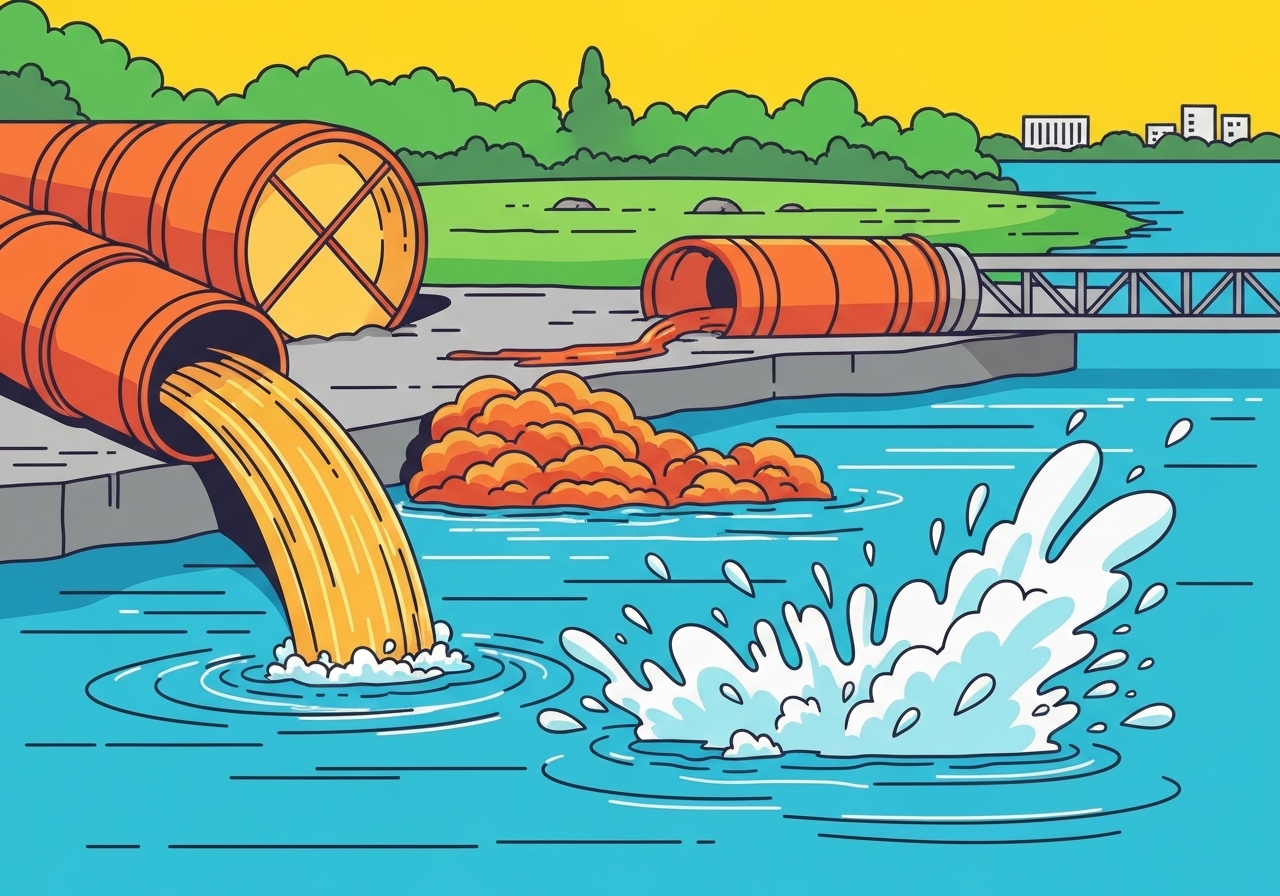
Crews scrambled this week to contain a rupture in the Potomac Interceptor that has allowed an estimated 40 million gallons of untreated sewage per day to enter the Potomac River since the break was discovered on Monday. The failure occurred along Clara Barton Parkway in Montgomery County, Md., near the Potomac River and the Chesapeake and Ohio Canal National Historic Park. DC Water said the line — part of a 1960s-era system that can carry up to 60 million gallons a day — began discharging raw wastewater as crews worked to install pumps, cofferdams and a temporary bypass. The spill coincided with a forecast for a major winter storm, complicating repair work and public-safety measures.
Key Takeaways
- Estimated discharge: DC Water reported about 40 million gallons per day of untreated sewage has flowed into the Potomac since the Monday rupture.
- System capacity and age: The Potomac Interceptor transports up to 60 million gallons daily and was built in the 1960s; some sections were already scheduled for repair.
- Location: The rupture occurred near Clara Barton Parkway in Montgomery County, Md., adjacent to the Potomac River and the C&O Canal National Historic Park.
- Response: Crews deployed high-capacity pumps, built cofferdams and established a temporary bypass to limit further overflows while repairs proceed.
- Coordination: DC Water is working with the Environmental Protection Agency and the D.C. Department of Energy and Environment to assess ecological risks.
- Public health note: Officials said the city’s drinking-water system is separate from the wastewater network and is not affected by the overflow.
- Weather impact: A forecast of 8–10 inches of snow and wind chills down to -10°F beginning Sunday threatens to slow or complicate repair operations.
Background
The Potomac Interceptor is a major wastewater conduit that carries sewage from parts of Maryland and Virginia to pumping facilities in Washington, D.C. Constructed in the 1960s, the interceptor has been the subject of periodic maintenance and targeted rehabilitation projects to address age-related deterioration. DC Water had identified sections needing repair and was conducting such work when engineers discovered the sudden rupture on Monday.
Sewer infrastructure nationwide faces mounting stress from aging pipes, heavier storm events and greater urban loads; the Potomac Interceptor is one of several large collectors in the Washington region that agencies have flagged for upgrades. Local stakeholders include Montgomery County, which maintains rights-of-way and coordinates emergency access, the National Park Service, which manages the adjacent C&O Canal National Historic Park, and regional environmental regulators monitoring river health.
Main Event
The failure was first detected Monday; crews mobilized to the Clara Barton Parkway site and initially focused on stopping ongoing discharges and preventing spread into sensitive parkland. Workers erected temporary cofferdams near the rupture point and positioned pumps intended to divert flow around the damaged segment. DC Water’s spokesman, John Lisle, provided the agency’s daily spill estimate on Saturday and confirmed the line break had not occurred at one of the sections that had been under active repair.
As teams prepared for a staged repair, officials emphasized safety: they posted warnings to keep the public out of the immediate work area and restricted access along riverfront trails. The temporary bypass system is designed to limit additional overflows while crews plan a permanent repair; contractors will need to excavate and assess the pipe condition before a full restoration can proceed.
Agencies also began environmental sampling downstream to track immediate impacts. DC Water said it is coordinating with the Environmental Protection Agency and the D.C. Department of Energy and Environment to evaluate potential ecological harm to the Potomac and adjacent waterways and to determine whether additional public advisories are necessary.
Analysis & Implications
The spill underscores vulnerabilities in decades-old sewer mains that were sized and constructed under different urban and regulatory conditions. A failure that releases an amount approaching the line’s maximum daily capacity — here roughly 40 million of a possible 60 million gallons per day — can have acute impacts on water quality, aquatic life and recreational access along a heavily used river corridor.
Ecological implications depend on flow, temperature and timing; a large cold-weather discharge may reduce bacterial die-off rates and prolong contamination of shallow tributaries and shoreline habitats. Downstream water bodies and shoreline parks may face short-term closures that affect tourism, boating and fishing until monitoring confirms safe conditions.
Financial and operational fallout is likely to include repair costs, overtime for emergency crews, potential fines or enforcement actions if regulators find violations, and longer-term pressure to accelerate upgrades to aging interceptors. For regional planners, the incident will add urgency to prioritizing redundancies and to evaluating whether existing capacity and emergency bypass plans are adequate for extreme-weather scenarios.
Comparison & Data
| Metric | Value |
|---|---|
| Estimated spill rate | ~40 million gallons/day |
| Potomac Interceptor capacity | Up to 60 million gallons/day |
| Construction era | 1960s |
| Snow forecast (metro area) | 8–10 inches beginning Sunday |
| Wind chill forecast | As low as −10°F |
The table places the daily spill estimate in the context of the line’s maximum capacity and shows how weather forecasts could interact with response operations. That approximate 40-million-gallon-per-day figure represents an operating-scale discharge that will require days of mitigation even if a bypass holds and cold weather does not halt work.
Reactions & Quotes
We are deploying pumps and constructing cofferdams to route flow around the rupture and minimize further overflows, and we will work through the weather as conditions safely permit.
John Lisle, DC Water spokesman (agency statement)
We are coordinating with local and federal partners to monitor near-term ecological impacts and protect public health along affected shorelines.
Environmental Protection Agency representative (agency coordination)
Residents should avoid waterfront areas near Clara Barton Parkway until officials say it is safe; recreational closures may be necessary while sampling continues.
Montgomery County emergency official (local advisory)
Unconfirmed
- The precise cause of the rupture has not been released; investigators have not yet completed a failure analysis.
- The full tally of total untreated volume released since Monday is an estimate and may be revised as flow records and downstream sampling are analyzed.
- Longer-term ecological damage and the timeline for lifting any recreational advisories are not yet determined pending water-quality test results.
Bottom Line
The rupture in the Potomac Interceptor has produced an estimated 40 million gallons per day of untreated sewage entering the Potomac River, prompting an urgent multi-agency response to limit environmental and public-health impacts. The incident highlights the operational risks tied to aging wastewater infrastructure that serves dense, multi-jurisdictional metropolitan areas.
Weather will be a critical variable: an approaching storm with heavy snow and frigid wind chills could impede repairs and monitoring, prolonging restrictions on riverside parks and recreational uses. Officials and regulators will likely accelerate inspections, emergency planning and investment decisions for interceptor reliability across the region as they assess both immediate consequences and longer-term resilience needs.