
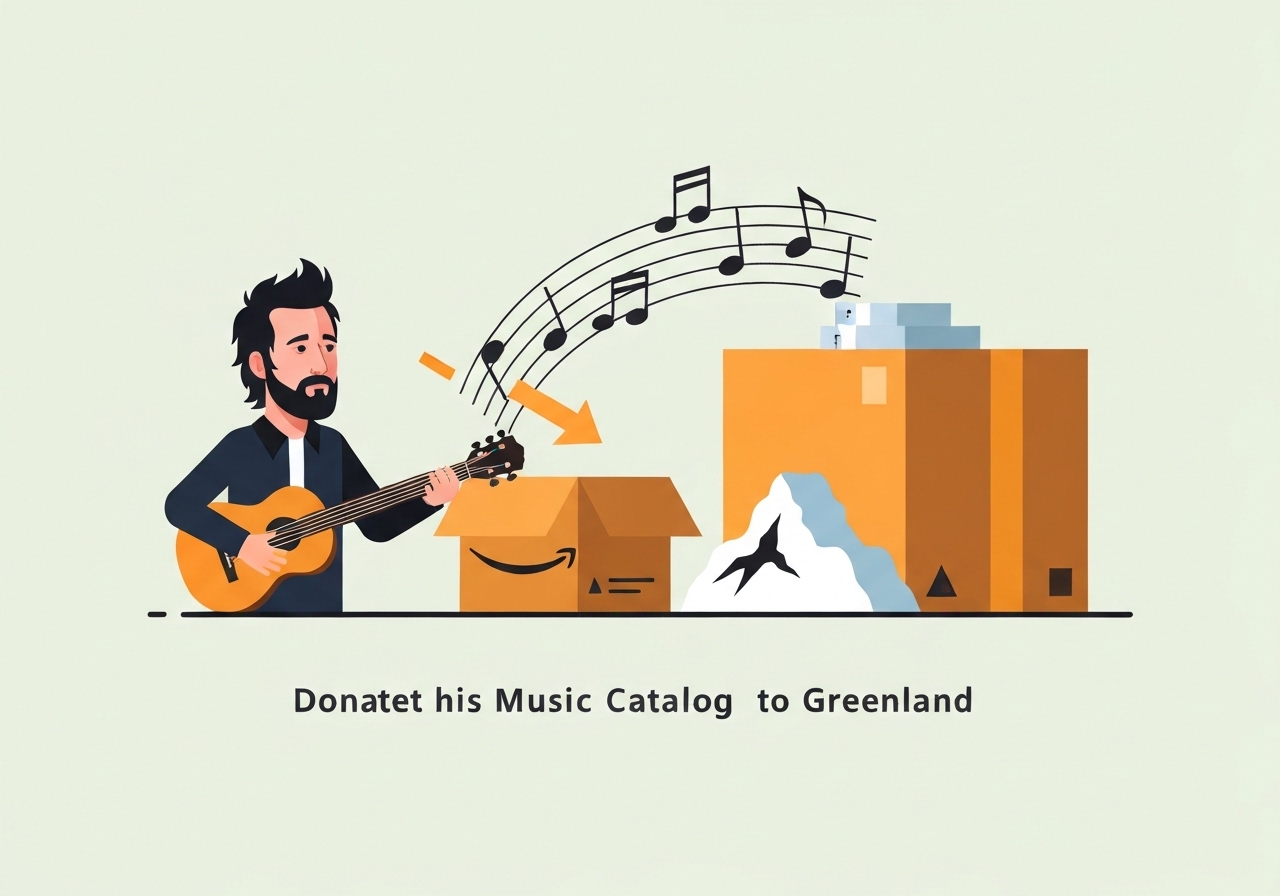
Lead: In October Neil Young reiterated his decision to remove his recordings from Amazon and said he will not make them available while the company remains under Jeff Bezos’s ownership. This week Young made a separate move by offering free access to his complete catalog and archival material to residents of Greenland via the Neil Young Archives. The offering — normally behind a subscription tier that ranges from $24.99 to $99.99 per year — is framed by Young as a gesture in response to what he described as threats from the Trump administration toward Greenland. He also used a recent public letter to urge fans to avoid Amazon and to seek independent news sources.
Key Takeaways
- Neil Young reaffirmed in October that he will keep his music off Amazon while Jeff Bezos owns the company.
- The Neil Young Archives, which hosts his full catalog and archival audio/video, typically charges $24.99–$99.99 per year for access.
- Young announced free, high-definition access to his entire 62-year recorded output for people in Greenland, available via NeilYoungArchives.com/Greenland.
- The Greenland offer was presented as an act of solidarity in reaction to President Donald Trump’s reported threats against Greenland.
- Young published a string of public letters (three in three days) criticizing Amazon’s ownership, urging support for independent sellers, and recommending alternative news outlets.
- He referenced recent live activity: a show on October 25 at Painted Turtle Camp in Lake Hughes, California, and a planned European tour start on June 17 at the Eden Project in Cornwall, England.
Background
Neil Young has long been an outspoken figure on industry and political matters, coupling artistic statements with direct appeals to fans. In October he first announced a pullback from Amazon’s platform, citing the company’s ownership and its founder’s political affiliations as incompatible with his values. The Neil Young Archives, launched as a direct-to-fan platform, provides high-resolution audio, concert films, and unreleased material as a subscription service with tiered annual pricing. Musicians and creators have increasingly used exclusive platforms to control distribution and revenue, a trend amplified by disputes over platform policies and corporate ownership.
The immediate context for the Greenland gesture is a recent diplomatic flashpoint: public reporting that President Donald Trump discussed buying Greenland prompted an outcry and raised questions about U.S.-Greenland relations. Young framed his offer to Greenlanders as a humane response to what he called threats and anxiety tied to that episode. His stance also fits a broader pattern of artists leveraging their catalogs for political signaling, from boycotts to benefit releases. Independent record stores and alternative digital outlets were singled out by Young as preferred channels for fans in lieu of Amazon.
Main Event
Young’s announcement combined two strands: a continued refusal to have his music distributed on Amazon and a targeted philanthropic access offer to Greenland residents. He directed Greenlanders to NeilYoungArchives.com/Greenland to sign up for free access, saying the entire archive — studio albums, live concerts, outtakes, and films — would be available while they remain in Greenland. The archive normally requires payment, but Young wrote that the subscription would be free to renew for Greenland residents for the duration he described.
In public letters posted over consecutive days, Young named Jeff Bezos and criticized Amazon ownership, framing it as a conflict with his personal and political convictions. He encouraged fans to buy physical media from record stores and to use independent digital services if they wished to purchase his work. Young also used one of those letters to critique major U.S. news outlets and popular cable networks, urging readers to seek independent journalism and to avoid certain channels he described as unreliable.
The move drew attention because it combines cultural, commercial, and diplomatic signals: an artist withdrawing from a major retail platform, a targeted donation of cultural goods to a small nation, and explicit commentary about U.S. political leadership and media. Young’s reference to 62 years of recorded output underscores the scale of what he made available to Greenland — a lifetime of work spanning studio records, live recordings, and film. The announcement arrived as he continues to perform live and prepares for a European leg of shows beginning June 17.
Analysis & Implications
Young’s decision illustrates how individual artists can use control over their catalogs to make political statements while also reshaping distribution dynamics. Withdrawing from Amazon reduces his footprint on one of the world’s largest retail platforms, potentially shifting purchases to independent stores and alternative digital services he endorsed. For independent retailers and niche streaming services, such high-profile withdrawals can translate into increased traffic or sales, though the overall commercial impact will depend on fan behavior and available alternatives.
The Greenland gift is symbolic and practical. Symbolically, it signals solidarity with a community Young says is under diplomatic pressure; practically, it gives Greenland residents no-cost access to archival material that normally sits behind a paywall. The move raises questions about precedent: whether other artists will follow by restricting availability on large platforms or offering geographically targeted access for political or humanitarian reasons. It also exposes limits: geographic gating can be circumvented, and the long-term sustainability of single-artist archives depends on subscription revenue and licensing arrangements.
Politically, Young’s statements link corporate ownership to civic responsibility, framing consumer choices as ethical decisions. That framing may resonate with some fans but alienate others who see platform participation as separate from an owner’s politics. Media criticism in his letters — urging avoidance of certain cable networks and recommending independent outlets — contributes to ongoing debates about trust and fragmentation in news consumption. If other cultural figures replicate this mix of commercial withdrawal and targeted gifting, we could see more frequent intersections of cultural distribution and geopolitical commentary.
Comparison & Data
| Offer | Price (annual) | Access |
|---|---|---|
| Neil Young Archives (standard tiers) | $24.99 – $99.99 | High-definition audio, concerts, films, archives |
| Greenland special | Free (for Greenland residents) | Full catalog and archival content while in Greenland |
The table summarizes the publicly stated subscription range and the exceptional Greenland access. The Archives’ tiers reflect a direct-to-fan model that bundles high-resolution audio and video content; specific feature sets for each price tier are set by the platform. The Greenland offering removes the financial barrier for residents, but the statement did not specify an end date or administrative details beyond the signup URL.
Reactions & Quotes
Young’s communications prompted responses across audiences: fans applauded the solidarity gesture, independent retailers welcomed the renewed emphasis on physical sales, and observers noted the political valence. Below are representative excerpts with context.
“I will not allow my music on Amazon while it remains under Bezos’s ownership,”
Neil Young (public letter)
This line summarized Young’s policy decision and personal objection to the company’s ownership. He positioned the withdrawal as a moral choice rather than a business negotiation, and urged fans to avoid Amazon and support independent sellers.
“Everything I’ve recorded over the past 62 years is available to Greenlanders,”
Neil Young (Neil Young Archives announcement)
Young framed the archive gift as a gesture of peace and relief for people in Greenland, linking cultural access to humanitarian concern amid an earlier diplomatic dispute involving the U.S. administration.
“Try a different news source for a day if you usually watch Fox,”
Neil Young (public letter)
In a separate message, Young urged readers to diversify their news intake and recommended independent outlets over certain mainstream television programs, reflecting his broader critique of today’s media ecosystem.
Unconfirmed
- Whether the free Greenland access is time-limited or will continue indefinitely is not specified in Young’s public announcement.
- It is unconfirmed if the free access will be enforceable only by IP/location checks or if other verification steps will be required for Greenland residents.
- There is no public confirmation that other artists or organizations will follow Young’s example, despite his expressed hope that they might.
Bottom Line
Neil Young’s actions combine cultural distribution, political protest, and targeted philanthropy. By keeping his catalog off Amazon and gifting archival access to Greenlanders, he has used his intellectual property to make a public statement that links consumer platforms to political accountability. The move is likely to have symbolic impact and may modestly redirect some purchases to independent channels, but its broader commercial effect depends on fan response and whether other creators adopt similar tactics.
For policymakers and cultural institutions, the episode highlights how artistic choices can amplify diplomatic conversations and shape public discourse. Readers should watch for follow-up details from the Neil Young Archives about the duration and mechanics of the Greenland access, and for any responses from Amazon, independent platforms, or other artists that could indicate whether this approach will gain wider traction.
Sources
- Rolling Stone — news outlet reporting on Young’s announcement
- Neil Young Archives — official announcement/artist platform