
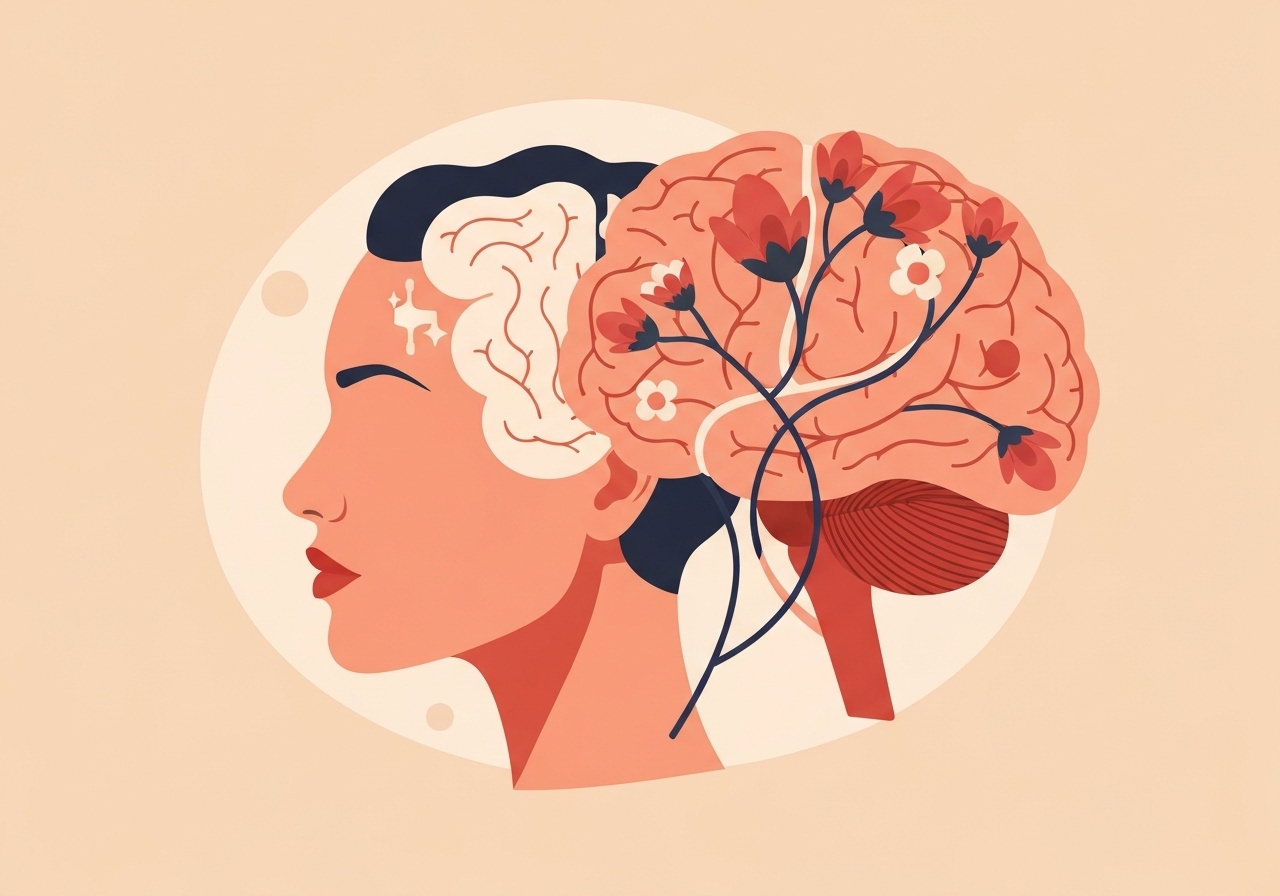
Lead: A large UK study of nearly 125,000 women, including roughly 11,000 who had MRI scans, found that menopause is associated with loss of grey matter in brain areas commonly affected in Alzheimer’s disease. Published in the journal Psychological Medicine, researchers report reductions in regions tied to memory, spatial navigation and emotion regulation. Hormone replacement therapy (HRT) did not appear to prevent the observed grey matter changes. Authors and advocacy groups caution that these structural differences do not prove future dementia in individuals without long-term follow-up.
Key takeaways
- The study pooled data on almost 125,000 women; about 11,000 underwent MRI brain imaging, providing the neuroimaging evidence reported.
- Gray-matter reductions were detected in the hippocampus, entorhinal cortex and anterior cingulate cortex—regions involved in memory, spatial navigation and emotional attention.
- Researchers report that HRT use showed no clear protective effect against the measured grey matter loss in this cross-sectional sample.
- Women accounted for around two-thirds of people with Alzheimer’s in the UK; authors suggest menopause-related brain changes may be one contributing factor to sex differences in dementia prevalence.
- The study observed higher rates of poorer mental health among women taking HRT, but investigators note many had pre-existing mental-health problems before treatment.
- Findings are derived from cross-sectional data; the team and external experts emphasize the need for longitudinal follow-up to link structural change to later dementia risk.
Background
The risk of Alzheimer’s disease is higher in women than men in many countries; in the UK women make up roughly two-thirds of people living with the condition. Scientists have long explored biological, social and longevity-related explanations for that gap, and declining sex hormones around menopause have been one path of inquiry. Neuroimaging studies can reveal patterns of tissue loss or change that resemble those seen in neurodegenerative diseases, but interpretation depends on study design, sample size and follow-up.
Hormone replacement therapy has been prescribed to manage menopausal symptoms—hot flushes, sleep disruption and mood changes—and clinical guidelines (for example NHS guidance) consider HRT an option for symptomatic women. However, evidence about HRT’s effects on brain structure, cognition and long-term dementia risk has been mixed and sometimes contradictory. Large population-level imaging datasets offer an opportunity to look for subtle, region-specific structural differences tied to life phases such as menopause.
Main event
The research analyzed medical and imaging data from almost 125,000 women in the UK, with neuroimaging available for about 11,000 participants. Using standard volumetric MRI measures, investigators found smaller grey-matter volumes in the hippocampus, entorhinal cortex and anterior cingulate in post-menopausal women compared with pre-menopausal or perimenopausal groups. Those regions are known to be vulnerable in the early stages of Alzheimer’s pathology, prompting the authors to highlight the similarity in topography between menopause-related changes and Alzheimer’s-typical atrophy.
When the team examined HRT use, they did not observe a clear protective association with grey-matter volume in these regions across the sample. The study also reported that women who had used HRT were more likely to indicate poorer mental health; investigators flagged that indication could reflect selection, since many had worse mental health before being prescribed HRT. The analysis controlled for several covariates, but residual confounding and the cross-sectional design limit causal claims.
Authors, including Prof Barbara Sahakian of Cambridge, emphasized that the regional differences do not by themselves prove that menopause causes dementia, only that structural patterns overlap with areas affected in Alzheimer’s. The study was published in Psychological Medicine and discussed by advocacy organizations such as the Alzheimer’s Society, which noted the importance of further longitudinal tracking. Researchers recommended more targeted studies to determine whether the observed changes predict later cognitive decline.
Analysis & implications
If menopause is associated with region-specific loss of grey matter, the finding could help explain part of the higher dementia prevalence among women, but it is unlikely to be the whole explanation. Biological mechanisms that link hormone shifts to neuronal structure include altered synaptic density, neuroinflammation and changes to vascular or metabolic support; none can be confirmed from a cross-sectional MRI snapshot. The study’s scale strengthens the observation of regional differences, yet it cannot resolve timing—whether changes begin before, during or after the menopausal transition.
Clinically, the lack of a protective signal for HRT in this dataset should not be read as definitive guidance on hormone therapy. HRT decisions already balance symptomatic relief against known risks and are individualized; randomized trials with cognitive outcomes remain limited. For clinicians and policymakers, the study underscores an evidence gap: whether interventions during or after menopause can modify trajectories of brain ageing and dementia risk.
Public-health implications include emphasizing modifiable dementia-risk factors that do have supportive evidence: regular physical activity, smoking cessation and limiting harmful alcohol use. These behaviors were highlighted by the Alzheimer’s Society in response to the study. At the research level, the priority is longitudinal cohorts that couple hormonal measures, repeated imaging, cognitive testing and eventual clinical outcomes to determine predictive value.
Comparison & data
| Item | Reported value | Notes |
|---|---|---|
| Total women in analysis | ~125,000 | Population sample used for demographic and clinical data |
| Women with MRI | ~11,000 | Subset used for brain-structure measurements |
| Regions with reduced grey matter | Hippocampus, entorhinal cortex, anterior cingulate | Areas implicated in memory and emotion regulation |
| HRT effect on grey matter | No clear protective association | Cross-sectional observation; confounding possible |
The table summarizes the key quantitative points reported. Because the study is cross-sectional, the numbers describe group-level associations rather than changes tracked within the same individuals over time. That distinction matters when assessing whether the anatomical differences translate into future cognitive impairment or clinical dementia.
Reactions & quotes
Researchers and advocates framed the findings as a substantive contribution but stressed limits. The senior author highlighted anatomical overlap with Alzheimer’s-affected regions, while charity voices urged caution about inferring future dementia risk without longitudinal follow-up.
“The brain regions where we saw these differences are ones that tend to be affected by Alzheimer’s disease.”
Prof Barbara Sahakian, Cambridge University (study co-author)
Prof Sahakian’s comment points to anatomical similarity; she and colleagues stop short of concluding menopause causes Alzheimer’s. The phrasing underlines why the team calls for follow-up to see whether structural differences predict cognitive decline.
“We all need to be more sensitive to not only the physical, but also the mental health of women during menopause.”
Dr Christelle Langley (co-researcher)
Dr Langley’s remark draws attention to the broader clinical picture: menopause can include mood and sleep disruption, which clinicians must address alongside any long-term risks. The study’s signal that many HRT users had prior mental-health issues highlights potential selection effects in observational data.
“Women account for around two-thirds of people living with Alzheimer’s disease in the UK.”
Michelle Dyson, Alzheimer’s Society (charity response)
The Alzheimer’s Society used the finding to reiterate established prevalence differences and to recommend protective lifestyle measures that have the strongest current evidence for reducing dementia risk.
Unconfirmed
- Whether the menopause-associated grey-matter differences lead to increased individual dementia risk—this requires long-term follow-up and is currently unproven.
- The mechanism linking ovarian hormone decline to the specific regional changes is not established; suggested pathways remain hypothetical.
- Whether HRT timing, type, dose or duration might protect brain structure in some subgroups is unresolved and not demonstrated by this cross-sectional analysis.
Bottom line
This large UK study identifies an association between menopause and reduced grey matter in regions vulnerable in Alzheimer’s disease, adding to evidence that the menopausal transition is a relevant period for brain health. The findings are important for hypothesis generation and for prioritizing longitudinal research but do not demonstrate that menopause causes dementia for individual women.
For clinicians and policymakers, the practical takeaway is twofold: continue evidence-based management of menopausal symptoms (including considered use of HRT according to guidelines) and reinforce proven dementia-risk reduction strategies such as exercise, smoking cessation and moderated alcohol use. Researchers should focus on longitudinal cohorts and randomized interventions to test whether menopausal brain changes forecast cognitive decline and whether specific treatments can alter that trajectory.
Sources
- BBC News — media report summarizing the study and quotes from authors and charities.
- Psychological Medicine (Cambridge University Press) — academic journal where the study was published (journal site).
- Alzheimer’s Society — UK charity commentary and prevalence data (charity/advocacy).
- NHS guidance on HRT — official clinical guidance on hormone replacement therapy (public health/clinical guidance).