
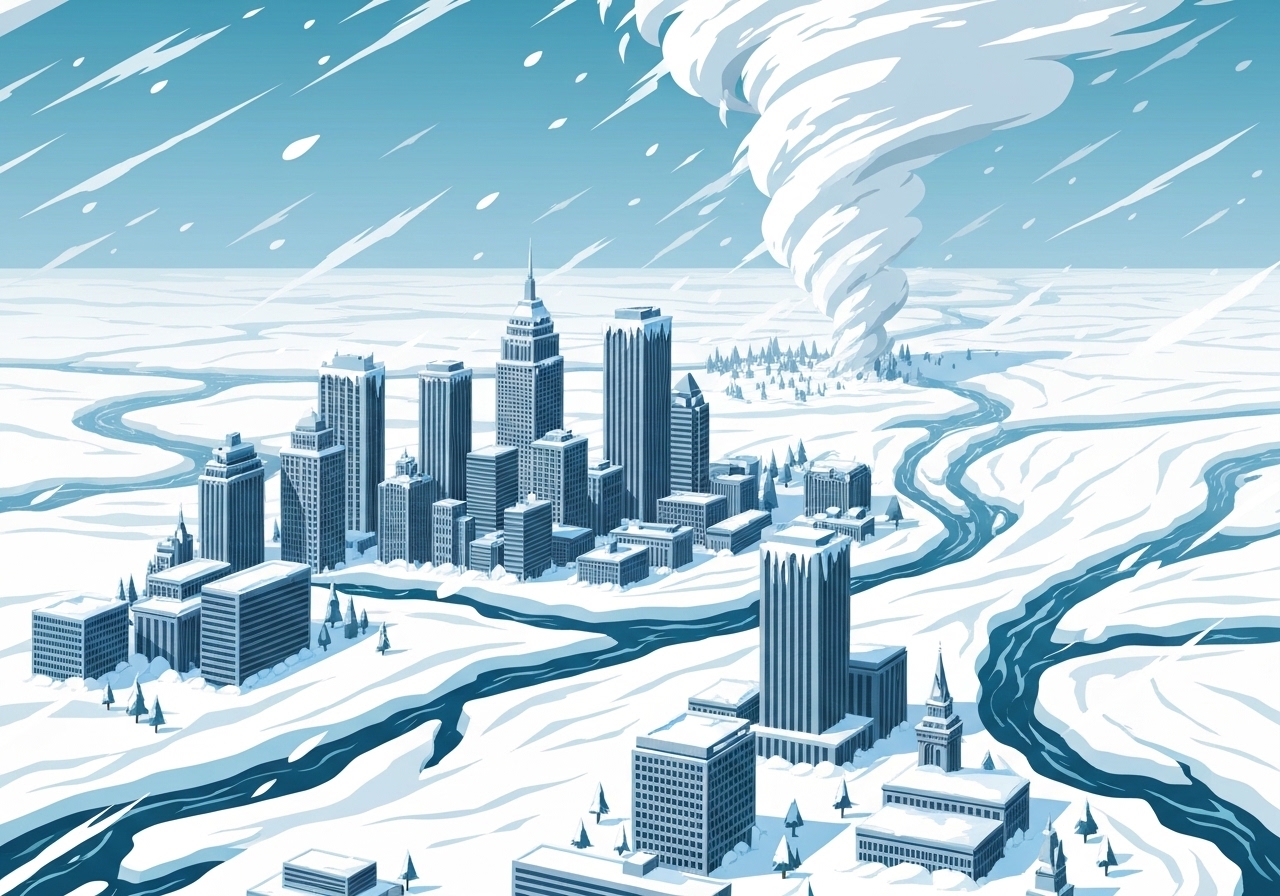
Winter Storm Debilitates the South, Encasing Cities in Ice and Snow
Lead: A powerful winter storm that moved across the U.S. South over Jan. 24–26, 2026 left at least 10 people dead and crippled infrastructure from Mississippi to Tennessee. Heavy ice and snow toppled trees, damaged homes and vehicles, and produced widespread power failures, including a historic peak of about 230,000 simultaneous outages reported by Nashville Electric Service. Municipal officials and utility crews scrambled to clear roads and restore service while many residents endured freezing conditions without heat or transport. The system has since shifted northeast but its toll on Southern communities is still being tallied.
Key Takeaways
- Dates and scope: The storm struck from Jan. 24–26, 2026, impacting large portions of the U.S. South before tracking toward the Northeast.
- Human cost: Authorities report at least 10 deaths across the affected region as of Jan. 26, 2026.
- Widespread outages: Nashville Electric Service recorded a peak of roughly 230,000 simultaneous power outages, the largest in the utility’s history.
- Infrastructure damage: Falling trees and ice-laden limbs blocked roads and damaged homes and vehicles in cities such as Oxford, Miss., and other communities.
- Service response: Local crews mobilized for tree removal and repairs, while shelters and warming centers opened but access was limited by impassable roads.
- Ongoing disruption: Many residents remained without power, transportation or full municipal services days after the worst of the weather passed.
Background
Forecasters had warned days earlier that a strong winter system could be among the most severe in a generation for parts of the southern United States. The combination of heavy precipitation and subfreezing surface temperatures produced freezing rain atop earlier snowfall, creating thick ice coatings on trees, power lines and road surfaces. Southern infrastructure—designed and maintained with milder winters in mind—was stressed by the sudden load of ice and falling limbs, increasing the likelihood of outages and road closures. Local officials and utilities had staged pre-positioned crews, but the scale and geographic spread of damage exceeded many routine response plans.
Historically, major ice storms in the South have led to prolonged outages and cascading effects for heating, water and emergency services; forecasters and emergency managers noted those precedents as the storm approached. Rural areas and smaller municipalities often face longer restoration timelines due to sparse crews and longer service lines. Social vulnerabilities—older populations, people reliant on electric medical devices, and households without backup heat—heightened public-health risk during the multi-day cold snap. State and federal resources were placed on alert as some counties requested assistance for debris removal and sheltering operations.
Main Event
In Oxford, Mississippi, trees coated with ice bent and in many cases collapsed, bringing branches onto houses, cars and overhead utility lines and rendering numerous streets impassable. Oxford’s mayor described widespread structural and vegetative damage that left neighborhoods isolated and required concentrated clearing efforts. In Nashville and surrounding areas, heavy ice and strong gusts caused widespread failures across the local distribution network, prompting Nashville Electric Service to report a record simultaneous outage peak of about 230,000 customers. Crews worked around the clock, but icy roads and downed trees slowed access to damaged substations and lines.
Across the region, emergency shelters opened though some remained difficult to reach because of blocked routes and local power losses. Hospitals operated on backup generation where necessary, and first responders prioritized life-safety calls while triaging less urgent incidents. Travel was severely disrupted: airports delayed or canceled flights, and highways saw extended closures until clearance and de-icing could proceed. By Jan. 26, the storm center had shifted toward the Northeast, but Southern communities continued to grapple with cleanup and restoration.
Officials emphasized patience and safety: residents were urged to avoid downed power lines, conserve generator use to prevent carbon monoxide poisoning, and check on vulnerable neighbors. Utility restoration timelines varied by circuit and severity of damage; officials cautioned that full restoration to all customers in the hardest-hit places could take days to weeks depending on resource availability and continued weather risks. Coordination among municipal, county and state agencies worked to prioritize hospitals, critical facilities and the most vulnerable populations for power and road access.
Analysis & Implications
The storm exposes continuing vulnerabilities in regional preparedness for significant winter icing events in the South. Many distribution systems in southern states rely on above-ground lines and vegetation controls calibrated for less frequent severe icing; the rapid accumulation of ice reveals the trade-offs between maintenance costs and resilience. As the climate shifts, some regions may experience more frequent extremes—even if averages warm—forcing policymakers to reassess infrastructure standards and vegetation-management protocols. Investment choices now will influence both the speed of future recoveries and the financial burden on utilities and ratepayers.
Economically, prolonged outages and blocked supply routes can have ripple effects beyond immediate repair costs: lost work hours, spoilage of food and medicines, delayed business activity and added strain on emergency services. Local governments may face increased short-term expenditures for debris removal and sheltering, and long-term fiscal impacts if recovery requires infrastructure hardening. Insurance claims and appeals for state or federal disaster assistance could rise if aggregated damages exceed local capacities.
Politically, visible failures in response or slow restoration can erode public trust in local authorities and utilities, prompting calls for regulatory scrutiny and accountability. Conversely, rapid, well-communicated action by crews and officials can mitigate frustration and reduce risk. Planners will likely revisit mutual-aid agreements, stockpiling of repair materials, and targeted investments—such as selective undergrounding of lines near critical facilities—to reduce exposure in future storms.
Comparison & Data
| Metric | Reported Value |
|---|---|
| Storm dates | Jan. 24–26, 2026 |
| Reported deaths (region) | At least 10 |
| Peak simultaneous outages (Nashville) | About 230,000 |
| Primary affected states | Mississippi, Tennessee, Alabama, Georgia, Louisiana |
The table summarizes verified, public figures reported through Jan. 26, 2026. Peak outage counts are utility-reported and may be revised as restorations proceed and data are reconciled. Fatality counts are aggregated from multiple local reports and remain subject to confirmation as coroner and emergency records are updated.
Reactions & Quotes
The mayor of Oxford described streets lined with toppled trees and extensive property damage, urging residents to heed safety warnings while crews clear debris.
Robyn Tannehill, Mayor of Oxford (public statement)
Nashville Electric Service said its system experienced the largest number of simultaneous outages in the utility’s history and noted crews were working continuously to make repairs where safe access was possible.
Nashville Electric Service (utility statement)
Weather officials emphasized that the combination of freezing rain and persistent low temperatures created the storm’s most dangerous impacts, particularly where trees and power lines were already stressed by the ice load.
National Weather Service (forecast/briefing)
Unconfirmed
- Final, county-level death tolls remain incomplete; some local counts may be revised as officials finish reporting and investigations.
- Detailed timelines for full power restoration to all affected customers have not been released for every municipality and may change based on accessibility and resource allocation.
- Precise damage-cost estimates across residential and municipal infrastructure are still being compiled and will be updated as claims and assessments proceed.
Bottom Line
The Jan. 24–26, 2026 winter storm inflicted acute damage across the U.S. South, producing life-threatening cold, record local outages and significant property impacts. Immediate priorities are safe restoration of power, clearing primary transportation routes, and ensuring vulnerable residents have heat and shelter while utilities and municipalities coordinate recovery resources.
Longer term, the event is likely to prompt reviews of grid resilience, vegetation management, and emergency logistics for extreme winter events in regions that historically have not faced them so frequently. Policymakers and utilities will weigh investments to reduce future risk while balancing near-term recovery needs and community expectations.
Sources
- The New York Times (media report summarizing regional impact, Jan. 26, 2026)
- PowerOutage.us (data aggregator of utility outage reports)
- Nashville Electric Service (utility status updates/official)
- City of Oxford, Mississippi (municipal notices/official)