
Lead
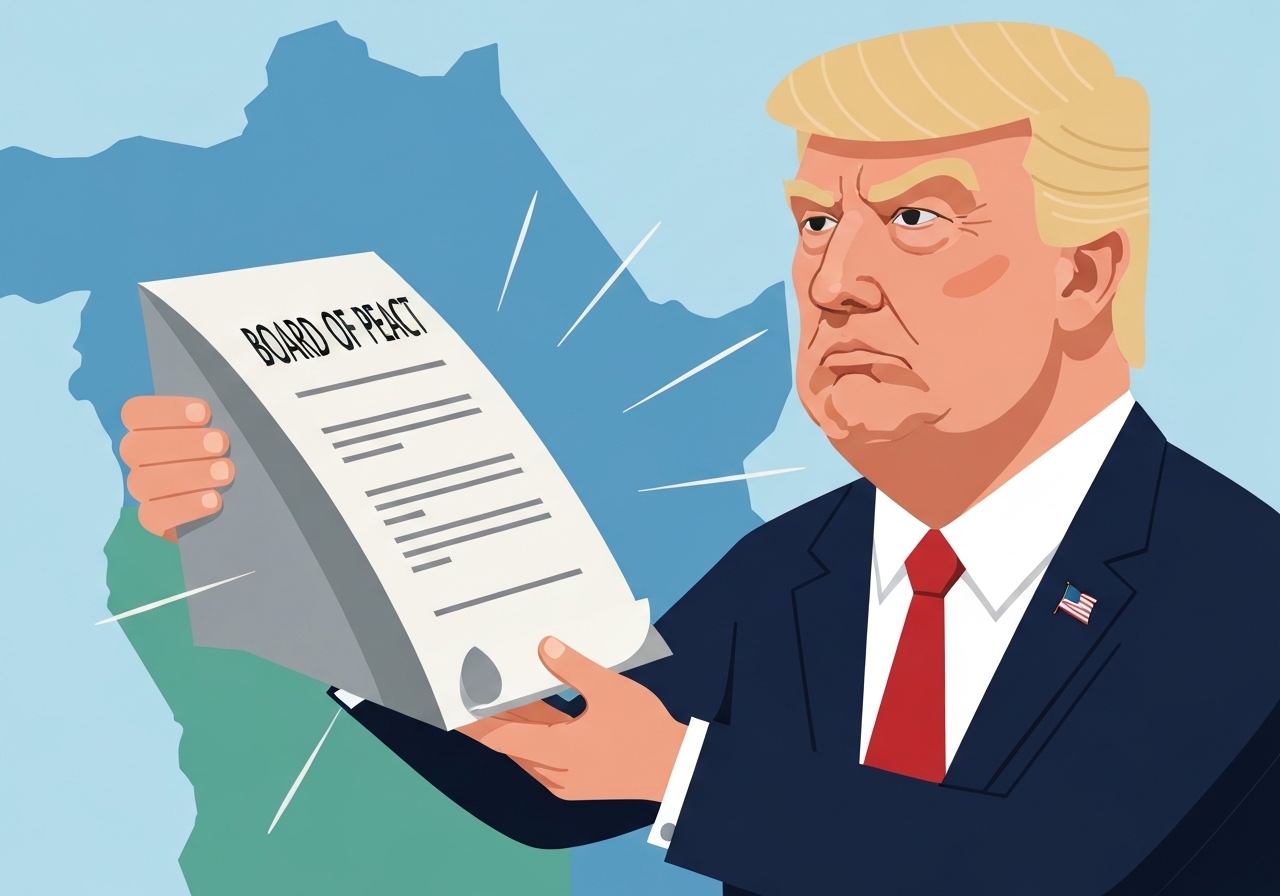
On Jan. 27, 2026, a draft resolution tied to the newly formed Board of Peace — which met for the first time last week in Davos, Switzerland — outlined powers that would grant President Donald J. Trump sweeping authority over the governance of the Gaza Strip. The draft, dated Jan. 22, proposes that the Board chairman nominate senior officials to administer Gaza, including a “high representative” and the commander of an international stabilization force. Member states such as Azerbaijan and Qatar have signed the Board’s founding charter, but the resolution remained unsigned and under discussion, according to officials familiar with the document. The plan, if enacted, would reshape international involvement in Gaza’s security and civilian administration and has already drawn scrutiny from allies and legal experts.
Key Takeaways
- The draft resolution, dated Jan. 22, 2026, would let the Board chairman nominate senior administrators for Gaza, including a “high representative” and a commander for an international stabilization force.
- The Board of Peace held its inaugural meeting in Davos, Switzerland, last week; Azerbaijan and Qatar are among signatories of its founding charter committing to “enduring peace” in conflict-affected areas.
- Three officials briefed on the draft told reporters they verified the authenticity of the obtained copy, but the resolution had not been signed by the chairman and remained under internal discussion.
- The document resembles a United Nations Security Council text in format and scope but stems from a newly created international body with unclear legal standing.
- If implemented, the plan would give the chairman authority to approve and, in urgent cases, suspend Board resolutions — concentrating decision-making power in a single office.
- The draft proposes a Palestinian-administered body for Gaza overseen by the high representative, paired with an international stabilization force responsible for security operations within the enclave.
- The proposal arrives amid extensive humanitarian needs in Gaza and questions about governance and public services after prolonged conflict.
Background
The Gaza Strip has endured repeated military confrontations, widespread infrastructure damage and a severe humanitarian crisis in recent years. International responses have ranged from United Nations relief operations to ad hoc coalitions aimed at short-term stability; none established a durable governance model accepted by all local and regional stakeholders. The Board of Peace positions itself as a multistate mechanism to secure “enduring peace in areas affected or threatened by conflict,” according to its founding charter, which several countries signed at the Board’s Davos meeting.
Historically, external administration of territories has raised legal and political questions about sovereignty, accountability and the rights of local populations. United Nations trusteeships, Security Council mandates and multinational stabilization missions each followed different legal frameworks and levels of oversight; the draft Board resolution appears to borrow the UN Security Council’s textual style without the same built-in enforcement or member-state legitimacy. Key regional actors, Palestinian authorities and Israel will be crucial to any operational plan, and their positions have not been fully documented in public records tied to the draft.
Main Event
The Board of Peace convened for the first time at the World Economic Forum meeting in Davos last week, where delegates signed a founding charter and discussed operational plans for conflict-affected areas. The draft resolution obtained by reporters lays out an organizational structure in which the Board chairman would nominate a high representative to oversee a Palestinian-administered administrative body for Gaza and appoint a commander to lead an international stabilization force.
According to officials briefed on the draft, the chairman would also hold authority to approve Board resolutions and, in urgent circumstances, suspend them — effectively concentrating decision-making power in the chairman’s office. The document’s backers argue this centralization is intended to speed responses in an active crisis environment; critics warn it risks sidelining multilateral checks and balances.
Member states that signed the charter include Azerbaijan and Qatar, among others, and delegates described the Board as aiming to secure long-term peace in volatile regions. The draft resolution’s text resembles UN Security Council language in form and command intent, but it does not automatically confer established UN legal powers, nor does it substitute for negotiated agreements with local authorities.
Analysis & Implications
Legally, the Board’s authority is uncertain. The draft would create operational roles and grant the chairman appointment and suspension powers, yet it lacks the clear treaty-based or UN-mandated imprimatur that typically underpins binding international administration. That ambiguity could generate disputes over jurisdiction, immunities for foreign personnel and the legal status of decisions affecting civilians in Gaza.
Politically, vesting broad authority in a single international chairman risks alienating stakeholders whose consent is essential for on-the-ground stability. Palestinian leaders and civil society groups may view externally imposed administrators as undermining local self-determination; Israel and neighboring states will assess security arrangements for any international stabilization force. Divergent views among Board members could further complicate implementation if unanimity or broad consensus is required for deployments or budgeting.
From a humanitarian and operational perspective, the proposal could accelerate delivery of services if adequately resourced and coordinated with local actors. A high representative could streamline reconstruction, public health and civil administration efforts, while an international stabilization force might secure supply routes and protect aid distribution. Conversely, weak oversight or contested legitimacy could hamper access for humanitarian organizations and provoke local resistance, worsening conditions for civilians.
Comparison & Data
| Authority | Board of Peace (draft) | UN Security Council (typical) |
|---|---|---|
| Appointment of administrators | Chairman nominates high representative and commanders | No routine appointment of territorial administrators; mandates missions |
| Power to suspend resolutions | Chairman may suspend resolutions in urgent cases | No single-member suspension; veto power exists for five permanent members |
| Force command | Chairman assigns commander of international stabilization force | Peacekeeping forces are authorized by UNSC and led by UN command structures |
The table highlights procedural differences: the Board draft centralizes appointment and suspension authority in a chairman, whereas UN practice distributes decision-making among member states and institutional bodies. That divergence raises questions about legal accountability, lines of command and the mechanisms through which civilian and military components would coordinate.
Reactions & Quotes
Supporters of tighter centralized decision-making argue rapid nomination and command lines can shorten response times in acute crises. Skeptics emphasize the need for legally grounded multilateral oversight to protect civilian rights and ensure legitimacy.
“enduring peace in areas affected or threatened by conflict.”
Founding charter, Board of Peace (signed at Davos)
The phrase above appears in the Board’s charter and expresses the stated mission behind the group’s creation. Critics note that mission language does not specify the legal instruments that would govern implementation in places like Gaza.
“[T]he chairman shall nominate senior officials to oversee the administration and security arrangements for the enclave.”
Draft resolution dated Jan. 22, 2026 (obtained by reporters)
The draft’s wording indicates an intent to vest appointment power in the chairman, a provision that outside legal analysts say will require clarification on oversight, tenure and accountability mechanisms.
Unconfirmed
- Whether Chairman Trump will sign the Jan. 22 draft into force; officials said the document was under discussion and unsigned at the time of reporting.
- Whether the draft, if signed, would have binding international legal force comparable to a UN Security Council resolution.
- Exact composition, rules of engagement, deployment timeline and troop-contributing countries for any proposed stabilization force were not publicly specified.
- The level of acceptance by Palestinian governing bodies and Israel for the proposed administrative arrangements has not been confirmed in public statements.
Bottom Line
The Jan. 22 draft resolution produced by the Board of Peace would, if adopted as written, concentrate considerable governance and security appointment powers in the office of its chairman, reshaping external involvement in Gaza. That concentration of authority is intended to enable rapid action in a challenging humanitarian and security environment, but it raises immediate legal and political questions about legitimacy, oversight and local consent.
How events unfold will depend on whether the chairman signs the draft, how key regional and local actors respond, and whether the Board develops transparent accountability mechanisms. Observers should watch for formal statements from Palestinian authorities, Israel, UN bodies and potential troop-contributing states to assess the proposal’s practicability and its likely effects on civilians in Gaza.
Sources
- The New York Times — international news reporting (article based on obtained draft resolution and official briefings)
- World Economic Forum — event host for Davos meetings and public program information