
Lead
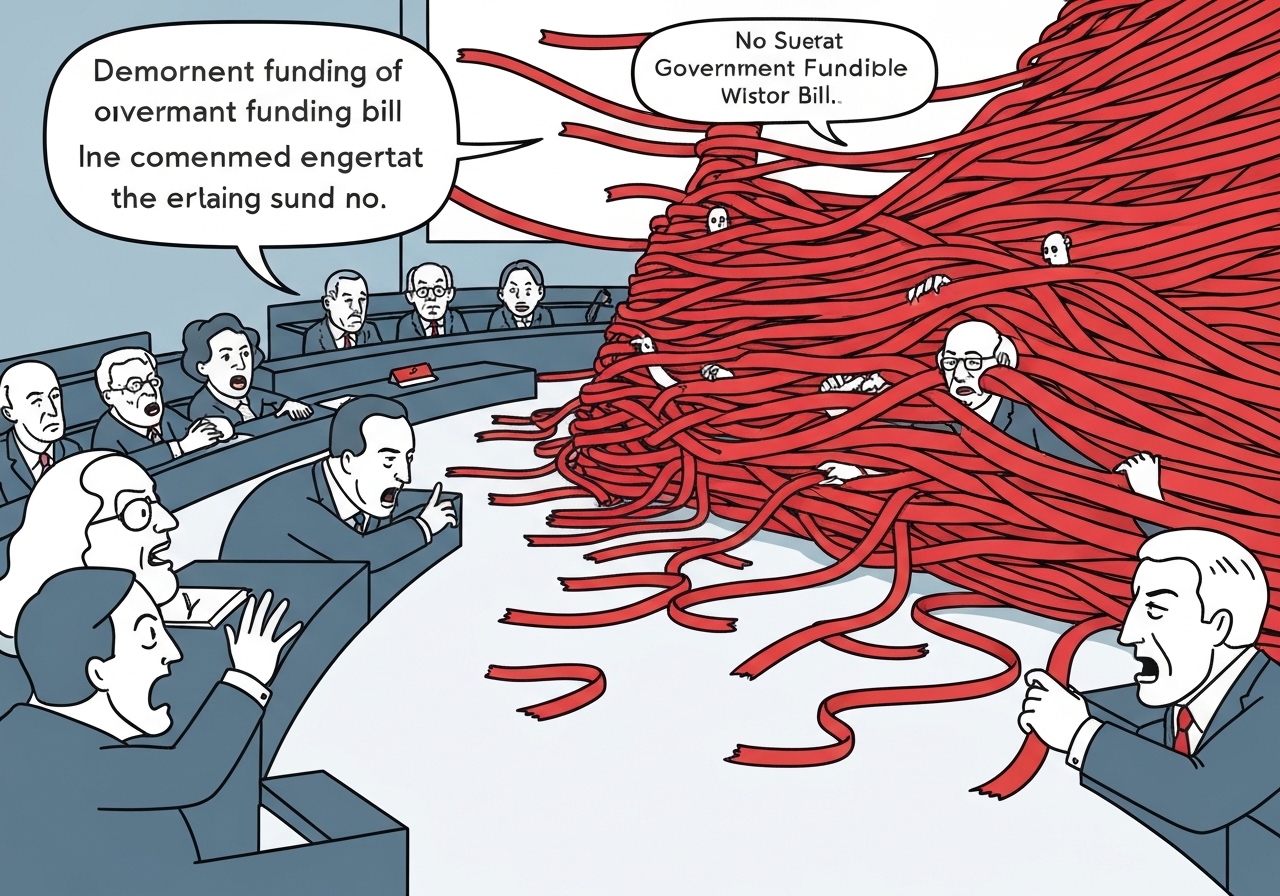
On Thursday in Washington, Senate Democrats voted 45-55 to block a fiscal package that would fund the Department of Homeland Security and other federal agencies, citing demands tied to new restrictions on immigration enforcement. The move came as congressional leaders and the White House raced to negotiate terms to avoid a partial government shutdown when money runs out on Friday. President Donald Trump told reporters he did not want a shutdown and said talks were underway, including a possible short-term funding separation for Homeland Security. Democrats said recent deaths involving federal agents in Minneapolis sharpened their resolve to press for enforceable reforms to U.S. Immigration and Customs Enforcement (ICE).
Key Takeaways
- The Senate failed a cloture vote 45-55 on Thursday to advance the spending package that included DHS funding, setting up a potential partial shutdown when funds lapse Friday.
- Democrats demand an overhaul of ICE and specific reforms—body cameras, visible identification, limits on roving patrols and warrant standards—before providing needed votes.
- President Trump and senior officials signaled they prefer to avoid a shutdown; discussions reportedly include short-term funding for Homeland Security only, with other agencies funded through September.
- Two protesters, Alex Pretti and Renee Good, were killed in incidents involving federal agents in Minneapolis, a catalyst for the Democrats’ unified posture.
- Senate leaders are divided: Schumer insists on reform conditions; some Republicans, including Sen. John Thune, say talks are advancing but GOP unity on concessions is uncertain.
- House conservatives, including the Freedom Caucus, have warned they will not accept changes that reduce DHS funding or alter the bill the House passed last week.
Background
The impasse centers on a sprawling spending package that bundles money for Homeland Security, the Defense Department and several other agencies. Democrats say they will withhold votes until the administration agrees to enforceable limits on ICE operations after two fatal encounters with federal agents in Minneapolis. Senate Democratic leader Chuck Schumer framed the standoff as a demand to “rein in and overhaul” ICE and called the moment one of truth for accountability.
Negotiations have repeatedly leaned on temporary measures, such as continuing resolutions that keep parts of the government funded while Congress resolves disputes. Democrats are pressing to separate Homeland Security funding from the rest of the package so DHS can be extended only briefly, allowing intensive talks on the reforms they seek. House Republicans, by contrast, have signaled resistance to changes that would reduce or condition funding for DHS and ICE.
Main Event
Thursday’s 45-55 procedural vote in the Senate prevented the legislation from moving forward and crystallized the choices ahead: a negotiated compromise, a narrowly targeted short-term extension for DHS, or a partial shutdown when appropriations expire on Friday. President Trump, speaking at a Cabinet meeting before the vote, reiterated that “we don’t want a shutdown” and said administration officials were in discussions with congressional Democrats. Senate GOP leaders publicly encouraged talks; Sen. John Thune said negotiators were “getting closer” to an accommodation.
Democrats, galvanized by public outrage over the Minneapolis deaths, presented a specific list of demands including masks-off identification, body cameras, warrants for arrests and an enforceable code of conduct for federal immigration agents. Minnesota Sen. Tina Smith described a high degree of unity within the Democratic caucus and framed the demands as bringing ICE in line with local policing norms. Some Republicans signaled openness to separating Homeland Security funding for short-term debate, but acceptance of the operational reforms sought by Democrats appeared limited.
Not all Democrats are aligned on the tactical question of a short-term extension. Sen. Bernie Sanders said Congress should not allocate additional funds to ICE until Homeland Security Secretary Kristi Noem is removed, a position that complicates prospects for a temporary fix. On the House side, the conservative Freedom Caucus warned the package would not return without DHS funding intact, pressuring Republicans to resist concessions. Senate Appropriations Chairwoman Susan Collins urged moving the bill forward as a step toward negotiation rather than a final agreement.
Analysis & Implications
The dispute highlights a broader political tension: lawmakers must weigh governing continuity against using appropriations leverage to demand policy change. A partial shutdown could disrupt services tied to agencies in the package and create political fallout for both parties ahead of other legislative priorities. Short-term funding for Homeland Security would buy time for negotiations but risks angering progressives who want immediate, enforceable limits on immigration enforcement.
Policy changes sought by Democrats—visible identification, body cameras, and warrant requirements—would reshape ICE operational norms and how federal agents interact with local communities. If codified, those rules could affect federal-local coordination on immigration enforcement and might lead to legal challenges or new training and oversight structures. Republicans who prioritize border enforcement have signaled resistance to reforms they view as hampering operations, raising the prospect that any compromise will be narrowly tailored or temporary.
Politically, the episode risks deepening partisan divisions even as both sides express a desire to avoid a shutdown. Democrats see leverage in a united caucus and public concern after the Minneapolis incidents; Republicans face pressure from their right flank to protect funding and resist changes. The outcome will signal how far Congress is willing to use spending bills to force administrative behavior changes in a polarized era.
Comparison & Data
| Event | Duration | Trigger / Notes |
|---|---|---|
| Recent prolonged shutdown cited by lawmakers | 43 days | Earlier standoff over expiring federal health-care subsidies; resolved when moderates broke ranks |
| Potential partial shutdown (current) | Unknown — funds lapse Friday | Centered on DHS funding and demands to change ICE practices |
The table contrasts the cited 43-day impasse that ended when a small group of moderate Democrats negotiated a deal with Republicans, with the current, still-undetermined lapse set to begin the day after the Senate vote. If a shutdown occurs, its length and scope will depend on whether Congress separates DHS funding or reaches a broader compromise.
Reactions & Quotes
“The American people support law enforcement. They support border security. They do not support ICE terrorizing our streets and killing American citizens.”
Senate Democratic Leader Chuck Schumer (statement)
Schumer used forceful language to frame Democrats’ position as both pro-law enforcement and pro-accountability, linking the policy demands to recent fatalities in Minneapolis. His remarks reinforced caucus unity and clarified that Democrats will withhold votes until they see substantive reforms.
“We don’t want a shutdown.”
President Donald Trump (remarks at Cabinet meeting)
President Trump acknowledged negotiations were ongoing and expressed a preference to avoid a shutdown, while declining to provide detailed concessions. His statement signaled executive willingness to pursue a negotiated path but left open how far the White House would go on operational changes to ICE.
“Boil it all down, what we are talking about is that these lawless ICE agents should be following the same rules that your local police department does. There has to be accountability.”
Sen. Tina Smith, D-Minn.
Sen. Smith linked the demands to familiar policing standards—identification, body cameras, and warrant procedures—arguing those norms are reasonable expectations for federal agents operating in local communities.
Unconfirmed
- Whether the White House will accept Democrats’ full list of operational reforms for ICE remains unclear and unconfirmed by an official agreement.
- It is unconfirmed if all Senate Democrats will back a short-term DHS extension; some progressive members have called for withholding any additional funding.
- Reports that the administration would agree to remove or replace Homeland Security leadership (naming of a specific official) have not been verified by an official statement.
Bottom Line
The Senate’s 45-55 vote underscored a high-stakes negotiation in which Democrats are using appropriations power to press for enforceable limits on federal immigration enforcement after local fatalities. Short-term separation of Homeland Security funding is the most plausible near-term path to avoid an immediate shutdown, but it would only defer a larger political and policy fight.
How the White House and Senate Republicans respond will determine whether the country faces a partial shutdown starting Friday, and whether any agreement produces durable reforms for ICE operations or merely a temporary political truce. For observers, the key signals to watch are (1) whether a DHS carve-out is enacted, (2) whether Democrats accept a short-term extension, and (3) whether any reforms are written into enforceable law rather than interim guidance.
Sources
- Associated Press (news)