
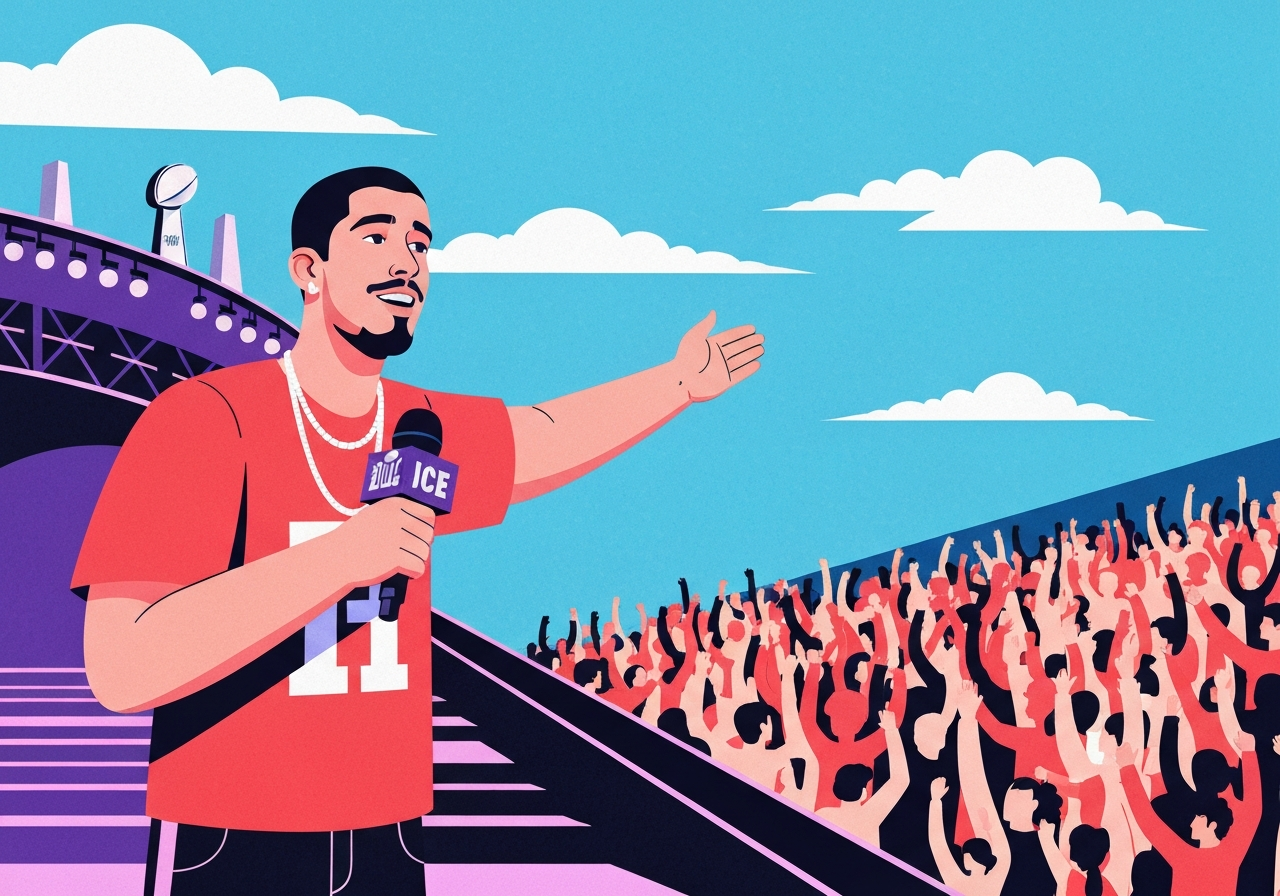
NFL commissioner Roger Goodell told reporters on Monday night that he expects Bad Bunny’s Super Bowl 2026 halftime performance to emphasize unity rather than politics, days after the artist criticized ICE during his Grammy acceptance remarks. Goodell spoke six days before the game and said the league selected the Grammy-winning star in part because of his global reach and ability to bring people together. The commissioner also noted that past halftime performers have used the platform to connect diverse audiences rather than drive partisan divides. Goodell’s remarks came amid heightened public attention and organized counterprogramming around the halftime slot.
Key Takeaways
- Roger Goodell said on Monday (Feb. 2, 2026) he expects Bad Bunny’s halftime show at Levi’s Stadium to focus on uniting fans, not political agitation.
- Bad Bunny referenced U.S. Immigration and Customs Enforcement (ICE) during his Grammy speech, using the phrase “ICE out” and decrying dehumanizing rhetoric.
- Turning Point USA announced a competing halftime event featuring Kid Rock as a headliner, creating a visible ideological counterpoint.
- An anonymous player survey reported by The Athletic found 58.6% of respondents liked the choice of Bad Bunny for the halftime show, while 41.1% did not.
- Goodell was asked about possible ICE enforcement at Super Bowl venues; he did not confirm any federal operational plans publicly during the briefing.
- The NFL cited the performer’s global appeal and creative reach as central reasons for the selection of Bad Bunny for the 2026 halftime slot.
Background
The NFL announced Bad Bunny as the halftime headliner earlier in the season, a pick that generated strong reactions across the political and cultural spectrum. Halftime shows have long been high-profile cultural moments with global audiences, and the league has in recent years leaned into artists with wide cross-border followings. Bad Bunny’s Grammy acceptance speech, in which he criticized ICE and called for compassion, intensified scrutiny because it arrived within days of the Super Bowl spotlight. Conservative commentators and activist groups characterized the selection as provocative, while many players, fans and industry figures framed it as a mainstream entertainment choice rooted in popularity.
Organized pushback has included promotional activity around alternative halftime events and strongly worded social commentary, reflecting broader debates about artists using major platforms to address public policy and social issues. The NFL’s decision-making process emphasized broadcast audience reach, marketplace dynamics and the capacity of performers to produce a commercially successful halftime production. At the same time, the league must weigh security, sponsor relationships and broadcast partner concerns whenever a halftime performer draws political attention. Those operational and reputational trade-offs help explain why the commissioner publicly framed the halftime slot as a unifying moment.
Main Event
Goodell addressed reporters on Monday night, responding to questions about both Bad Bunny’s Grammy remarks and whether ICE would carry out enforcement operations at Super Bowl events. He stressed that the league chose Bad Bunny in part because of his stature and the unifying potential of the halftime platform, and said performers historically have used the show to bring diverse viewers together. When asked about enforcement actions, Goodell did not provide operational details and directed reporters to federal authorities for specifics.
Bad Bunny’s Grammy speech included direct criticism of ICE and an emotional appeal about humanity and love; those remarks were widely circulated on social media and in television coverage. The commissioner said those comments showed the artist’s passion and influence but reiterated his expectation that the Super Bowl set will be an entertainment-focused moment. Meanwhile, conservative groups announced plans to stage alternative programming during the halftime window, turning a singular broadcast moment into a broader cultural flashpoint.
Player sentiment has been mixed. The Athletic’s anonymous survey showed a clear plurality of players supported the league’s choice, but a substantial minority expressed disapproval. That split mirrors public reaction patterns for other polarizing cultural events and complicates internal messaging for the NFL, which seeks broad appeal across markets and political demographics. The league’s external communications have attempted to emphasize the artistic and connective aspects of the event rather than foreground contentious policy debates.
Analysis & Implications
The commissioner’s public framing matters because the Super Bowl halftime show is one of the most-watched musical stages globally; a performer’s behavior there can shape public narratives beyond the sport. Goodell’s emphasis on unity is a deliberate reputational safeguard intended to reassure sponsors, broadcasters and local hosts that the NFL expects a mainstream entertainment presentation. That stance also reflects risk management: the league must balance creative freedom with commercial and security obligations at a marquee event.
Bad Bunny’s Grammy remarks—and the ensuing backlash—underscore how artists now carry amplified political visibility when they accept awards or headline major broadcasts. For the NFL, the challenge is twofold: preserve artistic credibility so the halftime show remains a cultural draw, while minimizing instances that could provoke boycotts, advertiser unease or logistical complications. Advertisers and broadcast partners will closely monitor the production and any associated off-site events for reputational spillover.
On the security front, questions about federal agency activity near Super Bowl venues surfaced during the briefing, but no operational confirmations were provided by the league. That leaves local and federal law enforcement to manage any enforcement or protest-response activities consistent with standard major-event planning. The absence of a public federal statement makes the situation less predictable for attendees and nearby communities, increasing the importance of transparent, pre-event coordination among stakeholders.
Comparison & Data
| Group | Support for Bad Bunny as Halftime Headliner |
|---|---|
| NFL players (anonymous survey) | 58.6% support / 41.1% oppose |
| Conservative activist organizers | Publicly opposed; planning counterprogramming (e.g., Turning Point USA event) |
The Athletic’s anonymous survey of NFL players provides a measurable inside-the-league perspective showing modest majority support for the pick, while organized conservative groups have relied on alternative events and high-profile performers to signal opposition. The numbers underline a divided response rather than a consensus, which carries practical implications for league communications, sponsor exposure and local planning in the Super Bowl host region. Because the player survey was anonymous and the sample is self-selecting, the results should be read as indicative rather than definitive.
Reactions & Quotes
Commissioner Goodell’s remarks were short and focused on the role of the halftime platform; he framed it as an entertainment moment meant to bring people together. His comments were reported during the league’s pre-Super Bowl media availability and repeatedly cited by press outlets covering the intersection of sports and culture.
“This platform is used to unite people and to be able to bring people together.”
Roger Goodell
Goodell added that the NFL selected an artist who could reach a wide audience and that past performers have harnessed the moment to connect viewers rather than inflame divisions. Media coverage of those remarks emphasized the league’s intent to keep the halftime show commercially focused.
Bad Bunny’s Grammy speech drew immediate attention when he invoked ICE and appealed for dignity and compassion. Clips of the acceptance remarks circulated widely, amplifying debate about whether musicians should raise political or social issues on broadcast stages.
“ICE out,”
Bad Bunny (Grammy speech)
Following the speech, conservative commentators and activist groups publicly criticized the artist and the league, while supporters defended his right to address social issues. The contrasting responses have set expectations for a highly scrutinized halftime presentation.
Unconfirmed
- Whether ICE will conduct specific enforcement operations at Super Bowl sites — no federal operational confirmation was provided by the NFL during Goodell’s remarks.
- Exact attendance figures and reach for Turning Point USA’s planned counterprogramming are not confirmed and may vary from announced projections.
- The degree to which the halftime setlist or on-stage moments will reference recent political remarks is unconfirmed until the performance is publicly aired.
Bottom Line
Roger Goodell’s public comments aim to defuse tension by framing the Super Bowl halftime show as a unifying entertainment moment rather than a political platform. That approach responds to immediate controversy sparked by Bad Bunny’s Grammy remarks and to organized counterprogramming designed to spotlight ideological opposition. For the NFL, reinforcing a neutral, inclusive narrative reduces commercial and security risks in the run-up to a major global broadcast.
Nevertheless, the episode highlights a persistent reality: major cultural stages now function simultaneously as entertainment and potential vectors for political messaging. Sponsors, viewers and local authorities should expect heightened scrutiny around the halftime window, with operational details and actual on-stage content providing the ultimate test of whether the event keeps to the commissioner’s expectation of unity.
Sources
- New York Post — news report on Goodell’s comments and related coverage (media).
- The Athletic — reporting outlet referenced for the anonymous player survey figures (media).
- The Recording Academy / GRAMMYs — coverage and clips of Bad Bunny’s Grammy acceptance speech (official/industry)