
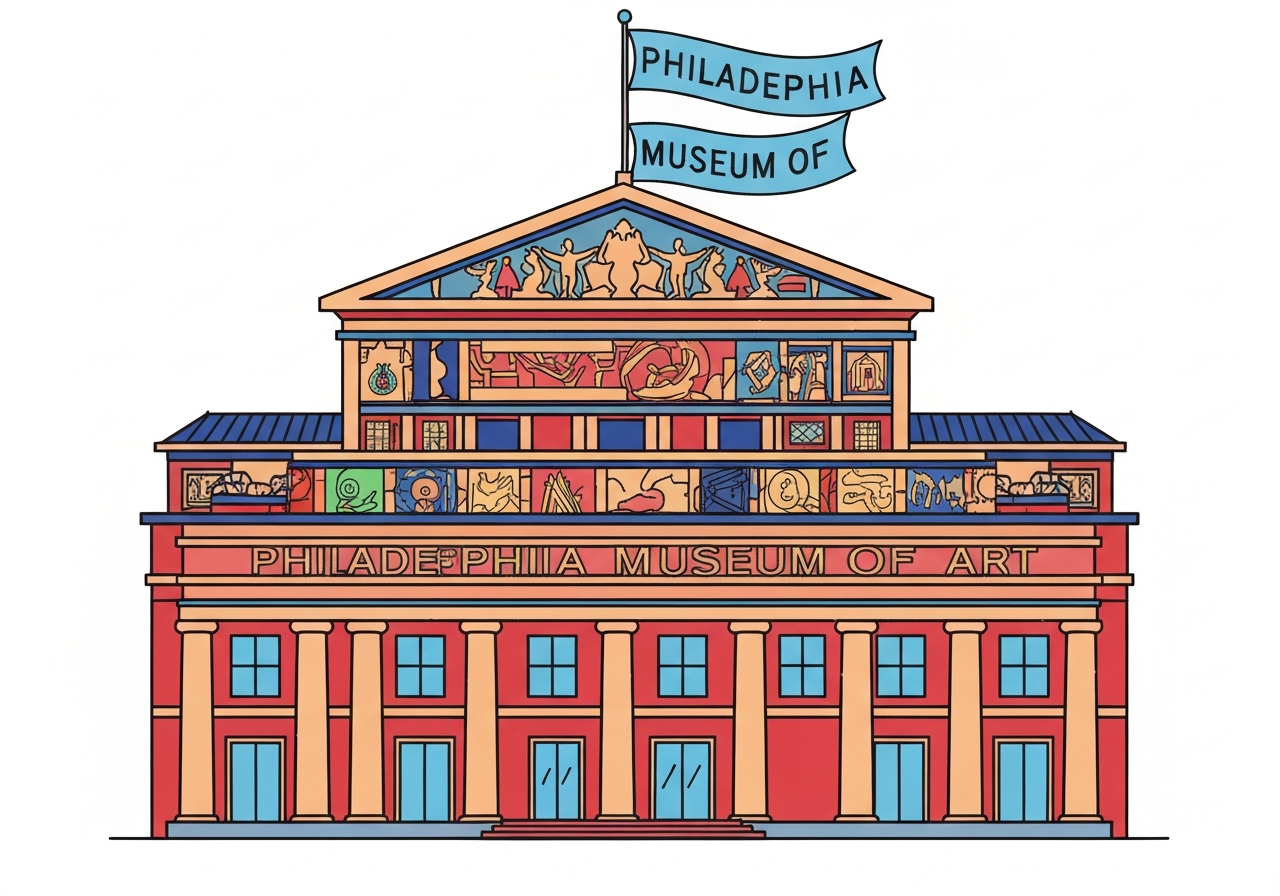
Less than four months after unveiling a bold and controversial rebranding, the Philadelphia Museum of Art announced on Feb. 5, 2026 that it will revert to its longstanding name. The rollback follows public backlash to the short-lived title, the sudden dismissal of former director Sasha Suda in November 2025, and criticism from local commentators. Daniel Weiss, the museum’s director and chief executive, described the rebrand as “a misstep” and said the institution will phase the change back over the coming months while keeping selected design elements. Restoring the historic name is being framed by trustees as a move to rebuild community trust and stabilize the institution.
Key Takeaways
- The museum announced the name reversal on Feb. 5, 2026, less than four months after the rebrand first appeared.
- The contested rebranding had shortened the institution’s name to the “Philadelphia Art Museum,” a change that drew immediate public criticism and mockery, including the nickname “PhArt Museum.”
- Former director Sasha Suda, who initiated the rebrand, was ousted by trustees in November 2025, about three years into a five-year contract.
- Daniel Weiss, the museum’s director and chief executive, called the original change “a misstep” and said the rollback will be implemented over several months.
- Certain design elements, notably a new griffin logo, will remain in place despite the name restoration.
- The trustees said rebuilding community confidence and institutional stability are top priorities following the controversy.
Background
The Philadelphia Museum of Art is one of the city’s most visible cultural institutions, with a name and identity long embedded in local and national civic life. Museum leadership initiated a visual and verbal rebrand in late 2025 intended to modernize the institution’s public face; that campaign included a new name, typographic system and a griffin emblem. Rebranding an established museum carries reputational risk: audiences often associate institutional names with history, civic pride and donor expectations, making sudden changes sensitive.
Trustees and senior staff have historically balanced ambitions to broaden audiences with stewardship of the museum’s legacy collections and relationships with donors, city government and neighborhood stakeholders. Internal debate over strategic direction predates the 2025 rebrand, and some board members signaled dissatisfaction with how the campaign was rolled out. The dismissal of Sasha Suda in November 2025 crystallized tensions and intensified scrutiny of decision-making at the top of the institution.
Main Event
In late 2025 the museum unveiled an identity package that shortened its name to the Philadelphia Art Museum and introduced a contemporary griffin logo and new visual system. Reaction from the public and some local commentators was swift and largely negative; critics said the new name felt abrupt and disconnected from the museum’s history. Within weeks the nickname “PhArt Museum” circulated on social channels, amplifying the backlash and complicating the museum’s messaging efforts.
Trustees moved to remove Sasha Suda in November 2025, citing internal concerns about leadership and direction. Board deliberations were not fully public; the trustees provided limited on-the-record comments at the time. Following the leadership change, a new executive team reviewed the rebrand and opened discussions with civic partners and community stakeholders about next steps.
On Feb. 5, 2026, trustees announced a decision to restore the institution’s historic name. Daniel Weiss, serving as director and CEO, framed the rollback as corrective: he acknowledged the public discontent, affirmed the need for institutional stability and said the change back to the historic name will be phased in over months. He also confirmed that some elements of the redesign — notably the griffin logo — would be retained as part of a refined identity approach.
Analysis & Implications
The reversal underscores the political and reputational hazards of rebranding longstanding cultural institutions. Names function as shorthand for institutional history, civic memory and donor recognition; altering them risks alienating long-time supporters even as organizations attempt to attract new audiences. The museum’s leadership miscalculated the depth of attachment to the traditional name and the speed at which public criticism could intensify online and in local media.
Operationally, the rollback will carry costs and logistical complications. Signage, printed materials, digital assets and sponsorship agreements often embed institutional names; reversing a rebrand requires coordinated updates and may create expense and contractual ripple effects. Trustees will need to decide how to allocate resources for the transition while reassuring donors and municipal partners that governance is steady.
Politically, the episode may prompt closer examination of oversight at cultural institutions and the processes by which major branding decisions are made. Boards and executives could face greater pressure to consult community stakeholders and communicate changes incrementally. Conversely, retaining the griffin logo suggests a compromise approach: preserving some modernization work while restoring historical continuity in nomenclature.
Comparison & Data
| Event | Date (month/year) |
|---|---|
| Rebrand unveiled (new name and logo) | Late 2025 (Oct–Nov 2025) |
| Former director Sasha Suda ousted | November 2025 |
| Trustees announce return to historic name | Feb. 5, 2026 |
The table above places the key milestones on a compact timeline. While the precise launch date of the rebrand has been described as “less than four months” before Feb. 5, 2026, public discussion intensified through autumn 2025. The reversal timeline — a decision announced on Feb. 5 with a phased implementation over subsequent months — gives the museum a short window to execute logistical changes and mend community relations.
Reactions & Quotes
“It was a misstep,”
Daniel Weiss, Director and Chief Executive
Weiss used candid language to acknowledge the depth of public dissatisfaction and positioned the rollback as a corrective course intended to rebuild trust.
“The institution has been through a difficult time,”
Daniel Weiss
Weiss described the episode in terms of institutional trauma, emphasizing stabilization and outreach as immediate priorities for leadership and trustees.
“PhArt Museum”
Local critics and social media
That mocking label circulated online and in community commentary, crystallizing negative sentiment and making it harder for the rebrand to gain traction.
Unconfirmed
- Specific internal reasons beyond the rebrand for Sasha Suda’s November 2025 dismissal have not been fully disclosed by the trustees.
- The total financial cost of developing and partially rolling back the rebrand has not been publicly released.
- Details of any formal agreement between the board and donors or sponsors about name usage during the transition are not publicly available.
Bottom Line
The museum’s reversal illustrates the steep reputational costs that can follow rapid identity changes at venerable cultural institutions. Leadership has signaled a course correction meant to repair community relationships and shore up governance after a turbulent autumn and winter of scrutiny.
Practically, the institution now faces the twin tasks of implementing the name restoration while retaining select design updates, and doing so in a way that reassures donors, staff and the public. How effectively trustees and executive leadership translate this decision into sustained trust-building will determine whether the episode is seen as a painful but manageable course correction or as a longer-term governance challenge.
Sources
- The New York Times (national newspaper)
- Philadelphia Museum of Art (official site / institutional information)