
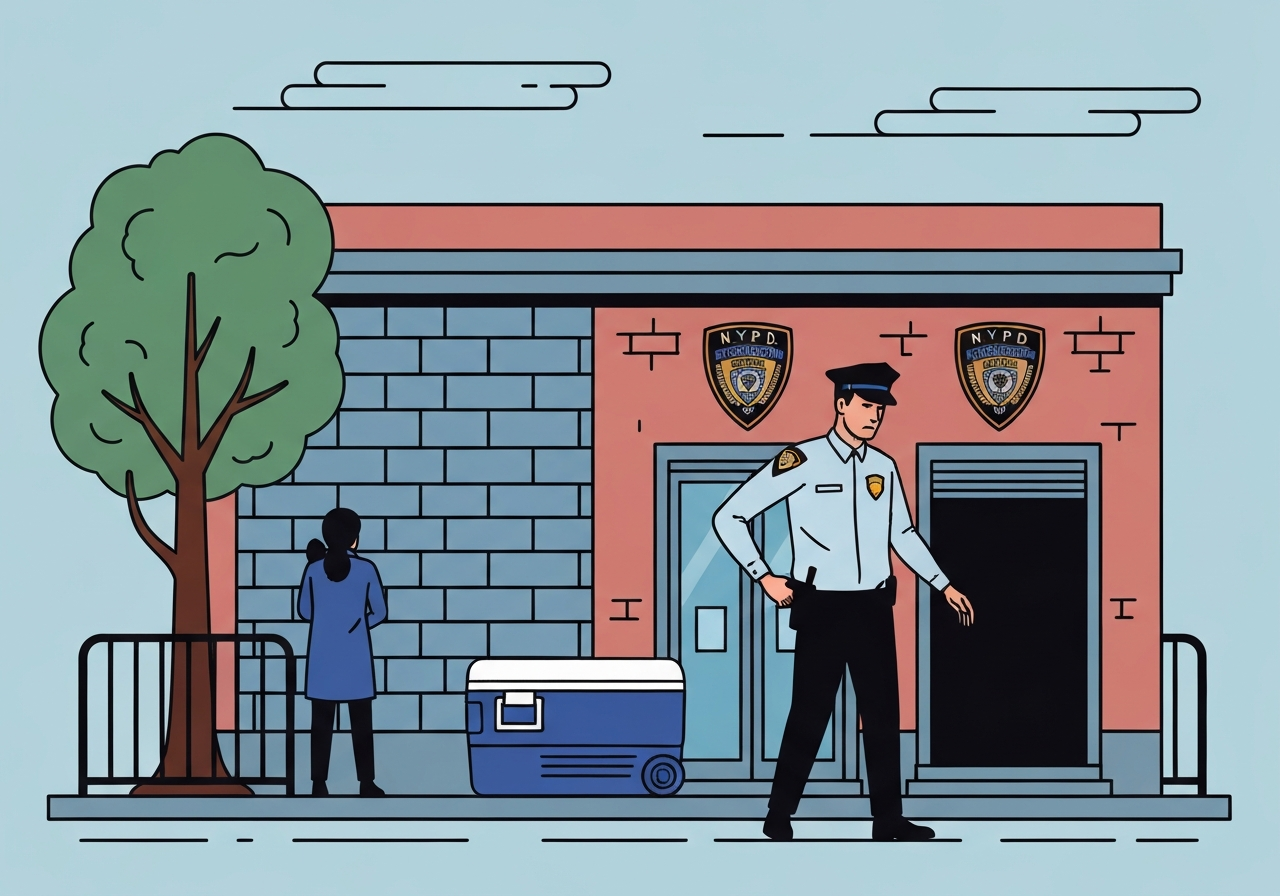
Lead: On Feb. 6, 2026, a New York City police sergeant, Erik Duran, was found guilty of second-degree manslaughter for the 2023 Bronx death of Eric Duprey after the officer threw a plastic cooler at Mr. Duprey as he fled on a motorbike following a brief undercover drug sale. Judge Guy H. Mitchell delivered the verdict after Duran waived a jury trial; the officer was acquitted of criminally negligent homicide. Duran, 38, faces sentencing on March 19, 2026, with a potential prison term of five to 15 years, and the Police Department announced he was fired shortly after the verdict.
Key Takeaways
- Verdict: Sergeant Erik Duran was convicted of second-degree manslaughter on Feb. 6, 2026, for the 2023 death of 30-year-old Eric Duprey in the Bronx.
- Incident facts: The encounter followed a $20 cocaine purchase from Mr. Duprey by an undercover detective; Duran threw a cooler that knocked Duprey off his motorbike.
- Legal outcome: Judge Guy H. Mitchell found the state proved guilt beyond a reasonable doubt; Duran was cleared of criminally negligent homicide.
- Sentence exposure: Duran faces a sentencing hearing on March 19, 2026, and could be imprisoned for five to 15 years under the conviction.
- Department action: The New York Police Department terminated Duran’s employment immediately after the guilty verdict.
- Historical note: This is the first conviction of a New York City police officer for an on-duty killing in roughly ten years.
- Civil follow-up: The Duprey family plans a wrongful-death lawsuit in civil court seeking damages related to the death.
Background
The incident occurred in 2023 in the Bronx when investigators say Eric Duprey sold a small quantity of cocaine to an undercover detective. Video and witness accounts introduced at trial showed Duprey leaving the scene on a motorbike; Sergeant Erik Duran pursued and threw a portable cooler that struck Duprey and caused him to fall. The case drew immediate public attention because it involved a use of force by an officer during what prosecutors characterized as a nonviolent encounter.
Prosecutors from the state attorney general’s office brought the case after a local investigation; they argued that Duran’s action was an unreasonable use of force that directly led to Duprey’s death. The defense acknowledged the cooler was thrown but argued the act did not rise to criminal culpability for manslaughter. Duran waived a jury trial and elected a bench trial, placing the legal question before Judge Mitchell rather than jurors.
Main Event
Court testimony and evidence during the three-week proceeding described the sequence: an undercover purchase of $20 worth of cocaine, Duprey’s departure on a motorbike, Duran’s pursuit and the cooler strike, and Duprey’s subsequent injury and death. Judge Mitchell reviewed witness statements, video, and forensic reports before reaching his decision. The judge concluded the state had met the standard of proof for second-degree manslaughter but not for criminally negligent homicide, which carries a different legal threshold.
The courtroom on Feb. 6 was full: dozens of officers, family members, and activists attended. As the guilty verdict was read, Duprey’s partner, Pearl Velez, wept; the police officers sitting behind Duran were largely silent. Defense attorneys Andrew Quinn and John D’Alessandro showed visible disbelief at the outcome, while prosecutors expressed that the ruling affirmed their case of unjustified conduct by a law enforcement officer.
Immediately after the verdict the Police Department confirmed Duran’s dismissal. The Duprey family’s attorney, Jonathan Roberts, said the verdict validated the family’s view that a dangerous and unnecessary decision cost a life, and announced plans to file a wrongful-death civil suit. Sentencing is scheduled for March 19, 2026, when the court will consider aggravating and mitigating factors and Duran’s prior record.
Analysis & Implications
The conviction highlights renewed scrutiny of officer conduct in New York City and signals that prosecutors are prepared to pursue criminal accountability for use-of-force incidents they judge to be unjustified. As the first on-duty killing conviction for an N.Y.P.D. officer in about a decade, the verdict may influence charging decisions in future cases and raise expectations among advocates for stricter oversight.
Politically, the case could prompt calls for policy reviews within the Police Department and among city officials, including reassessments of pursuit guidelines and use-of-force training. Civil litigation that follows could produce additional disclosures in discovery and further public debate over departmental supervision and discipline systems.
For the department’s rank-and-file, the conviction may create tension between calls for accountability and concerns about morale and prosecutorial treatment of split-second decisions in policing. Union leaders and many officers may view the outcome as a testing point for how criminal law applies to policing; reform advocates will likely cite the verdict in arguments for systemic change.
At the broader legal level, the case underscores the distinction between criminal liability and administrative discipline: Duran faces both potential imprisonment in criminal court and separate civil or employment consequences. The sentencing stage and any appellate litigation will shape how similar cases are handled going forward.
Comparison & Data
| Year | Event | Outcome |
|---|---|---|
| 2023 | Death of Eric Duprey after cooler strike | Case investigated, charged |
| 2026 | Bench verdict for Sgt. Erik Duran | Convicted of 2nd-degree manslaughter; sentencing Mar 19, 2026 |
The table above provides a concise timeline of the incident and legal milestones. While public databases track use-of-force incidents and civil settlements, criminal convictions of on-duty officers remain rare in New York City; this verdict breaks a roughly ten-year absence of such convictions. Further quantitative comparison would require a review of police disciplinary records, prosecutor filings, and court dockets dating back to the prior decade.
Reactions & Quotes
“Prosecutors have proven beyond a reasonable doubt that the defendant’s actions were not justified.”
Judge Guy H. Mitchell
The judge’s brief statement summarized the legal basis for the conviction and the standard applied in a bench trial.
“A life was lost because a police officer made a dangerous and unjustifiable decision during a nonviolent encounter.”
Jonathan Roberts, family attorney (civil counsel)
Roberts framed the verdict as both recognition of harm to the family and a step toward civil accountability.
“All power to the people.”
Hawk Newsome, Greater New York Black Lives Matter co-founder
Activists who supported the Duprey family voiced public relief at the outcome and staged chants outside the courthouse, underscoring the case’s social resonance.
Unconfirmed
- Whether Sergeant Duran had prior formal misconduct findings on his record was not disclosed in court during the published coverage and remains unconfirmed.
- Details about internal NYPD disciplinary steps prior to the firing announcement were not fully documented in public records at the time of reporting.
- Any criminal or civil settlement negotiations between the Duprey family and the city or police department were not reported and remain unconfirmed.
Bottom Line
The guilty verdict in the 2023 Bronx death marks a rare criminal conviction of an on-duty N.Y.P.D. officer and will likely reverberate through policing policy debates, civil litigation, and prosecutorial decisions on future use-of-force cases. It affirms that prosecutors were able to meet the criminal standard in a case centered on a single, intentional act—the throwing of a cooler—that led directly to a civilian’s death.
Sentencing on March 19, 2026, and any subsequent appeals and civil suits will determine the final legal consequences and may further clarify how courts and prosecutors treat similar incidents. For the Duprey family and community activists, the verdict is a milestone in accountability; for the Police Department and officers, it raises urgent questions about training, tactics, and the line between permissible and criminal conduct in the field.