
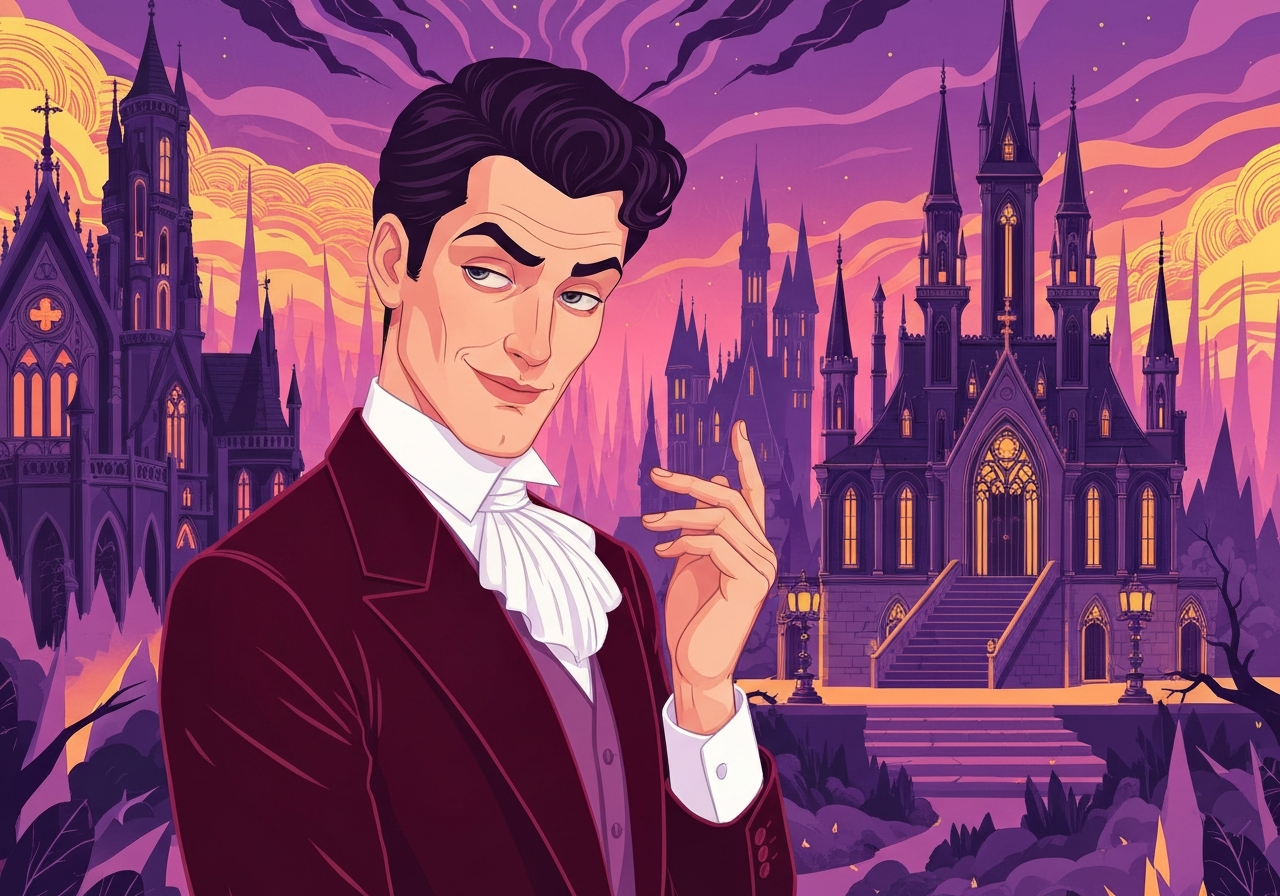
Luc Besson’s lavish retelling of Bram Stoker’s Dracula, released in the U.S. by Vertical on February 6, 2026, leans hard on spectacle and color but struggles to justify its narrative choices. Caleb Landry Jones plays Prince Vladimir/Dracula with elastic, often campy energy, while Zoë Bleu appears as both Elisabeta and Mina; Christoph Waltz features as a priest. Running more than two hours, the film privileges bombastic set pieces over sustained dread, earning a lukewarm critical response and an IndieWire grade of C-.
Key Takeaways
- Release and distribution: Vertical released Luc Besson’s Dracula in the U.S. on February 6, 2026.
- Running time and reception: The film runs longer than two hours and received a C- from IndieWire’s review.
- Cast highlights: Caleb Landry Jones headlines as Dracula; Zoë Bleu plays both Elisabeta and Mina; Christoph Waltz appears as a priest.
- Tone and style: Besson’s piece emphasizes saturated visuals and fantasy set designs, evoking comparisons to The Fifth Element and Moulin Rouge! imagery.
- Comparisons to peers: Critics noted clear echoes of Robert Eggers’ 2024 Nosferatu in imagery and structure, with Eggers viewed as the stronger formalist by some reviewers.
- Narrative critique: Reviewers flagged a verbose, over-explanatory script that undermines emotional immediacy despite strong production design.
- Genre context: With more than 200 Dracula films in circulation, observers question the necessity of another major reinterpretation.
Background
Bram Stoker’s 1897 novel has produced a vast cinematic lineage; across a century, filmmakers have alternately foregrounded horror, romance, religious allegory and camp. Directors who revisit Dracula often choose between fidelity to Stoker’s gothic structure or radical reinvention; Besson opts for the latter, using color and theatricality rather than faithful period constraint. Luc Besson, known for the hyper-stylized sci-fi The Fifth Element, has repeatedly favored heightened, comic-book-like palettes and kinetic production design in his career. That visual appetite sets audience expectations for immersive worldbuilding; where that visual craft is not matched by narrative focus, critics argue, viewers can feel detached.
Robert Eggers’ Nosferatu (2024) reintroduced a modern arthouse vocabulary to vampire cinema, favoring restraint and dread. That film’s critical success has sharpened contrasts with more overt genre plays arriving afterward. Industry watchers also note the crowded Dracula field—more than 200 adaptations—meaning new versions must offer striking conceptual or emotional novelty to stand out. Besson’s decision to graft an overt romantic through-line onto a monstrous origin places his film within a recurring debate: can Dracula be reclaimed as an empathic romantic hero without diluting his menace?
Main Event
Besson opens Dracula 400 years before the central 19th-century action, introducing Prince Vladimir of Wallachia in an early sequence with Princess Elisabeta (Zoë Bleu). Their sensual intimacy and mutual affection are foregrounded, and Vladimir’s grief after Elisabeta’s murder during battle with the Ottoman Empire sets him on the path to vampirism and the name Dracula. The early material aims to humanize the prince and establish the film’s emotional stake, but reviewers found the script’s repeated explanatory beats undermined dramatic urgency.
The story then shifts to Paris in 1889, where Dracula re-enters history and pursues an ethereal bond with Mina Murray (also played by Bleu). Besson stages seduction scenes in densely stylized spaces—super-saturated, theatrical backdrops that recall Moulin Rouge!—and leavens horror with comic-pop flourishes. Caleb Landry Jones’ interpretation plays lively and mischievous, alternating between giddiness and predatory flashes; his charisma is often cited as the film’s primary sustaining force.
As the film moves toward its finale, Besson amplifies action elements—digital gargoyles descend, set pieces turn operatic and fights grow bombastic. A climactic, large-scale confrontation replaces creeping dread with spectacle; critics argued the final act’s tone shifts toward pop-comic action and away from sustained erotic or metaphysical tension. Christoph Waltz’s priest, whose dialogues touch on God and the Devil, is positioned to provide a moral center, but reviewers found the performance oddly flattened within the film’s tonal mix.
Analysis & Implications
Besson’s strengths—bold production design, precise color schemes and kinetic staging—are visible throughout Dracula, and those technical achievements create memorable images that will likely fuel marketing and audience curiosity. Yet the pervasive critique is structural: the screenplay’s habit of over-explaining and repeating thematic lines saps emotional payoff. When visual invention outpaces dramatic specificity, the result can feel like style without sufficient narrative anchoring.
Caleb Landry Jones provides electric moments that often rescue individual scenes; his performance’s elasticity makes many of Besson’s riskier tonal moves watchable. Still, a single charismatic turn rarely compensates for ensemble and scripting weaknesses in a film of this scope. The presence of seasoned actors such as Christoph Waltz heightens expectations for sustained intellectual and moral interrogation, which some critics felt was only intermittently realized.
Commercially, the film’s vivid visuals and marquee names could attract audiences for opening-weekend curiosity, but long-term legs depend on word of mouth and critical momentum—areas where mixed reviews matter. In a franchise-saturated Dracula market and against the recent prestige of Nosferatu (2024), Besson’s picture may be positioned as a stylistic curiosity rather than a definitive new interpretation. Festival reception, international box office and streaming performance will determine whether the film becomes a durable entry or a short-lived spectacle.
Comparison & Data
| Film | Director | Year | Tonal focus | Critical note |
|---|---|---|---|---|
| Nosferatu | Robert Eggers | 2024 | Restrained dread, arthouse | Praised for formal rigor (critic consensus) |
| Dracula | Luc Besson | 2026 | High-color spectacle, romance-action | Mixed reviews; strong visuals, thin narrative (IndieWire C-) |
The table highlights stylistic divergence: Eggers’ winner-take approach favors minimalism and mounting terror, while Besson foregrounds saturation and theatricality. That difference helps explain why critics compare the two and often rank Eggers higher for formal control, whereas Besson receives nods for entertainment value but criticism for narrative coherence.
Reactions & Quotes
“A fine excuse to go to the theaters but hardly a seductive one.”
IndieWire review
“Offers intellectual conversations about God, the Devil, and moral ambiguity,”
IndieWire on Christoph Waltz’s role
Critics and early audiences have repeatedly pointed to the film’s visual bravura as its ticket to initial attention; however, many also flag that spectacle alone does not substitute for the slow-building menace that defines classic vampire storytelling. Industry commentary emphasizes that a strong lead performance can only go so far when the surrounding script and tonal framing do not consistently support it.
Unconfirmed
- Long-term box-office trajectory: whether Dracula will find sustained commercial legs beyond opening weekend is not yet confirmed and depends on word of mouth.
- Award-season positioning: any strategy to position the film for awards (technical or acting categories) has not been publicly confirmed.
- Future franchise plans: there is no confirmed announcement about sequels or expanded-universe plans tied to this Dracula release.
Bottom Line
Luc Besson’s Dracula is a confident, image-driven reimagining that showcases the director’s talent for saturated, larger-than-life mise-en-scène and a lead performance from Caleb Landry Jones that frequently electrifies the frame. Yet the film’s screenplay choices—repetitive exposition, tonal mismatches and a finale leaning toward pop action—prevent it from achieving the emotional and atmospheric depth that many critics expect from a top-tier Dracula adaptation.
For viewers drawn to bold production design and charismatic, off-kilter leads, Dracula offers entertaining sequences and memorable visuals. For those seeking a new, haunting definitive treatment of Stoker’s novel, this version may feel superfluous amid a crowded adaptation landscape and in light of recent, more restrained successes such as Nosferatu (2024). The film will likely be discussed as a style-forward but narratively uneven entry in the Dracula canon.