
Lead
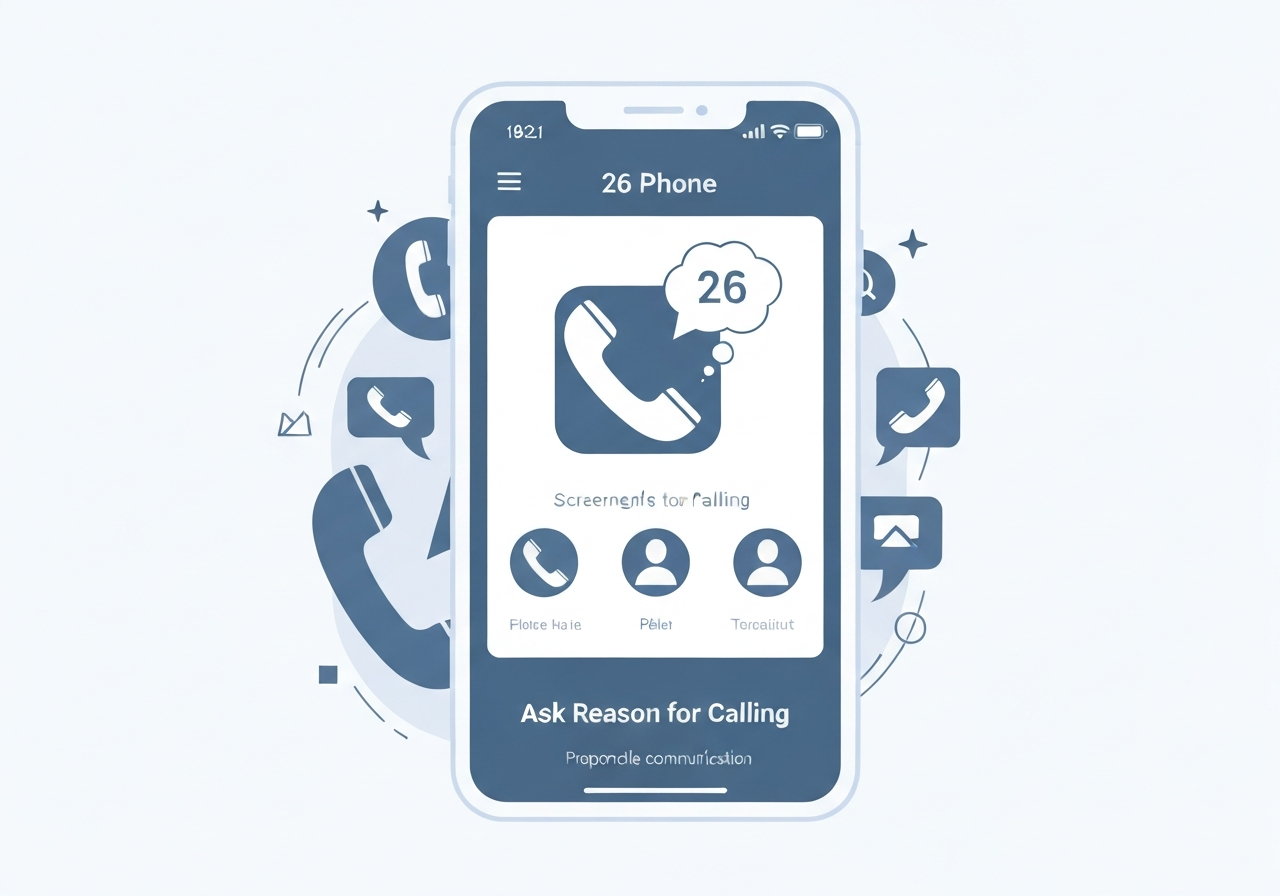
Apple’s iOS 26 overhaul of the Phone app, highlighted in reporting on February 6, 2026, introduces a new call‑screening option called “Ask Reason for Calling.” The feature sits alongside redesigned ringtones and Live Translation and aims to reduce unwanted interruptions without blocking legitimate unknown callers. It prompts unsaved numbers for a reason before the device rings, giving recipients context to decide whether to answer. Early user tests indicate it can cut through the tradeoff between allowing all calls and silencing unknown numbers completely.
Key Takeaways
- iOS 26 updated the Phone app as part of a broader communication focus; the change was reported on February 6, 2026.
- The Settings path is Settings → Apps → Phone → Screen Unknown Callers, where three modes are available: Never, Ask Reason for Calling, and Silence.
- “Ask Reason for Calling” requests additional information from callers with unsaved numbers before the phone rings; this is a new middle option between ringing all calls and silencing unknown callers.
- Previously, silencing unknown callers filtered numbers not in Contacts, Mail, or Messages but risked hiding legitimate calls; iOS 26 aims to reduce that false negative problem.
- The Phone app also received new ringtones and Live Translation features in iOS 26, expanding its communication toolset.
Background
Smartphone users and carriers have long battled with unwanted and automated spam calls. Apple introduced a basic filter in prior iOS versions that silenced callers not found in Contacts, Mail, or Messages, which improved nuisance call volume but sometimes blocked important, legitimate calls from unknown numbers. That binary choice—let everything ring or silence unknowns—left many users uneasy about missing time‑sensitive communications such as delivery updates, medical callbacks, or service calls.
Apple’s broader iOS 26 update targeted communication apps, bringing visual and functional changes to Messages and Phone. The company balanced usability and privacy concerns by adding contextual features rather than only hard blocks. Device‑level call‑screening options can reduce reliance on carrier or third‑party spam filters, shifting some control back to end users while keeping core telephony behavior consistent with emergency and verified business calling standards.
Main Event
In Settings → Apps → Phone, the Screen Unknown Callers section now lists three explicit choices. “Never” lets unsaved numbers ring normally; “Silence” sends them to voicemail and logs them in Recents; the new “Ask Reason for Calling” prompts callers for a short explanation before the recipient’s phone rings. The recipient sees the provided reason and can accept or decline the call based on that context, reducing disruptive or unnecessary ringing.
The feature is designed to work with standard carrier calls; it does not replace verified business calling frameworks or end‑to‑end encrypted apps. Apple also bundled cosmetic and utility updates in the Phone app—new ringtones and Live Translation capabilities—so the app’s overhaul affects both appearance and workflow for incoming calls. For users who previously chose the “silence unknown callers” option but worried about missed legitimate calls, this new middle option offers a practical alternative.
Activation is straightforward: toggle the desired mode within the Phone settings. Once enabled, the system intercepts unsaved numbers and triggers a brief screening interaction that captures the caller’s stated purpose. The screening step occurs before the recipient’s device rings, minimizing interruptions while surfacing useful context for deciding whether to pick up.
Analysis & Implications
The new screening option represents an incremental approach to a persistent usability problem: balancing spam reduction with access to legitimate, unsaved callers. By requesting a reason, iOS 26 converts an all‑or‑nothing filter into a low‑friction verification step that preserves important inbound calls. For many users, this may reduce missed opportunity costs—appointments, deliveries, or one‑off business calls—without increasing spam exposure dramatically.
From a privacy perspective, the screening exchange appears to keep control on the recipient’s device: callers are asked to identify themselves without exposing the recipient’s data. However, the design raises questions about how carriers and automated systems handle the extra prompt and whether robocallers will adapt by providing canned reasons. The long‑term effectiveness will depend on caller compliance and whether spammers can game short speech prompts.
For businesses and verified services that rely on reaching customers, the feature could change call pickup dynamics. Companies that expect callbacks from unknown numbers may encourage customers to save their numbers or include identifying information in messages. Conversely, legitimate small businesses and service providers that call from rotating numbers might see increased friction unless they adopt verified calling practices.
Comparison & Data
| Option | Behavior | Recents |
|---|---|---|
| Never | Unsaved numbers ring normally. | Missed calls appear in Recents. |
| Ask Reason for Calling | Unsaved callers are prompted to state a reason before ring; recipient sees that reason. | Call attempts and provided reasons are logged in Recents. |
| Silence | Unsaved numbers are silenced and sent to voicemail. | Silenced calls appear in Recents (no ring). |
The table summarizes the three modes available in iOS 26’s Screen Unknown Callers setting. In practice, “Ask Reason for Calling” sits between the prior default behaviors by adding a micro‑interaction that supplies caller context without forcing the recipient to accept an unknown call immediately.
Reactions & Quotes
iOS 26 prioritizes upgrades to core communication apps, aiming to reduce friction in everyday calling.
Apple (official reporting)
For users tired of answering spam but unwilling to miss important calls, a screening prompt can restore a balance.
Technology commentator (industry analysis)
Many users report the feature provides useful context and reduces unnecessary interruptions compared with the blunt silence option.
Early adopters (user feedback)
Unconfirmed
- Whether the screening prompt will materially reduce spam call volume across large user samples is not yet verified.
- How automated robocall systems will respond to the new prompt—whether they’ll provide plausible reasons or be filtered—remains uncertain.
- The precise interaction flow for callers on all carriers and regions has not been exhaustively validated.
Bottom Line
iOS 26’s “Ask Reason for Calling” converts a previously binary choice into a practical middle ground for managing unknown callers. For users who want fewer interruptions but cannot risk missing legitimate unknown calls, the feature offers immediate value with minimal behavior change.
Its long‑term impact on spam depends on caller behavior and carrier handling, but as an option it shifts power to recipients by adding context before a phone rings. Users concerned about missed business or service calls should try the new mode; organizations that rely on unsaved numbers may need to adapt to maintain reach.