
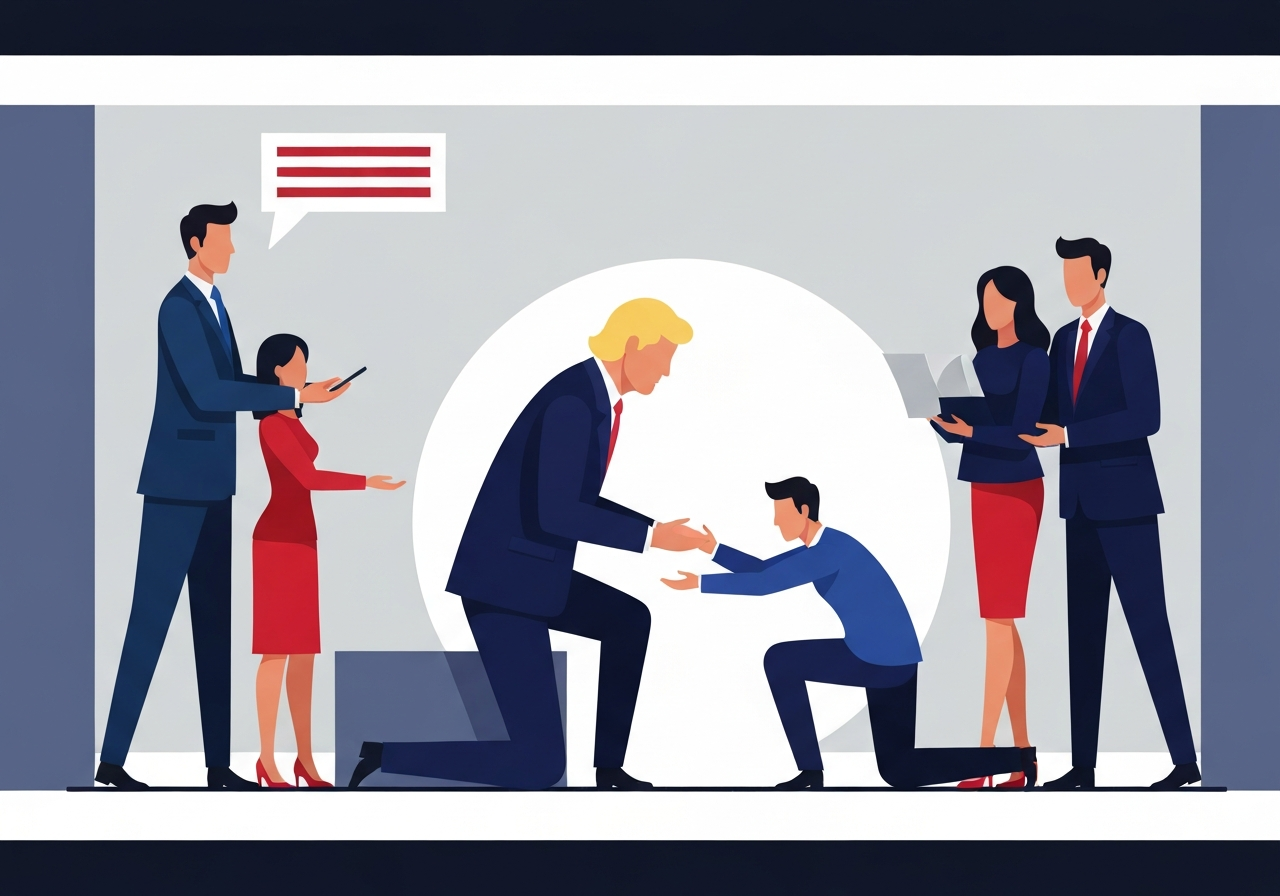
Reports on Feb. 8, 2026 show a newly announced organization, Freedom 250, offering donors who give at least $1 million special access to President Donald J. Trump as it raises private funds for events tied to the nation’s 250th birthday. The group, unveiled by Mr. Trump in a December 2025 social media post, is promoting large-scale spectacles — including a traveling “Freedom Truck” and appearances at state fairs — while soliciting high-value, tax-related gifts. Documents and interviews indicate the fundraising is led by Meredith O’Rourke and that several proposed projects blend patriotic imagery with events unrelated to the nation’s founding. The reporting raises questions about whether private donations could confer influence or blur the line between public commemoration and private political benefit.
Key Takeaways
- Freedom 250 is soliciting donors who give at least $1 million, offering bespoke donor packages that include access to President Trump (reported Feb. 8, 2026).
- The group is positioning events for the U.S. semiquincentennial (250th anniversary) that include a traveling “Freedom Truck” and a Tampa state-fair appearance with the U.S. Army Old Guard Fife and Drum Corps.
- Planned or proposed attractions reported include an arch near Washington, an IndyCar event through the capital, a national prayer gathering and an Ultimate Fighting Championship-style match on the White House lawn to coincide with Mr. Trump’s 80th birthday.
- Meredith O’Rourke, described as the president’s top fundraiser, is coordinating private donations and circulating solicitation materials for Freedom 250.
- Reporting describes Freedom 250 as a vehicle—compared to past White House projects—through which donors and companies with business before the administration might make tax-related gifts while gaining access to the president.
- Officials and critics have warned the approach could overshadow broader, nonpartisan semiquincentennial plans meant to reach a wide cross-section of Americans.
Background
The semiquincentennial, the 250th anniversary of the United States, has been the subject of planning by public commissions and civic groups aiming for inclusive national commemorations. Historically, federal commissions and nonprofit partners have emphasized education, historical preservation and civic programming tied explicitly to founding-era events such as the Boston Tea Party and the Declaration of Independence. In December 2025, President Trump announced the creation of Freedom 250 in a social post, describing a vow to stage an extraordinary national celebration, and since then private organizers have begun promoting high-profile spectacles connected to the anniversary.
At the same time, the new fundraising and event plan echoes past controversies over private projects tied to the presidency, including debates about access, influence and the role of tax-deductible giving. Critics point to earlier White House-related endeavors in which private donors gained proximity to senior officials and have questioned whether private fundraising for public celebrations risks privileging donors’ interests. Supporters argue that private funds can augment federal resources and enable larger-scale programming; the tension between public oversight and private sponsorship is central to the current dispute.
Main Event
Documents obtained by reporters describe solicitation materials offering tiered, bespoke donor packages to individuals and corporations willing to give $1 million or more. Those materials, and interviews with people familiar with the outreach, say donors would receive events-access perks and meeting opportunities tied to Freedom 250 activities. Organizers have already run a traveling “Freedom Truck” show; that presentation featured the U.S. Army Old Guard Fife and Drum Corps at a state fair in Tampa, Florida in early 2026, illustrating how the program is deploying ceremonial elements alongside popular entertainment.
Beyond the truck tour, the solicitation lists grander proposals: a monumental arch overlooking Washington, an IndyCar race through the nation’s capital, a nationwide prayer event and a mixed-martial-arts–style spectacle staged on the White House grounds timed for Mr. Trump’s 80th birthday. Those items have drawn attention because several lack clear, direct links to founding-era events and appear tailored to the president’s personal brand of spectacle and legacy-building. Organizers say private funds are necessary to realize large, showpiece projects that federal appropriations would not cover.
Freedom 250’s fundraising is overseen by Meredith O’Rourke, described in reporting as the administration’s principal fundraiser; her team is circulating the solicitation and cultivating major donors. Officials familiar with the outreach say the effort has attracted interest from corporations and wealthy individuals who want visibility within high-profile national celebrations. At the same time, watchdogs and some public officials have raised concerns about whether donor access to senior officials creates potential conflicts when donors have pending matters before the administration.
Analysis & Implications
The arrangement described raises several ethical and legal questions. When private donors are promised access to a sitting president in exchange for large gifts to organizations linked to presidential initiatives, the possibility of perceived or actual influence follows. Federal ethics rules and statutes about gifts to public officials focus on preventing quid pro quo arrangements; here the line is the proximity between private giving and governmental decision-making, especially when donors have pending interests before executive agencies.
There is also a reputational calculation: a semiquincentennial that appears captured by partisan spectacle could diminish the credibility and reach of broader commemorations intended to be nonpartisan and historically grounded. State commissions, museums and civic groups traditionally frame these anniversaries around education and shared civic themes; replacing that emphasis with branded entertainment risks alienating institutions and communities the original plans sought to include. International observers may see privatized, presidentially branded national celebrations as departure from customary U.S. practices for civic remembrance.
Practically, questions remain about permitting, logistics and the legal status of donated funds. Events on federal property — including the White House grounds — require federal review and permits; staging a competitive sporting event or motor race through the capital would face significant regulatory and security hurdles. Similarly, whether Freedom 250’s funds are accepted as tax-deductible donations depends on the organization’s formal nonprofit status and tax filings, which determine how gifts are treated under IRS rules.
Comparison & Data
| Proposed Freedom 250 Project | Connection to Founding-Era Events | Public vs. Private Funding |
|---|---|---|
| Freedom Truck tour (state fairs) | Indirect — patriotic pageantry | Private fundraising (reported) |
| Arch overlooking Washington | Limited direct link to 1770s events | Private proposal |
| IndyCar race in the capital | No clear founding-era precedent | Private proposal, would need permits |
| National prayer event | Tenuous link; civic-religious element | Private sponsorship |
| UFC-style match on White House lawn | No historical connection; novelty | Private proposal; federal approval required |
The table summarizes the projects publicized in reporting and assesses, at a high level, their apparent ties to founding-era history and the likely funding pathway. Many proposals emphasize spectacle over direct historical commemoration, and several would depend on federal permissions or significant private outlays to proceed.
Reactions & Quotes
“We will give the nation a celebration unlike any other,”
President Donald J. Trump (social post, Dec. 2025)
“Private fundraising tied to access to senior officials raises legitimate conflict-of-interest concerns that warrant scrutiny,”
Ethics watchdog (public statement)
Unconfirmed
- Whether $1 million donors have received or will receive specific policy favors or decision-making influence remains unproven and has not been documented.
- It is not confirmed that the more sensational proposals (IndyCar race, UFC-style match on the White House lawn) have been formally approved by relevant federal agencies or property stewards.
- The final tax status of Freedom 250 and whether all donations will be treated as tax-deductible has not been independently verified.
- The full roster of donors and the precise benefits promised to each level of contribution have not been publicly released.
Bottom Line
The Freedom 250 effort, as reported on Feb. 8, 2026, illustrates how a major national milestone can become entwined with private fundraising and presidential branding. The solicitation of seven-figure gifts in exchange for access to a sitting president raises ethical questions that go beyond celebration aesthetics: they touch on public trust, the appropriate role of private money in civic commemoration and the safeguards needed to prevent conflicts of interest.
For policymakers and the public, the critical near-term issues are verification and oversight: confirming the legal and tax status of Freedom 250, clarifying the approval process for proposed events on federal property, and ensuring that a national anniversary intended to unite diverse communities remains broadly inclusive rather than captured by partisan spectacle. How those questions are answered will determine whether the semiquincentennial is remembered for historical reflection or for the controversies around its funding and access.
Sources
- The New York Times (news report)