
Lead
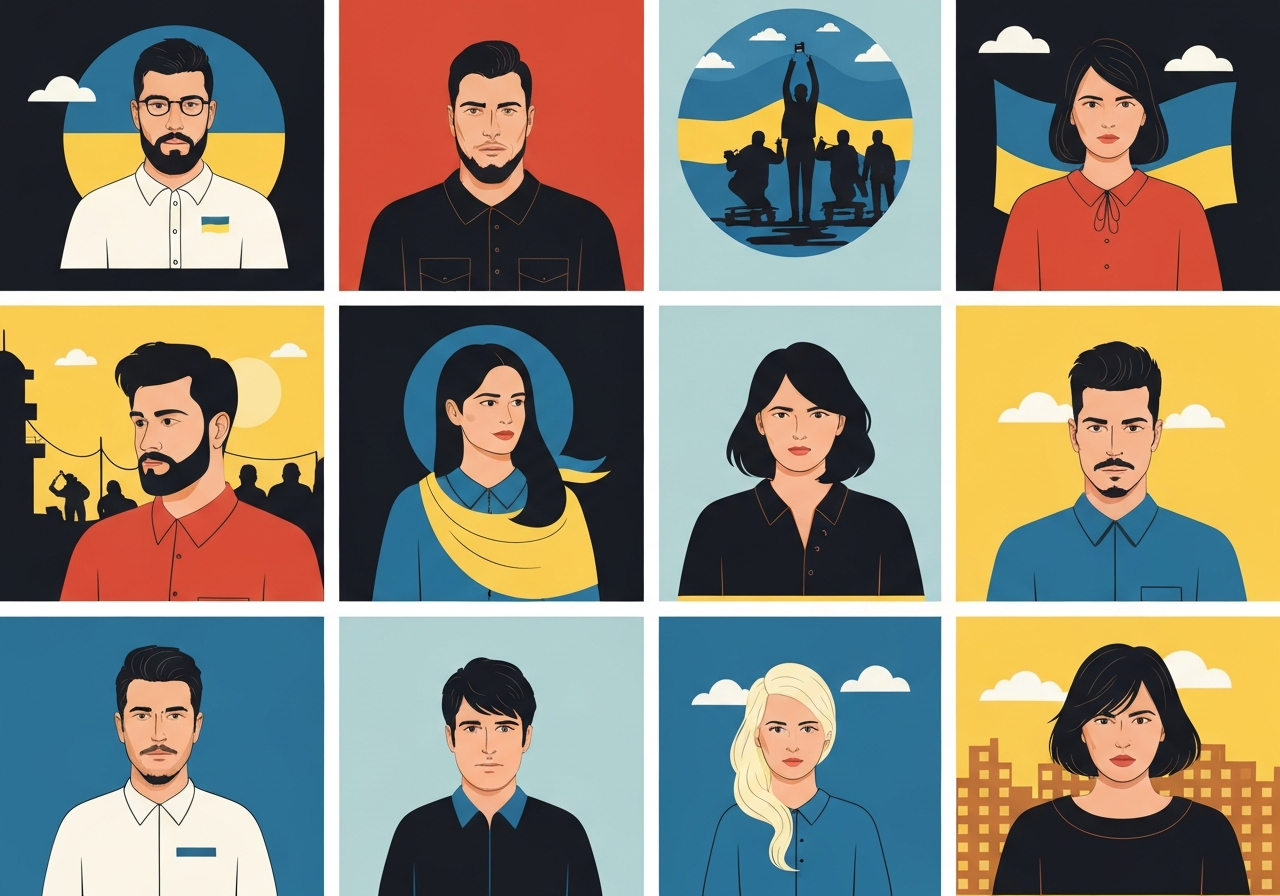
In Kyiv and across Ukraine on the eve of the fourth anniversary of Russia’s full-scale invasion that began Feb. 24, 2022, AP photo editors collected portraits and short life stories of Ukrainians whose lives were irrevocably changed. The series captures people photographed before the war — now teachers turned snipers, mothers who lost spouses, wounded veterans, rescue workers and elderly evacuees — and shows the human cost and resilience that have followed four years of conflict. These portraits were taken in February 2026 and are accompanied by firsthand accounts of losses, survival and everyday determination. Together they underscore loss of life, injury, displacement and continued civic resolve.
Key Takeaways
- All portraits were made with images taken before Feb. 24, 2022, and follow-up photos or interviews in February 2026.
- Tetiana Khimion, 47, a former dance teacher from Sloviansk, is now serving as a sniper in the Ukrainian army after training in Europe and rotating through several units.
- Oksana Osypenko’s husband, Oleksandr, a welder and territorial defense member, was killed by a Russian airstrike in Chernihiv on March 3, 2022; their child Hlib was born in 2020.
- Liliia, 30, whose boyfriend Bohdan joined the Azov Brigade in 2015, says he was captured after the 2022 invasion and was sentenced by a Russian court to 18 years in detention late in 2025.
- Ruslan Knysh, 20, lost both arms and legs in an October 2025 drone attack in the Kharkiv region and is undergoing rehabilitation with plans to travel to the United States for prostheses.
- Yaroslav Nehoda, 40, lost his wife, six-month-old daughter and niece in a Shahed drone strike on Oct. 22, 2025, which destroyed the family home in Pohreby, Kyiv region.
- Ivan Khmelnytskyi, 25, shifted from postal call-center work to the State Emergency Service and now responds to missile and drone strikes across the Kyiv region.
- Liudmyla and Viktor Shytik, in their late 70s, have been displaced repeatedly since Feb. 24, 2022, and currently live in social housing near Kyiv.
Background
Russia launched its full-scale invasion of Ukraine on Feb. 24, 2022, triggering widespread military operations across the country that have continued into 2026. Cities and towns in Donetsk, Kharkiv, Chernihiv and around Kyiv experienced bombardment, resulting in thousands of civilian casualties, extensive damage to housing and infrastructure, and large-scale internal displacement. Over the past four years, weaponry such as ballistic missiles, cruise missiles and Shahed-type attack drones have been widely reported in strikes that targeted both military and civilian areas, producing complex humanitarian needs.
The mobilization of volunteers, territorial defense units and established forces reshaped many civilians’ roles, with some joining frontline units, others enlisting in emergency services, and many becoming caregivers or household heads after family members were killed or detained. International humanitarian organizations and governments have responded with aid, prosthetics programs and resettlement offers, but gaps remain in long-term housing, mental health services and legal recourse for prisoners of war and detainees.
Main Event
The photo essay assembled by AP highlights a cross-section of Ukrainians who were photographed before the 2022 invasion and revisited in early 2026. Each subject’s portrait is paired with a short narrative describing how the invasion changed daily life, work and family structure. For example, Tetiana Khimion — pictured dancing in prewar photos — described a transition from an international ballroom judge to a trained sniper after her husband enlisted and urged her caution, which she ultimately did not heed.
Other portraits recount direct loss and long-term effects: Oksana Osypenko’s husband was killed in a March 3, 2022 airstrike in Chernihiv, leaving her to raise young children alone and cope with delayed confirmation of his death. Liliia’s boyfriend, Bohdan, who had served in the Azov Brigade since 2015, was captured and later sentenced to 18 years by a Russian court, a sentence his family publicly contests and condemns.
War injuries and rehabilitation feature prominently. Ruslan Knysh, who was wounded in a drone attack in October 2025, lost all four limbs and now uses prosthetics planning, remote consultations and memory of Ukrainian literature to sustain morale. Rescue and emergency personnel like Ivan Khmelnytskyi describe the normalization of high-alert readiness, sleeping with phones at hand and sometimes resting in vehicles between missions.
For older civilians, the essay records repeated displacement and housing loss. Liudmyla and Viktor Shytik have moved nine times since early 2022, experienced damage from a missile strike in October 2022 and now reside in social housing near Kyiv under temporary arrangements. Yaroslav Nehoda, coping with the deaths of immediate family members in a Shahed strike on Oct. 22, 2025, speaks of living two lives — memory and rebuilding — while confronting the limits imposed by age and trauma.
Analysis & Implications
The portraits and testimonies illustrate several intersecting trends: a sustained civilian toll, the militarization of everyday life, and an emergent cohort of veterans and rescue workers whose career paths and health needs will shape Ukraine’s recovery. Physical injuries, such as the amputations sustained by Ruslan Knysh, create long-term medical, prosthetic and social support demands that international aid and domestic programs must address at scale. Rehabilitation and prostheses programs will require sustained funding, specialized clinics, and coordinated international partnerships.
The detention and sentencing of fighters like Bohdan raise legal and diplomatic issues that complicate prisoner exchanges, repatriation efforts and international criminal accountability. Families’ public appeals and participation in rallies underscore the social pressure on governments and international bodies to secure humane treatment and legal review for detainees. Meanwhile, the use of drones and long-range strikes continues to blur frontlines, expanding the zones where civilians live under persistent risk.
Politically, these human stories feed public sentiment and policy debates in Ukraine and among its partners. Images of loss and resilience strengthen domestic resolve and foreign sympathy but also place a premium on visible, sustained support — from weapons and training to reconstruction funds and refugee resettlement. Economically, repeated displacement and destroyed housing stock will slow postwar recovery, increasing demand for social housing, construction labor and long-term psychosocial services.
Comparison & Data
| Name | Age (2026) | Pre-war role | Current status |
|---|---|---|---|
| Tetiana Khimion | 47 | Dance teacher, judge | Sniper, trained in Europe |
| Oksana Osypenko | 43 | Secondary schoolteacher | Widow, mother of two |
| Liliia | 30 | Dancer, theater | Partner of a sentenced POW |
| Ruslan Knysh | 20 | Student/young civilian | Veteran, quadruple amputee |
| Yaroslav Nehoda | 40 | Family man | Bereaved, displaced |
| Ivan Khmelnytskyi | 25 | Call-center worker | State Emergency Service sergeant |
| Liudmyla & Viktor Shytik | 77 / 78 | Accountant / construction worker | Displaced, social housing |
The table summarizes seven portrait subjects from the AP series, showing pre-war occupations and post-invasion roles or conditions. These cases are not statistically representative but illustrate the variety of civilian-to-combatant transitions, long-term injuries, family loss and repeated displacement documented in this series. National datasets show the war’s broader scale of casualties, damage and displacement beyond these individual stories; these portraits personalize that larger context.
Reactions & Quotes
The portraits have prompted responses from families, advocacy groups and on social platforms, where photos and brief testimonies are shared to press for aid and prisoner exchanges. Below are short excerpts and context for three representative statements.
“We believed that the world was beautiful and kind.”
Tetiana Khimion (former dance teacher, now soldier)
This reflection came as Tetiana contrasted prewar life in Sloviansk with her current combat role; she emphasized the personal reinvention required by wartime service and the tension between an artistic background and precision-focused sniping duties.
“I lived for about a year and a half with the feeling that he might walk through the door.”
Oksana Osypenko (schoolteacher, widow)
Oksana described the long delay before receiving official confirmation of her husband’s death after the March 3, 2022 airstrike in Chernihiv, and how uncertainty prolonged grief for her and their children.
“There are moments when it really overwhelms you, when you start thinking about ending your life.”
Ruslan Knysh (veteran, amputee)
Ruslan spoke about depression and the mental-health challenges of severe injury, while also describing coping mechanisms such as humor, poetry and plans for prosthetic care abroad.
Unconfirmed
- The specific medical condition and full treatment records of individual prisoners of war mentioned in family accounts are not independently verified in this report.
- Certain battlefield details, such as the precise military movements around the October 2025 drone strikes, are summarized from survivors’ accounts and have not been independently corroborated here.
Bottom Line
The AP photo essay personalizes the wide-ranging human consequences of four years of war: from transformed careers and torn families to catastrophic injury and repeated displacement. These portraits are not only records of loss but also attestations of resilience, showing how civilians have adapted roles and sought support while continuing to demand justice, care and political action.
Looking ahead, the stories highlight priorities for Ukraine and its partners: sustained medical and prosthetic support, durable housing solutions, legal advocacy for detainees, and mental-health services for survivors. The images and narratives issued on the 2026 anniversary are likely to shape public understanding and policy debates about reconstruction, accountability and humanitarian assistance.
Sources
- AP News (news/photography) — original photo essay and reporting, Kyiv, Feb. 2026.
- UNHCR (international organization) — reporting on displacement and humanitarian needs in Ukraine.
- International Committee of the Red Cross (ICRC) (international organization) — information on treatment of detainees and wartime humanitarian law.