
Lead
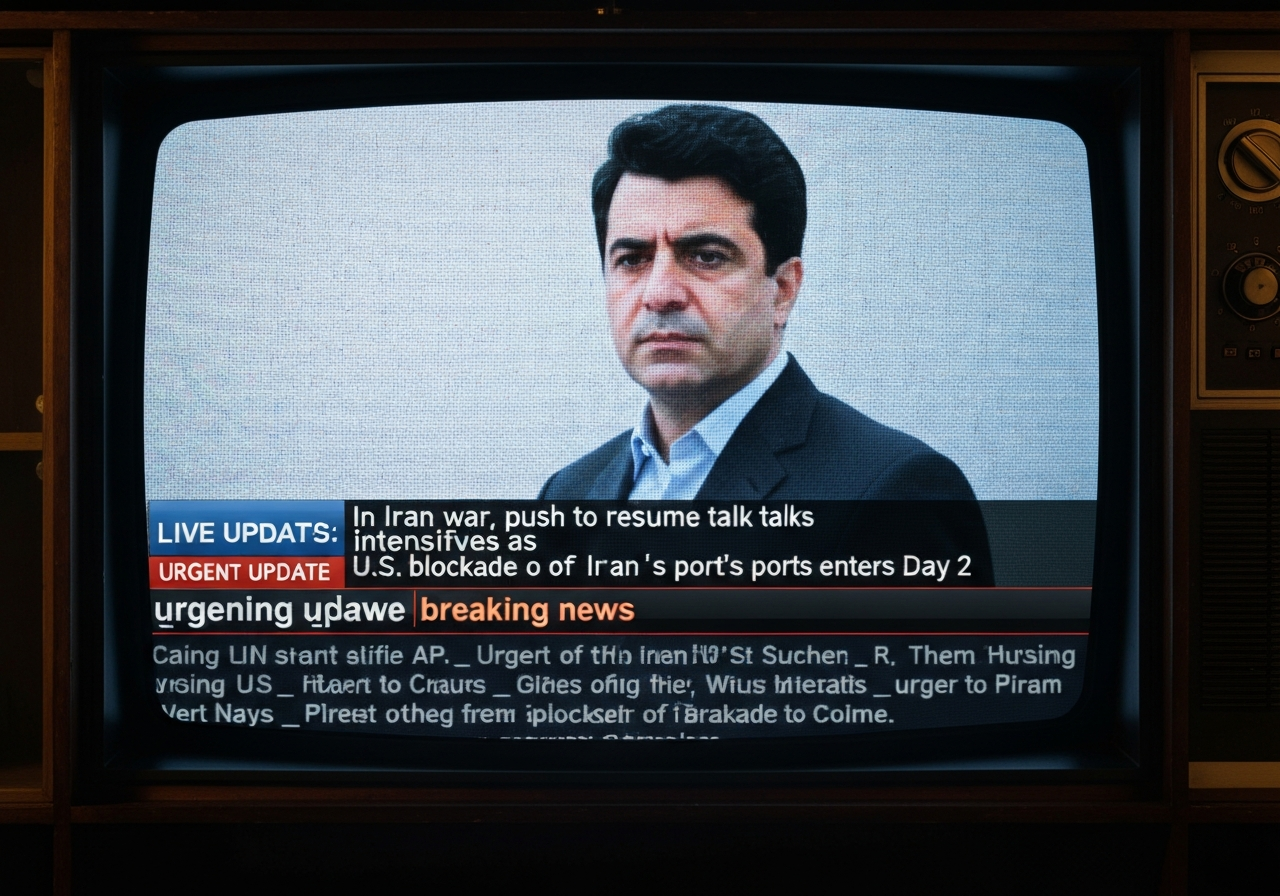
Diplomatic and military tensions continued to spike as the U.S. naval blockade of Iranian ports entered its second day while international and regional actors pressed to restart suspended ceasefire talks. Washington says the blockade targets traffic entering or leaving Iranian ports, but allows transit through the Strait of Hormuz for ships en route to non‑Iranian ports. Tracking data and Iranian statements suggest some vessels moved through the strait after the blockade began, raising questions about enforcement and economic impact. Energy markets and regional diplomacy are adapting in real time as leaders from Paris to Islamabad urge negotiations to resume.
Key Takeaways
- The U.S. blockade of Iranian ports entered Day 2 after being ordered Sunday; U.S. officials say it applies to maritime traffic entering and exiting Iranian ports but not to ships merely transiting the Strait of Hormuz.
- Vessel-tracking data shows multiple Iran-linked ships (including Christianna, Ladonna, Murlikishan, Peace Gulf, Rich Starry and Elpis) moved through the Strait of Hormuz after the blockade started; CBS News notes spoofing of ship positions cannot be ruled out.
- The IMF cut 2026 growth forecast for the Middle East and North Africa to 1.1%, projecting a 6.1% contraction for Iran, an 8.6% drop for Qatar and 6.8% for Iraq; the region grew 3.2% in 2025.
- House Republicans postponed an Armed Services Committee hearing with Adm. Brad Cooper and Gen. Dagvin R.M. Anderson from April 21 to May 19, per planning sources; a Senate session scheduled for April 23 may be affected.
- Diplomatic maneuvers ramped up: French President Emmanuel Macron urged resumption of Islamabad talks and announced a Paris conference for non‑belligerent states; Israel and Lebanon planned direct talks in Washington, though Hezbollah urged Lebanon to cancel.
- Iranian officials are preparing local authorities to counter blockade threats while Tehran reportedly raised war reparations in Islamabad discussions with U.S. counterparts, according to state media.
- Military clashes continue: Israeli forces said 10 soldiers were wounded and another soldier killed in fighting around Bint Jbeil, southern Lebanon, as diplomatic talks proceed in Washington.
Background
The current crisis followed open hostilities that began on Feb. 28 when the U.S. and Israel launched major operations targeting Iranian capabilities, triggering a broader regional confrontation. A brief, fragile U.S.-Iran truce announced last week did not include Hezbollah or Lebanon in Israel’s framing, complicating efforts to halt fighting on multiple fronts. Trade flows through the Strait of Hormuz—normally carrying about one‑fifth of global oil—have been a focal point: prior to the blockade, Iran had used covert tanker movements and a so‑called dark fleet to keep crude flowing to buyers, especially in Asia.
Economic fallout has been fast: the IMF’s downward revision to 1.1% regional growth for 2026 reflects disrupted Gulf energy exports and transport. At the same time, sanctions waivers and temporary measures earlier this year allowed some Russian and Iranian oil flows to ease immediate price shocks—moves that are now being reassessed amid renewed hostilities and the U.S. blockade. Regional governments, foreign navies and commercial shippers face a complicated legal and operational environment for enforcing sanctions while protecting freedom of navigation.
Main Event
On Day 2 of the blockade, U.S. military officials reiterated that the measure targets vessels entering or leaving Iranian ports rather than ships simply transiting the strait, but commercial tracking showed several tankers with recent Iranian port calls moving through the waterway overnight. CBS News stressed that the data cannot fully exclude ship transponder spoofing. Iran’s Interior Minister Eskandar Momeni ordered border governors to use delegated powers to “neutralize” blockade threats, according to state television, but did not detail operational steps.
At the same time, diplomatic actors intensified efforts to reopen talks. French President Emmanuel Macron said he urged Presidents Trump and Massoud Pezeshkian to resume the Islamabad negotiations, and announced France and the U.K. would host a Paris conference for non‑belligerent states prepared to discuss restoring freedom of navigation in the Strait of Hormuz when conditions permit. Iranian readouts said Tehran is willing to continue talks within international law and with protections for Iranian rights.
On the ground in Lebanon, Israel reported intensified fighting around Bint Jbeil: the military said 10 soldiers were wounded and that forces had encircled the town, with one soldier also reported killed—the first such casualty since the U.S.-Iran truce took effect. Israel and Lebanon’s envoys were scheduled to meet in Washington for direct talks—the first since 1993—while Hezbollah’s deputy leader Naim Qassem publicly urged Lebanon to cancel the meeting.
Domestically in the U.S., House Republicans delayed an April 21 hearing in which Adm. Brad Cooper and Gen. Dagvin R.M. Anderson were to testify, moving it to May 19; it is unclear whether the related Senate hearing on April 23 will proceed. Vice President J.D. Vance told Fox News the “ball is in the Iranian court,” saying Washington had made red lines clear in negotiations and that Iran must now act.
Analysis & Implications
The blockade complicates a fraught tradeoff: tightening pressure on Tehran may constrain its ability to finance military operations, but it also risks further disrupting crude flows that stabilize prices and supply to Asian buyers. If enforcement deters third‑country tankers from loading in Iranian ports, the immediate effect will be less crude reaching markets that had depended on Iranian flows since February. That would likely push oil prices higher and raise inflationary pressures for energy‑importing economies in Asia and beyond.
Politically, the move shifts leverage to Washington in negotiations by choking revenue and transit income that Tehran had been exploiting, including charging fees for passage through the strait. But the tactic carries escalation risks: Chinese officials called the blockade “dangerous and irresponsible,” and U.S. naval actions that interfere with third‑country or flagged merchant ships could be interpreted as confrontational. Much depends on how strictly the blockade is enforced and how third‑country navies and shipping companies respond.
Diplomacy remains fragile. Macron’s push to relaunch Islamabad talks and a Paris conference aim to weld a multilateral response—combining political cover for navigation missions with pressure on Tehran to re‑engage. Yet Hezbollah’s public rejection of direct Israel talks and fresh fighting in southern Lebanon threaten to unravel ceasefire prospects, undercutting any deal that does not address cross‑border militias and proxies. A durable settlement likely requires parallel tracks: maritime security guarantees, concrete steps limiting proxy escalation, and mechanisms for inspecting and verifying nuclear‑related activities.
Comparison & Data
| Item | Reported Figure |
|---|---|
| IMF 2026 MENA growth forecast | 1.1% |
| Projected Iranian contraction (2026) | −6.1% |
| Qatar (2026) | −8.6% |
| Iraq (2026) | −6.8% |
| Russia oil export revenue (March) | $19 billion |
| Russian crude & product exports (March) | 7.1 million b/d |
The IMF’s revision to 1.1% for 2026 contrasts sharply with regional growth of 3.2% in 2025, underscoring the abrupt economic impact of disrupted energy flows. The IEA reported a spike in Russian export revenues in March—$19 billion—after temporary easing of some restrictions, which also shaped global oil availability while the Iran conflict intensified. These data points show how supply disruptions and policy choices are now shifting where barrels originate and which economies feel the brunt.
Reactions & Quotes
U.S. political and diplomatic figures framed the blockade as a lever in negotiations while warning Iran of consequences for stalling talks.
“I really think the ball is in the Iranian court, because we put a lot on the table.”
Vice President J.D. Vance (Fox News/CBS)
French and Iranian leaders exchanged messages urging renewed negotiations and emphasizing legal frameworks.
“Under these conditions, negotiations should be able to resume quickly, with the support of the key parties concerned.”
President Emmanuel Macron (French Presidency readout)
Hezbollah and Iranian officials signaled resistance to aspects of direct diplomacy and pressure measures.
“We call for a historic and heroic stance by canceling this negotiating meeting.”
Naim Qassem, Hezbollah deputy leader (televised address)
Unconfirmed
- Whether the vessels tracked through the Strait of Hormuz after the blockade began were accurately reporting positions or using spoofed transponder signals; CBS News cautioned this could not be independently verified.
- Whether the delayed House hearing will directly alter the planned Senate May 23 session with the same Pentagon officials; the Senate date remains unclear in public reporting.
- Specific operational measures Iranian provincial governors will use to “neutralize” the blockade threat; state media reported the instruction but gave no operational details.
Bottom Line
The U.S. blockade of Iranian ports marks a deliberate escalation aimed at reducing Tehran’s maritime revenue and bargaining power ahead of resumed negotiations. But the measure also exposes markets and regional diplomacy to new shocks: oil flows that have been propping up supply to Asia are now at risk, and enforcement gaps or third‑party responses could rapidly widen the confrontation.
Successful de‑escalation will require near‑term confidence‑building measures on navigation, clear verification steps in any resumed talks, and arrangements to prevent proxy escalation in Lebanon and along other front lines. Watch for whether the Paris conference and Islamabad track can produce measurable, verifiable safeguards for shipping and whether third‑country importers—especially in Asia—alter their behavior in response to the blockade.
Sources
- CBS News live updates — (U.S. media: primary live report)
- International Monetary Fund (WEO & press) — (International financial institution: growth forecasts)
- International Energy Agency — (Intergovernmental energy agency: export & revenue data)
- The New York Times — (U.S. media: reported hearing delay)
- Reuters — (International news agency: regional reporting)