
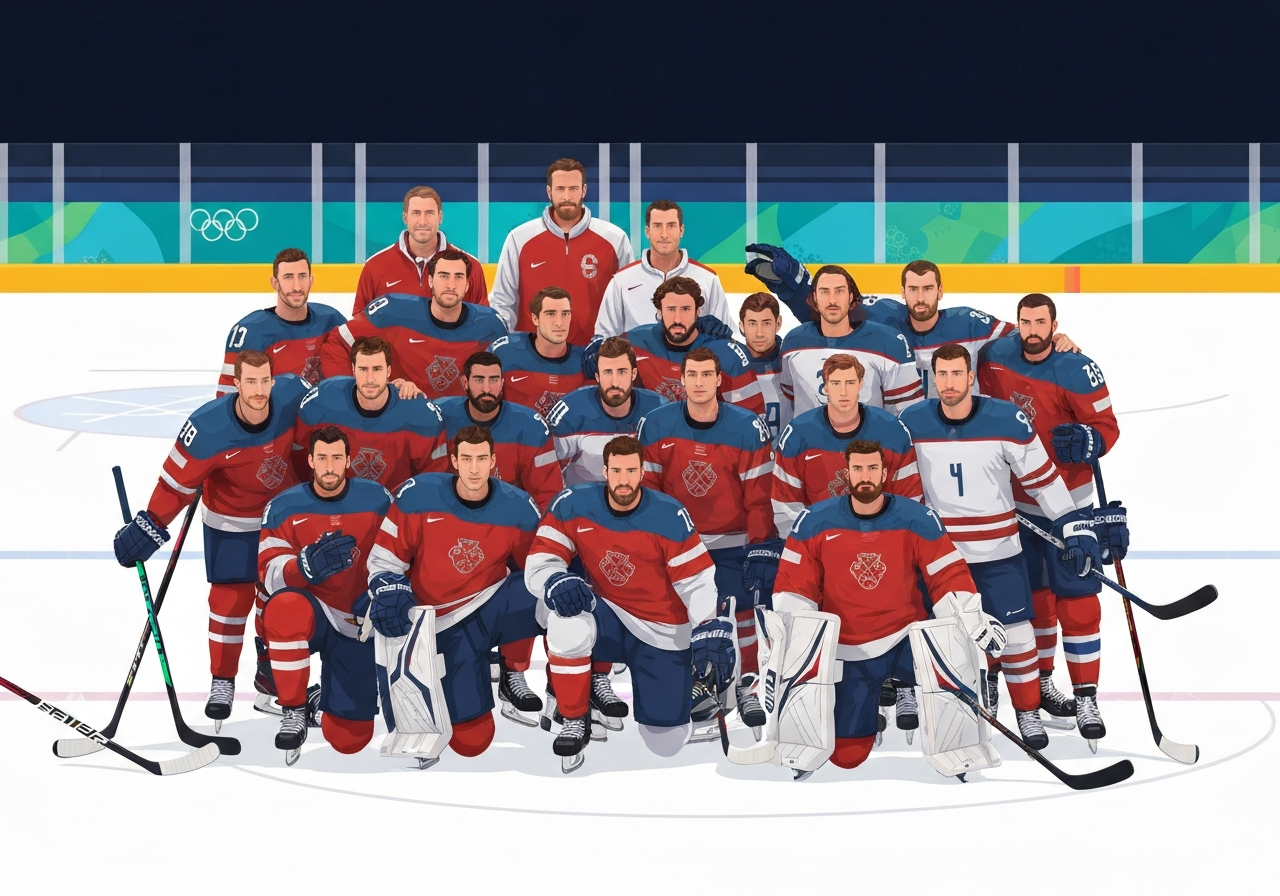
Lead: On Tuesday night, Feb. 25, 2026, President Donald J. Trump recognized the gold medal–winning United States men’s Olympic hockey team during his State of the Union address in Washington, D.C., prompting a standing ovation from the chamber. Trump’s six‑minute acknowledgement included praise for goaltender Connor Hellebuyck and an announcement that the women’s gold medal team “will soon be coming to the White House.” The women’s squad declined attendance at the address, citing scheduling and academic and professional commitments, while USA Hockey said any White House visit would be arranged after players’ seasons conclude.
Key Takeaways
- The U.S. men’s Olympic hockey team—25 players named to the roster—was honored during the State of the Union on Feb. 25, 2026; 20 players traveled to Washington, and 17 entered the House Chamber for the acknowledgement.
- Trump devoted roughly six minutes to the team and announced his intention to award goaltender Connor Hellebuyck the Presidential Medal of Freedom.
- The men’s Olympic team beat Canada 2–1 in overtime two days earlier, securing the United States’ first Olympic men’s hockey gold since 1980.
- The U.S. women’s gold medal team was invited to the State of the Union but declined because of timing and prior academic or professional commitments, according to a statement cited by The Athletic.
- USA Hockey confirmed players had returned to professional and collegiate play and said a White House visit would depend on team schedules after their seasons end.
- Not all rostered players attended or were visible in the chamber; absent names reported include Kyle Connor, Jake Guentzel, Jackson LaCombe, Brock Nelson and Jake Oettinger.
- Seventeen players entered the chamber in two groups, wearing matching Olympic sweaters and receiving loud ovations and chants of “USA.”
Background
The United States captured the men’s Olympic hockey gold on Feb. 23, 2026, with a 2–1 overtime victory over Canada, ending a 46‑year drought since the 1980 Lake Placid triumph. Olympic success has historically produced public recognition in Washington, with visiting teams often receiving invitations to the White House or presidential events. Athletic honors at presidential addresses are a relatively recent practice used to provide celebratory, apolitical moments during larger political speeches.
Both the men’s and women’s U.S. hockey teams entered the Olympics with high expectations; the women also won gold at their tournament. The women’s team was invited to the State of the Union but declined the invitation for scheduling reasons, a decision framed by players and USA Hockey as logistical rather than political. Professional and collegiate seasons for many hockey players overlap with diplomatic and ceremonial calendars, complicating post‑Olympic appearances.
Main Event
At approximately the 12‑minute mark of his address, President Trump turned to the hockey team and offered extended praise for their performance, singling out goaltender Connor Hellebuyck. Trump said he asked the players whether Hellebuyck should receive the Presidential Medal of Freedom and described the team’s unanimous support. The president’s remarks lasted about six minutes and included repeated affirmations that the nation was “winning,” rhetoric he used to frame the athletes as exemplars of national success.
Seventeen team members entered the House Chamber from the upper concourse, standing in two aisles while lawmakers gave a standing ovation and chanted “USA.” One group was led by brothers Jack and Quinn Hughes; another group was led by Matthew Tkachuk and Hellebuyck. The players wore identical Olympic sweaters and remained on display for several minutes as the speech continued.
Officials confirmed that 25 players formed the Olympic roster, and that 20 of them made the trip from Milan to Washington after the Games. Several players were not present at the Oval Office event earlier in the day and were absent from the chamber, including Kyle Connor, Jake Guentzel, Jackson LaCombe, Brock Nelson and Jake Oettinger; Auston Matthews, Clayton Keller and Dylan Larkin were not seen during the speech.
Analysis & Implications
Honoring Olympic teams during a State of the Union address performs multiple functions: it highlights national achievement, injects a nonpartisan celebratory moment, and affords the administration positive optics. For the athletes, invitations to Washington can raise profiles and offer lifetime honors, but they also collide with demanding professional and collegiate schedules—particularly for hockey players whose club seasons run through spring.
Trump’s announcement about awarding the Presidential Medal of Freedom to Hellebuyck carries symbolic weight. The medal is one of the country’s highest civilian honors and has been given to athletes across administrations. While the president can both nominate and award the medal, the timing and political framing of such awards can draw scrutiny about selections tied to high‑visibility moments.
The women’s team decision not to attend underscores tensions between ceremonial invitations and athletes’ professional obligations. Even when invitations are extended in good faith, teams may decline to accept if it disrupts competition or academic commitments. The optics of inviting one team and not having the other attend could lead to public questions about equity, though officials framed the women’s absence as logistical.
Looking ahead, administrators and teams may seek clearer protocols for post‑Olympic appearances to avoid scheduling conflicts and manage public perceptions. Sports federations, clubs and collegiate programs may also negotiate availability windows so that national teams can accept ceremonial invitations without jeopardizing competitive seasons.
Comparison & Data
| Metric | Value |
|---|---|
| Olympic gold — prior U.S. men’s title | 1980 (Lake Placid) |
| 2026 Olympic final | U.S. 2–1 OT vs. Canada (Feb. 23, 2026) |
| Roster size | 25 players |
| Players who traveled to Washington, D.C. | 20 |
| Players who entered House Chamber | 17 |
The attendance figures show a typical attrition between an Olympic roster and players available for post‑Games public engagements, reflecting travel, club obligations and individual decisions. Those numbers frame why the women’s team cited scheduling as the reason for not attending the State of the Union.
Reactions & Quotes
“Good as GOLD. We are honored to welcome our men’s U.S. hockey team to the Capitol ahead of @POTUS’s State of the Union address.”
Speaker Mike Johnson (official tweet)
Speaker Johnson’s post framed the moment as a bipartisan celebration of athletic achievement and amplified the public recognition the team received at the Capitol.
“Players are back competing with their professional and collegiate teams and are in the midst of their season. They’re honored and grateful to be invited and any opportunity to visit the White House as a team will be based on their schedule once their seasons conclude.”
USA Hockey (official statement)
USA Hockey emphasized scheduling and competition priorities, presenting the women’s non‑attendance as driven by logistics rather than protest.
“I’ve never seen a goaltender play as well as goalie Connor Hellebuyck.”
President Donald J. Trump (State of the Union remarks)
Trump’s praise served to explain his decision to publicly propose awarding Hellebuyck the Presidential Medal of Freedom.
Unconfirmed
- Whether and when the U.S. women’s hockey team will accept a White House visit remains unconfirmed; USA Hockey said a date would depend on player schedules after their seasons end.
- Formal confirmation and timing for awarding the Presidential Medal of Freedom to Connor Hellebuyck have not been announced by the White House as of this report.
Bottom Line
The State of the Union recognition of the U.S. men’s Olympic hockey team on Feb. 25, 2026, was a high‑profile ceremonial moment that celebrated the team’s first men’s Olympic hockey gold since 1980 and highlighted how sport intersects with national storytelling. President Trump used the occasion to both praise individual performance and propose a major civilian honor for goaltender Connor Hellebuyck, amplifying attention on the team.
At the same time, the women’s team’s absence—explained by scheduling and competition commitments—illustrates practical constraints athletes face when balancing professional seasons with ceremonial invitations. The episode underscores a likely need for clearer coordination among national federations, professional clubs and the White House to manage future post‑Olympic engagements without compromising competition or creating avoidable optics.
Sources
- The New York Times — news report on State of the Union recognition and team attendance (media)
- USA Hockey — official statement and organizational comment (official federation)
- Speaker Mike Johnson (@SpeakerJohnson) — official Twitter post acknowledging the team (official account)