
Lead
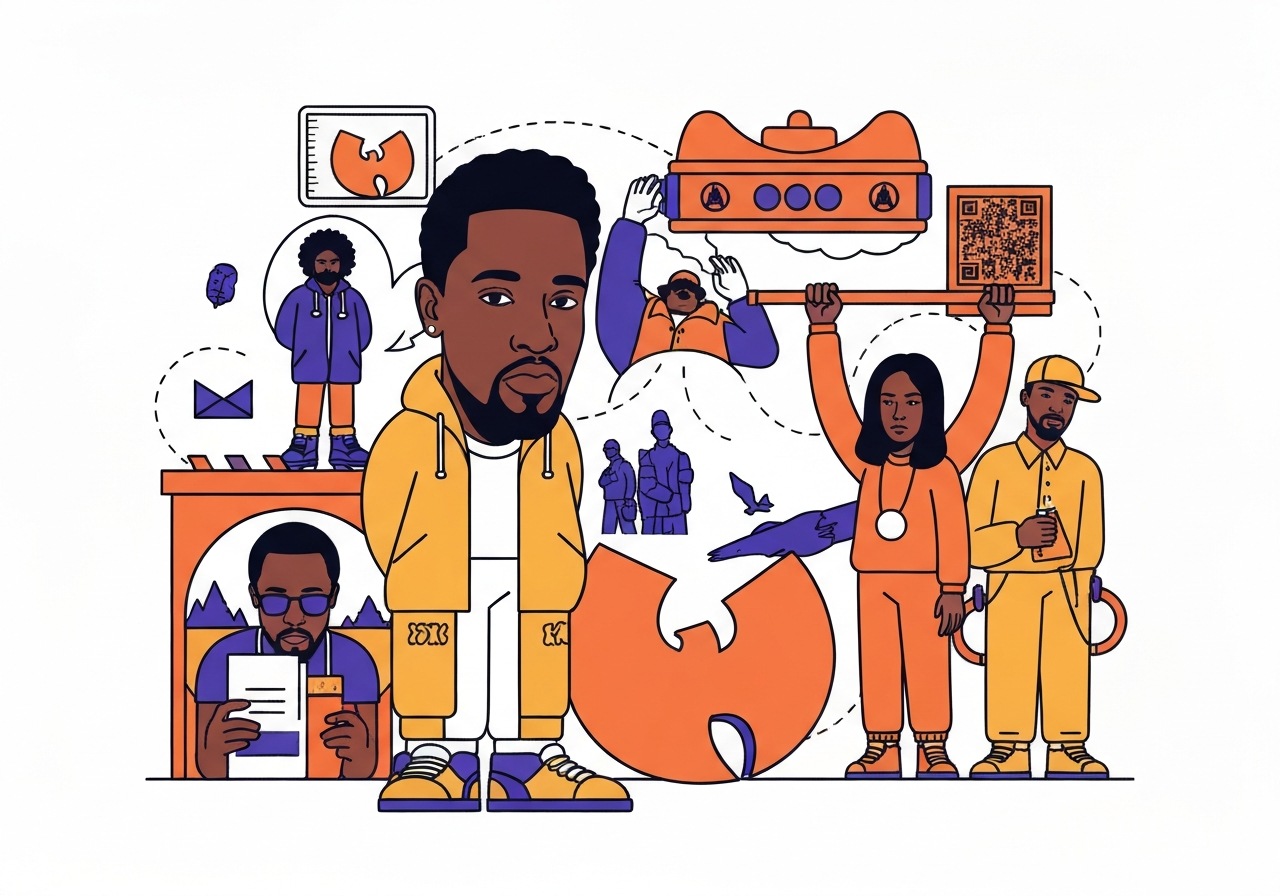
Oliver “Power” Grant, a cofounder and early architect of the Wu-Tang Clan, has died at 52 after a battle with pancreatic cancer, his family disclosed in a joint statement to Rolling Stone on Saturday. The family described Grant as a “true fighter until the end,” and credited him with helping finance the group’s breakout early single and launching its streetwear imprint. Though not a performing member, Grant’s business and creative roles were central to Wu-Tang’s emergence in the early 1990s. The announcement prompted tributes from group members and peers across social media and music press.
Key Takeaways
- Cause of death: Pancreatic cancer, as confirmed by Grant’s family in a statement to Rolling Stone on Saturday.
- Age at death: Grant was 52 years old.
- Early financing: Grant helped fund the group’s initial single, “Protect Ya Neck,” providing critical early support.
- Album role: He served as an executive producer on Enter the Wu-Tang (36 Chambers); Rolling Stone ranked that album 27th on its 2023 list of greatest albums.
- Entrepreneurship: Grant co-created Wu Wear, a streetwear brand that both influenced fashion and provided funding in the group’s formative years.
- Public reaction: Prominent members including Method Man and GZA publicly acknowledged his role; GZA said the group’s success would have been unlikely without him.
- Legacy framing: Family called him a “global architect of culture,” highlighting influence beyond music into fashion and business.
Background
Oliver Grant emerged as a behind-the-scenes force during the early rise of the Wu-Tang Clan, a New York–born hip-hop collective that reshaped 1990s rap. While the Clan’s public profile was driven by its MCs, Grant operated in managerial and financial capacities, arranging resources and branding that helped sustain the group when it lacked major-label backing. The creation of Wu Wear turned artistic identity into a fashion business, providing an early revenue stream and cultural footprint that extended the group’s reach beyond records. In subsequent decades the Wu-Tang brand grew into a multinational cultural reference point; Grant’s contributions have been cited by collaborators and members as instrumental to that expansion.
Pancreatic cancer is a disease with a historically poor prognosis, which has often struck public figures in ways that raise awareness about screening and treatment access. In hip-hop history, business partners and managers have frequently played decisive roles in translating creative output into sustainable careers; Grant’s mixture of financing, branding and executive production fits that pattern. Industry observers point to the Clan’s DIY-era resourcefulness—financing singles, developing merchandising and leveraging reputations—as the model Grant helped operationalize. That model allowed the group to build momentum leading into their landmark 1993 debut album.
Main Event
The family’s statement, shared with Rolling Stone and subsequently reported by outlets including TMZ, revealed that Grant had been contending with pancreatic cancer before his death at 52. They characterized his final months as a fight and framed his life’s work as a lasting cultural contribution. Wu-Tang announced Grant’s passing earlier in the week, which set off a wave of tributes from artists, collaborators and fans online. Members such as Method Man posted brief remembrances, while GZA emphasized Grant’s foundational role in the group’s trajectory.
Grant’s early financial backing included underwriting the group’s initial single, “Protect Ya Neck,” which circulated in underground and college radio circuits before mainstream breakthrough. As an executive producer on Enter the Wu-Tang (36 Chambers), he participated in the album’s launch process—crediting that record with helping to reshape East Coast hip-hop. Rolling Stone’s 2023 placement of the album at number 27 on its list of greatest albums underscores the long-term critical regard for the project Grant helped bring to market. Beyond records, Grant’s establishment of Wu Wear supplied both an income stream and a visual identity that reinforced the group’s cultural footprint.
At the time of his death announcement, the group and family framed Grant not as a background technician but as an architect whose decisions materially affected the group’s reach. Tributes noted not only his business instincts but also his sense of loyalty and strategic thinking during the Clan’s earliest negotiations and branding efforts. Reports indicate Grant’s role blurred creative and commercial lines, a dynamic common in artist collectives that rely on internal leadership to survive industry skepticism.
Analysis & Implications
Grant’s passing highlights how non-performing contributors shape musical movements. In hip-hop’s history, managers, financiers and brand builders have often been invisible in mainstream narratives; Grant’s profile disrupts that tendency by foregrounding the business acumen behind a cultural phenomenon. The Wu-Tang model combined fierce artistic identity with entrepreneurial channels—merchandising, licensing and strategic branding—that reduced dependence on traditional label support. Grant’s blend of business initiatives and cultural stewardship accelerated the group’s commercial sustainability during its formative years.
Economically, the Wu Wear example illustrates an early instance of artists monetizing image and street culture outside record sales. That approach presaged broader music-industry trends in which artists pursue diversified revenue—merchandise, fashion collaborations and direct-to-consumer sales—to buffer cyclical record revenues. For legacy acts and emerging collectives alike, the lesson is that intellectual property and brand cultivation can be as consequential as recorded output in long-term valuation.
Politically and socially, Grant’s role invites a reappraisal of how credit is assigned within creative movements. A narrow focus on front-facing performers obscures the contributions of those who manage logistics, secure financing and design brand extensions. As estates and rights negotiations follow the deaths of cultural figures, clearer documentation of behind-the-scenes roles will be important for equitable recognition and compensation. Grant’s family statement and the public responses that followed may catalyze more granular archival work around the business architectures of hip-hop collectives.
Comparison & Data
| Item | Notable Year/Note | Grant’s Role |
|---|---|---|
| “Protect Ya Neck” | Early single (early 1990s) | Provided early financing |
| Enter the Wu-Tang (36 Chambers) | Album (1993); Rolling Stone rank No. 27 in 2023 | Executive producer |
| Wu Wear | Streetwear line (1990s growth) | Co-creator and funding source |
The table summarizes verifiable milestones connected to Grant’s work: early single financing, an executive-producer credit on the 1993 debut, and co-creation of the Wu Wear label. These elements collectively illustrate how his responsibilities spanned financing, production oversight and brand development—functions that sustained the group during its most precarious early stage. While the table presents dates and facts preserved in public reporting, it does not attempt to quantify sales or revenue where authoritative figures have not been published.
Reactions & Quotes
Family and group statements emphasized both personal courage and cultural reach; media outlets relayed those words and contextualized them within Wu-Tang’s history. Public tributes highlighted the blend of business savvy and loyalty Grant brought to the group’s inner circle.
“He was a true fighter until the end.”
Family statement to Rolling Stone (reported)
The family framed Grant’s final stretch in terms of courage and lasting influence, language picked up across music press.
“We wouldn’t have succeeded without him.”
GZA (social post, reported)
GZA’s remark, echoed by peers, stressed Grant’s foundational contribution to the group’s ability to translate talent into a sustained cultural force.
Unconfirmed
- The precise timeline of Grant’s diagnosis and treatment regimen has not been disclosed publicly and remains unconfirmed.
- The exact date and place of death have not been independently verified in the public statements beyond the family announcement timeframe.
- Detailed financial figures for early Wu Wear revenues and how those funds were allocated to the group are not publicly available.
Bottom Line
Oliver “Power” Grant’s death underscores that the architecture of major cultural movements often depends as much on strategic management and entrepreneurship as on visible performers. His financing of early releases, executive production on Enter the Wu-Tang (36 Chambers) and co-creation of Wu Wear helped convert artistic momentum into enduring cultural and commercial structures. Public reactions from members and music outlets reflect recognition that Grant’s behind-the-scenes role materially shaped the group’s opportunities and legacy.
For observers of music business history, Grant’s passing is a moment to reassess attribution and archival practice—ensuring future accounts include the contributions of those who build the infrastructure around artists. In the short term, the family’s statement and ongoing coverage will likely prompt retrospectives on Wu-Tang’s business model, the influence of Wu Wear and the distribution of recognition within artist collectives.
Sources
- TMZ — Entertainment news report citing family statement (news outlet).
- Rolling Stone — Music magazine reporting and original outlet for the family statement (music press).
- Wu-Tang Official Site — Artist collective official site for archival and brand context (official).