
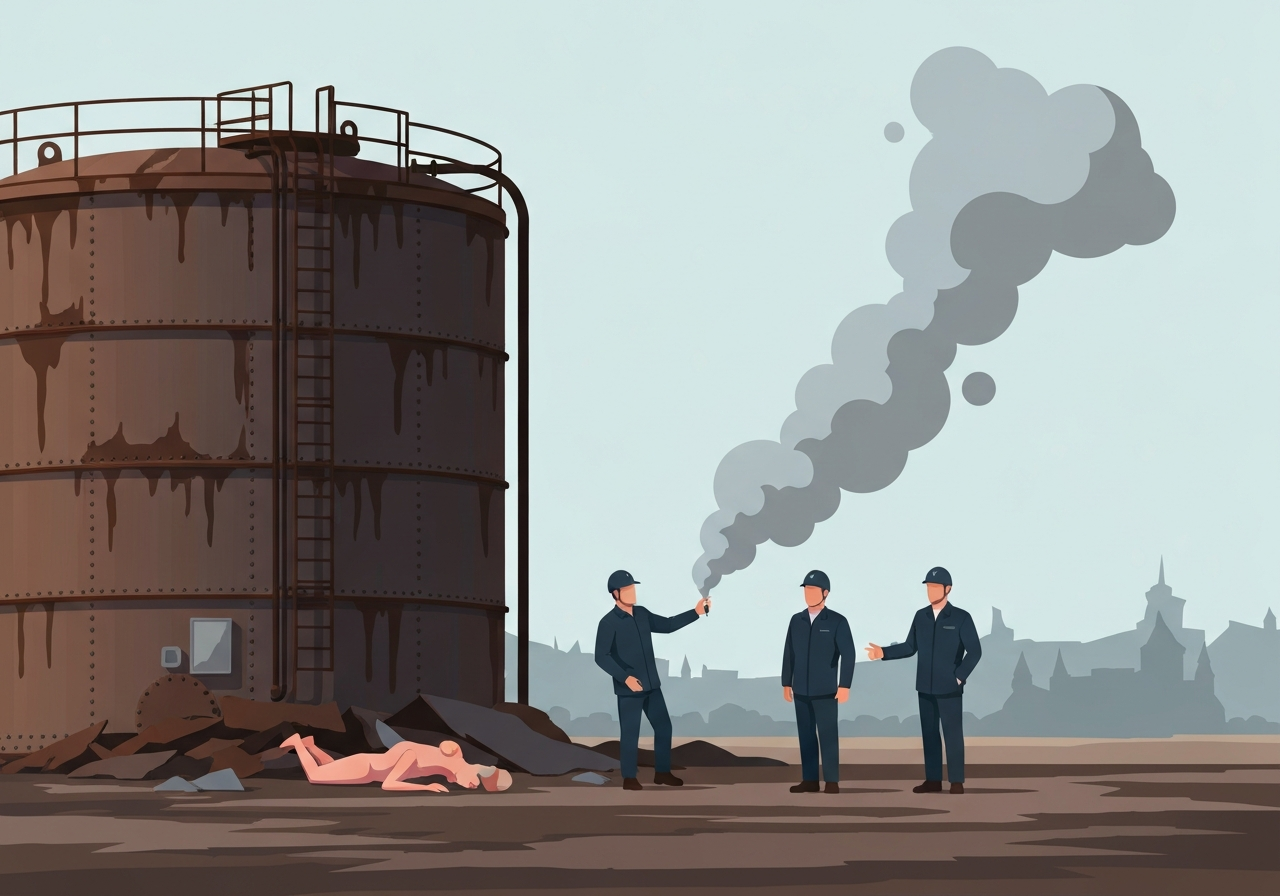
Two people died and dozens sought medical care after a chemical reaction at Catalyst Refiners in the Institute area of Kanawha County, West Virginia, on the morning of April 22, 2026. Officials say a reaction between a product identified as M2000A and nitric acid produced hydrogen sulfide, prompting a mile-wide shelter-in-place that has since been lifted. Local and state authorities, including the West Virginia Department of Environmental Protection, responded and conducted air and water testing in Institute, Dunbar, Nitro and St. Albans, and officials report no ongoing public threat. Investigations at federal, state and local levels are expected as cleanup and decontamination continue.
- Fatalities and medical response: Two company employees died and 21 people were either transported to hospitals or treated on site, with one patient reported in critical condition.
- First report and timeline: The incident was reported about 9:30 a.m. on April 22, 2026, and a mile-wide shelter-in-place from West Virginia State University to the Nitro/St. Albans Bridge was issued and later lifted.
- Hazardous substance and cause: Officials say a violent reaction between M2000A and nitric acid released hydrogen sulfide at the Catalyst Refiners facility, which was closing operations and undergoing cleaning when the event occurred.
- First responders and exposures: Seven of those treated were Kanawha County EMS personnel; coworkers used respirators to pull affected employees from the plant.
- Public safety testing: Air and water tests in surrounding communities found no ongoing threat to residents, and roads in the immediate area have been reopened.
- Agency support: The West Virginia governor pledged continued technical, health and logistical aid; the Department of Environmental Protection is assisting with cleanup and waste disposal.
- Healthcare observations: Treated patients reported respiratory symptoms including cough, shortness of breath, sore throat and eye irritation, according to a hospital spokesperson.
Background
Catalyst Refiners, operated by Ames Goldsmith Corps., is a chemical processing site in Institute, a riverside community adjacent to West Virginia State University and residential neighborhoods. Facilities that handle reactive chemicals routinely follow strict cleaning and processing protocols because compounds like nitric acid can cause or accelerate hazardous reactions if mixed with incompatible materials. Hydrogen sulfide is a well-known industrial hazard; at sufficient concentrations it can cause rapid respiratory distress and, in severe exposures, death. Local emergency plans include shelter-in-place orders and hazmat mobilization given the proximity to campus housing, river corridors and commuter routes such as Interstate 64.
In recent decades, Kanawha County and West Virginia have had episodic industrial releases that test coordination among company safety teams, county emergency services and state environmental agencies. The Department of Environmental Protection plays a central role in spill response and waste handling, while county emergency operations coordinate scene-level rescue, triage and community protection. Employers in chemical processing face OSHA oversight and potential multiagency investigations when fatalities and large-scale exposures occur. Community stakeholders, including university officials and local hospitals, are routinely briefed during such events to manage both immediate rescue and longer-term health monitoring.
Main Event
According to county and state briefings, the incident occurred during a period when the Catalyst site was reportedly winding down operations and conducting cleaning and decontamination work. Around 9:30 a.m., a violent reaction between a material identified as M2000A and nitric acid produced hydrogen sulfide inside a building, officials said. Coworkers on scene used respirators to remove affected employees before specialized hazmat teams could enter. Kanawha County Emergency Services activated the Emergency Operations Center and hazmat crews established exclusion zones while initial medical triage was conducted at the scene.
Medical transport records and county statements show 21 people were taken to hospitals or treated at the scene; seven were EMS workers who had responded. Vandalia Health Charleston Area Medical Center and other hospitals treated patients for respiratory symptoms including cough, shortness of breath, sore throat and eye irritation. By midafternoon the county reported the shelter-in-place had been limited and ultimately lifted for most areas, including West Virginia State University, though the university canceled classes for the remainder of the day as a precaution. Roads that had been closed, including local segments near First Avenue South and MacCorkle Avenue, were reopened after officials deemed the immediate hazard contained.
Company and government statements said the fumes were reported within a single building and that cleanup and waste disposal were underway with DEP assistance. Governor Patrick Morrisey confirmed state resources would remain available and thanked local responders for their work. County leaders said national, state and local investigations are likely and that hazmat teams would re-enter the facility when it is safe to do so.
Analysis & Implications
Immediate public-health implications hinge on confirmation of the hydrogen sulfide release magnitude and exposure radius. Hydrogen sulfide is acutely toxic at higher concentrations, and even smaller community exposures can cause irritation and respiratory symptoms that strain local emergency and hospital capacity. The reported containment inside a single building, if confirmed, likely limited community exposure; air and water testing in Institute, Dunbar, Nitro and St. Albans so far shows no ongoing threat, reducing the likelihood of wider evacuations or long-term ambient contamination.
Regulatory and legal consequences are probable. Fatalities and multiple injuries will trigger OSHA inquiries into workplace safety and process controls, while state and federal environmental agencies may investigate handling, storage and disposal practices for both M2000A and waste contaminated during the event. Companies typically face civil liability claims from affected workers or families and could receive administrative penalties if safety lapses are found. The speed and transparency of the company and agency responses will shape public trust and the pace of operations resuming at the site.
There are broader economic and operational effects to consider. Catalyst Refiners operations may be paused during investigation and remediation, affecting local suppliers, contractors and employees. Longer-term monitoring for environmental contamination could impose ongoing costs and public concern. For the university and nearby residential areas, even a short-term incident can disrupt campus activities and daily life, prompting reviews of emergency protocols and community notifications.
| Metric | Count / Note |
|---|---|
| Confirmed fatalities | 2 employees |
| People treated or transported | 21 total |
| EMS personnel treated | 7 |
| Critical condition | 1 person |
| Initial report time | About 9:30 a.m., April 22, 2026 |
| Shelter-in-place extent | Mile-wide, later lifted; campus classes canceled |
These numbers are drawn from successive official briefings; additional testing and investigation may adjust exposure counts or clinical outcomes as further information becomes available.
Reactions & Quotes
We really need prayers tonight for the individuals who lost their lives today and for an individual in serious condition, and for everyone affected by today’s incident.
Gov. Patrick Morrisey, West Virginia
Ames Goldsmith called the situation an unfathomably difficult time and said the two who died were company employees; the firm noted it is working with local, state and federal agencies to determine the cause.
Frank Barber, Ames Goldsmith Corps., company president
Those affected inside the plant were pulled out by fellow employees using respirators while hazmat crews prepared to enter the facility once it was safe.
C.W. Sigman, Kanawha County Emergency Services Director
Unconfirmed
- The company statement that fumes were contained within a single building is being investigated and has not been independently verified by all agencies on site.
- Specific chemical composition and occupational history of the material labeled M2000A have not been publicly released in full technical detail.
- Total number of people exposed beyond the 21 reported treated or transported could change as more community screening or hospital reports are compiled.
Bottom Line
The April 22, 2026 incident at Catalyst Refiners resulted in two confirmed deaths and multiple injuries and triggered a coordinated response from local, state and company teams. Early testing suggests no continuing threat to surrounding communities, but the human toll and the presence of hydrogen sulfide mean thorough investigations are required into procedures, chemical controls and emergency readiness at the facility.
Expect multiple formal inquiries in the coming days and weeks, including OSHA and state environmental reviews, and follow-up monitoring for workers and neighbors. Officials have committed resources to the response; the focus now will be on determining cause, ensuring remediation is complete and communicating clearly with the public as facts are confirmed.
Sources
- WCHS-TV coverage of the incident — local news report with official briefings and timeline
- Office of the Governor of West Virginia — official statements and coordination of state resources
- West Virginia Department of Environmental Protection — state environmental response and cleanup assistance