
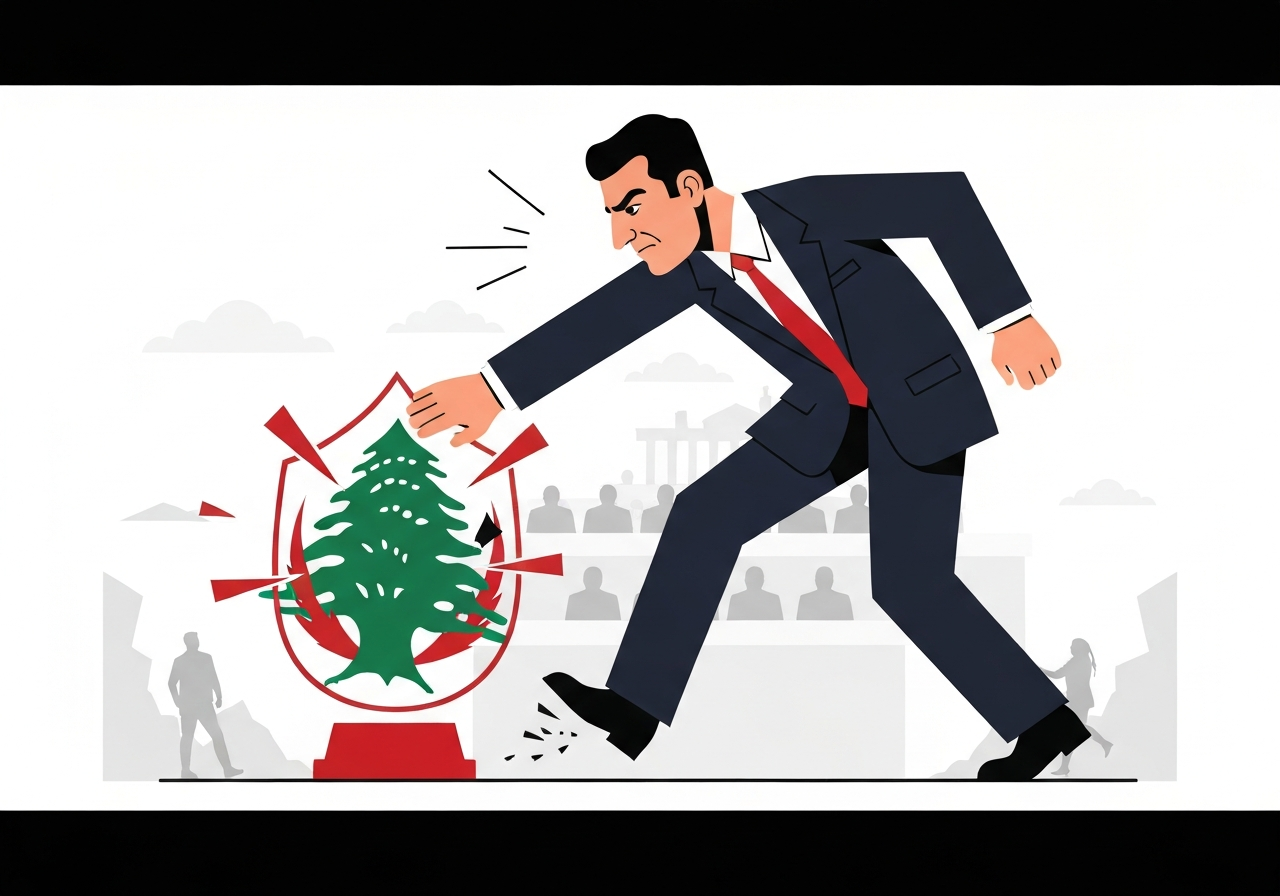
Lead: On 2 March 2026, Lebanese Prime Minister Nawaf Salam announced a ban on Hezbollah’s military and security operations after the Iran-aligned group launched rockets and drones at Israel from Lebanese territory and Israel carried out air strikes on Beirut’s southern suburbs. Salam said the group’s role must be confined to politics and ordered security forces to stop any attacks originating from Lebanon. Israel said it targeted sites and a senior Hezbollah intelligence figure in overnight strikes. State media reported more than 30 killed and 149 wounded in the strikes on Beirut and southern Lebanon.
Key takeaways
- Prime Minister Nawaf Salam on 2 March 2026 declared Hezbollah’s military and security activities illegal and restricted the group to political work.
- Hezbollah launched rockets and drones at a military missile-defence facility near Haifa, saying the strike was in response to the killing of Iran’s supreme leader, according to the group’s statement.
- Israel responded with air raids on Beirut’s southern suburbs and southern Lebanon; Lebanon’s state-run National News Agency reported more than 30 dead and 149 injured.
- The Israeli military said an overnight strike killed Hussein Makled, described as head of Hezbollah’s intelligence headquarters, and warned operations would continue.
- Hezbollah remains outside government command; it suffered leadership losses in a 2024 conflict that weakened its structure, according to regional accounts.
- Lebanon has a five-stage disarmament plan; the government says the second phase (area between the Litani and Awali rivers) will take at least four months to complete.
- The US embassy in Beirut urged American citizens to leave Lebanon immediately while commercial flights remain available, citing a volatile security environment.
Background
Hezbollah is a powerful Lebanese political and armed movement that has operated independently of the Lebanese state since its emergence in the 1980s. The group maintains a well-armed militia and a significant political bloc in parliament; its military posture has long been a core point of tension with Israel and with Lebanese rivals who call for a monopoly of force by state institutions. International actors, notably the United States and Israel, have repeatedly pressured Lebanese authorities to disarm or rein in Hezbollah’s armed wing.
In 2024 a direct confrontation with Israel inflicted major losses on Hezbollah’s leadership and military capabilities, according to regional reporting and analysts. The Lebanese government subsequently announced a multistage plan to dismantle armed groups’ arsenals in the south; by January 2026 officials said the first phase — between the Litani River and the Israeli border — was complete, while the second phase, covering the area between the Litani and the Awali rivers, would require months to finish. Those plans and past ceasefire terms are central to current disputes over where disarmament applies.
Main event
On Monday morning Hezbollah said it had fired rockets and launched drones at a military missile-defence facility near Haifa. The group framed the operation as retaliation for the killing of Iran’s supreme leader and as a defensive response to what it called repeated Israeli aggression. The claim was issued directly by Hezbollah; the motivations and specific targets were described in the group’s public statements.
Israel responded with strikes on Beirut’s southern suburbs and on locations in southern Lebanon. The Israeli military said its operations targeted Hezbollah infrastructure and included an overnight strike that killed Hussein Makled, whom it described as the head of Hezbollah’s intelligence headquarters and responsible for coordination and planning against Israeli forces. The army said operations would continue against individuals and sites it alleges are linked to Hezbollah’s military planning.
Lebanese official sources, including the state-run National News Agency, reported heavy civilian tolls from the strikes: more than 30 people killed and 149 wounded in Beirut and the south. The strikes prompted mass displacement, with residents of dozens of towns and villages told to evacuate amid air and artillery activity. Humanitarian and municipal authorities in Beirut and southern governorates warned of growing needs for shelter, medical care and basic services as people fled conflict zones.
Analysis & implications
Salam’s move to declare Hezbollah’s military activities illegal is a significant political gesture that aims to reassert state authority and reduce escalation risk. Practically, enforcement depends on Lebanon’s security institutions, which face constraints in manpower, equipment and political cohesion. The announcement signals a desire to de-escalate but may be difficult to implement where Hezbollah retains local support and armed capacity.
Regionally, the exchange risks widening the confrontation between Israel and Iran-linked actors. Hezbollah’s action and Israel’s retaliatory strikes could invite further cross-border exchanges, increasing spillover risk to Lebanon’s fragile economy and public services. Lebanon has endured prolonged economic decline and political paralysis; renewed fighting would exacerbate humanitarian needs and strain state institutions already stretched by displacement and infrastructure damage.
Internationally, the decision places Lebanon at the center of competing pressures: the United States and Israel push for disarmament of militias, while Hezbollah and its allies frame such moves as external interference. Western governments may intensify diplomatic engagement or offer security assistance to bolster Lebanon’s state capacity, but material support is likely to be politically sensitive and conditional on internal reforms and an ability to protect civilians.
Comparison & data
| Item | Date/Area | Reported figure |
|---|---|---|
| Air strikes on Beirut & south Lebanon | 2 March 2026 | 30+ killed, 149 injured (National News Agency) |
| Hezbollah attack target | Near Haifa | Missile-defence facility (rockets/drones) |
| Disarmament plan phases | Phase 1 completed Jan 2026; Phase 2 start Mar 2026 | Phase 2 estimated 4 months to complete |
The table summarizes official figures and timelines reported by Lebanese and Israeli sources. Casualty counts are from Lebanon’s National News Agency; military claims about targets and individual deaths are from Israeli military statements. Differences between agency reports and military claims are common in active conflicts and may be revised as more information becomes available.
Reactions & quotes
Lebanese leadership framed the episode as a threat to national security and an impetus to reassert state control.
“We announce a ban on Hezbollah’s military activities and restrict its role to the political sphere,”
Nawaf Salam, Prime Minister of Lebanon (official statement)
The Israeli military explained its targeting rationale and identified individuals it said were responsible for planning attacks.
“Operations against those responsible for planning and directing attacks will continue,”
Israeli military (official statement)
The US embassy warned of deteriorating security and advised American citizens to depart promptly.
“The security situation in Lebanon is volatile and unpredictable; depart Lebanon NOW while commercial flight options remain available,”
US Embassy in Beirut (public advisory)
Unconfirmed
- Hezbollah’s stated motive that the strike was “in retaliation for the killing of Iran’s supreme leader” is the group’s claim and has not been independently corroborated here.
- Precise casualty and damage figures for specific strikes remain preliminary and could be revised as on-the-ground assessments continue.
- Detailed confirmation of Hussein Makled’s role and network is based on Israeli military statements and has not been independently verified by Lebanese authorities in public reports.
Bottom line
The Lebanese prime minister’s ban on Hezbollah’s military activities marks a high-stakes attempt to restore state monopoly on force amid renewed cross-border violence. Implementation will be challenging: security forces face capacity limits and political fractures, while Hezbollah retains armed capabilities and local influence. The announcement may placate international partners seeking containment, but without credible enforcement and political accommodation it risks remaining declaratory.
In the near term, expect continued diplomatic activity, calls for de-escalation and urgent humanitarian responses as thousands move to safer areas. The outcome—whether a concrete disarmament push, a negotiated containment arrangement, or further escalation—will hinge on how Lebanon’s security apparatus, Hezbollah, Israel and external patrons manage pressure points in the coming weeks.
Sources
- Al Jazeera (media report)
- National News Agency (NNA) (Lebanese state-run media)
- Israel Defense Forces (IDF) (official military statement)
- US Embassy in Beirut (official travel/security advisory)