
Lead
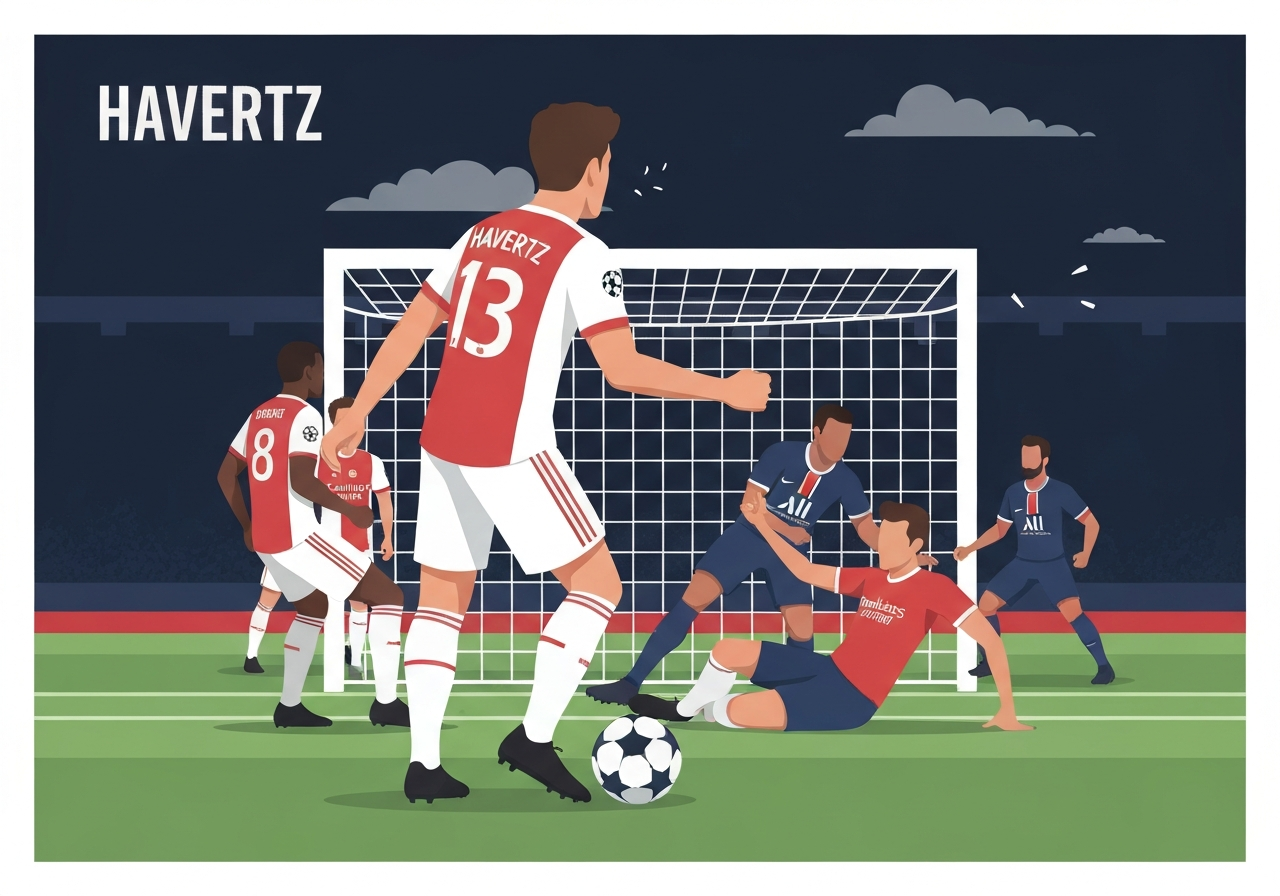
At the Puskás Arena in Budapest on May 30, 2026, Arsenal took an early lead over defending champions Paris Saint-Germain when Kai Havertz finished from close range to make it 1-0. The match, a UEFA Champions League final, has swung back toward parity after Ousmane Dembélé converted a penalty to level at 1-1. The game has seen heavy possession for PSG but clinical defending and counter work from Arsenal. Substitutions and a tense closing period have left the outcome wide open with roughly 30 minutes remaining.
Key takeaways
- Kai Havertz opened the scoring early after a deflected ball fell to him; Arsenal led 1-0 inside six minutes.
- Ousmane Dembélé equalized from the penalty spot after Cristhian Mosquera fouled Khvicha Kvaratskhelia; the score became 1-1.
- PSG dominated possession (over 77–80% in stretches) but created relatively few clear-cut chances in the first half.
- Arsenal made tactical changes: Martinelli and Noni Madueke replaced Bukayo Saka and Leandro Trossard; later Jurrien Timber and Viktor Gyökeres came on.
- Gabriel produced several crucial defensive interventions, and David Raya made a late save to deny Bradley Barcola a near-certain chance.
- Referee bookings: Mosquera and Saka were both shown yellow cards, affecting Arsenal’s right flank dynamics.
- Opta data cited: Arsenal have lost only one of their last 117 matches across competitions when leading at half-time (W101 D15 L1).
Background
The 2026 Champions League final pitched Arsenal, seeking their first European Cup, against PSG, the reigning champions. Arsenal returned to a European final for the first time in 20 years, carrying a season defined by defensive solidity under Mikel Arteta and a pragmatic approach in major matches. PSG arrived with an attack stacked with talent—Kvaratskhelia, Dembélé and the returning fitness of Hakimi and Ruiz were key talking points.
Pre-match narratives focused on selection dilemmas for both managers. Arteta opted for a more conservative mix that started Kai Havertz ahead of Viktor Gyökeres and left Jurrien Timber on the bench; Luis Enrique picked a near-full-strength PSG with Safonov in goal for the departed Donnarumma. Expectations centered on whether Arsenal’s compact defensive shape could blunt PSG’s ball retention and wide threats.
Main event
Kick-off arrived under intense atmosphere as tens of thousands filled the Puskás Arena. Arsenal struck first when a deflection from Leandro Trossard’s involvement put Kai Havertz through; the German ran onto the loose ball and finished at the near post to make it 1-0 inside the opening six minutes. Arsenal’s early organization forced PSG to chase possession rather than the other way around.
PSG steadily grew into the match and carved out chances before half-time—Khvicha Kvaratskhelia tested the post and Fabian Ruiz had an opportunity that went over—and their pressure culminated in a penalty after Mosquera fouled Kvaratskhelia in the box. VAR reviewed the incident and the spot-kick was awarded; Ousmane Dembélé calmly converted to level the score at 1-1.
Following the equalizer both teams made changes. Arsenal introduced Gabriel Martinelli and Noni Madueke to inject pace and later brought on Timber and Gyökeres to reshape midfield and attack, with Havertz dropping deeper at times. PSG responded with fresh legs as Bradley Barcola threatened on the counter; one overhit touch nearly resulted in a goal but David Raya rushed out to smother the chance.
Analysis & implications
Possession statistics have favored PSG heavily—periods of the match showed the French side holding upward of 77–80%—but Arsenal’s approach has been to concede possession, stay compact, and hit on counters and set pieces. That game plan delivered the opener and kept PSG’s high-profile attackers from consistently finding the final pass. If Arsenal can maintain their structure, they keep a realistic path to the title despite PSG’s territorial advantage.
For PSG, the equalizer restored momentum, but their difficulty in converting long spells of possession into clear shots highlights an execution problem in the final third. Kvaratskhelia and Dembélé have been dangerous at moments, yet finishing and quick combination play inside the box have been intermittent. Luis Enrique may need to gamble with additional attacking substitutes to force better shot quality in the closing stages.
Player management and bookings matter: Mosquera and Saka picking up yellow cards constrains Arsenal’s right flank choices, and Timber’s introduction signals Arteta’s willingness to shore up the backline as the match moves into the decisive phase. The match outcome will hinge on which side adjusts successfully to late-game dynamics—set pieces, quick transitions, and substitution impact.
Comparison & data
| Metric | Arsenal | PSG |
|---|---|---|
| Score (current) | 1 | 1 |
| Notable scorers | Kai Havertz (6′) | Ousmane Dembélé (pen) |
| Possession (sample) | ~20–23% | ~77–80% |
| Key substitutions | Martinelli, Madueke, Timber, Gyökeres | Barcola (for Kvaratskhelia) |
The numbers underline a classic contrast: PSG dominate possession but have fewer quality chances; Arsenal’s effectiveness stems from defensive organization and clinical use of limited opportunities. Opta history also favors Arsenal when leading at half-time: only one loss in their last 117 such matches (W101 D15 L1), a stat that boosts their prospects if they regain the lead.
Reactions & quotes
“Very difficult because they both bring very different stuff… with the game we expect we believe it is the right call,”
Mikel Arteta, Arsenal manager (pregame comment)
Context: Arteta was asked before kick-off about starting Havertz and preserving options on the bench; his selection paid an immediate dividend with the early goal.
“Cool as you like, Ousmane Dembélé slots home the penalty,”
Match report summary
Context: Dembélé’s composed spot-kick after VAR confirmation swung momentum back to PSG and energized their supporters in Budapest.
“Arsenal fans have been waiting 20 years for this moment.”
Supporter reaction / stadium atmosphere
Context: Supporters in Budapest and watch parties in London and Paris underscored the emotional stakes for both clubs.
Unconfirmed
- Exact extent of Safonov’s head knock after a collision: the goalkeeper was treated and continued, but full details of any follow-up checks have not been released.
- Fitness projections for Jurrien Timber beyond this match: his short-term return to the squad was confirmed, but long-term status requires medical updates.
- Any potential post-match disciplinary reviews regarding the penalty incident or bookings—UEFA statements, if any, were not available at publication.
Bottom line
This Champions League final remains delicately poised. Arsenal’s early clinical finish and robust defending forced PSG into a possession-heavy but intermittently dangerous performance; PSG’s equalizer restored balance and amplified the late-game tension. Tactical substitutions from both managers will be decisive in the remaining period, particularly in how each side manages fatigue, yellow-card constraints, and set-piece opportunities.
What to watch next: whether Arsenal can reassert their counter-attacking plan without exposing the booked Mosquera and Saka, and whether PSG can convert their territorial dominance into higher-quality chances. The final 30 minutes in Budapest will likely determine if the match is settled in normal time or requires extra time and penalties.
Sources
- NBC Sports — live match coverage / major media
- OptaJoe (Twitter) — football analytics / statistical record referenced
- Arsenal FC (official) — club announcement of starting lineup
- TNT Sports / broadcast coverage — pre-match interview with Mikel Arteta