
Lead
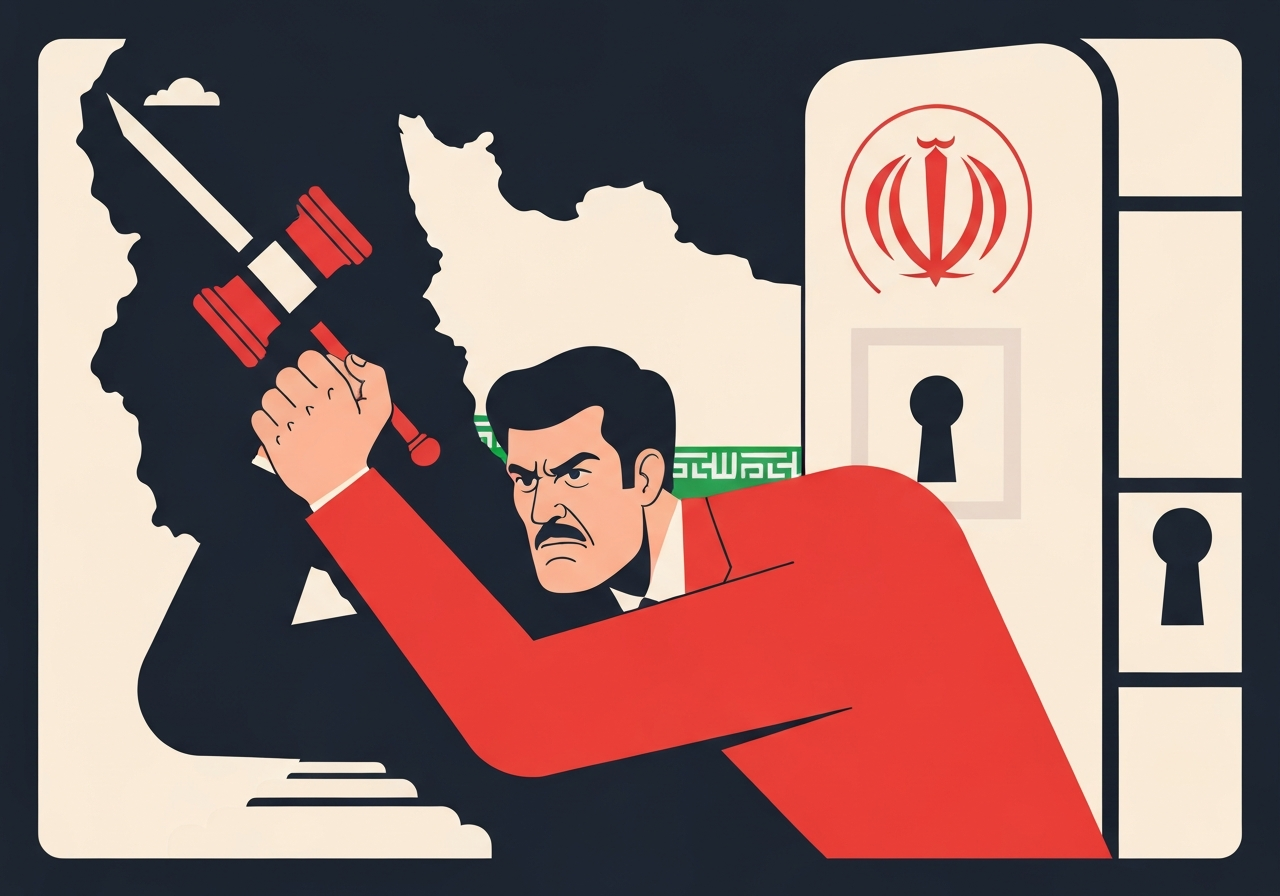
On Monday, March 2, 2026, Pentagon official Pete Hegseth used a combative press briefing at the Pentagon to cast the massive US–Israeli military operation against Iran as an unapologetic, anti–”politically correct” campaign, framing it as a decisive, limited strike rather than a traditional nation‑building war. He defended actions tied to Operation Epic Fury and declined to provide a firm exit timeline, even as regional retaliation and the deaths of four US service members raised the risk of wider conflict. Senior administration rhetoric, including comments from President Donald Trump and allied voices such as Senator J.D. Vance, has been inconsistent on duration and objectives. Hegseth’s message was less about details than tone: this administration will fight differently, he said, with fewer constraints.
Key Takeaways
- Pete Hegseth, a former Fox News host now in a top Pentagon role, led a Monday press briefing framing the US–Israeli campaign in Iran as a low‑constraint operation named Operation Epic Fury.
- The administration acknowledged four US service members killed in the opening phase of the conflict and confirmed Iranian ballistic missile strikes across the region in response to Israeli action.
- President Trump has offered shifting timelines, at times suggesting the campaign could last days or up to four weeks; Hegseth said the operation could run “two weeks, four weeks, or six weeks.”
- Officials refused to rule out deploying ground troops, leaving open the prospect of mission creep despite repeated claims against long‑term nation‑building.
- Hegseth explicitly rejected the Iraq‑era playbook, promising “no stupid rules of engagement” and arguing the administration would not prioritize democracy‑building as a goal.
- Senator J.D. Vance, a former Iraq veteran, has publicly urged against overlearning past mistakes, signaling intellectual buy‑in for renewed kinetic engagement within the administration.
- The first high‑level briefing came more than 48 hours after the conflict began, creating a gap between battlefield action and official explanation.
Background
Public debate over US military engagement in the Middle East has been shaped for two decades by the consequences of the 2003 Iraq invasion and the protracted stabilization efforts that followed. Successive administrations have wrestled with rules of engagement, post‑conflict reconstruction, and the political costs of extended deployments—questions that remain politically sensitive at home. Donald Trump has long positioned himself as a critic of those long wars, promising a different, less entangled approach; yet his administration’s opening of a broad military operation in Iran marks a sharp test of that rhetoric.
Pivotal figures in the current policy mix bring personal combat experience and media‑savvy communications styles. Pete Hegseth and Senator J.D. Vance both served in Iraq, and their influence inside the White House and Pentagon helps explain the current emphasis on kinetic options with fewer procedural restraints. Israel’s decision to strike high‑value targets inside Iran—and reports that some of those targets included potential successors to Iran’s supreme leader, Ayatollah Ali Khamenei—has elevated regional tensions. Those strikes, combined with Iranian missile responses and casualties among US forces, create a volatile environment that could pull in additional state and non‑state actors.
Main Event
At the Pentagon briefing on Monday, Hegseth defended the campaign’s scope and tone rather than offering operational specifics. He repeatedly contrasted the current operation with the US approach in Iraq, arguing that past wars were hamstrung by an excessive focus on nation‑building and politically driven constraints. He framed Operation Epic Fury as being conducted “on our terms, with maximum authorities,” and emphasized the administration’s intent to act without the kinds of coalition caveats that characterized earlier interventions.
Reporters pressed Hegseth on timelines, the prospect of ground forces, and objective definitions; he often declined to provide definitive answers, dismissing some questions as media “gotcha” attempts and reiterating that the campaign would proceed until US leaders judged their aims met. In public briefings and private congressional briefings, administration spokespeople have pointed to Iran’s ballistic missile capabilities as an “intolerable” threat and cited an alleged Iranian intent to prepare preemptive strikes as justification for the attacks.
Meanwhile, the battlefield picture has been unsettled. Israeli strikes inside Iran and cross‑border exchanges in Lebanon have expanded the conflict geography, and Iran’s ballistic missile launches and proxy actions around the region have contributed to a pattern of escalation. The administration confirmed four US service members killed in the opening phase, underscoring the human cost even as officials sought to contain narrative and operational ambiguity.
Analysis & Implications
The administration’s rhetorical shift toward a low‑constraint model signals a reorientation of US deterrence strategy: favor rapid, decisive strikes carried out with fewer public guardrails. That approach may deliver short‑term tactical advantages but risks longer‑term strategic costs. Reduced emphasis on post‑conflict stabilization and local political transitions may leave power vacuums that regional actors or militant groups can exploit, increasing the chance of protracted instability.
Domestically, framing military action as an antidote to “political correctness” is politically expedient for the administration’s base, but it also narrows bipartisan support across the broader spectrum of lawmakers who demand clearer objectives and exit strategies. The administration’s refusal to articulate firm benchmarks or a timeline complicates congressional oversight and heightens prospects for contentious hearings and appropriations battles if hostilities continue.
Internationally, sidelining traditional allies and emphasizing unilateral action could weaken coalition options in the near term and fracture longstanding security partnerships. Allies that prefer multilateral planning or legalistic constraints on force may balk at coordinated follow‑on operations, limiting access to basing, intelligence sharing, and joint civil‑military capabilities—a handicap if the conflict broadens.
Comparison & Data
| Feature | Iraq (2003 onward) | Operation Epic Fury (2026) |
|---|---|---|
| Stated US Objective | Regime removal; nation‑building and democratization | Targeted removal of perceived threats; not aimed at democracy‑building |
| Rules of Engagement | Constrained by stabilization goals and multilateral frameworks | Presented as fewer public constraints, “maximum authorities” |
| Public Timeline | Open‑ended; years of troop presence | No firm timeline; administration suggested days to weeks |
The table is intended to highlight contrasts in stated goals and public posture. While Iraq evolved into a long stabilization mission, officials now explicitly reject that model. That rejection raises questions about how the US will manage aftermath risks—especially if local governance structures are disrupted without plans for reconstruction or political transition.
Reactions & Quotes
“This is not Iraq. This is not endless. Our generation knows better,”
Pete Hegseth, Pentagon official
Hegseth used his Iraq experience to draw a sharp line between past campaigns and current operations, arguing the administration would avoid extended nation‑building commitments.
“We fight to win, and we don’t waste time or lives,”
Pete Hegseth, Pentagon official
That phrase framed the administration’s calculus: accept casualties as part of decisive action while minimizing open‑ended commitments. Separately, Senator J.D. Vance has publicly cautioned against overgeneralizing past mistakes, an outlook that dovetails with the administration’s more kinetic posture.
Unconfirmed
- Claims that the initial strikes killed all identified potential successors to Ayatollah Ali Khamenei remain unverified by independent sources.
- Briefings that asserted Iran was preparing an imminent pre‑emptive strike were described by some officials as intelligence assessments; an imminent, specific threat has not been publicly substantiated.
- Public statements that the US will definitively avoid ground forces are inconclusive; officials declined to rule out boots on the ground, leaving the possibility open.
Bottom Line
Pete Hegseth’s Pentagon briefing was less an operational update than a political framing exercise: an effort to present the US–Israeli campaign in Iran as a resolute, low‑constraint action that breaks with the Iraq‑era playbook. That rhetoric aligns with President Trump’s longer‑standing critique of extended overseas missions, but the practical effect is ambiguous—reduced public guardrails can yield short‑term flexibility while increasing the risk of unintended escalation and prolonged instability.
For policymakers and the public, the central questions remain: what are measurable end states, which partners will the US need to rely on for longer‑term stability, and how will Congress and allies respond if the conflict expands beyond the administration’s current time horizon? Absent clearer objectives and transparent oversight, the risk of mission creep and regional spillover will persist.
Sources
- The Guardian — news media report summarizing the Pentagon briefing and related developments.