
Lead
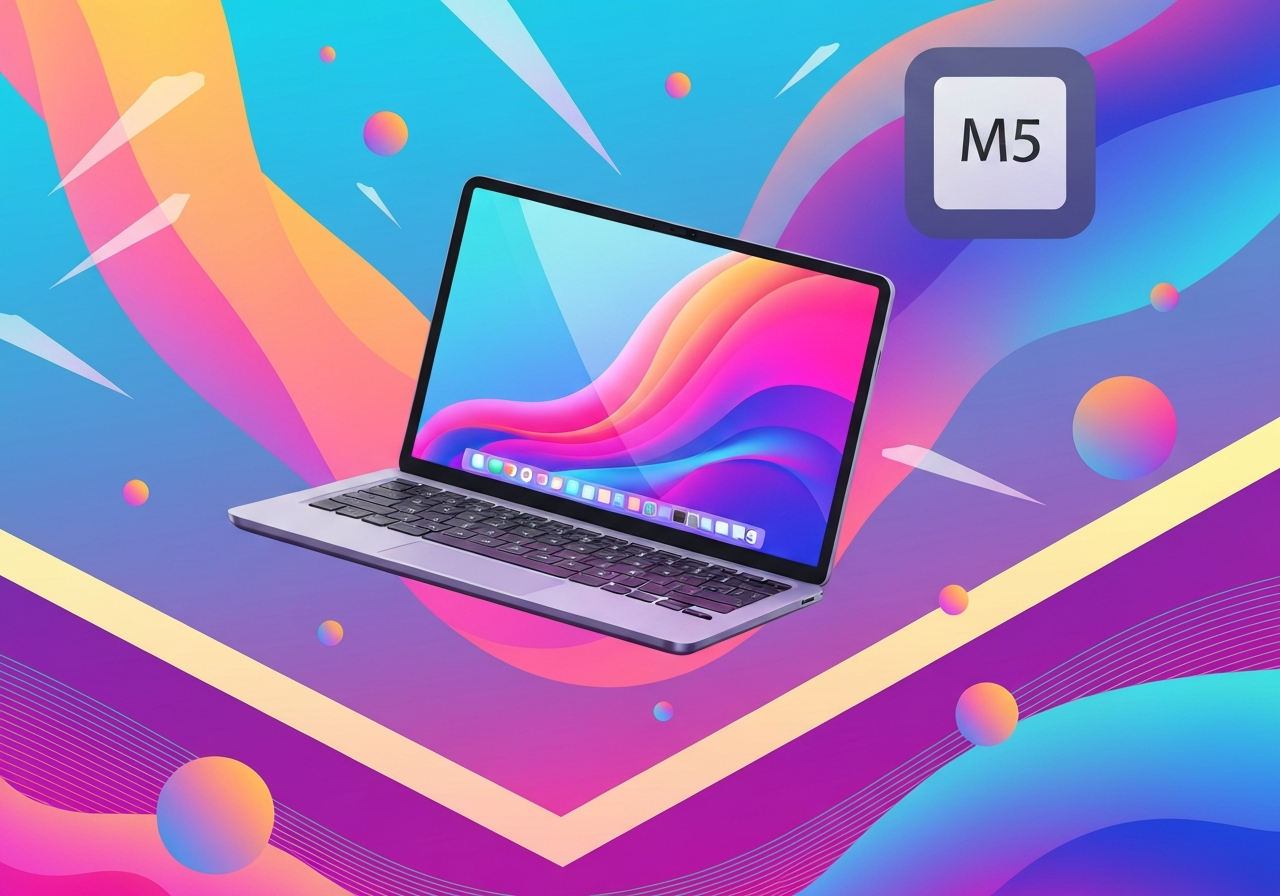
Apple announced the new MacBook Air with the M5 chip on March 3, 2026, in Cupertino, California. The update pairs a faster CPU and next‑generation GPU with a Neural Accelerator in every core, and adds Wi‑Fi 7 via a new N1 wireless chip. Apple said the laptop ships in 13‑ and 15‑inch models, doubles the base storage to 512GB, and offers up to 18 hours of battery life. Preorders begin March 4, with retail availability starting March 11.
Key Takeaways
- The M5 introduces per‑core Neural Accelerators and a next‑generation GPU; Apple cites up to 6.9x faster AI video enhancement versus M1 and up to 1.9x versus M4 for some workloads.
- MacBook Air now starts at 512GB of SSD storage (configurable to 4TB) and uses faster SSD technology.
- Wireless is upgraded by Apple’s N1 chip, enabling Wi‑Fi 7 and Bluetooth 6 for improved connectivity.
- Apple lists up to 18 hours of battery life—six hours longer than its prior Intel‑based MacBook Air models—and adds fast‑charge support.
- Available in sky blue, midnight, starlight and silver, the lineup includes 13‑ and 15‑inch fanless designs with two Thunderbolt 4 ports and support for two external displays.
- Starting prices: 13‑inch $1,099 (education $999); 15‑inch $1,299 (education $1,199). Preorders open March 4; availability March 11 in 33 countries and regions.
- Apple frames macOS Tahoe and Apple Intelligence as central software features, with Live Translation, enhanced Shortcuts and continuity additions like Phone on Mac.
Background
Apple has refreshed the MacBook Air line several times since introducing its M1 system‑on‑chip, moving from M1 to M4 and now to M5. Each generational leap has emphasized energy efficiency and specialized accelerators for machine learning; the M5 continues that trajectory by embedding a Neural Accelerator within each CPU core. The Air remains Apple’s lightest and most widely used laptop in consumer, education and many business segments, a position the company highlights when positioning incremental hardware advances.
The broader market context includes rising demand for on‑device AI capabilities, tighter expectations around wireless performance as Wi‑Fi 6E matures into Wi‑Fi 7, and persistent interest in longer battery runtimes. Apple’s decision to double base storage responds to heavier local workloads—large media files, app caches and machine‑learning datasets—that users increasingly keep on laptops. For professionals and students, portability combined with accelerated AI and creative workloads is a central selling point.
Main Event
At its March 3 announcement, Apple presented the MacBook Air with the M5 as a performance and AI upgrade for a mass‑market laptop. The company emphasized generational performance gains—specific benchmarks cited include up to 6.9x faster AI video enhancement in Topaz Video versus M1 and up to 6.5x faster 3D rendering in Blender for certain ray‑tracing tasks compared with M1.
Design and usability changes are modest but intentional: Apple retains a fanless aluminum chassis for silent operation, extends the display sizes to 13.6‑ and 15.3‑inches with Liquid Retina panels rated to 500 nits and support for a billion colors, and keeps a two‑port Thunderbolt 4 configuration alongside MagSafe charging. The FaceTime camera is upgraded to 12MP with Center Stage and Desk View support, and audio is described as immersive with Spatial Audio and Dolby Atmos compatibility.
Connectivity is a focal point—Apple’s new N1 wireless chip brings Wi‑Fi 7 and Bluetooth 6, which the company says yields improved web‑browsing and heavier‑task performance compared with a competitive Intel Core Ultra X7 system. Apple also highlights software synergy: macOS Tahoe’s features and Apple Intelligence are presented as enablers for on‑device and cross‑device productivity, including Live Translation in Messages and expanded Shortcuts integrations.
Analysis & Implications
Performance claims track Apple’s multi‑year shift toward specialized silicon that pairs general‑purpose CPU cores with dedicated accelerators for machine learning. A Neural Accelerator in each core signals that Apple expects more workloads to run concurrently and benefit from distributed ML execution, from live video enhancement to on‑device data extraction. For everyday users, that architecture can translate into faster image processing, smoother video calls and more capable local AI features without offloading data to cloud services.
Doubling the baseline storage to 512GB is consequential for the Air’s target audiences. Students and creative professionals who once relied on external drives or cloud storage will find a larger local footprint useful for large projects and local datasets. That change also shifts the upgrade calculus: buyers may be less driven to immediately configure-to-order higher storage levels, improving perceived value at the entry price points Apple set.
On connectivity, Wi‑Fi 7 and Bluetooth 6 adoption depends on ecosystem readiness. Users with Wi‑Fi 7 routers will see meaningful throughput and latency improvements; most consumers, however, will not have immediate access to Wi‑Fi 7 infrastructure. The N1 chip still positions Apple to capitalize as routers and enterprise networks upgrade, but near‑term benefits will vary by user environment.
From a competitive standpoint, Apple continues to market the Air as a device that narrows the gap with higher‑end, fan‑cooled laptops for creative workflows. However, the two‑port Thunderbolt layout and fanless thermal envelope impose physical limits on sustained peak performance compared with larger, actively cooled systems. Buyers who prioritize prolonged heavy workloads should compare sustained benchmark behavior, not just peak claims.
Comparison & Data
| Task / Metric | Compared to M1 | Compared to M4 |
|---|---|---|
| AI video enhancement (Topaz Video) | Up to 6.9x | Up to 1.9x |
| 3D rendering (Blender, ray tracing) | Up to 6.5x | Up to 1.5x |
| Image processing (Affinity) | Up to 2.7x | Up to 1.5x |
| Web browsing vs Intel Core Ultra X7 | Up to 50% faster | — |
| Battery life (vs Intel‑based Air) | +6 hours (up to 18 hours) | — |
| Base storage | 512GB (double) | — |
The table summarizes Apple’s comparison figures published with the announcement; testing dates and system configurations are specified by Apple as February 2026 and in some cases reference Apple’s own M1 and M4‑based systems. These are vendor‑supplied results and should be interpreted alongside independent benchmarks for sustained workloads and thermals.
Reactions & Quotes
Apple framed the launch as both a performance and AI milestone for the Air. The company’s messaging centers on a blend of hardware and software upgrades intended to broaden the Air’s appeal beyond basic productivity.
“The new MacBook Air with M5 brings exceptional performance and expanded AI capabilities to the world’s most popular laptop.”
Apple (press release)
Apple also emphasized value and portability for students and creative professionals when discussing colors, sizes and battery life.
“MacBook Air delivers unmatched value for college students and creative professionals.”
Apple (press release)
Apple highlighted macOS Tahoe and Apple Intelligence as software pillars that unlock new on‑device features while asserting privacy protections at each step.
“Apple Intelligence adds powerful features with groundbreaking privacy at every step.”
Apple (press release)
Unconfirmed
- Independent, third‑party benchmark comparisons for sustained thermal performance across varied workloads are not yet broadly available; Apple’s numbers are vendor tests from February 2026.
- Real‑world Wi‑Fi 7 benefits will vary by router and network environment; broad consumer access to Wi‑Fi 7 infrastructure remains limited.
- Regional inventory levels and launch‑day stock in all 33 listed countries and regions have not been independently verified.
Bottom Line
Apple’s MacBook Air with M5 packages measurable generational gains—particularly for AI and creative tasks—into a familiar thin, fanless design while raising the base storage and upgrading wireless capabilities. For buyers seeking a lightweight laptop with stronger on‑device AI, improved media‑editing performance and longer battery life, the new Air represents a compelling, comparatively affordable option.
However, prospective purchasers should weigh peak performance claims against sustained thermal behavior and consider whether their workflows will benefit immediately from Wi‑Fi 7 or the per‑core Neural Accelerator architecture. Independent benchmarks and hands‑on reviews that examine sustained loads, thermals and real‑world battery life will be important next steps before upgrading from recent M‑series machines.