
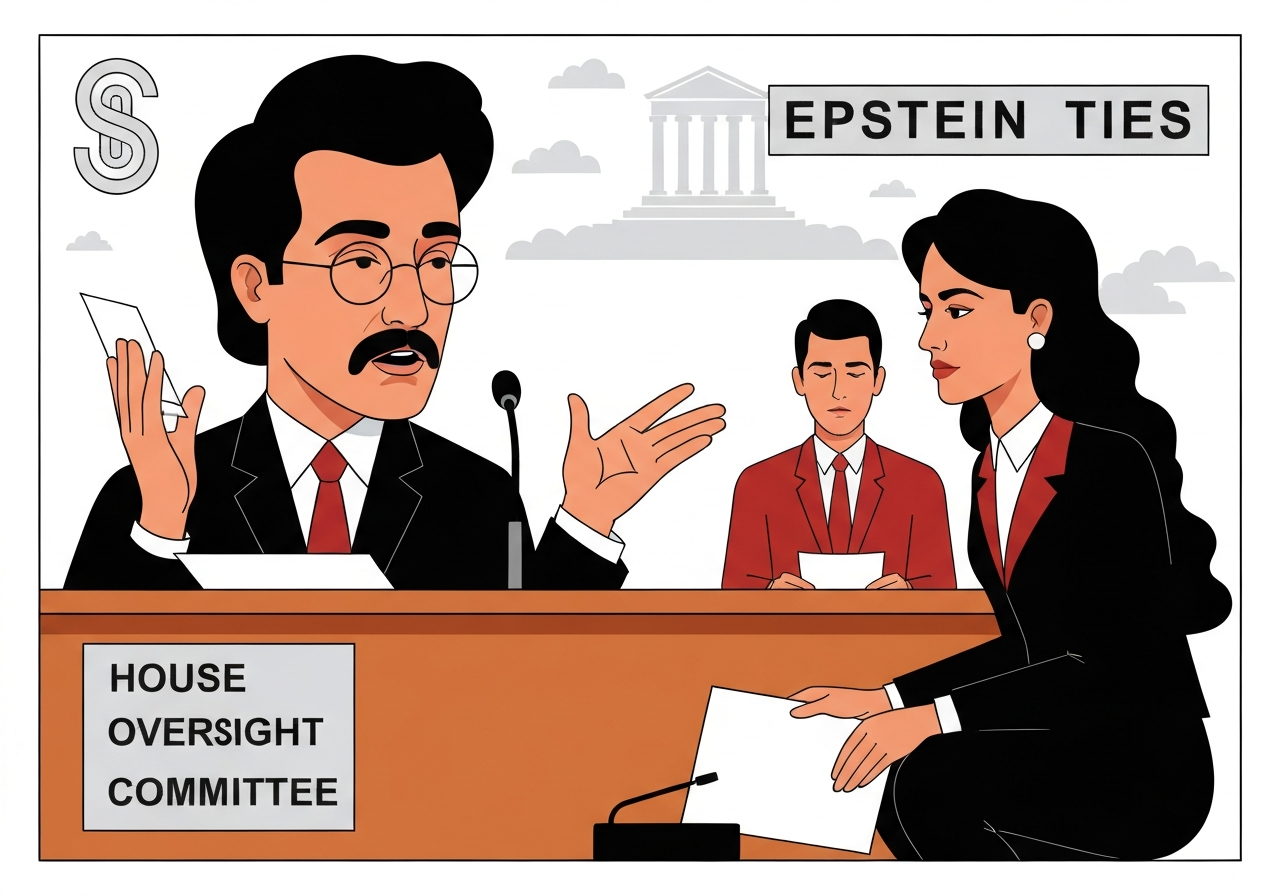
Commerce Secretary Howard Lutnick has volunteered to appear before the House Oversight Committee to answer questions about his previously disclosed connections to Jeffrey Epstein, Rep. James Comer (R-Ky.) confirmed on March 3, 2026. The announcement follows Lutnick’s February testimony before the Senate Appropriations Subcommittee, where he acknowledged a 2012 visit to Epstein’s private island with family and nannies. A photograph and email thread surfaced in the Department of Justice’s recent release of Epstein-related materials that prompted fresh congressional scrutiny. Lutnick says he has done nothing wrong and has agreed to cooperate so he can set the record straight.
Key Takeaways
- Howard Lutnick, serving as U.S. Commerce Secretary, has agreed to testify before the House Oversight Committee; Rep. James Comer confirmed the voluntary appearance on March 3, 2026.
- In February 2026 Senate testimony, Lutnick admitted visiting Jeffrey Epstein’s private island in 2012 with family and nannies, reversing earlier claims that he had cut ties.
- A photograph reportedly showing Lutnick next to Epstein surfaced among millions of records released by the Department of Justice and was briefly removed from the DOJ site before reappearing.
- Rep. Nancy Mace (R-S.C.) announced plans to subpoena Lutnick after the photo and an apparent scheduling email were circulated publicly.
- The White House, via spokesman Kush Desai, described Lutnick as a key Trump administration official involved in trade and investment wins.
- Axios first reported Lutnick’s willingness to cooperate; an interview before the committee is expected to take place privately in the coming weeks and could later be released publicly.
- Neither the Commerce Department nor the Oversight Committee’s Democratic staff had immediately provided comment to CNBC at the time of reporting.
Background
The new round of scrutiny stems from the Department of Justice’s release of millions of documents tied to the Epstein investigation, a trove that has produced photographs, emails and witness statements dating back years. Epstein, a deceased financier and convicted sex offender, cultivated relationships with wealthy and powerful figures; those associations remain a focal point for investigators and congressional committees. Howard Lutnick, a prominent financier who later became Commerce Secretary, was previously reported to be Epstein’s next-door neighbor, a detail that gained broader attention as the DOJ materials were made public.
In early February 2026, Lutnick appeared before the Senate Appropriations Subcommittee on Commerce, Justice, Science, and Related Agencies and disclosed that he had visited Epstein’s private island in 2012 accompanied by family and nannies. That admission contrasted with earlier statements that he had severed contact with Epstein. The emergence of a photo allegedly showing Lutnick and Epstein together, plus what was presented as an island-visit scheduling email, intensified calls from some members of Congress for further explanation.
Main Event
On March 3, 2026, Rep. James Comer, chairman of the House Oversight Committee, confirmed via social post that Lutnick had agreed to testify voluntarily. Comer praised Lutnick’s willingness to cooperate, characterizing the decision as a commitment to transparency. The committee has jurisdiction over executive branch oversight and has taken a lead role in pressing public officials about ties to Epstein and the broader questions raised by the DOJ release.
Rep. Nancy Mace, a member of the Oversight Committee, announced she would subpoena Lutnick, citing a photograph and email that she said warranted formal questioning. Mace posted the image and the apparent scheduling email on social media, amplifying attention and prompting Lutnick to accept the committee’s invitation. According to reports, the committee plans a private interview in the coming weeks; congressional practice allows such private sessions to be later released in full.
Lutnick has publicly maintained his innocence. In remarks relayed to Axios, he said, “I have done nothing wrong, and I want to set the record straight.” The White House issued a statement emphasizing Lutnick’s role in securing trade and investment agreements for the Trump administration, while declining to provide additional detail on the substance of the forthcoming testimony.
Analysis & Implications
At stake are three related dynamics: legal exposure, political risk, and institutional optics. Legally, Lutnick is not accused of wrongdoing in the public record; disclosure of past social contact does not itself imply criminal liability. Politically, however, the optics of a cabinet official linked—by proximity and documented visits—to Epstein can be damaging across party lines, especially when evidence appears in a high-profile DOJ release.
For the Oversight Committee, pressing Lutnick serves multiple purposes: it signals bipartisan appetite for answers about the breadth of Epstein’s connections, it allows the committee to publicly delineate what contacts officials had with Epstein, and it reinforces congressional authority to examine and document those relationships. A voluntary appearance reduces the need for formal coercion but does not eliminate the possibility of follow-up subpoenas or public release of interview transcripts if the committee deems it warranted.
Domestically, the episode may affect public confidence in vetting and ethics processes surrounding cabinet appointments. If Lutnick’s testimony clarifies timelines and contexts—who arranged meetings, who attended, and what was discussed—it could defuse criticism. Conversely, new or corroborating records could prolong scrutiny and create political headaches for the administration during a sensitive period for trade and economic policy messaging.
Comparison & Data
| Date | Event |
|---|---|
| 2012 | Lutnick visits Epstein’s private island with family and nannies (admitted in later testimony) |
| Feb 10, 2026 | Lutnick appears before Senate Appropriations Subcommittee and acknowledges 2012 visit |
| Mar 3, 2026 | Lutnick agrees to testify before House Oversight Committee; photo and email circulate |
The timeline above captures the core public milestones relevant to current scrutiny. While the 2012 visit is the central factual pivot, the recent DOJ release and subsequent circulation of a photo and email have accelerated congressional action. Historical patterns show that document releases often trigger rounds of subpoenas and interviews, and private interviews can later be made public, amplifying their political and media impact.
Reactions & Quotes
Oversight Committee leadership framed Lutnick’s cooperation as welcome, emphasizing transparency. Representative Comer publicly thanked Lutnick for his willingness to appear and signaled the committee’s interest in moving forward quickly.
I commend his demonstrated commitment to transparency and appreciate his willingness to engage with the Committee. I look forward to his testimony.
Rep. James Comer (R-Ky.), Oversight Committee Chair
Some members signaled a tougher line, citing the photo and email as justification for formal process. Rep. Nancy Mace announced a planned subpoena and posted the materials on social media to justify congressional inquiry.
He has questions to answer about his relationship with Jeffrey Epstein.
Rep. Nancy Mace (R-S.C.), Oversight Committee Member
Lutnick, seeking to limit reputational damage, voiced a desire to clear the record and emphasized his public service record. The White House reinforced his value to the administration in a brief statement.
I have done nothing wrong, and I want to set the record straight.
Howard Lutnick, U.S. Commerce Secretary
Unconfirmed
- The exact date and format of Lutnick’s interview with the House Oversight Committee have not been announced publicly.
- It is not confirmed whether the photograph was intentionally removed from the DOJ site or disappeared due to technical or administrative reasons.
- There is no public evidence yet that Lutnick engaged in or facilitated criminal conduct related to Epstein; investigations remain focused on documenting associations and timelines.
Bottom Line
Howard Lutnick’s decision to testify before the House Oversight Committee closes one chapter of uncertainty but may open another, depending on what documents or testimony emerge. His voluntary cooperation reduces immediate institutional friction but does not preclude further subpoenas or public disclosures if the committee seeks them. For the administration, rapid resolution and transparent disclosure would limit political fallout; for investigators and the public, full records and clarifying testimony remain the pathways to greater clarity.
Observers should expect a narrow window in which private testimony could become public, potentially reshaping the narrative depending on what is revealed. The coming weeks will test how effectively Lutnick and the Oversight Committee can balance timely fact-finding with procedural fairness.
Sources
- CNBC (News report) — original article reporting Lutnick’s agreement to testify and related developments.
- U.S. Department of Justice (Official) — source of the public release of Epstein-related files referenced in congressional inquiries.
- Reuters (News agency) — photo and caption reporting from Capitol Hill cited in coverage of Lutnick’s public appearances.