
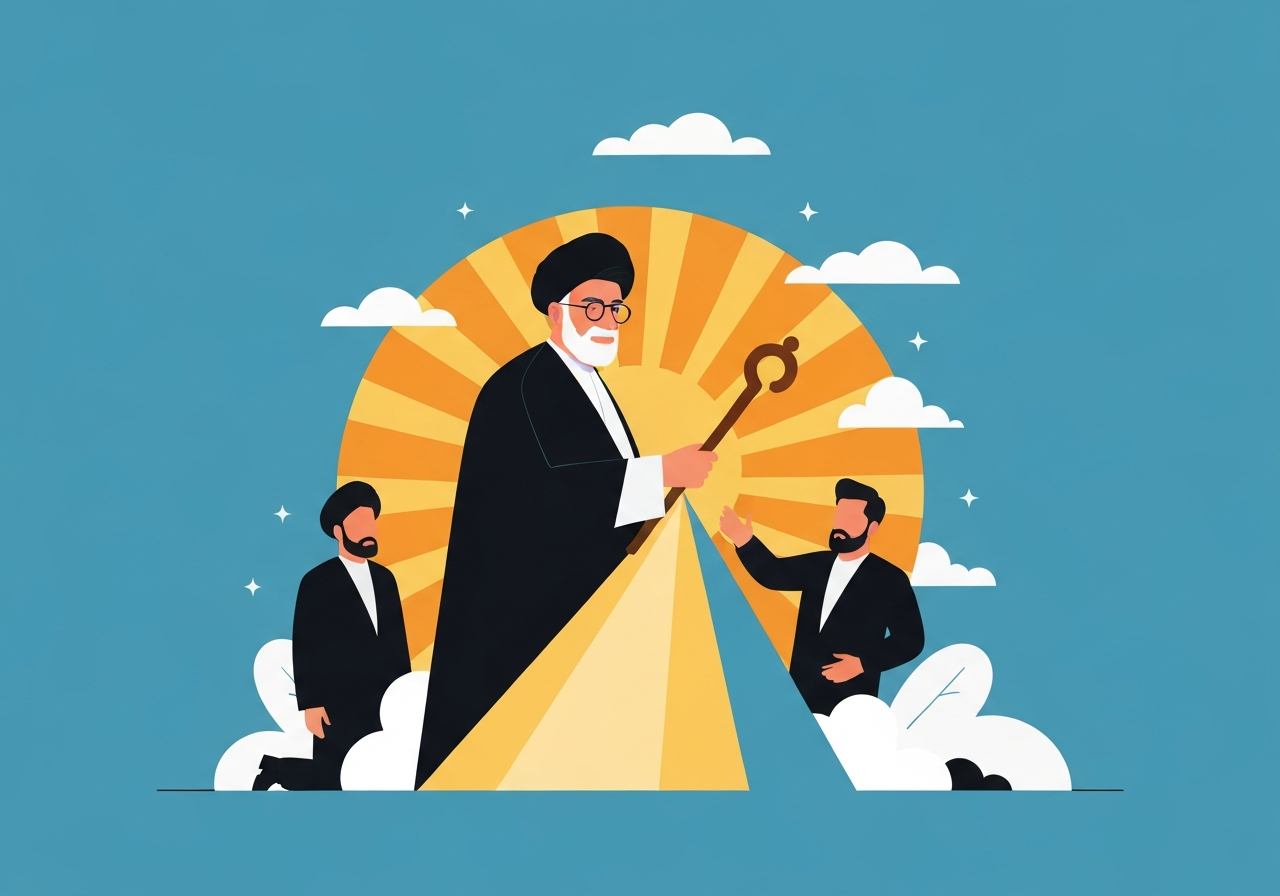
Senior clerics in Tehran convened on March 3, 2026, to choose a new supreme leader after the death of Ayatollah Ali Khamenei. Sources close to the deliberations say Mojtaba Khamenei, the late leader’s 56-year-old son, emerged as the leading candidate. The Assembly of Experts held two virtual sessions that day as security concerns mounted following an Israeli strike on a building in Qum where the assembly had been due to meet. Some members reportedly warned that endorsing Mojtaba could make him a high-profile target for foreign adversaries.
Key Takeaways
- The Assembly of Experts met virtually on March 3, 2026, holding two sessions to deliberate a successor.
- Three Iranian officials familiar with the discussions identified Mojtaba Khamenei, age 56, as the front-runner.
- Officials considered announcing his selection as soon as the morning after the meetings, according to sources.
- An Israeli strike hit a building in Qum tied to the assembly’s schedule; Iranian state-linked Fars News reported the site was empty.
- Analysts, including Vali Nasr of Johns Hopkins, say Mojtaba’s selection would indicate stronger influence by hard-line Revolutionary Guard factions.
- Some clerics expressed reservations that naming the son could raise security risks from the United States and Israel.
Background
The constitutionally mandated Assembly of Experts is charged with selecting Iran’s supreme leader, a role that shapes policy across the military, judiciary and foreign affairs. Historically, the body’s deliberations are opaque; members often meet in private and speak on sensitive matters on condition of anonymity. The sudden death of Ayatollah Ali Khamenei in U.S.-Israeli strikes has accelerated a succession process that would normally unfold over a longer period.
Mojtaba Khamenei has operated largely away from public view, serving as a discreet but influential figure inside the clerical and security networks built around his father. He has been discussed in Tehran as a potential heir for years, though observers say his candidacy gained and waned at various points over the last decade. The Revolutionary Guard Corps (IRGC) and other power centers in Tehran are central stakeholders in any transition, and their preferences will shape which candidate the assembly can realistically confirm.
Main Event
On March 3, the Assembly of Experts held two virtual meetings — one in the morning and another in the evening — to evaluate potential successors and consider next steps after the late leader’s death. Three officials with knowledge of the discussions told reporters that Mojtaba emerged as the clear front-runner during those sessions. Delegates debated not only clerical qualifications but also security implications of elevating a direct family member.
News outlets aligned with the state and the IRGC reported that an Israeli strike struck a building in Qum, a major center of Shia scholarship, which had been listed as a meeting site for the assembly; Fars News said the structure was empty at the time. Delegates reportedly weighed whether an immediate public announcement would risk drawing foreign strikes against the nominee and the institutions that support him.
Counsel within the assembly appears divided: some members favor a rapid endorsement to show continuity and deter internal fragmentation, while others urge caution given the volatile security environment and international scrutiny. The deliberations reflect a broader contest among Iran’s political factions over the regime’s future direction and how overtly the IRGC will shape that path.
Analysis & Implications
If Mojtaba Khamenei is formally confirmed, it would mark a departure from several past successions that emphasized clerical credentials and broader consensus among senior clerics. Analysts note that installing a successor with close familial ties to the late leader could consolidate clerical and security networks loyal to the Khamenei lineage. That consolidation might produce more cohesive decision-making — but it could also intensify factional rivalries if other elites feel sidelined.
Internationally, a Khamenei family successor could alter how foreign capitals assess Iran’s strategic intent. Observers warn that an explicitly IRGC-aligned leadership might pursue more assertive regional policies, which could prompt firmer countermeasures from Israel and the United States. Conversely, some diplomats argue that a rapid, orderly succession could stabilize Tehran’s internal politics and reduce the likelihood of chaotic escalation.
Economically, the immediate effect on markets is likely limited but depends on how the new leadership signals policy continuity or change. Sanctions dynamics, energy exports, and domestic controls will all be shaped by who rises to the top and which factions dominate the senior decision-making councils. Business and financial actors will watch public messaging from the assembly and from Iran’s security agencies for signs of policy direction.
Comparison & Data
| Item | Previous Transition | Current Situation (Mar 3, 2026) |
|---|---|---|
| Primary selector | Assembly of Experts | Assembly of Experts (virtual sessions) |
| Public timeline | Gradual deliberation over weeks | Intense deliberation over days following leader’s death |
| Security incidents near deliberations | Rare | Israeli strike on a Qum building reported as related site |
Past successions have often unfolded with lengthy, behind-the-scenes consultations among clerics and power brokers. The compressed timetable in early March 2026 reflects both the abrupt loss of the sitting leader and elevated security risks. The reported strike in Qum is an unusual proximate security event tied to the assembly’s planning, underscoring the fraught environment around the selection process.
Reactions & Quotes
“If Mojtaba is chosen, it points to greater influence by hard-line elements tied to the Revolutionary Guard,”
Vali Nasr, Johns Hopkins University (expert on Iran and Shia Islam)
Nasr’s observation frames the choice as a signal about which internal faction will steer Tehran’s policies, especially regarding regional posture and relations with the West.
“The building was empty at the time,”
Fars News Agency (IRGC-affiliated state-linked media)
Fars’s reporting on the Qum site has been cited by officials as evidence that the assembly avoided direct harm, but independent verification of strike intent and targeting has not been publicly confirmed.
Unconfirmed
- Whether an official, public announcement naming Mojtaba Khamenei will be issued on the morning following the March 3 meetings remains unconfirmed.
- Attribution of the Qum building strike to a specific external operation or deliberate targeting of the assembly has not been independently verified.
- Reports of unanimous support within the Assembly of Experts for Mojtaba are unverified; some delegates are reported to have reservations.
Bottom Line
The deliberations on March 3 position Mojtaba Khamenei as a prominent candidate to succeed his father, a development that could consolidate hard-line influence within Iran’s ruling structure. Security concerns, including a reported strike near an assembly site in Qum, have complicated the pathway to a smooth, uncontested succession and prompted calls for caution among some clerics.
Whether Mojtaba is formally confirmed will have immediate consequences for Iran’s domestic power balance and for regional diplomacy. International actors and markets will monitor the assembly’s next public statements and any official endorsement for signs of continuity or a shift toward a more militarized policy posture.
Sources
- The New York Times — International newspaper reporting on Assembly deliberations and sources
- Fars News Agency — State-linked Iranian news agency reporting on Qum incident (media)
- Johns Hopkins SAIS profile: Vali Nasr — Academic/expert commentary on Iran and Shia politics (academic)